
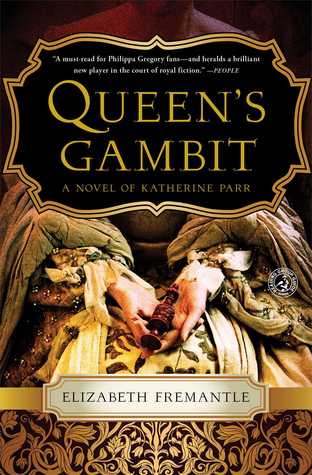
 To be married to a king may seem like a dream, but reality can be cruel. Take the wives of Henry VIII. After saying ” I do,” each wife had to deal with complex challenges after saying “I do.” We all know the poem; divorced, beheaded, died, divorced, beheaded, survived, but does that define these queens? After the death of her second husband, Katherine Parr must choose between Henry VIII and Thomas Seymour, the man who has captured her heart. She must navigate love, court intrigues, and the treacherous religious landscape of England in the 1540s to survive. Katherine’s life as Queen of England and how close she came to a disastrous fall from grace are explored in Elizabeth Fremantle’s first novel, “Queen’s Gambit: A Novel of Katherine Parr.”
I have heard about this particular novel for years, and I have wanted to read it for a long time. Katherine Parr is my favorite wife of King Henry VIII, but sadly there are not many novels about her. When it was announced that this novel would be turned into a new movie called “Firebrand,” I knew now was the perfect time to read this book.
“Queen’s Gambit” begins with Katherine Parr at the deathbed of her second husband, Lord Latymer. Their relationship was full of love, but it was also stained with tragedy as Katherine was left alone to fend off the Pilgrimage of Grace, which scarred both Katherine and her stepdaughter Meg for years to come. With the death of Lord Latymer, Katherine returns to court with Meg and her beloved maid Dot, where she falls hard to the debonair Thomas Seymour. Their love can never be as another man has his eyes on the desirable widow, and no one ever disobeys King Henry VIII. Katherine Parr marries the king and becomes his sixth wife, a queen of England.
As queen, Katherine’s life might seem like a dream, but dealing with an ailing husband and trying to promote her religious views without losing her head is a balancing act. I thoroughly enjoyed how Fremantle portrayed Katherine and her time as queen and eventually the wife of Thomas Seymour. Her relationships with Henry VIII, Thomas Seymour, Anne Askew, Mary, Elizabeth, and Edward are complicated but well fleshed out. I also enjoyed the additional characters that Fremantle included in Katherine’s tale, especially the loyal to a fault Dot and Huicke, the king’s physician whose friendship would become invaluable to Katherine.
This was my first time reading a book by Elizabeth Fremantle, and I cannot wait to read another story. Fremantle does a superb job of telling Katherine’s story in an engaging and thoughtful manner. It was so interesting that I did not want this novel to end.
Katherine Parr was not just the final wife who survived King Henry VIII’s last years. She was a wife, a loving stepmother, a widow, a woman in love, a caring friend, a writer, and a reformer. Her life was full of risks, tragedies, and love. If you love Tudor historical fiction novels, you will adore “Queen’s Gambit: A Novel of Katherine Parr” by Elizabeth Fremantle.
 England in the 9th century was a land full of dangers and was deeply divided in the form of four main kingdoms; Northumbria, East Anglia, Mercia, and Wessex. One by one, the kingdoms began to fall to the Danes until there was only Wessex that stood in the way of complete conquest. There was a young man who became a king who stood in the way of the invaders. His name was King Alfred the Great, but he was not alone in his quest to unite all of England. His right-hand man was a Northumbrian nobleman who lost his birthright, was raised by the Danes, and had to choose a side in this conflict. His name was Uhtred of Bebbanburg, and his story begins in the first novel of The Saxon Stories series by Bernard Cornwell, “The Last Kingdom.”
 During medieval wars, one’s fate is often determined by the spin of the Wheel of Fortune, even for those who did not fight a single battle. One could be living a life of luxury, stability reigning supreme, and is destined to marry a foreign king or prince, but when the wheel begins to spin, all seems lost, and the things that once were as good as guaranteed fall by the wayside. This description could fit any number of stories from the past. Still, the one highlighted in this particular novel is the story of the eldest daughter of King Edward IV and Elizabeth Woodville and the first Tudor queen. In the first book of her latest book series, “The Last White Rose: A Novel of Elizabeth of York,” Alison Weir shows how one woman was able to ride the highs and lows of life to secure her family’s legacy and transform English history forever.
 Elizabeth Tudor is now the Queen of England and is learning quickly how her relationships with others would affect all of Europe, especially when it comes to her marriage. Marriage is difficult, as Margery Preston soon discovers. Margery is a lady in waiting to the fickle Queen Elizabeth and must navigate the intricacies of court life while learning to be a wife to Robin Lewis, a man she barely knows. She is treated like a child rather than a woman by those around her. Can Margery convince others that she is a strong woman and find love and happiness in the quagmire of court life? Margery’s story is told in the third installment of The Tudor Court series by Karen Heenan, “Lady, In Waiting.”
 For a woman from the past to leave a mark in history books, she had to have lived an extraordinary life. Some have notorious reputations, or they were considered women of immaculate character. In Foxe’s Book of Martyrs, there was one who was “a woman of noble wit.” She was the daughter of an ancient gentry family who had connections with the court of Henry VIII. Her large family would navigate political turmoil and religious reformations to survive. The name of this wife and mother was Katherine Raleigh, and her tale is told in Rosemary Griggs’ debut novel, “A Woman of Noble Wit.”
 A Woman of Noble Wit
 Author Bio:
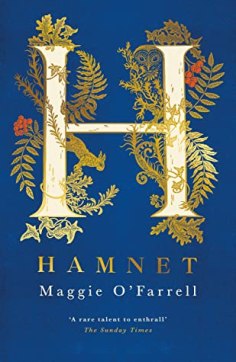 The Black Death has ravished England and Europe for centuries. Although the plague in the 16th century was not as devastating as in previous centuries, it still was a horrific disease that killed thousands. For example, in Warwickshire, England, a family understood how unforgiving death could be and how it can tear down even the strongest of familial bonds. The family of the playwright William Shakespeare must navigate the sudden loss of their beloved son while they keep their family together. “Hamnet” by Maggie O’Farrell is the story of the death of one child and how his death affected so many people.
 The Wars of the Roses was a time filled with dynamic figures who fought for the right to restore order to England. We often think about the strong warrior men who marched into battle, facing their inevitable doom just for the chance to wear the crown and rule the land. The women who stood by their husbands’ and sons’ sides were just as strong as their male counterparts, even if they did not wear armor. They were on the sidelines, ensuring that they could create alliances that would prove helpful in future conflicts. The most famous examples of strong women during the Wars of the Roses are Margaret of Anjou, Margaret Beaufort, and Elizabeth Woodville. Yet, there was another woman who stood firmly on the side of the Yorkist cause. She was known as the Rose of Raby and the wife of Richard, Duke of York. Her name was Cecily Neville, and she is the protagonist of Annie Garthwaite’s brilliant debut novel, “Cecily.”
 A banner decorated with three suns flaps in the wind on the field of battle. The young man behind this emblem is Edward, Earl of March, whose father Richard Duke of York and brother Edmund Earl of Rutland were tragically slain at the Battle of Wakefield. His younger brothers, George Duke of Clarence and Richard Duke of Gloucester, will help Edward carry their father’s cause for the family of York to rule England. When loyalty is questioned even among family members, only one man would truly stand behind Edward until the bitter end. That man would be Richard Duke of Gloucester, or as we know him today, the much-maligned King Richard III. He is often viewed as a treacherous child-killer who coveted the throne after Edward IV’s death, but is that accurately portraying the last Plantagenet king? Who was the real King Richard III? In her magnum opus, “The Sunne in Splendour,” Sharon Kay Penman presents her case for Richard III as a man betrayed, both in life and after his death.
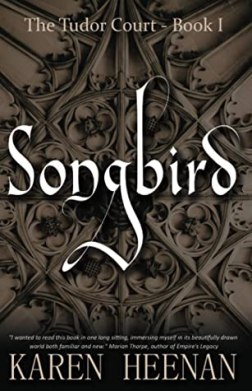 We all know about the man who would become King Henry VIII. We know about his love life and his ever-changing views on religious reform, yet a side of the infamous king rarely explored; his love of music. Henry’s court in literature is often viewed through the lenses of those who held power in government and the lady’s maids, but what if it was considered from a different perspective? What if it was viewed from the perspective of one of the performers of King Henry VIII’s court? What might their experiences have been like singing their hearts out for the rich and glamorous? Karen Heenan tries to give her readers a better look into the world of Music with Bess, the titular character of her first novel in The Tudor Court series, “Songbird.”
 Adventures of a Tudor Nerd