
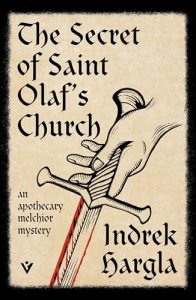
 15th-century Estonia was at the edge of Christendom. It also just finished facing off against the notable Victual Brothers, a band of brigands and pirates who wreaked havoc across the land. In the town of Tallinn, St. Olaf’s Church is being constructed, but nefarious dealings are coming to the surface. A serial killer is turning this once peaceful town, which is finding its identity on its head. Now, an apothecary named Melchior Wakenstede must help the magistrate solve the case before anyone else is killed. This is the premise for the first Apothecary Melchior Mystery by Indrek Hargla, entitled “The Secret of Saint Olaf’s Church.”
I would like to thank Pushkin Vertigo and Net Galley for sending me a copy of this novel. I am not familiar with Indrek Hargla’s works, nor was I familiar with medieval Estonian history, so I was excited to learn more in this novel.
We begin with a bit of background information about Estonia and Tallinn during this period. The Victual Brothers, a band of pirates loosely joined together, have just been defeated by the Teutonic Order. One of the former commanders of the Teutonic Order, Henning von Clingenstain, is found murdered, he is beheaded, and a coin is stuck in his mouth. This mystery novel is based on the true case of Henning von Clingenstain, with liberties obviously taken where the written record falls short.
Hargla has chosen to focus on the stories of those who live in the town of Tallinn, primarily the apothecary Melchior Wakenstede. We also get to see the stories of his wife Keterlyn, Magistrate Dorn, Mertin Tweffell, Kilian Rechpergerin, Burckhart Casendorpe, Prior Eckell, and Brother Wunbaldus. For a small town that is growing, it holds many secrets, including deadly ones. One murder turned into multiple dead bodies. It is up to Melchior to solve the murders and make sure the murderers are brought to justice.
I will be honest. It took me a while to get used to this book as I am not familiar with this author or Estonian history and culture, which is a bit different than other medieval stories I have read, but I am glad I read it. Hargla showed his audience what life was like in medieval Estonia with a thrilling tale full of twists, turns, and secrets. If you want a medieval murder mystery but you want something different, I suggest you give “The Secret of Saint Olaf’s Church” by Indrek Hargla a try.
 The year is 1540, and King Henry VIII is looking for a wife. He has been a widower for over three years, and his councilor Thomas Cromwell believes that a foreign alliance will be the best path forward for England, so he arranges a marriage between Henry and Anne of Cleves. In theory, it should be a good match, but it falls apart quickly. To top it all off, one of Anne of Cleves’ Maid of Honour brought her own drama to court that ended with a murder. Can Will Somers, the King’s Fool, navigate the drama at court while dealing with his own love life, or will the mystery of the missing body prove too much for him to handle? This is the premise of the next book in the King’s Fool Mysteries series called “Devil’s Gambit.”
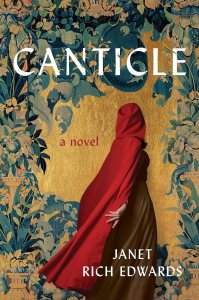 Have you ever believed in something or someone so much that you were willing to do anything to be with them? What if it meant isolating yourself from everyone and everything you loved? Aleys knows this all too well. Born near Bruges during the 13th century, Aleys believes that she is destined for great things and has religious visions. Can this young woman survive both religious and political challenges to make her aspirations of being closer to God a reality, or will she fly too close to the sun and lose everything? Janet Rich Edwards tells Alleys’ tale in her debut novel, “Canticle.”
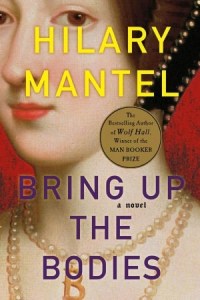 The year is 1535, and Henry VIII is growing bored with his current wife, Anne Boleyn. His eyes are wandering yet again, and this time his sights are set on Jane Seymour. Anne Boleyn had failed to give him his desired son, so Henry decided that it was only fitting for his right-hand man, Thomas Cromwell, to take down a queen. It’s Cromwell’s biggest challenge yet, but it could also become Cromwell’s defining moment. Hilary Mantel explores the pivotal months that pitted Cromwell against the Boleyns in her second book in the Wolf Hall trilogy, called “Bring Up the Bodies.”
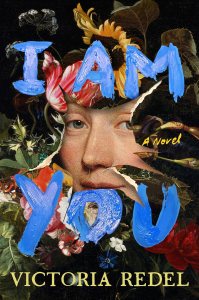 Have you ever looked at a painting and wondered what it must have been like for the artist to paint it? Have you ever wondered what their lives might have been like when they were painting these images that have sparked discussion and intrigue? Usually, we tend to focus on the male artists and their lives, but there has been a trend in recent years to tell the stories of women artists. Take, for example, the story of Maria van Oosterwijk and her maid Geertje Pieters Wyntges. Can these two women find their own successes during Amsterdam’s Golden Age through their art while navigating their own feelings towards each other? Victoria Redel explores the lives of these two women in her latest novel, “I Am You.”
 When we think of Elizabethan England, we tend to think of the Golden Age of England. A time of discoveries and for the arts to flourish under the Virgin Queen, Elizabeth I. However, there is a darker side. It was also a time of espionage, fears of invasions from other countries, and the hatred between Catholics and Protestants. The dangers of the Elizabethan underworld have reached the queen, as there is an attempt on her life. Can Jack, the son of a crime boss, change his life and find the culprit before they find him, or will he be betrayed by those he calls his friends? Amie McNee explores the seedy underworld of Elizabethan England in her novel, “To Kill a Queen.”
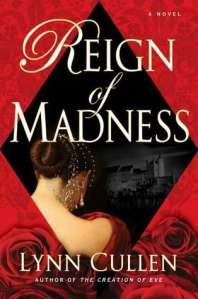 The daughters of Isabel of Castile and Ferdinand of Aragon lived very interesting lives. Of course, we know what happened to Katherine of Aragon, but her elder sister, Juana, has her own tragic tale. She was known as Juana the Mad because the rumors were that when her husband, Philip the Handsome, died, she carried her coffin around for months and would not let him be buried. Was Juana truly mad, or was it all a ruse by powerful men to steal her lands and titles? Lynn Cullen explores Juana of Castile’s life in her novel, “Reign of Madness.”
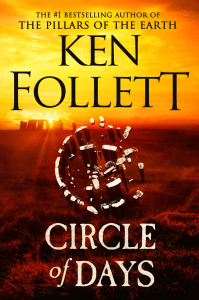 Stonehenge, a marvel of the ancient world that still stands centuries after it was built. It has been the center of mystery and wonder for all who gaze upon it. A gigantic monolithic structure, whose purpose has been a source of discussion since its origins, but that raises another quandary: who were the people who built such an impressive landmark? This single question presents a grand opportunity for historical fiction writers as we don’t have many written records for this period of time, which means authors have room to play. Ken Follett took on the daunting task of telling the tales of those who built this imposing monument in his latest novel, “Circle of Days.”
 There’s nothing like a quest to keep a man going, even on the brink of death, but in the case of Uhtred of Bebbanburg, he has several quests. His main goal is to reclaim his birthright, Bebbanburg, but he also wants to help fulfill Alfred’s dream of uniting the kingdoms to create England. However, life can present even more challenges, and Uhtred knows this all too well. Uhtred not only has to save a royal heir and his daughter, but he also must find the sword that wounded him and place a woman on a throne to rule in a time when women were seen rather than heard. It’s a lot to do, but if anyone is up to the task, it is Uhtred of Bebbanburg. The question is, will he survive? Bernard Cornwell brings us another action-packed novel full of adventures in book 8 of the Saxon Stories series, “The Empty Throne.”
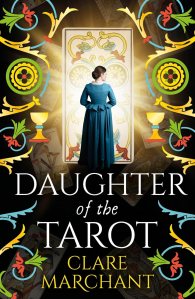 A single deck of cards changed the fate of generations of women. The tarot cards, created in 16th-century Italy, will connect two women separated by centuries. One was a woman in 17th-century London, originally from Milan, who used the cards to rescue women from abusive relationships. The other is a woman from modern-day London starting her life anew when she comes across an old tarot card deck with a missing card. What began as a hunt for a missing card will connect the two women and change lives forever. The cards hold secrets to the past, but will they bring hope or disaster? This is the premise for Clare Marchant’s latest dual-timeline novel, “Daughter of the Tarot.”
 Adventures of a Tudor Nerd