Book Review: “The Shakespeare Secret” by DJ Nix

Everyone knows the story of William Shakespeare—the famed poet, actor, and playwright who revolutionized English literature forever. There have been a series of debates about whether or not Shakespeare truly wrote the plays or someone else did. Well, what if a group of women employed William Shakespeare as a sort of spokesperson for their plays? Can this group of women survive to write another day? This is the premise of DJ Nix’s novel. “The Shakespeare Secret.”

I would like to thank Alcove Press and Net Galley for sending me a copy of this novel. I have not read a lot of novels about the writing of Shakespeare’s plays, but I have heard the many theories on who actually wrote them. When I saw that this novel would focus on a group of women as the so-called authors of the plays, it was such a fun idea that I decided to give it a go.

So, just who were these three women who were the authors of the plays? We begin with Mary Herbert, Countess of Pembroke, who has just returned to the court of Queen Elizabeth I after a three-year absence. She is not one for court life, but she soon finds herself enjoying the company of others below her station. Take, for example, Emilia Bassano, a court musician and mistress to Lord Chamberlain, Baron Hunsdon. And then we have Jane Daggett, the new Mistress of the Wardrobe for the Queen’s Men, a company that was the starting point for a young Will Shakespeare. One fateful day, these three women met and decided to write a play, which would become known as The Taming of the Shrew. Since this was a group of women writing a play, they needed a man to act as their spokesperson to make sure that their play would be performed. Enter young Will Shakespeare, who wanted to make a name for himself.

It seems like such an innocent prospect, that is, until Robert Cecil and his spy Hardwood catch wind of what they think is a Catholic plot against Queen Elizabeth I. Talk about making a mountain out of a molehill. Now, Mary, Emilia, and Jane must escape suspicion while navigating life, love, and playwriting, with Will along for the ride. This was a relatively predictable plot, and I felt a bit bored by the middle of this novel. While the characters are well written, it is hard for me to imagine this group of women together and using the formal Shakespearean dialogue. Other than the few historical characters and locations, it does not feel like Elizabethan England (especially with the mention of tea).

Overall, it’s an okay novel, but it could have been better. The premise had a lot of potential, but it kind of turned into a sappy ending, which is not a bad thing, but I wanted more. If you want a novel about the alternative history of the writing of the early Shakespearean plays, you might enjoy “The Shakespeare Secret” by DJ Nix.

Book Review: “The Pagan Lord”(Book 7 of the Saxon Stories Series) by Bernard Cornwell

The island we know as England is on the cusp of the 10th century. King Alfred is dead, and his son Edward now rules. The kingdom of Wessex is still standing strong, and it looks like the Danes are behaving themselves and keeping the peace, for now. Unfortunately, things are not going smoothly for Uhtred of Bebbanburg. He gets into a bit of mischief and becomes a target of Cnut Longsword, the Viking leader, all while trying to fight for his right to rule his beloved Bebbanburg. Can Lord Uhtred survive his latest adventure, or will his Saxon allies save him in the nick of time? This is the premise of Uhtred’s latest adventure, “The Pagan Lord,” Book 7 in the Saxon Stories series by Bernard Cornwell.

We reunite with our ruffian hero Uhtred of Bebbanburg on a dark, stormy night, when he is riding through a town with his second son Osbert and Aethelstan, the illegitimate son of Alfred. They are then accosted by a gaggle of priests, which includes his eldest son, Uhtred, soon to become a Christian priest, and Abbot Wihtred. This one encounter will alter how the Saxons will view Uhtred because not only does he disinherit his eldest son, but kills Abbot Wihtred, which makes him an outlaw in the eyes of the Saxons. Osbert is renamed Uhtred Uhtredson, and the group moves on like nothing happened, but the damage is already done.

A tired Uhtred comes home to burning buildings, dead comrades, a blind father Cuthbert, and Uhtred’s woman Sigunn kidnapped. Uhtred begins to wonder which one of his numerous enemies kidnapped Sigunn. Turns out this is revenge from Cnut Longsword, who believes that Uhtred kidnapped his children and his wife. Obviously, Uhtred knows nothing about it, but decides to work with Cnut to clear his name, at least for the time being. Uhtred’s journey to save Cnut’s family will see him in his beloved Bebbanburg and reunited with his lovers Sigunn and Lady Aetheflaed. While Uhtred is considered an outlaw to the Saxons, he still chooses to side with them at the battle of Tettenhall, where he clashes with Cnut Longsword one final time in a fight to the death.

I have been loving this series so far because of how dynamic the characters are, especially Uhtred of Bebbanburg. He gets into so many scraps, but he keeps his home, his family, and his allies in mind whenever he fights. I am always excited to read a new Saxon Stories novel, but I am also a bit sad because I know it’s one book closer to finishing this fantastic series. If you are like me and have finished the first six books in the Saxon Stories, I highly recommend that you read book seven in the series, “The Pagan Lord” by Bernard Cornwell.

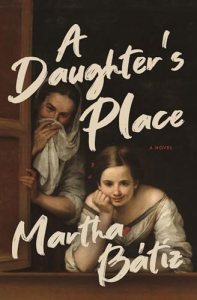
Book Review: “A Daughter’s Place” by Martha Batiz

Miguel de Cervantes, the author of Don Quixote, lived quite an interesting life. He was a poet, soldier, war hero, prisoner, husband, brother, uncle, father, and author. His writing might portray a man of honor and dignity, but his home life was messy. You see, Miguel was married, but his daughter was not the daughter of his wife, Catalina de Salazar. His daughter, Isabel, was illegitimate, and when her mother died, Miguel decided the best possible solution was to invite Isabel to live with his sisters and his niece. What’s the worst that could happen? Martha Batiz explores the women’s lives connected to Miguel de Cervantes in her debut novel, “A Daughter’s Place.”

I would like to thank the House of Anansi Press and Net Galley for sending me a copy of this novel. I had never read Don Quixote, and I knew nothing about Miguel de Cervantes or his family, so I was excited to learn more. Stories like this add depth to the understanding of the late 16th and early 17th centuries in Spain and Europe as a whole.

This novel is broken into five sections and contains three different narrators: Isabel, the illegitimate daughter of Miguel de Cervantes, Constanza de Ovando, Miguel’s niece, and Catalina de Salazar, Miguel’s wife. Our story begins with Isabel, who just turned fifteen. All of her life, she believed that she was the daughter of a tavern owner, that is, until she met Magdalena de Cervantes, who claims to be her aunt, as Isabel’s true father is none other than the famous war hero turned author Miguel de Cervantes. After the death of Isabel’s mother, Miguel has decided to have Magdalena as Isabel’s legal guardian and raise her to be part of his family, although not with the de Cervantes name. Constanza de Ovando has been dumped after a long engagement and is nearing the age of spinsterhood. She is jealous of Isabel and wonders if she will ever marry and have her own life. Finally, we have Catalina de Salazar, who lives far away from the family and did not know that her husband, Miguel, had an illegitimate child.

We see this family slowly adjust to having a new family member and the repercussions of Isabel being part of the de Cervantes family. While the family is getting used to one another, King Philip III of Spain threw a monkey wrench into their plans as he moved the royal court from Madrid to Valladolid and back to Madrid. Since Miguel is writing his magnum opus, Don Quixote, and is looking for sponsors, the family has to move alongside the court, which causes its special kinds of headaches and heartbreaks. There are so many twists and turns, especially the last twist, that kept me guessing until the end of how this novel was going to end.

Batiz has created such a believable world of 16th and 17th century Spain with a colorful cast of characters in the de Cervantes family. I got very attached to this family, and to see what would happen to them as life kept causing chaos. As a debut historical fiction novel, this is such an enjoyable, beautifully written, and extremely well-researched novel, and I hope that Batiz continues to write historical fiction. If you want an excellent novel about one of the most celebrated authors in Spanish history and his family, I highly recommend you read “A Daughter’s Place” by Martha Batiz.

Book Review: “Florenzer” by Phil Melanson

Florence, Italy, in the 16th century, was a city of opportunity and full of art and architecture. It was also a city on the precipice of great change. The great banking family, the Medicis, holds the reins of government in Florence, and Lorenzo de’ Medici is the family’s current head. However, two bastards will radically change his life and the Medici family. One was a bastard son of a notary who became one of the most famous artists ever. The other was a bastard son who became a priest and the enemy of the Medici family. Their stories of power and ambition intersect in the city of Florence in Phil Melanson’s debut novel, “Florenzer”.

I would like to thank Liveright Publishing and Net Galley for sending me a copy of this novel. The description of this novel attracted me to it, rather than the cover, as the cover was released after I requested to read this novel. I have slowly been diving into the world of Renaissance Italy, but I have yet to encounter Leonardo da Vinci or Lorenzo de’ Medici in my adventures, so when I saw a novel that featured both and a new historical person to me, Francesco Salviati, I jumped at the chance to read it.

We begin with the funeral of Cosimo de’ Medici, the grandfather of Lorenzo de’ Medici, in 1464. It is the point where all three characters are introduced, and in the case of Leonardo da Vinci, it is the point before his apprenticeship where we begin to see the tumultuous relationship between Leonardo and his father, Piero, the notary. We then jump forward to 1471, when Leonardo is working as an apprentice painter for Andrea del Verrocchio. Around this time, Leonardo meets Lorenzo de’ Medici, a young man who is trying to achieve greatness, but issues arise, such as the death of the Pope and his brother Giuliano not wanting to be part of the family business. Lorenzo desires military glory, but it doesn’t go well. Finally, we have Francesco Salviati, a man who was destined to be a banker, but because he was a bastard son with darker skin, he decided to devote his life to the church, working alongside the new Pope Sixtus IV, also known as Francesco della Rovere.

As the three men grew up, they had obstacles to deal with. Leonardo fell in love with another man, known as Iac in this novel, and his love might cost him everything. While Lorenzo is trying to make sure his family is the most prominent in all of Italy, Francesco Salviati is using his influence at the Vatican to turn the tables on Lorenzo, which culminated in the Pazzi Conspiracy of 1478. The Pazzi Conspiracy was something that I had never heard of before this novel, so it was interesting to see it play out and the aftermath. While I did enjoy reading about Leonardo and Lorenzo, I didn’t feel a connection to Salviati, so when his story concluded, I didn’t feel any sort of way. I think the formatting of the book, almost like a screenplay, was a unique idea, but I don’t think it added anything to the context of the novel.

Overall, I think this was a decent novel. It was a slow start, and it was a bit of a challenge to get used to three different perspectives, but the stories of ambitions, love, and power truly shone. As a debut for someone who does not usually focus on historical fiction, I think Melanson does an admirable job of portraying 15th-century Florence in such a believable way. I think if you want a novel that’s set in 15th-century Italy, you will enjoy “Florenzer” by Phil Melanson.

Book Review: “The Cardinal” by Alison Weir

During the reign of King Henry VIII, the king would elevate well-qualified men to positions of power and prestige. We all know the story of Thomas Cromwell, but it is his mentor, Sir Thomas Wolsey, whose story shows how one can rise from humble beginnings, but whose fate is ultimately tied to the mood of the monarch. The son of a butcher turned scholar who became a priest, a lover, a father, and the closest advisor to the king. His life, his loves, his successes, and his struggles are told in Alison Weir’s latest novel, “The Cardinal.”

I would like to thank Ballantine Books and Net Galley for sending me a copy of this novel. I am a fan of Weir’s novel, so when I saw her writing a new one about Sir Thomas Wolsey, I knew I wanted to read it. Wolsey is someone who tends to be a side character, so to have a novel dedicated to his life was an exciting idea.

Weir begins her story with Thomas (known in this novel as Tom) at the age of 11, going to school. His father, Robert Wolsey, is a butcher from Ipswich who wants his son to climb the social ladder in the church. Tom will eventually rise to the level of becoming King Henry VII’s chaplain and will begin working with King Henry VIII. Life for Tom is thrilling with the twists and turns of court life, but the one thing that is missing in his life is someone to share it with. Since he is a member of the church, he cannot marry or have his own family, but things change for Tom when he meets Joan Larke. Their love for each other is genuine, even though it is taboo in the eyes of the church and King Henry VIII, which comes across as quite hypocritical.

It was under King Henry VIII that Tom’s star rose to remarkable heights. He became a Cardinal, was the King’s right-hand man and best friend, and was able to create the architectural marvel of Hampton Court Palace. But his rise in prominence came with a cost. Tom must help the king navigate not only international affairs, such as the Field of Cloth of Gold, but also more personal matters, such as the divorce of King Henry VIII and Katherine of Aragon, which would become known as The Great Matter. Tom would have many enemies at court, including Anne Boleyn, the future wife of King Henry VIII, who would ultimately lead to Tom’s fall from grace.

This is such an engrossing novel about one of the most complex figures of the Tudor dynasty. Thomas Wolsey’s story shows the struggle of fighting for those you love over the ambitions and prestige of the glittering court life. If you want an excellent novel about one of Henry VIII’s closest advisors and his life, I would highly recommend you read “The Cardinal” by Alison Weir.

Book Review: “The Pretender” by Jo Harkin

The Wars of the Roses are ending, and with it comes uncertainty about who will lead the country. On one side is King Richard III, who many believe killed his nephews to become King of England; on the other is Breton Henry, Henry Tudor, who believes he is the rightful king due to his bloodline. However, there is a third player in this entire debacle. A young farm boy named John Collan may spend his days daydreaming and studying to his heart’s content, but he is destined for more. A path that will lead him to hobnob with nobility and become the enemy of a king who just sat on his throne. Just who is John Collan, and how did this boy go from the farm to a life of infamy? Jo Harkin tells the story of how John Collan became Lambert Simnel in her novel, “The Pretender.”

I would like to thank Knopf and Net Galley for sending me a copy of this novel. As someone who reads a lot about the Wars of the Roses, I tend to gravitate towards the main players and the nobility. However, there was something about a novel all about one of the pretenders, Lambert Simnel, that piqued my curiosity. Plus, the fact that this was the author’s first foray into historical fiction was a nice touch. I wanted to see how well Harkin would do with an obscure figure and her first historical fiction novel.

We begin with John Collan, a son of a farmer who dreams of being a scholar and running away from a rather vicious goat. John’s father, Will Collan, is a pretty wealthy man, but he is also connected to a man named Maister Richard Simons, who agrees to tutor John at Oxford. Such a remarkable turn of luck for a farm boy, but why choose him over others? Maister Simons explains that Will Collan is not John’s father. His name is not even John. He is to be known as Lambert Simnel, and his true father is none other than George, Duke of Clarence, which makes him Edward, Earl of Warwick. It’s a lot to take in, but then John/Lambert is taken to both Burgundy and Ireland so that he can gain powerful allies such as Margaret, Dowager Duchess of Burgundy, John de la Pole, 1st Earl of Lincoln, and the Earl of Kildare.

John/Lambert continues to study, falls in love with a girl named Joan, is crowned king, and even goes to war against the Tudor king. But the boy will soon learn the bitter taste of betrayal and the heartache of losing those he loves the most to try and wrest the crown from Henry VII. While the dialogue was at times borderline vulgar, I did enjoy most of the story until the aftermath of the Battle of Stoke Field. It was when John/Lambert was held captive that it fell flat, and it was a bit difficult to follow along for me. I also wish Harkin had included some sort of author’s note or explanation of her research to help those who are new to Lambert Simnel’s story understand why she wrote the novel in the way she did.

Overall, I think this was a decent novel. It is ambitious to tackle an obscure figure like a pretender as a protagonist of a historical novel, but I think Harkin does a good job. It makes you wonder what must have been going on when this young man decided that he was going to take on a crowned king. Such a small footnote in history makes one compelling tale. If you want a novel about someone who does not get enough attention, I recommend you read “The Pretender” by Jo Harkin.

Book Review: “My Lady Jane” by Cynthia Hand, Brodi Ashton, and Jodi Meadows

Do you have a favorite historical figure whom you have wondered what would have happened if they survived their dark fate? Have you wondered what would happen if they had fantastical abilities, such as transforming into animals? Maybe the last piece sounds a bit too far-fetched, but it makes for an interesting concept for a novel. What if we took the story of Lady Jane Grey, the Nine-Day Queen of England, and turned the tale into a fantastical comedy full of romance and adventure? Then, you would get the premise of “My Lady Jane” by Cynthia Hand, Brodi Ashton, and Jodi Meadows.

Now I know what you are all thinking: why would you pick up a book that is purposefully fanciful with historical figures sprinkled in? I have always been a fan of YA fantasy novels, and so when I first heard about this book with the announcement of the Amazon show of the same name, it kind of confused me. I mean, there is nothing comedic about the story of Lady Jane Grey and her husband, Gifford Dudley; I wanted to see how these authors approached the Tudors with fantasy elements. I wanted to see how the book was before I decided whether to watch the series or not.

This story is in an alternative version of England where the people are divided not by religious affiliations but rather by whether or not they can transform into animals or not. Those who can transform are known as Edians, and those who believe that humans should stay as humans are known as Verities. For the longest time, the Verities were firmly in control, which meant that the Edians were persecuted, but things are changing. For those of us who study the Tudor dynasty pretty regularly, it is easy to see which side represents the Catholics and which side represents Protestants.

Now that we have that all cleared up, let’s dive into the actual plot of this book. King Edward VI is dying, and to make sure that the Edians are protected, he decides to override his father’s will and declare his cousin Lady Jane Grey as Queen of England, surpassing his sister Mary, who is a Veritie, and his sister Elizabeth, who is pretty neutral on the matter. Under the guidance of Lord Dudley, Edward decides that Lady Jane Grey, an only child in this novel, must marry Dudley’s son, Gifford, known as G in this novel. Marriage between strangers is not uncommon during this time, but the wedding takes place at night because during the day, G turns into a horse. Jane the bookworm must navigate her new married life with a horse husband, learn how to become a queen quickly, and uncover what happened to her beloved cousin Edward.

If you are looking for a historically accurate novel, you need to look elsewhere. This is a novel that is fun, fanciful, and full of adventure, mischief, and romance. It is also a novel that might get young adults interested in the Tudors with a fantasy twist. I think my only real big issue with this novel is that it didn’t feel like Tudor England to me, so it was a bit difficult to be fully immersed in the story. If you want a good novel to escape reality for a while with Tudors and a bit of magic, I recommend you read “My Lady Jane” by Cynthia Hand, Brodi Ashton, and Jodi Meadows.

Book Review: “Nothing Proved” by Janet Wertman

A princess born to a king and his second wife lost her title and legitimacy when her father decided that her mother, Anne Boleyn, needed to die. Elizabeth Tudor knows the meaning of resilience as she survived her childhood during her father King Henry VIII’s reign. Now that her father is dead  Elizabeth is at the mercy of her half-siblings Edward and Mary, plus any scheming man who wants to marry her and get closer to the crown. Can Elizabeth survive her siblings’ reigns or is she destined to be locked in the Tower to await her ultimate fate like her mother? Janet Wertman explores the life of Elizabeth Tudor in her latest series Regina and the first novel, “Nothing Proved” explores Elizabeth’s turbulent adolescence. 

I would like to thank Janet Wertman for sending me a copy of this novel. I have always been a big fan of novels about Elizabeth I and so when I heard that Wertman was writing another Tudor series all about Elizabeth I, I jumped at the chance to read it.

From an early age, Elizabeth Tudor swore she would never marry, especially after seeing how her mother Anne Boleyn, and her numerous stepmothers were treated by her father. Now her father King Henry VIII is dead, her brother Edward VI is King of England, and she is separated from the stepmother that she loved Katherine Parr after several unwanted incidents with Katherine’s husband Thomas Seymour. Elizabeth never got to see her beloved stepmother again and Thomas has his eyes on marrying Elizabeth or possibly taking control of the king. Bad mistakes on both parts, but it does not mean that Elizabeth is safe from scandal as Edward’s council believes that Elizabeth was involved in the plot against the king.

Elizabeth may have survived Edward’s reign, but her step-sister Mary’s reign is a different case. Mary is a devout Catholic who does not trust Elizabeth. She believes that Elizabeth is part of the plots to overthrow Mary and become the next queen of England. These accusations are dangerous and will place Elizabeth in the Tower. Luckily, Elizabeth is not alone as she has her ladies in waiting as well as friends like Robert Dudley and William Cecil, who is the second protagonist in this novel. It was a nice touch to add William Cecil’s point of view because he rarely gets a starring role in historical fiction novels so it was interesting to see his perspective on matters leading up to the moment Elizabeth becomes queen.

I found this an enjoyable novel that explored Elizabeth’s adolescent years which were some of her most turbulent. We can see her signature resilience and the formation of her close-knit circle of allies and friends that will become so important during her reign. If you are a fan of Elizabethan novels,  I think you will  thoroughly enjoy, “Nothing Proved” book one in the Regina series by Janet Wertman.

Book Review: “The Tudor Queens’ Midwife” by Brigitte Barnard

Throughout history, the true defining feature of a good queen was whether or not she could give birth to a male heir and a spare to keep the dynasty going. No dynasty relied heavily on the pregnancy of a queen and a male heir than the Tudor dynasty of England. While we tend to focus on the women who wear the crown and give birth to the potential heir, another stands beside her during the entire process; the royal midwife. Not much attention has been given to the royal midwife until now. Brigitte Barnard explores the life of a royal midwife and her daughter who work to help Queen Katherine of Aragon in her novel, “The Tudor Queens’ Midwife.”

I want to thank The Coffee Pot Book Club and Brigitte Barnard for sending me a copy of this book. When I read the description of this book for a blog tour that I was invited to join, it was an appealing concept. I like reading novels where the royal family takes a back seat, so seeing a novel about a royal midwife was different and I wanted to read it. 

In the glittering court of Henry VIII and Katherine of Aragon, Sarah Menendez the midwife and her daughter Faith must deal with the dangers of childbirth. Through dealing with miscarriages and stillbirths, Sarah and Faith help the queen in any way they can. But this mother and daughter have a secret. While serving Katherine of Aragon, the Spanish Catholic queen, they are not Catholic or Protestant. They are Jews who were exiled from their native Spain after the Inquisition that was put in place due to Katherine’s mother.

Throughout this novel, we witness Sarah and Faith helping Katherine of Aragon up to the Great Matter and other noble women and working women alike. Some of the women found the joys of motherhood while others paid the ultimate sacrifice to bring new life into the world. We also get to see the bond between Sarah and Faith and how fortune’s wheel continues to turn even for normal men and women. I also enjoyed the fact that we got to experience what life might be like for a Jewish family living in England when religion was a hot topic and the Jews had been banned from England for centuries.

 I enjoyed this novel. It was a fresh take on the Tudor era in England that explores what it might have been like to be a Jewish midwife when Katherine of Aragon was queen. As a debut, I think Barnard does a good job of creating believable characters and great scenarios. I am looking forward to her next novel and I hope she continues telling the story of these midwives. If you want a novel that is full of secrecy, religious conflict, and a loving family, I would suggest you read, “The Tudor Queens’ Midwife” by Brigitte Barnard.

Blurb: 

In the glamorous, glittering, and dangerous court of King Henry VIII and his queen Katherine of Aragon, the desperate desire for a healthy male heir overshadows all. Plagued by a series of miscarriages the queen is left grappling with the weight of her singular duty to provide a son for the Crown. Amidst this turmoil, the queen turns to Sarah Menendez, the most highly skilled midwife in England. Sarah, exiled from her homeland and concealing her true identity must serve the queen and battle her deepest fears. As Sarah strives to save the queen from the perils of childbirth, the specter of her past threatens to unravel the carefully crafted identity Sarah has created for herself and her young daughter. 

  In a world where power, politics, and religion collide, Sarah finds herself entangled in a web of intrigue and deadly danger. The fate of the queen’s unborn child, the survival of the midwife and her daughter, and the stability of the kingdom hang in the balance. Sarah Menendez must employ all of her skills, cunning, and courage to protect those she holds dear as well as the life of the queen and her unborn child. 

The Tudor Queens’ Midwife is a gripping tale of secrecy, sacrifice, and religious turmoil amongst the most opulent courts the world has ever seen.  

Buy Link: 

Universal Buy Link: https://books2read.com/u/4jzxyk  

Author Bio

Brigitte Barnard is an amateur historian of Renaissance English history and an author of the trilogy The Tudor Queens’ Midwife, of which the first book in the series is available. She is currently writing a non-fiction book about Tudor midwifery for Pen and Sword Publishing House.  

Brigitte is a former homebirth midwife, and she lives at home with her husband and four children. She also raises Cavalier King Charles Spaniels.  

Author Links

Website: http://thetudormidwife.com/  

Twitter: https://x.com/TheTudorMidwife  

Instagram: https://www.instagram.com/thetudormidwife

Guest Post: “Research of the Locations Featured in Sword Brethren” by Jon Byrne

I am pleased to welcome Jon Byrne to my blog today to share information about his research for the locations in his novel Sword Brethren.  I would like to thank The Coffee Pot Book Club and Jon Byrne for allowing me to participate in this blog tour.
Detailed research is important for all writers – but for those writing historical fiction, it is vital. While much can be gained by researching information on the internet or reading books on the subject, one of the best things for me is the chance to visit the locations depicted in the book. Sometimes it is only by going to a place that you can really get a feel for how it might have been. Having said that, all of the places depicted in Sword Brethren have changed so much over the last 800 years that it is still difficult to imagine how a location would have looked so long ago, especially as there is so little remaining from this period. 

The story begins in Cranham, a fictional village in East Anglia in England, located somewhere between Bury St Edmunds and Thetford. I traveled the area a few years ago, visiting the local castles like Framlingham and Orford, as well as the village of Lavenham – one of the best-preserved medieval villages in England. This helped to get an idea of what the area might have been like in the High Middle Ages, but even here most of the buildings date from the late medieval and Tudor periods.  

One of the places that I found particularly helpful was Eye Castle – originally a motte and bailey fortress built during the reign of King William I. This is even earlier than the timeframe of the book, which made it far more relevant, but the castle is ruined, and a house was built on the motte in 1844, which has since decayed and collapsed. Nevertheless, the fictional village and castle of Cranham would not have been dissimilar. 

Lübeck, in northern Germany, is now a UNESCO World Heritage Site and the location for approximately a third of the book. I spent a very satisfying weekend walking the cobbled streets and visiting the historical sites it has to offer – made considerably easier for me because at the time I lived in Berlin, which is only 280 km (approx. 170 miles) away.  


Caption: The Holsten Gate in Lübeck (built between 1464 to 1478). On the right can be seen some of the buildings of the Salzspeicher – a row of historic salt warehouses. On the left, the spires of St Mary’s Church (Marienkirche) pokes above the trees. 

Founded in the mid-12th century, Lübeck became known as the Queen of the Hanseatic League (originally a powerful trading network of merchant communities in Northern Germany) and was the main point of departure for the Northern Crusades. Unfortunately, most of the late medieval buildings that the city is famous for – the Holsten Gate (Ger. Holstentor), St Mary’s Church (Ger. Marienkirche), St Peter’s Church (Ger. Petrikirche), the Salzspeicher (salt warehouses) and the famous brick-built gable houses – were not constructed at the time of this book. Only the cathedral that still stands (Ger. Dom zu Lübeck) existed in the early 13th century, and it was under construction, although it has been modified many times since and was almost completely destroyed in the Second World War. Much of the half-island that today makes up the old town was undeveloped and prone to flooding in the period of the book. The Holstenbrücke (Holsten Bridge) was first mentioned in 1216 but it is conceivable that a bridge existed beforehand. This would have been constructed from wood. 

One of the highlights of researching Sword Brethren was a week-long trip I spent in Latvia with my family. We were based in Riga, which is a fascinating city that I would recommend anyone visit. Again, most of the architecture is later than the events in my book. In the early 13th century, Riga was made almost entirely of wood (including the churches), and despite being the largest city in the eastern Baltic at this time, it was little more than a village when compared to cities in Western and Central Europe. 

One of the first buildings made of stone in Riga was the original St George’s Castle, the first headquarters of the Livonian Brothers of the Sword, an order of warrior-monks, similar to the Knights Templar, who were formed to protect the fledgling German colony. It is the oldest surviving stone building in Riga. The only part still surviving is the chapel, now used by the Latvian Museum of Decorative Arts and Design. 

(Wikimedia Commons):  

Caption: St George’s Chapel – the oldest stone building in Riga and the original headquarters of the Livonian Brothers of the Sword.  

Outside of Riga, the only buildings that still remain from the period of the book are the stone castles built by the Brothers of the Sword and the Livonian Order of the Teutonic Knights that followed them. Most of these are either ruins or in various states of repair. Many of these castles were built on the banks of the River Daugava (Ger. Düna) by the German settlers and crusaders, using the river to improve their defenses. Sadly, today many are submerged beneath the waters of the Daugava that engulfed them when the Riga Hydroelectric Power Plant was built. 

Nevertheless, two castles that remain in good condition lie northeast of Riga, only 23 miles or so from each other. The first is at Sigulda (Ger. Segewold), which was first constructed in 1207 and later rebuilt into a convent-type fortress. From its elevated position on a steep slope above the Gauja River, you can see another castle at Turaida across the water, built on the remains of an old pagan hillfort. It is a beautiful location, with the thick forest around it, and it gives a good flavor of how it might have felt to live here in the early 13th century. 


 Turaida castle (Ger. Treiden) (taken by author):  

Caption: The view from Sigulda castle. 

The second castle, one of the best preserved in all of Latvia, is at Cēsis (Ger. Wenden). This is a huge castle, much of it still complete, with several relatively intact towers and walls. This is the castle that later became the main seat of the Brothers of the Sword and the Teutonic Order afterward. It is an impressive fortress that features more in the next book of the series, Soldier of Christ

 (taken by author):  

Caption: Cēsis castle – probably the best-preserved castle in Latvia from the early 13th century 

However, it is only possible to learn a certain amount from visiting sites in the book personally. The bulk of research – for me at least, is reading some of the excellent books and research papers concerning the Northern Crusades. 

The principal first-hand source is The Chronicle of Henry of Livonia, which was written by a priest, Henricus des Lettis, probably around 1229. The chronicle deals with events in the eastern Baltic between 1180 to 1226. Hardly surprisingly, it is written from the German point of view and describes the role of the Latin Church in colonizing and spreading Christianity to the local pagan tribes.  

His chronicle is a highly detailed account, rich in human history, and he provides eye-witness testimony of the events at this time, depicting not only the military campaigns but interesting facts about the local people themselves. This is particularly valuable as there is practically no other first-hand evidence of the events of the early Christian settlement in what is now Latvia and Estonia. 

Blurb:

1242- After being wounded in the Battle on the Ice, Richard Fitz Simon becomes a prisoner of Prince Alexander Nevsky of Novgorod. Alexander, intrigued by his captive’s story, instructs his scholar to assist Richard in writing about his life. 

Richard’s chronicle begins in 1203 when his training to be a knight is disrupted by treachery. He is forced to flee England for Lübeck, where he begins work for a greedy salt merchant. After an illicit love affair, his new life is thrown into turmoil, and he joins the Livonian Brothers of the Sword as they embark on imposing the will of God on the pagans of the eastern Baltic. Here, he must reconcile with his new life of prayer, danger, and duty – despite his own religious doubts, with as many enemies within the fortified commandery as the wilderness outside. However, when their small outpost in Riga is threatened by a large pagan army, Richard is compelled to make a crucial decision and fight like never before. 

Buy Links:  

Universal Ebook Buy Link: https://books2read.com/u/boVKlV  

Barnes and Noble: https://www.barnesandnoble.com/w/sword-brethren-jon-byrne/1146519606?ean=2940184429601 

Waterstones: https://www.waterstones.com/book/sword-brethren/jon-byrne/9781835740798 

Author Bio

Jon Byrne, originally from London, now lives with his German family by a lake in Bavaria with stunning views of the Alps. As well as writing, he works as a translator for a local IT company and occasionally as a lumberjack.  

He has always been fascinated by history and has studied the Medieval world for over twenty years, building up a comprehensive library of books. In his research, he has traveled to all of the locations mentioned in the book (East Anglia, Bremen, Lübeck, Latvia, etc).  

Sword Brethren (formerly Brothers of the Sword) made it to the shortlist of the Yeovil Literary Prize 2022 and the longlist of the prestigious Grindstone International Novel Prize 2022. It is the first book in The Northern Crusader Chronicles

Author Links

Website: https://www.jonbyrnewriter.com/ 

Facebook: https://www.facebook.com/JonByrneAuthor 

Amazon Author Page: https://www.amazon.co.uk/stores/Jon-Byrne/author/B0DJC6PL8D 

Goodreads: https://www.goodreads.com/author/show/52458339.Jon_Byrne