
 Have you ever had a dream for your life that seemed so impossible that you would do anything to make sure it happened? Whether the matter of age or gender or even circumstances of one’s birth, there is always that one dream that keeps you going even during the most difficult times. Sander Cooke and his best friend Joan Buckler have dreams that seem impossible, especially living in Elizabethan England. Sander wants to stay young so he can continue to act in female roles in plays whereas Joan wants to be a natural philosopher even though she is a woman. Can they achieve their dreams or will they be doomed to fall to greater powers? The story of Sander and Joan is told in Nicole Galland’s latest novel, “Boy.”
I want to thank William Morrow and NetGalley for sending me a copy of this novel. The cover caught my eye first, and I was impressed by its simplicity. Then, I read the description, and I knew it was right up my alley. I don’t read a lot of novels about Elizabethan theater life or natural philosophy, so I was excited to see how she could incorporate these ideas into one cohesive novel.
We begin with Alexander ‘Sander” Cooke who is one of the best boy players in the Chamberlain’s Men. He can get any female part that he wants that is written by William Shakespeare. Sander is renowned for his beauty and his acting skills, but he knows that his youth will not last forever so he is working feverishly to create connections at court. Meanwhile, Sander’s friend Joan just wants an opportunity to show that she can study just like a man can. She has no formal education, but she wants to study in the halls of the Barber-Surgeons and with natural philosophers.
It seems that both Sander and Joan’s problems are solved when Sander is introduced to Sir Francis Bacon, a natural philosopher. Sander comes up with a scheme for Joan to converse with Bacon, but Joan must dress as a male servant. While Joan has to deal with masquerading as a man, Sander has his issues as he is close to Robert Devereux Earl of Essex, and his sister Lady Penelope Rich. While there are areas of love, danger, and intrigue, what grabbed my attention was how revolutionary some of the scientific and philosophical experiments made me think about their discussions in depth. It was refreshing and innovative in its approach with the historical figures we all know from this period of the past taking more of a back seat.
This was an evocative novel that gave even more depth to an already rich period of the past. It shows the lives of the common people striving for better lives and how to better the world around them through the arts or scientific discoveries. I did not know what to expect when I first selected this book, but I am so glad I read it. If you want a novel with a fresh take on Elizabethan England, I highly suggest you read “Boy” by Nicole Galland.
 I am pleased to welcome Carolyn Hughes back to my blog to share an audiobook extract from her novel, “A Woman’s Lot.” I want to thank The Coffee Pot Book Club and Carolyn Hughes for allowing me to be part of this blog tour.
 Blurb:
 Author Bio
 The Tudor court during the reign of King Henry VIII was a treacherous place to be, even for the humble female musician. It was full of men and women vying for a position of power, and they were ready to give anything and everything for that power. This is the world that Kat Cooke finds herself in. After faithfully serving Queen Katherine of Aragon for years, she must switch her loyalties to Anne Boleyn, but when things get dangerous, where will Kat’s loyalties lie? Can Kat survive such turbulent times or sacrifice everything she holds dear? Kat’s story is told in the second book of Caroline Willcocks’ Tudor Queens series, “The Duty of Women.”
 The medieval world could be a treacherous place to live in, especially when it comes to life in the medieval court. There was so much backstabbing and men reaching for titles and crowns that were not given to them. Take, for example, the House of York. Now, we will assume that their desire for the throne truly came to fruition during the period known as the Wars of the Roses in the 15th century. However, the sons and the daughter of Edmund of Langley and Isabella of Castile were fiercely loyal to those they served and were ruthless to those who they deemed as their enemies. This is the world that Constance of York, Lady Despenser, is raised in, but when her world is turned upside down, will she choose to stay on the sideline, or will she scheme with her family and fight for what they believe is right? Constance’s story is woven together in Anne O’Brien’s novel, “A Tapestry of Treason.”
 A love that can get through any obstacle even when the couple is married to other people is considered very rare. However, star-crossed lovers at court were practically unheard of, especially multiple couples from the same family. Anne Brandon knows how rare these matches are as her father Charles Brandon married the sister of King Henry VIII. Now she must figure out her feelings about romance while navigating court life. In the modern day, Caroline Harvey has relationship problems while she navigates the loss of her famous writer, grandfather Dexter Blake. How are these two women from different centuries connected and can they fight for who they love or are they destined to be alone? Alexandra Walsh tells both women’s stories in her novel, “The House of Echoes.”
 For centuries, the brave knights of Camelot and the Crusaders have searched for the Holy Grail. The cup that Jesus of Nazareth used during his Last Supper is rumored to be a vessel that can grant eternal life or miraculous healing powers. It can be a cup, plate, or stone, but in all stories, the Grail guardians and those searching for it are predominately male. But what if the guardians were male and female and the ones searching for it were predominately female? Alais from 11th-century France and Alice Tanner visiting France in 2007 share a connection that is centuries deep and it all started with a ring, a book, and an image of a labyrinth. How are these two connected to the labyrinth and the Grail and can they protect it from those who want to use it for their dark purposes? Kate Mosse weaves the tale of the Grail and the two women connected by fate in her novel, “Labyrinth.”
 Blurb:
 Praise for Helen Hollick:
 Author Bio:
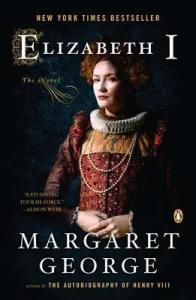 The stories of queens have been told in numerous ways for centuries, but one of the most famous queens in human history is the Virgin Queen, Elizabeth I. The daughter of Anne Boleyn and Henry VIII who famously decided not to marry any man and instead devout her entire life to serve England’s people. That does not mean she was subservient to others she demanded respect and adoration from her subjects. Most stories of Elizabeth I begin in her golden years, but what could a novel about the queen’s silver years tell us about her personality, her reign, and the people who choose to follow or rebel against the famous queen? Margaret George gives her readers an innovative look at the titular queen in her novel, “Elizabeth I.”
 When we think about the period known as the Renaissance, we often think about Italy and the artists like painters and sculptors. However, other craftsmen made Italy their home. Take, for example, tailors and seamstresses. These skilled craftsmen and women can create art you can walk in with their hands. However, there are gender barriers between tailors and seamstresses in that only men can be tailors and only women can be seamstresses. One orphan girl from Bologna not only challenges what it means to be a woman tailor but also challenges one of the wealthiest merchants in the entire city who has a dark connection to her past. This is the premise for Glennis Virgo’s debut novel, “City of Silk.”
 Adventures of a Tudor Nerd