I am pleased to welcome Gina Buonaguro to blog today to share a blurb from her novel, “The Virgins of Venice.” I would like to thank The Coffee Pot Book Club and Gina Buonaguro for allowing me to be part of this blog tour.
Blurb:
In sixteenth-century Venice, one young noblewoman dares to resist the choices made for her
Venice in 1509 is on the brink of war. The displeasure of Pope Julius II is a continuing threat to the republic, as is the barely contained fighting in the countryside. Amid this turmoil, noblewoman Justina Soranzo, just sixteen, hopes to make a rare love marriage with her sweetheart, Luca Cicogna. Her hopes are dashed when her father decides her younger sister, Rosa, will marry in a strategic alliance and Justina will be sent to the San Zaccaria convent, in the tradition of aristocratic daughters. Lord Soranzo is not acting only to protect his family. It’s well known that he is in debt to both his trading partners and the most infamous courtesan in the city, La Diamante, and the pressure is closing in.
After arriving at the convent, Justina takes solace in her aunt Livia, one of the nuns, and in the growing knowledge that all is not strictly devout at San Zaccaria. Justina is shocked to discover how the women of the convent find their own freedom in what seems to her like a prison. But secrets and scandals breach the convent walls, and Justina learns there may be even worse fates for her than the veil, if La Diamante makes good on her threats.
Desperate to protect herself and the ones she loves, Justina turns to Luca for help. She finds she must trust her own heart to make the impossible decisions that may save or ruin them all.
Gina Buonaguro is the co-author of The Wolves of St. Peters, Ciao Bella , and The Sidewalk Artist, as well as several romance titles under the name Meadow Taylor. The Virgins of Venice is her first solo novel.
She has a BA in English from Villanova University in Pennsylvania and earned an MA in English from the University of British Columbia while on a Fulbright Scholarship. Born in New Jersey, Gina Buonaguro lives in Toronto.
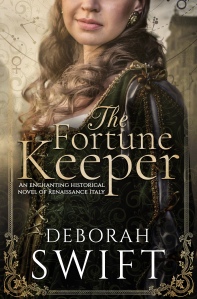
I am pleased to welcome Deborah Swift to my blog to share an article about researching crime in Renaissance Venice for her novel, The Fortune Keeper. I would like to thank Deborah Swift and The Coffee Pot Book Club for allowing me to be part of this blog tour.
One of the things I was aware of as soon as I started this novel, The Fortune Keeper, was that although not a crime novel, it would probably have several murders within its pages. This is because the whole series is about Giulia Tofana, who was renowned for poisoning men so that their wives could escape marital persecution.
Giulia Tofana became a legend and it is probable that she didn’t poison as many men as the rumors say, and that she was probably blamed for the crimes of others. One of the others suspected of her crimes was her stepdaughter Girolama. As she was to be featured in this book, it led me to look into the law in early modern Venice because I knew I would have to be aware of policing, punishment, and the mechanisms of the law.
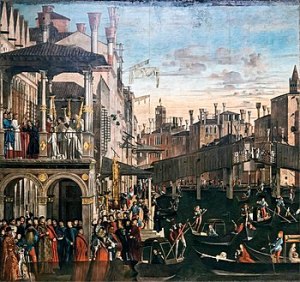
Accademia – Miracle of the Holy Cross at Rialto by Vittore Carpaccio
Renaissance Robbery
Venice was extremely wealthy in the Renaissance period, and vagabonds and thieves flooded into the city in search of easy pickings. In the picture above you can see the canal thronged with men dressed in rich clothing and ornament. The most common crimes in Venice were burglary and forgery, but it was by no means unusual for there to be murders over money and debts. The punishment for robbery was calculated based on the quantity of property taken. First offenders who stole goods worth less than one lira could get away with a whipping, but woe betide you if you stole something bigger. The penalty was the loss of an eye for goods valued between five to ten lire, and the noose awaited those brave enough to steal something worth more than forty lire. Debt and Death
The law allowed anyone owed more than five lire de piccola to threaten and even kill the debtor to recoup their money, putting the onus firmly on the debtor, not the avenger. This tells us that money was the main driving force in Venetian society. But what about armed robbery or assault where no debt was owed? Most assaults were subject to a mere fine of twenty-five lire, or banishment from the city-state. If your crime was a crime that drew blood – sanguinem fecerit – then the punishment was up to the judging council. Venetian law had no such thing as ‘innocent until proven guilty’ at that time. The proof was largely circumstantial, and it relied on the judge and jury’s instinct regarding the guilt of the person involved. Renaissance Lawkeepers
The Avogaria di Comun were a group equivalent to lawyers, though non-professional, drawn exclusively from the nobility. They acted as prosecutors for the state, giving evidence and arguing for punishments before the main judicial councils of Venice. Because of their status, their judgments were often influenced by their social position, and the personal axes they had to grind.
Execution and Mutilation
In this period it was still common for mutilations to take place, which had been traditional in medieval times. Cutting out the tongue for heresy, cutting off the thumb or fingers for pilfering. Courtesans regularly had their noses or faces cut. There was also the custom of cutting off the ‘offending’ part – this led to men who were convicted of dabbling in heresy or alchemy, or crimes against the Holy Roman Church having their hand cut off to remove the ‘devil’s instrument’. This kind of public ritual and humiliation was designed to bring public vengeance to the accused person and to reaffirm the values of the Church or state.
The ritual turned the execution into a purification of the city.
Few crimes brought down corporal or capital punishment. The types of corporal punishment used for the crimes of rape and assault were minor by today’s standards. As an example, for assault, out of 569 cases only fifteen involved mutilation of the criminal; and sixteen more involved some form of corporal discipline. For rape offenses, corporal punishment was even less significant, with twenty cases of discipline and only four of mutilation.
Maintaining law and order
On the streets, the main arbiters of law and order were the town guard, the vigili urbani, who acted as our police do now. Their job was to make sure masked men didn’t carry arms, that only noblemen wore swords, and to act as a preventative force as well as policing troublemakers.
Further up the ladder was the Council of Ten, a kind of secret police force whose job was to maintain order within the city-state of Venice. There was not much space in the city gaols of Venice due to the whole nature of its construction. For crimes of fraud, marital dispute, and affray, these men sat in judgment. It was unfeasible to keep men incarcerated for long because otherwise, the gaols would be full of minor offenders. Small fines and short gaol sentences were the usual punishments for common violence in Venice. When the crime crossed the line into something that was considered ‘against God’ or ‘against the reputation of Venice’ then ritual punishment could be relied upon to warn the populace about sinning against these bigger, less personal edifices.
Documents I found helpful in my research:
Law and Punishment in Early Renaissance Venice
Violence in Early Renaissance Venice – Guido Ruggiero
Banditry and Social Identity in the Republic of Venice – Sergio Lavarda
Authority and the Law in Renaissance Venice — G. Cozzi
xr:d:DAEbig1CmJo:257,j:33693903820,t:22082511
Blurb:
Count your nights by stars, not shadows ~ Italian Proverb
Winter in Renaissance Venice
Mia Caiozzi is determined to discover her destiny by studying the science of astronomy. But her stepmother Giulia forbids her to engage in this occupation, fearing it will lead her into danger. The ideas of Galileo are banned by the Inquisition, so Mia must study in secret.
Giulia’s real name is Giulia Tofana, renowned for her poison Aqua Tofana, and she is in hiding from the Duke de Verdi’s family who are intent on revenge for the death of their brother. Giulia insists Mia should live quietly out of public view. If not, it could threaten them all. But Mia doesn’t understand this, and rebels against Giulia, determined to go her own way.
When the two secret lives collide, it has far-reaching and fatal consequences that will change Mia’s life forever.
Set amongst opulent palazzos and shimmering canals, The Fortune Keeper is the third novel of adventure and romance based on the life and legend of Giulia Tofana, the famous poisoner.
‘Her characters are so real they linger in the mind long after the book is back on the shelf’
~ Historical Novel Society
NB This is the third in a series but can stand alone as it features a new protagonist. The other two books are available if reviewers want them.
Trigger Warnings:
Murder and violence in keeping with the era.
Buy Links:
This title is available to read on #KindleUnlimited.
Deborah Swift is a USA TODAY bestselling author who is passionate about the past. Deborah used to be a costume designer for the BBC, before becoming a writer. Now she lives in an old English school house in a village full of 17th Century houses, near the glorious Lake District. Deborah has an award-winning historical fiction blog on her website http://www.deborahswift.com.
Deborah loves to write about how extraordinary events in history have transformed the lives of ordinary people, and how the events of the past can live on in her books and still resonate today.
The first in her series about the Renaissance poisoner Giulia Tofana, The Poison Keeper, was a winner of the Wishing Shelf Book of the Decade, a Coffee Pot Book Club Gold Medal, and the latest in her WW2 Secret Agent series, Operation Tulip, is coming soon.
Those born of royal blood are either blessed by being able to sit on the throne or cursed to be under intense scrutiny for fears of treason. That is the case for the Grey sisters. Jane, Katherine, and Mary were the daughters of Henry and Frances Grey and the granddaughters of Mary and Charles Brandon. Their bloodline made them cousins to Mary I and Elizabeth I, which meant they threatened the two queens, especially when Edward VI named Lady Jane Grey his heir. After Mary I executes Jane and their father Henry for treason, the remaining Grey sisters, Katherine and Mary, must survive the treacherous Tudor court or end up like their sister. Can Katherine and Mary survive in a court where their royal blood leaves a target on their backs? Elizabeth Fremantle tells the tale of the lesser-known Grey sisters in her novel, “Sisters of Treason.”
A few years ago, I read the first book in The Tudor Trilogy by Elizabeth Fremantle called, “Queen’s Gambit: A Novel of Katherine Parr,” and I adored it. I have always been fascinated with Tudor heroines that do not get enough attention. I feel like Katherine and Mary Grey fit that bill and another woman Fremantle included in this novel, Levina Teerlinc. When I read the description of this book, I knew I would enjoy it.
We begin with the tragic execution of Lady Jane Grey as her mother Frances and Levina Teerlinc, a family friend, watch in horror in the middle of the crowd. They know they cannot save her, but they can protect her sisters from the same grisly fate by keeping a close eye on them from themselves and the schemes of others. Mary Grey can keep herself from major scandals and close to her cousins because of her misshapen body. She knows that she cannot threaten the house of Tudor because she cannot have children. On the other hand, Katherine Grey only cares about love and having her own family; she does not care about the consequences that she may have to deal with if she marries without the queen’s permission.
While Mary Grey is a constant companion for Queen Mary and Queen Elizabeth, Katherine is on the outside looking in, wanting her own life and to marry Edward Seymour, Earl of Hertford. Eventually, they marry secretly, much to the chagrin of Queen Elizabeth I. Katherine and Hertford suffer the consequences of their love match by spending time in the Tower. Mary on the other hand knows her duty to the throne and how it is important to keep her family safe from the Tudor queens’ ire, even when she falls in love with Thomas Keyes. We also have the perspective of the artist Levina Teerlinc, a family friend of the Greys and a surrogate mother to Katherine and Mary after the death of Frances. The Greys and Teerlinc must also navigate the ever-changing religious world as they are reformers when Catholicism battles it out with Protestantism.
This is yet another sublime novel by Elizabeth Fremantle. It is full of tension, intrigue, romance, and love for one’s family, whether a friend as close as a mother or the bonds of blood. Even though I knew how the stories of Katherine and Mary Grey played out, it was still a thrilling read, especially with the addition of Levina Teerlinc. I have loved every novel that I have read by Fremantle so far and I look forward to reading more. If you want an excellent novel about the Grey sisters, I highly recommend you read “Sisters of Treason” by Elizabeth Fremantle.
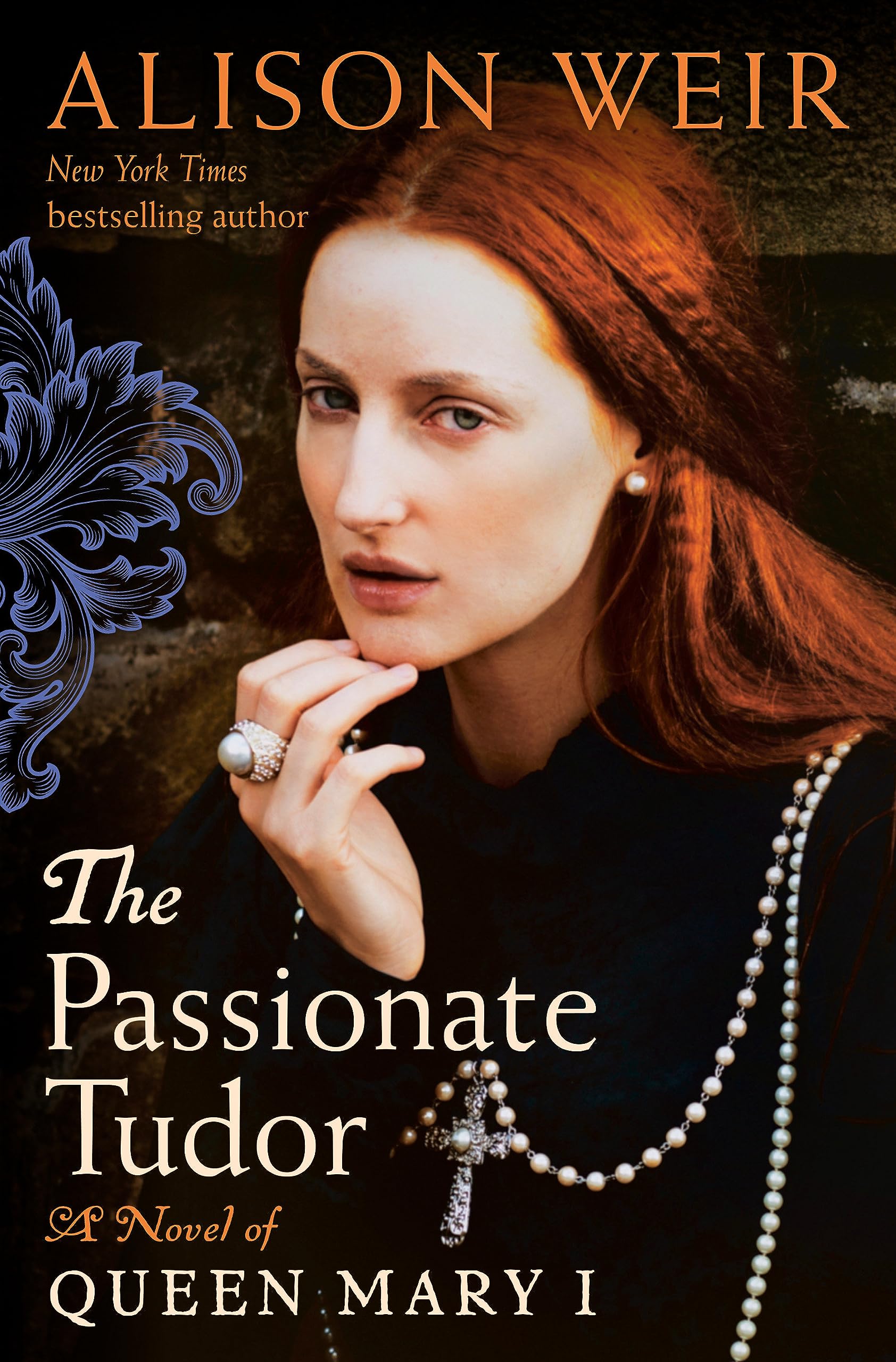
A king’s eldest child is usually the next in line to inherit the throne and become the next ruler. At least that is how the line of succession is supposed to work if the heir is male. Mary I knew this better than anyone. As the eldest daughter of King Henry VIII, she knew that once her mother Katherine of Aragon had a son, Mary would become a pawn in the marriage game. She was willing to accept this fate until her father fell in love with Anne Boleyn. Mary is declared a bastard and must fight for her inheritance and the crown of England while maintaining her Catholic faith. Alison Weir tells the tale of this remarkable woman, from her tumultuous childhood to her short reign that marked her legacy, in her latest novel, “The Passionate Tudor: A Novel of Queen Mary I.”
I would like to thank Ballantine Books and Net Galley for sending me a copy of this book. I have enjoyed the previous novels in The Tudor Rose trilogy by Alison Weir about Elizabeth of York and King Henry VIII, so when I heard she was writing a book about Mary I, I knew I wanted to read it. Mary I is one of those figures who shows how devastating it can be to be close to the throne and the hard decisions one makes when king or queen of a country.
Weir began her novel with Mary at the age of nine in 1525. She is her parent’s pride and joy as she is their only child. Her mother Katherine of Aragon is arranging an advantageous marriage for Mary that would create a strong alliance for England. Not even the birth of her half-brother Henry Fitzroy could dampen Mary Tudor’s spirits. However, that all changed when Anne Boleyn entered the picture and the Great Matter was made public. Katherine of Aragon is no longer queen, Anne Boleyn is Mary’s stepmother, and Mary is now declared a bastard in favor of her half-sister Elizabeth Tudor.
Mary’s life after the birth of Elizabeth Tudor begins to become even more tragic. Her mother Katherine of Aragon dies before she can see her daughter again and Anne Boleyn is executed for treason soon afterwards. Henry VIII marries Jane Seymour, has his desired male heir Edward VI, before Jane tragically dies quickly. As the Supreme Head of the Church of England, Henry wants his daughter Mary, a devout Catholic, to submit to his will, which she ultimately does. We also get to see how Mary interacted with her other stepmothers, Anna of Cleves, Katherine Howard, and Katherine Parr, until the death of her father Henry VIII. Before he died, Henry VIII revised his Act of Succession, making Mary Edward’s heir if he did not have children. However, Edward VI has his idea for who will succeed him after he dies and he names Lady Jane Grey as his heir, although that plan does not last long and Mary is proclaimed the first queen of England to rule on her own.
Weir shows Mary’s life and reign in a very sympathetic way. Even though she does still give her the nickname “Bloody Mary”, we can see a woman who is concerned about the faith of her kingdom and the well-being of her family, especially Edward, Prince Philip her husband, and Elizabeth, who she argues with on matters that matter to her. It is such a tragedy that Mary never had a child that she desperately wanted to have as she suffered through phantom pregnancies. At the end of the day, whether it was matters of faith or family, Mary was someone who was passionate and someone who desired to be loved.
This is a delightful novel about a woman who has often been vilified but maybe we should have sympathy for everything she had to endure starting at a young age. I enjoyed this novel very much and I look forward to the next novel by Weir. If you have enjoyed the previous books in the Tudor Rose trilogy or you just want a different take on Mary I’s story, I highly suggest you read, “The Passionate Tudor: A Novel of Queen Mary I” by Alison Weir.
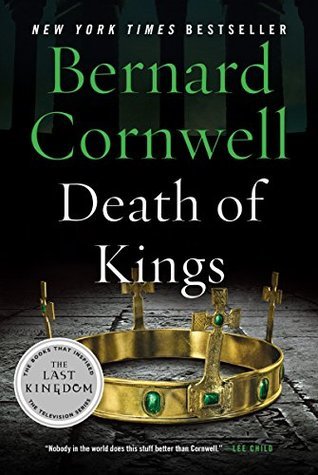
The ninth century is coming to a close and England is at a major crossroads. King Alfred the Great is dying and England being unified is still a long-term goal. The only hope for a united England lies in the hands of his son and successor Edward. However, the road to the throne will be challenging as other Saxons and Viking warriors desire the throne. Only one man can help the young king, but which side will Uhtred of Bebbanburg choose? The fight for England’s future continues in book six of the Saxon Stories, “Death of Kings” by Bernard Cornwell.
We begin with Lord Uhtred as he works hard to maintain the lands he earned through fighting for Alfred. But let’s be honest, the quiet life is not for Uhtred of Bebbanburg. A horde of ruffians attack Uhtred at his home, which he can fend off, but he soon finds out that it was a Saxon lord who wishes for his death. At the same time, the dying King Alfred has sent a group to Uhtred to create an alliance with King Eohric to fend off the Danes who are beginning to amass armies against the Saxons.
However, Uhtred soon realizes that Eohric desires power over peace and aligns himself with Sigurd to kill Uhtred. While Uhtred is about to confront Sigurd, he is told about a woman named Aelfadell, who allegedly knows the future. She tells Uhtred of a prophecy that seven kings will die, the women he loves will die, the son of Alfred will not rule, and the Danes will rule all of England. Such a cheerful prophecy that will come into play later on.
As Uhtred deals with the aftermath of all of this, he finds out that Alfred is on death’s door and Edward, his son, and heir, is facing an affair scandal with a woman named Lady Ecgywynn and her children, all while he is betrothed to Aelflaed. With the death of King Alfred, Uhtred is free from his promises to the Saxon king and is given a choice. He can either swear loyalty to the young king and fight for the hope of a united England or he can put down Serpent-Breath and let Alfred’s dream die. I am not going to spoil what choice Uhtred made, but rest assured, his decision will change the course of history, at least this fictional version of Saxon England.
Overall, I found this an enjoyable middle book in a series. It is a solid setup book with a thrilling final battle which helps the readers to realize that the fight for England is not done and that there are many more adventures for Uhtred of Bebbanburg. If you have read the previous five novels in the Saxon Stories series, I would recommend you read, “Death of Kings” by Bernard Cornwell.
The year is 1584 in Florence and a test is about to take place, but it is different from your typical test. It involves a Prince whose wife can only give him daughters and an attractive orphan girl who will be given a dowry and a husband when the task is done. The stories of these young women have been lost to the past, but the story of orphan Giulia is now coming to light. Katherine Mezzacappa tells the tale of the orphan who took back her life from the most powerful men in Italy in her novel, “The Maiden of Florence.”
I want to thank Fairlight Books and NetGalley for sending me a copy of this novel. I saw the cover on social media and thought it was stunning, but then I read the description and realized that it was deceptively beautiful. This is a haunting tale of a horrific situation in the life of an orphan and how she overcame it to find hope.
Our story begins with Giulia Albizzi, a former orphan, writing about the ordeal she had to overcome as a young girl over thirty years ago. When she was young, Giulia grew up in the orphanages Innocenti and Pieta. One day, while she was staying at the Pieta, a group of men, including a man named Vinta, and a woman showed up and asked to take Giulia away. She was later told that she was going to be used in a sort of test for Prince Vincenzo Gonzaga, who was destined to become the next Grand Duke of Mantua, but there was a catch. Since Prince Vincenzo’s previous bride had only had living daughters before he married into the Medici family, the Prince must prove that he could perform the marital act, hence why he needs the beautiful virgin, Giulia. In exchange, Giulia would be given a substantial dowry and a husband who would be willing to turn the other cheek when it came to her past.
The test, the examination, and the interrogation are brutal to read, but Giulia is soon released from her duties and is allowed to marry a man that Vinta chooses for her. Her husband, Giuliano Sperati, is a musician for the Grand Duke. Though the relationship has a rocky start, there is love between Giulia and Giuliano. While they start to make a new life and a family, Giulia’s past comes back to haunt her and threatens to destroy everything.
This was a sensational novel, full of heart and heartbreak. By giving the victim a voice and allowing the royals to take a step back, Mezzacappa sheds light on a dark secret in Renaissance Italy. This may have been my first novel by Katherine Mezzacappa, but it will not be my last. To me, this is a brilliantly written, raw, and compelling story. If you are a fan of historical fiction, especially those who have an interest in 16th-century Italy, “The Maiden of Florence” by Katherine Mezzacappa is an absolute must-read.
The 16th century was known for its dramatic changes in religious issues. None more so than during the late Tudor dynasty especially during the reign of Elizabeth I. However, France also saw the religious pendulum swing between Protestantism and Catholicism. Many families from all walks of life were caught in religious squabbles, like the Montgomery family. Lady Gabrielle Roberda Montgomery found herself in the middle of the drama and was forced to marry into a prominent Devon family in Elizabethan England, far from her native France. Roberda’s extraordinary story is told masterfully in Rosemary Griggs’ latest novel, “The Dartington Bride.”
I would like to thank Rosemary Griggs and The Coffee Pot Book Club for allowing me to take part in this blog tour with a book review. I thoroughly enjoyed Griggs’ debut novel, “ A Woman of Noble Wit,” so when I heard that she was writing a new novel, it was intriguing to me. I had never heard of Lady Gabrielle Roberda Montgomery before reading this novel, so I was excited to learn more about her life.
Lady Gabrielle Roberda Montgomery was the daughter of Gabriel de Lorges, Count of Montgomery, Lord of Lorges and Ducey, and his wife Isabeau de la Touche. Her father was the captain of the Scots Guard during the reign of King Henri II of France, but everything changed in 1559, when he accidentally struck the king in the eye with a lance, killing the king. The Montgomery family must make tough choices to survive and fight with Louis I de Bourbon, Prince de Conde in the French Wars of Religion and survive the St. Bartholomew’s Day Massacre.
To make sure Roberda is safe and secure, her parents arrange a marriage alliance with Sir Arthur Champernowne. Roberda marries Gawen Champernowne, a rough brute of a man, who is jealous of not only his young wife and how she looks at other men but is jealous of men like Sir Francis Drake who can get all the glory while he stays in the shadows as a spy for Walsingham. Roberda has a difficult marriage, but she gets along with her father-in-law Sir Arthur Champernowne, and her friend Anne Cecil at Dartington Hall. Roberda is a great mother to her growing family and helps Huguenot refugees start again in England. However perfect her life may look on the outside, Gawen remains jealous and decides that the only way to quell his anger is through divorcing his faithful wife.
This is another brilliant novel by Rosemary Griggs highlighting a woman from the Elizabethan age who has for centuries lived in the shadows of the past. I loved how Griggs was able to take a woman who has been a footnote in history and give her a beautiful yet heartbreaking tale of love and tragedy. I cannot wait to see who Rosemary Griggs will write about next. If you want a gripping novel about a lesser-known lady living in the Elizabethan age, you should check out, “The Darington Bride” by Rosemary Griggs.
Blurb:
1571, and the beautiful, headstrong daughter of a French Count marries the son of the Vice Admiral of the Fleet of the West in Queen Elizabeth’s chapel at Greenwich. It sounds like a marriage made in heaven…
Roberda’s father, the Count of Montgomery, is a prominent Huguenot leader in the French Wars of Religion. When her formidable mother follows him into battle, she takes all her children with her.
After a traumatic childhood in war-torn France, Roberda arrives in England full of hope for her wedding. But her ambitious bridegroom, Gawen, has little interest in taking a wife.
Received with suspicion by the servants at her new home, Dartington Hall in Devon, Roberda works hard to prove herself as mistress of the household and to be a good wife. But there are some who will never accept her as a true daughter of Devon.
After the St Bartholomew’s Day Massacre, Gawen’s father welcomes Roberda’s family to Dartington as refugees. Compassionate Roberda is determined to help other French women left destitute by the wars. But her husband does not approve. Their differences will set them on an extraordinary path…
Author and speaker Rosemary Griggs has been researching Devon’s sixteenth-century history for years. She has discovered a cast of fascinating characters and an intriguing network of families whose influence stretches far beyond the West Country and loves telling the stories of the forgotten women of history – the women beyond the royal court; wives, sisters, daughters, and mothers who played their part during those tumultuous Tudor years: the Daughters of Devon.
Her novel A Woman of Noble Wit tells the story of Katherine Champernowne, Sir Walter Raleigh’s mother, and features many of the county’s well-loved places.
Rosemary creates and wears sixteenth-century clothing, a passion that complements her love for bringing the past to life through a unique blend of theatre, history, and re-enactment. Her appearances and talks for museums and community groups all over the West Country draw on her extensive research into sixteenth-century Devon, Tudor life, and Tudor dress, particularly Elizabethan.
Out of costume, Rosemary leads heritage tours of the gardens at Dartington Hall, a fourteenth-century manor house and now a visitor destination and charity supporting learning in arts, ecology, and social justice.
England is in the midst of chaos in a conflict known as the Wars of the Roses. The Yorkist cause is formulating a case to take the throne’s power from Henry VI and the Lancastrians and replace the king with Richard, Duke of York, whose claim to the throne is a bit stronger. Caught in the middle of the Wars of the Roses was one strong and courageous woman who would fight tooth and nail for her family and the Yorkist cause. Her name was Cecily Neville, Duchess of York, and her story is masterfully told in Anne O’Brien’s novel, “The Queen’s Rival.”
A few years ago, I hosted Anne O’Brien to discuss this book as part of a blog tour for The Coffee Pot Book Club. I will admit that this was the first time I had read a novel by Anne O’Brien, but I had heard amazing things about her writing style, so when I saw this novel at a bookstore, it was an instant buy for me.
We begin in the year 1459 and the house of York is facing a disaster. The Yorkists have lost the Battle of Ludford Bridge and must now separate and go into exile. Cecily can only watch as the Lancastrians lay siege to her home, forcing her and her young children to be imprisoned at Tonbridge Castle. This moment might have broken Cecily’s spirit, but Cecily is a proud Neville, willing to fight until the bitter end to see her family safe and secure on the throne of England. Along the way, she must endure heartache (such as the death of her husband Richard Duke of York) and moments of betrayal, such as George, Duke of Clarence, and Richard, Earl of Warwick. Cecily’s name and reputation are dragged through the mud on numerous occasions. However, she gets to witness moments of glory, the crowning of her sons Edward IV and Richard III, and the birth of her grandchildren, to create the House of York.
My favorite aspect of this novel is that the chapters are not written like traditional chapters. The chapters are a series of letters to and from Cecily to her family members or those she considers her enemies to convince them to give her and her family leniency. Cecily’s main correspondences are with her sisters, Anne Duchess of Buckingham, and Katherine Dowager Duchess of Norfolk. One of my favorite characters is the author of England’s Chronicle, who reminds me of a gossip columnist, ready to spill all the secrets and rumors to anyone who will hear it.
I had such a fun time reading this novel. Even though I knew the events of the Wars of the Roses and what would happen, I found it refreshing to read it as a series of letters so that you can sense how the historical figure might have felt during that moment. This may have been my first novel by Anne O’Brien, but it definitely will not be my last. If you want a thrilling novel about the Wars of the Roses from the perspective of Cecily Neville, I highly suggest you read, “The Queen’s Rival” by Anne O’Brien.
I am pleased to welcome Eric Schumacher to my blog today to share a spotlight for his novel, “Riddle of the Gods.” I would like to thank Eric Schumacher and The Coffee Pot Book Club for allowing me to be part of this blog tour.
Blurb:
Riddle of the Gods is the riveting fourth novel in the best-selling series chronicling the life and adventures of one of Norway’s most controversial kings, Olaf Tryggvason.
It is AD 976. Olaf Tryggvason, the renegade prince of Norway, has lost his beloved wife to a tragedy that turns the lords of the land he rules against him. With his family gone and his future uncertain, Olaf leaves his realm and embarks on a decades-long quest to discover his course in life. Though his journey brings him power and wealth, it is not until he encounters the strange man in the streets of Dublin that his path to fame unfolds. And in that moment, he is forced to make a choice as the gods look on – a choice that could, at worst, destroy him and at best, ensure his name lives on forever.
Buy Links:
This book is available to read on #KindleUnlimited.
Eric Schumacher (1968 – ) is a historical fiction author of multiple best-selling novels set in the Viking Age. From a young age, Schumacher was drawn to books about medieval kings and warlords and was fascinated by their stories and the turbulent times in which they lived. It is a fascination that led to the publication of his first novel, God’s Hammer, in 2005, and many subsequent novels after that.
Schumacher now resides in Santa Barbara with his wife and two children and is busy working on his next novel.
A young Renaissance woman artist is attacked by her art teacher. He claimed that she was lying. For most, this would be the end of a career and a black mark left on their reputation for the rest of their lives. Not in this case. Artemisia Gentileschi is not a woman who will stand by and let men control her or her art. In the 21st century, she is seen as an artistic genius, but in her time, she was seen as an odd woman who refused to follow the rules. Artemisia’s harrowing tale of turning tragedy into inspiration for her art, showing what a woman could do, is masterfully told in Elizabeth Fremantle’s latest novel, “Disobedient.”
This is the second novel that I have read by Elizabeth Fremantle, the first being “Queen’s Gambit.” I was thoroughly enthralled by “Queen’s Gambit,” so when I heard she wrote a new novel about Artemisia Gentileschi, I knew I wanted to read it. Before I read this novel, I did not know much about Artemisia’s story, so I was excited to learn about her struggles and triumphs.
Rome in 1611 was not a kind place for a female artist. Artemisia is the eldest daughter of Orazio Gentileschi, an artist himself. Her mother died when she was but a child and after her death, her father has become an abusive drunkard. He controls his family through fear, but Artemisia is not afraid to stand up for her siblings and her artworks, no matter the consequences. To keep his headstrong daughter in line, Orazio turns to Zita to watch over her, but Zita is not the virtuous woman that Orazio believes she is as she is a thief. Artemisia has only one friend in the world who seems to understand her, the apprentice Piero, someone who truly cares for her and wants to see her talents develop, but it is conflicted when it comes to his feelings towards other men. Finally, there is the art teacher, Tassi, who may seem like a kind soul who simply wants to teach Artemisia how to paint, but he has darker plans in mind.
Everything takes a dramatic turn for the worse when Zita leaves Artemisia alone with Tassi and he attacks her. Instead of becoming timid and accepting the marriage proposal, Tassi presents her soon after the incident, Artemisia digs into her art and paints her hatred and pain into her most famous work, Judith Slaying Holofernes. The piece is full of emotions in a bloody scene that seems rather inappropriate for a woman artist during the Renaissance, but Artemisia does not care about the criticism. She is showing the world exactly what a woman can do, and her next step, taking Tassi to court, will define her strength and determination to fight for what she believes is right. Artemisia is a survivor who thrived under unimaginable circumstances.
This book left such an impact on me. I was heartbroken, angry, and devastated for Artemisia as the events unfolded. By the end, I had to catch my breath and realize that it was a fictional retelling of her life. It is a story that will stay with me for a long time and it makes me want to study Artemisia’s life and times. If you want a heartbreaking tale full of sorrow and strength set during the Italian Renaissance, you must check out “Disobedient” by Elizabeth Fremantle.

 I am pleased to welcome Gina Buonaguro to blog today to share a blurb from her novel, “The Virgins of Venice.” I would like to thank The Coffee Pot Book Club and Gina Buonaguro for allowing me to be part of this blog tour.
 Author Bio:




 Author Bio:
 Those born of royal blood are either blessed by being able to sit on the throne or cursed to be under intense scrutiny for fears of treason. That is the case for the Grey sisters. Jane, Katherine, and Mary were the daughters of Henry and Frances Grey and the granddaughters of Mary and Charles Brandon. Their bloodline made them cousins to Mary I and Elizabeth I, which meant they threatened the two queens, especially when Edward VI named Lady Jane Grey his heir. After Mary I executes Jane and their father Henry for treason, the remaining Grey sisters, Katherine and Mary, must survive the treacherous Tudor court or end up like their sister. Can Katherine and Mary survive in a court where their royal blood leaves a target on their backs? Elizabeth Fremantle tells the tale of the lesser-known Grey sisters in her novel, “Sisters of Treason.”
 A king’s eldest child is usually the next in line to inherit the throne and become the next ruler. At least that is how the line of succession is supposed to work if the heir is male. Mary I knew this better than anyone. As the eldest daughter of King Henry VIII, she knew that once her mother Katherine of Aragon had a son, Mary would become a pawn in the marriage game. She was willing to accept this fate until her father fell in love with Anne Boleyn. Mary is declared a bastard and must fight for her inheritance and the crown of England while maintaining her Catholic faith. Alison Weir tells the tale of this remarkable woman, from her tumultuous childhood to her short reign that marked her legacy, in her latest novel, “The Passionate Tudor: A Novel of Queen Mary I.”
 The ninth century is coming to a close and England is at a major crossroads. King Alfred the Great is dying and England being unified is still a long-term goal. The only hope for a united England lies in the hands of his son and successor Edward. However, the road to the throne will be challenging as other Saxons and Viking warriors desire the throne. Only one man can help the young king, but which side will Uhtred of Bebbanburg choose? The fight for England’s future continues in book six of the Saxon Stories, “Death of Kings” by Bernard Cornwell.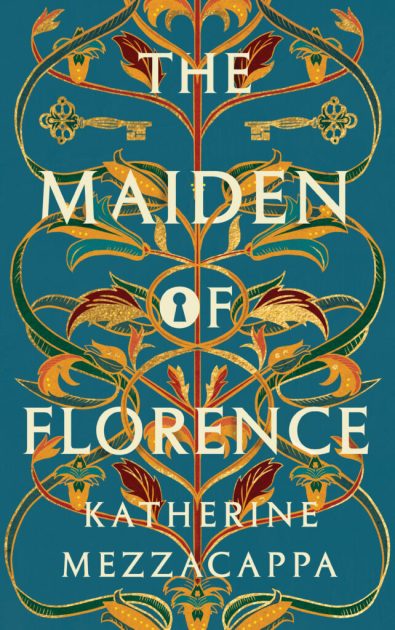
 The 16th century was known for its dramatic changes in religious issues. None more so than during the late Tudor dynasty especially during the reign of Elizabeth I. However, France also saw the religious pendulum swing between Protestantism and Catholicism. Many families from all walks of life were caught in religious squabbles, like the Montgomery family. Lady Gabrielle Roberda Montgomery found herself in the middle of the drama and was forced to marry into a prominent Devon family in Elizabethan England, far from her native France. Roberda’s extraordinary story is told masterfully in Rosemary Griggs’ latest novel, “The Dartington Bride.”
  Blurb:
 Author Bio:
 England is in the midst of chaos in a conflict known as the Wars of the Roses. The Yorkist cause is formulating a case to take the throne’s power from Henry VI and the Lancastrians and replace the king with Richard, Duke of York, whose claim to the throne is a bit stronger. Caught in the middle of the Wars of the Roses was one strong and courageous woman who would fight tooth and nail for her family and the Yorkist cause. Her name was Cecily Neville, Duchess of York, and her story is masterfully told in Anne O’Brien’s novel, “The Queen’s Rival.”
 I am pleased to welcome Eric Schumacher to my blog today to share a spotlight for his novel, “Riddle of the Gods.” I would like to thank Eric Schumacher and The Coffee Pot Book Club for allowing me to be part of this blog tour.
 Blurb:
 Author Bio
 “I’ll show you what a woman can do.”
 Adventures of a Tudor Nerd