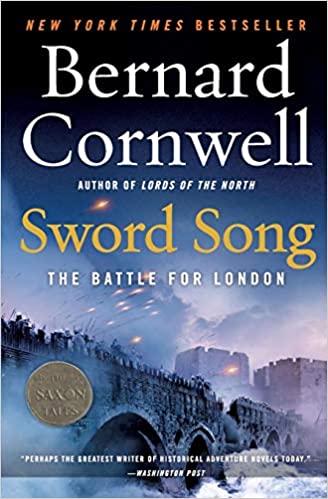
Book Review: “Sword Song”(Book Four of the Saxon Stories series) by Bernard Cornwell

sword songThe year is 855, and the country that one day will be known as England is relatively peaceful. The Danes have their kingdom in the north, while the Saxons, under King Alfred, rule Wessex in the south. Uhtred of Bebbanburg, a Saxon man raised by Danish warriors, lives with his wife Gisela and his children in Wessex, where he is sworn to protect Alfred and his family. It is a touchy alliance, but when rumors about a dead man speaking reach Uhtred’s home, he knows that he must pick up Serpent-Breath once again and make a choice that could change the direction of England as a whole. What do the dead man and new Viking invaders have in plan for Uhtred, and how will it affect Wessex and the rule of King Alfred? Another engaging adventure for Uhtred of Bebbanburg is book four of The Saxon Tales, “Sword Song” by Bernard Cornwell.

As someone who has grown to love the adventures of Uhtred of Bebbanburg, first from the TV show “The Last Kingdom” and now through the books, I wanted to continue the journey through the books. There is something so compelling about this Saxon world that Bernard Cornwell crafted with love and attention.

We join Uhtred and his men, Sihtric and Finan, on a night raid where they come across a brand new batch of Vikings. When Uhtred returns home, Aethelwold tells him how a dead man was brought back to life and says that he would be the King of Wessex and Uhtred would become King of Mercia. A far-fetched tale, but Uhtred decides that he must check it out, even if that means breaking his oath to Alfred. It is when he hears the dead man speak himself that he meets Haesten, and he hears about the Viking brothers Siegfried and Erik, who have lofty ambitions.

Meanwhile, in Alfred’s court, Alfred’s daughter Aethelflaed marries Aethelred of Mercia to form a strong alliance. It looks like it is a perfect match. Behind closed doors, Aethelred is abusive to Aethelflaed when Siegfried and Erik attack. Uhtred and Aethelred must reluctantly work together for the survival of Wessex and England as a whole.

Epic battles, twisted political ploys, and romance all intertwine in this novel as Uhtred works hard to fulfill his oath to Alfred. “Sword Song” is a bit slower in pace compared to the first three books in the series, but I see it as Cornwell showing that not every adventure with Uhtred is going to be fast-paced. There will be times when he has to negotiate and think methodically to ensure his mission is complete and no one he cares about will be harmed. It is a different side to Uhtred of Bebbanburg’s story, but it is one that I appreciate. If you have enjoyed the first three books in the Saxon Tales series, you need to read “Sword Song” by Bernard Cornwell.

Guest Post: “Spotlight for ‘Pagan King’ by MJ Porter”

Pagan King Tour BannerToday, I am pleased to welcome MJ Porter to my blog to share the blurb for her book, “Pagan King.” I would like to thank MJ Porter and The Coffee Pot Book Club for allowing me to be part of this blog tour. 

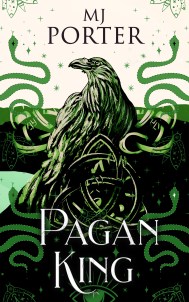
Pagan King coverBlurb:

From bestselling author MJ Porter comes the tale of the mighty pagan king, Penda of Mercia.

The year is AD641, and the great Oswald of Northumbria, bretwalda over England, must battle against an alliance of the old Britons and the Saxons led by Penda of the Hwicce, the victor of Hæ∂feld nine years before, the only Saxon leader seemingly immune to Oswald’s beguiling talk of the new Christianity spreading through England from both the north and the south.

Alliances will be made and broken, and the victory will go to the man most skilled in warcraft and statecraft.

The ebb and flow of battle will once more redraw the lines of the petty kingdoms stretching across the British Isles.

There will be another victor and another bloody loser.


Buy Links:

Universal Link: books2read.com/PaganKing

 Amazon UK: https://www.amazon.co.uk/Pagan-King-Gods-Kings-Book-ebook/dp/B01AWL0SW6/

Amazon US: https://www.amazon.com/Pagan-King-Gods-Kings-Book-ebook/dp/B01AWL0SW6/

Amazon CA: https://www.amazon.ca/Pagan-King-Gods-Kings-Book-ebook/dp/B01AWL0SW6/

Amazon AU: https://www.amazon.com.au/Pagan-King-Gods-Kings-Book-ebook/dp/B01AWL0SW6/


Barnes and Noble: https://www.barnesandnoble.com/w/pagan-king-m-j-porter/1141113393?ean=2940161148495

Waterstones: https://www.waterstones.com/book/pagan-king/m-j-porter/9781914332210

Kobo: https://www.kobo.com/gb/en/ebook/pagan-king-1

iBooks: https://apple.co/3XKZ0kC

iTunes: https://apple.co/3ZSRC8E

Audio: https://www.audible.co.uk/pd/Pagan-King-Britain-Audiobook/B0BLXB5SQ2

MJ Porter imageAuthor Bio:

MJ Porter is the author of many historical novels set predominantly in Seventh to Eleventh-Century England, as well as three twentieth-century mysteries. Being raised in the shadow of a building that was believed to house the bones of long-dead Kings of Mercia meant that the author’s writing destiny was set.

Social Media Links:

Website: www.mjporterauthor.com/

Blog: www.mjporterauthor.blog

Twitter: https://twitter.com/coloursofunison

Facebook: https://www.facebook.com/mjporterauthor

LinkedIn: https://www.linkedin.com/in/mj-porterauthor/

Instagram: https://www.instagram.com/m_j_porter/

Pinterest: https://www.pinterest.co.uk/coloursofunison/

BookBub: https://www.bookbub.com/profile/mj-porter

Amazon Author Page: https://www.amazon.co.uk/MJ-Porter/e/B006N8K6X4/

Goodreads: https://www.goodreads.com/author/show/7163404.M_J_Porter

Linktr.ee: https://linktr.ee/MJPorterauthor

Tiktok: https://www.tiktok.com/@mjporterauthor

 Matt Coles – audiobook narrator:

Instagram: https://www.instagram.com/mattcolesvoiceovers/

Tiktok: https://www.tiktok.com/@mattcolesvoiceovers

Website: www.mattcolesvoiceover.com


Book Review: “The Stolen Crown” by Carol McGrath

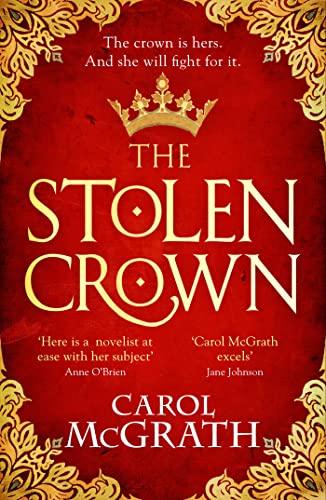
The Stolen CrownA nautical disaster has left Henry I of England in a bind. His only legitimate child is his daughter Matilda, the former Holy Roman Empress. Matilda’s path to the throne may seem straightforward as she has the oaths of all the leading men in the kingdom and a new younger husband named Geoffrey of Anjou, but things take a drastic turn when Henry I dies. Chaos reigns supreme as her cousin, Stephen of Blois, is declared King of England. Matilda knows that the throne is rightfully hers, and she will fight tooth and nail to recover what has been lost. Her story is told in Carol McGrath’s latest novel, “The Stolen Crown.”

Thank you, Headline  Publishing and Carol McGrath, for sending me a copy of this novel. I have enjoyed reading about Empress Matilda and The Anarchy, so when I heard about this novel, I jumped at the opportunity to read it.

We begin with the all-important oath ceremony, where the great lords of England pledge their loyalty to Matilda as Henry I’s heir. Matilda is an 18-year-old widow who is headstrong and is willing to fight to become the rightful ruler of England, even though she is a woman and no woman has ever ruled England. She was deeply in love with her first husband, Henry V, Holy Roman Emperor, but her father has decided that she must marry again to keep his legacy alive, and the man he has chosen is the young Count of Anjou, Geoffrey. It would be an understatement to say their relationship was rocky initially, but they would have a family, including the future King Henry II.

On top of the typical cast of characters that one would expect in a novel about The Anarchy, McGrath invented new characters, Alice, Xander, Pipkin, and Sir Jacques. Alice, Xander, and Pipkin are performers willing to spy for Matilda, no matter how dangerous the mission, to ensure Matilda sits on the throne. McGrath shows the thrilling back-and-forth struggle between Matilda and Stephen for the throne that lasts for years. This novel has many strong women, not just Empress Matilda and Alice, but Stephen’s wife, Matilda of Boulogne.

McGrath has created an immersive story with strong, independent characters who are not afraid to fight for what they believe is right. The Anarachy was a time in history that is slowly getting more attention, and this novel will entice readers to learn more about this period in English history. A dynamic adventure full of intrigue and emotion, “The Stolen Crown” by Carol McGrath is a thrilling read for anyone interested in the birth of the Plantagenet dynasty and Empress Matilda’s fight for the throne.

Book Review: “The Girl From Oto” by Amy Maroney

the girl from otoTwo independent women separated by time but united over two compelling portraits and the secrets hidden behind the paint. Mira (Miramonde) is a nun from a Renaissance convent in the Pyrenees who believes she is an orphan who wants to escape her small community and explore the world. Five hundred years later, Zari, an art scholar, begins the journey to discover who Mira is by using the clues she left behind in her works of art that will take her on a journey that will change her life forever. These two tales are woven together in the first book of the Miramonde series, “The Girl From Oto” by Amy Maroney.

I have seen this novel on social media, and it was an intriguing premise. I always look for books that present a fresh new look into the 16th century.

Our story begins with the birth of twins to Marguerite, the baroness of Oto, a boy and a girl. Unfortunately, in the house of Oto, daughters are not allowed to live, so Marguerite gives her daughter named, Miramonde, or Mira for short, to Elena, a mountain woman. Elena decides to make the journey to Belarac Abbey under the supervision of the Abbess Beatrice of Belarac. They make a plan that Mira will never know the truth about who she is and will be raised in the abbey until she is old enough to choose her path, which is her mother’s desire.

Jumping 500 years into the future, we meet Zari Durrell, a young art scholar on the hunt for paintings by a female Renaissance artist, Cornelia van der Zee, the topic of her dissertation. Her topic is well known, but while examining a portrait she believes was painted by Cornelia van der Zee, she discovers that the painting was painted by another artist named Mira. Zari’s journey to discover who Mira is will take her all over Europe as she follows the clues to the truth.

There is just something about a good history mystery mixed with a dual-timeline story that is so much fun to read. Maroney has done extensive research, not just for Mira’s story in the world of the Pyrenees, the wool trade, and life in a convent, but Zari’s adventures in academia and her journey along the Camino de Santiago.

Maroney created a colorful cast of characters, from the Renaissance to the modern day, that will grip the readers with the mysteries they must uncover. I cannot wait to see what other adventures Mira and Zari will go on. If you want a delightfully engaging and thrilling dual-timeline novel about 16th-century Spain, I highly recommend reading “The Girl From Oto” by Amy Maroney.

Book Review: “Marvelous” by Molly Greeley

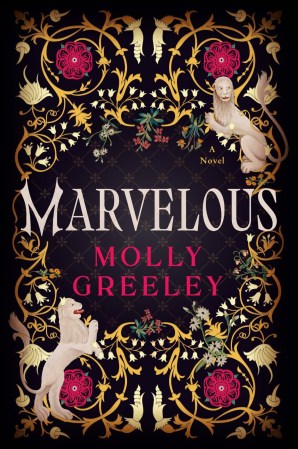
MarvelousThe tale is as old as time, of beauty and the beast. We know the story from either Disney or retellings. A peasant girl finds herself locked in a castle with a prince who is transformed into a hideous beast. He can only change back into a human if he can learn to love another person. Like many fairy tales, we often ask ourselves whether this story can be based on historical facts. Molly Greeley believes that Beauty and the Beast’s origins could be found in the true story of Pedro and Catherine Gonzales, who lived in the court of Catherine de Medici. She has chosen to tell their love story in her latest novel, “Marvelous.”

I want to thank William Morrow and Net Galley for sending me a copy of this novel. Beauty and the Beast was one of my favorite fairy tales growing up, so when I heard this was a historical fiction retelling, I jumped at the opportunity to read it. I had only read a brief mention of Pedro’s daughter Tognina (Antoinette) Gonslavus earlier this year, so I was curious about her father’s tale.

Pedro’s story begins on the small island of Tenerife as an orphan boy who the village fears for his outward appearance. Pedro’s entire body is covered in hair, and he is considered a devil or a monster. One day, Pedro is kidnapped by pirates and sold to the highest bidder as an oddity; the highest bidder is the King of France, Henri II. King Henri II sees potential in Pedro, so he gives him the name of Petrus Gonslavus and an education worthy of a royal.

As a reward for his services to the king, Catherine de Medici grants Pedro a place in her court and a wife, Catherine Raffelin, the daughter of a merchant, who was down on his luck. It would be an understatement to say their marriage was off to a rough start, but Pedro shows her a world full of glamorous splendor and prejudice toward people who were considered “oddities.” With the birth of their children, Antoinette, Madeline, and Henri, we also see how France changes after the St. Bartholomew’s Day Massacre and the fall of the House of Valois. We also get to see how different countries during the 16th century and early 17th century handled people who were considered different.

My favorite historical fiction novels are when famous figures like kings, queens, and princesses take a back seat to lesser-known figures from the past. It breathes new life into historical events and provides a fresh lens into the past. Greeley gives her readers a love story on the level of beauty and beast by following the mysterious Gonzales family.

Greeley does a masterful job of telling Pedro and Catherine’s tales from their perspectives. It was a joy to read this novel, and I hope others will fall in love with the Gonzales family through this book. Suppose you want a stunning historical fiction novel full of love and a protagonist unlike any you have read before set in the reign of Catherine de Medici. In that case, I highly recommend you read “Marvelous” by Molly Greeley.

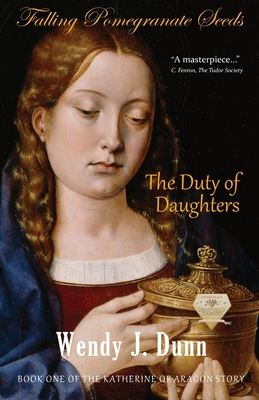
Book Review: “Falling Pomegranate Seeds: The Duty of Daughters” by Wendy J. Dunn

the duty of daughtersA young Spanish princess sits with her close friend, sisters, and brother as their beloved tutor, Dona Beatriz Galindo, tells them a story. As the children of Ferdinand of Aragon and Isabel of Castile, they must marry and create alliances to strengthen their kingdoms, while Beatriz must ensure they are ready for the challenge. Childhood ends rather quickly with a holy war against the Moors, the expulsion of the Jews from the kingdom, and death around every corner. In her novel, “Falling Pomegranate Seeds: The Duty of Daughters,” Wendy Dunn transports readers into a world of hope and sorrow, life and death.

After I read the second book in the Falling Pomegranate Seeds series, “All Manner of Things,” I wanted to read the book that started it all. There have not been many Tudor novels about Katherine of Aragon’s childhood, so I was curious what Dunn would bring to her story as a whole.

Our adventure into the house of Trastamara in Spain begins with Dona Beatriz Galindo being called to Isabel’s chambers. The two women deeply connected as Beatriz taught the queen Latin and tutored her children; Isabel, Prince Juan, Juana, Maria, and Catalina. Now, Isabel has given Beatriz the task of teaching her youngest daughter Catalina how to be Queen of England. Alongside Catalina, Beatriz would teach her companion Maria de Salinas, how best to serve Catalina in their new kingdom.

Beatriz’s relationship with her royal students throughout the novel evolves through trials and tribulations. Through the eyes of Beatriz, we get to see the fall of Granada and the treatment of the Jews during the reign of Ferdinand and Isabel. We also get to see Beatriz’s relationship with the love of her life Francisco Ramirez through letters that she writes to him as he is away at war against the Moors. We are also introduced to Cristobal Colon, also known as Christopher Columbus, as he begs permission to travel to the New World.

At the heart of this novel are the children of Ferdinand and Isabel as they grow up and marry, sometimes moving away. Marriage does not always provide happy endings, as we see with Alfonso, Prince of Portugal, and Margaret of Austria. Death and grief run rampant in the once glorious court as the children grow up quickly. Secrets tear the foundations of this family asunder, but love still overcomes sadness.

Dona Beatriz Galindo may have been just a tutor to the royal family, but Dunn has elevated her tale to one of great significance. Beatriz is a strong, independent woman who fights for those she loves. This sensational novel brilliantly gives Tudor readers a better understanding of what Katherine of Aragon’s childhood might have been like through the eyes of her royal tutor. If you want a novel showing how Katherine of Aragon became the strong queen she was and the women who raised her, I highly recommend you read “Falling Pomegranate Seeds: The Duty of Daughters” by Wendy J. Dunn.

Guest Post: “Excerpt from ‘The Black Madonna’ by Stella Riley”

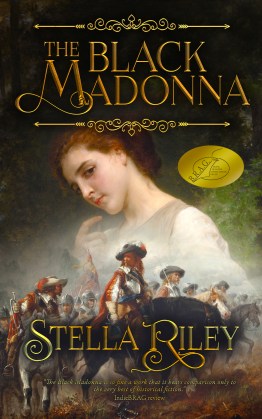
The Black Madonna Tour BannerToday, I am pleased to welcome Stella Riley to my blog to share an excerpt from her novel, “The Black Madonna.” Thank you, The Coffee Pot Book Club and Stella Riley, for allowing me to be part of this blog tour. 

A rescue … and the beginning of a close and unusual friendship.

Richard and Eden turned north through the labyrinthine alleyways of Bridewell in order to cross the Fleet.  It was an insalubrious area and, fully alive to the possibility of robbery, Richard kept a watchful eye around them – which was how he came to notice the savage proceedings, illuminated by fitful moonlight, in a yard off to his left.

What was happening was happening in near-silence – largely due to the gag which had been stuffed into the victim’s mouth while two pairs of hands held him roughly upright to receive the blows of a third.  Richard broke his son’s lethargy with one sharp jab of his elbow and then went plunging in at the assailants with a sort of flying dive that Eden, plunging swiftly in behind him, still found time to admire.

Dropped like a well-roasted chestnut while his captors met the unexpected attack, the victim slithered down the wall into an inert heap on the cobbles.  His fall passed unheeded.

Finding himself bereft of his cudgel without quite knowing how, the first man launched himself at Richard and collided with a fist that broke two teeth and loosened several others.  Eden, meanwhile, in a series of flawlessly executed moves learned in the Hotel de Cazenove (and a couple of effective but less genteel ones picked up in the taverns outside it), laid one man out cold against a water-butt and sent the other into staggering, retching retreat up the lane with Gap-Tooth in unsteady pursuit.

Richard flexed the fingers of his right hand, winced and grinned companionably at his son.

‘Well.  It’s nice to know that your time at Angers wasn’t completely wasted.’

‘And almost as comforting to discover that you’ve still got the hardest fist in three counties,’ retorted Eden with a grin.  Then, in a very different tone, ‘The only satisfaction, I suspect, either one of us will get.  Have you seen who we’ve rescued?’

Richard dropped on one knee, pulled the gag from the victim’s mouth and peered into the battered, unconscious face.

‘Ah.  Didn’t I see him at Far Flamstead last summer?  A money-lender, isn’t he?’

‘Amongst other things,’ came the dry response.  ‘Aside from pegging him up on the bridge, what do you suggest we do with him?’

Richard looked up, his brows lifting in mild surprise.

‘You don’t like him?’

‘Does anyone?’

‘I’ve no idea.  But if they don’t, one presumes they have cause.  Have you?’

‘Only indirectly.  Not as much as whoever ordered this … but enough to understand why they might want to.’  Eden bent to disentangle one wrist from the human wreckage on the cobbles.  ‘He’s not dead, at any rate.’

‘Nor even dying,’ added a thread-like voice with commendable distinctness.  ‘Though I confess it feels like it.’

Slowly and with extreme caution, Luciano del Santi opened his eyes on Richard’s face and achieved the ghost of his usual sardonic smile.

‘Ah.  Mr Maxwell, I believe?’

‘Yes – but never mind that now.  If you’ll tell us where your house is, we’ll endeavour to get you there.’

‘Cheapside.’  The heavy lids fell again, as if in an effort to conserve energy.  ‘The corner of Friday Street.  It’s too far.’

‘Then where?’

‘Malt Lane … near Blackfriars Stairs,’ came the fading response.  ‘The sign of the Heart and Coin.’

Eden met his father’s quizzical gaze with a carefully neutral one of his own.

‘The Heart and Coin?’ he said.  ‘It sounds like a bawdy-house.’

‘The word,’ said Luciano del Santi, ‘is brothel.  Don’t be shy.  Just knock three times and ask for Gwynneth.’

*  *  *

On the mercifully short journey to Malt Lane, the Italian lapsed in and out of consciousness with a frequency that made his bearers greet the sign of the Heart and Coin with profound relief.  It was a modest property but looking more like a comfortable country inn than the stew they had expected and inside, the cosy well-lit room was full of people.

The dark, beak-faced individual that Eden remembered from the hawking party was there, one hand on his knife.  In front of him and involved in heated discussion were a slender, soberly-dressed woman with the whitest skin Eden had ever seen and an expression of desperate anxiety, and a small dynamic person who waved his arms wildly as he talked but still managed to look like a large brown nut with moustaches.  Behind these three and collected into little tearful huddles were the girls.  Girls with skin of every shade from lustrous pearl to ebony, hair of gold and copper and jet … and apparently only one thing in common.  They were all uniquely beautiful.

Eden found that his mouth was open and resolutely shut it.  Luciano del Santi opened his eyes, summoned his dwindling resources and said vaguely, ‘Pardon my intrusion … but if there is a chair, I believe these gentlemen would be glad to put me in it.’  And promptly passed out again.

There was a brief silence; and then the occupants of the room surged forward on a tide of exclamation.  Predictably, the fellow with the knife got there first by the simple expedient of brushing the others aside. Nor did he waste time talking but merely removed his master from the hands of Richard and Eden and carried him inside to lay him carefully on the  rug in front of the hearth.

The woman in grey, surrounded by the girls like a dove amongst humming-birds, followed issuing a stream of lilting orders during which

Richard and Eden found themselves sitting on a cushioned settle while a dazzling blonde pressed glasses of brandy into their hands

Kneeling on the hearth and having cautiously examined the unconscious man’s ribs, Gwynneth looked up at the hawk-faced fellow and said, ‘There’s some damage but we’ll need a doctor to say how much.  Certainly it’s worse than last time and I really don’t like the look of him.’

‘And that, as they say, adds insult to injury,’ breathed Luciano del Santi from behind closed lids.  ‘But I forgive you. I’ll even allow Selim to put me to bed.  The only question is – whose?’

A sudden flush stained the lovely skin and Gwynneth lost her calm façade.

‘You fool – you fool!  Why do you do it?  It’s not the first time and it won’t be the last.  You promised not to stir after dark without Selim – you promised us all.  One day they’ll kill you.’

The Italian opened his eyes, his mouth twisting with wry amusement.

‘No. Haven’t you realised yet that the devil looks after his own.  I’m indestructible.’

‘Yes.  You look it.’

He managed a long, extremely careful breath.

‘My looks again?  You’re unkind, cara.  Don’t cry.’

‘I’m not crying!  You think I’d waste my tears on you?’  She sniffed and cradled his hand in both of hers.  ‘Don’t think I care what happens to you – I don’t.  But you might spare a thought for what’s to become of the girls and me if you get your throat cut.’

A faint laugh, abruptly checked, caused him to close his eyes again until the pain receded and made Gwynneth reach for the brandy.

‘Here,’ she said roughly. ‘Drink it all.  And, if you must talk, say thank you to the good gentlemen who saved your worthless life tonight.’

Luciano del Santi turned his head to locate Richard and Eden, his brow furrowed with the effort of it.  Then he said, ‘Forgive me.  I thought you had gone.’

Richard crossed to his side, followed more slowly by Eden.

‘Think nothing of it.  The brandy is excellent, so I’ve no complaints.  And I’m sure that – for other reasons entirely – my son has none either.’  He paused briefly and then said, ‘Tell me … does this kind of thing happen to you often?’

‘Not often, no.  Only when I grow careless.’

‘Only when you go out without Selim, you mean,’ said Gwynneth tartly.  ‘There’s scarcely one of those fine gentlemen of the Court who buy their dinners with your money who wouldn’t stick a knife in your back given half a chance.’

‘You talk too much, cara.’  The beautiful voice, though faint, was pleasantly final. ‘There’s no reason why Mr Maxwell should interest himself in my affairs.’

‘None,’ said Richard, ‘save that I’ve already done so.’

‘And thereby placed me under an obligation to you.’

‘Are you suggesting that as my motive?’

The Italian stared inscrutably back at him.

‘No.  I’m saying that if there is anything – either now or in the future – that I may do for you, you have but to name it.’

An arrested expression crossed Eden’s face and he opened his mouth as if to speak, then thought better of it.

Richard said, ‘I appreciate the offer and the fact that it isn’t made lightly.  But not quite everything has to be paid for, signor.’

‘I know it.’  Luciano del Santi’s smile was crooked but oddly infectious.  ‘But you must allow me to observe that you are the first Englishman I have met who knew it also.’

The Black Madonna coverBlurb:

As England slides into Civil War, master goldsmith, and money-lender Luciano Falcieri del Santi embarks on his hidden agenda. A chance meeting one dark night results in an unlikely friendship with Member of Parliament Richard Maxwell. Richard’s daughter, Kate – a spirited girl who vows to hold their home against Cavalier and Roundhead – soon finds herself fighting an involuntary attraction to the clever, magnetic, and diabolically beautiful Italian. 

Hampered by the warring English, his quest growing daily more dangerous, Luciano begins to realize that his own life and that of everyone close to him rests on the knife-edge of success … for only success will permit him to reclaim the Black Madonna and offer his heart to the girl he loves. 

From the machinations within Parliament to the last days of the King’s cause, The Black Madonna is an epic saga of passion and intrigue at a time when England was lost in a dark and bloody conflict.

Buy Links:

*Only £1.95 / $1.95 for the duration of the Blog Tour*

Universal Buy Link: https://books2read.com/u/bPNKpd 

Amazon UK: https://www.amazon.co.uk/Black-Madonna-Roundheads-Cavaliers-Book-ebook/dp/B00D4CF3LM/ 

Amazon US: https://www.amazon.com/Black-Madonna-Roundheads-Cavaliers-Book-ebook/dp/B00D4CF3LM/ 

Amazon CA: https://www.amazon.ca/Black-Madonna-Roundheads-Cavaliers-Book-ebook/dp/B00D4CF3LM

Amazon AU:  https://www.amazon.com.au/Black-Madonna-Roundheads-Cavaliers-Book-ebook/dp/B00D4CF3LM/

Barnes and Noble: https://www.barnesandnoble.com/w/the-black-madonna-stella-riley/1115550936?ean=2940044562431

Kobo: https://www.kobo.com/gb/en/ebook/the-black-madonna-5

Apple:  https://books.apple.com/us/book/the-black-madonna/id659127225

Smashwords:  https://www.smashwords.com/books/view/321222

Audio:  https://www.audible.co.uk/pd/The-Black-Madonna-Audiobook/B07SYMJ11G 

Stella RileyAuthor Bio:

Stella Riley

Winner of three gold medals for historical romance (Readers’ Favourite in 2019, Book Excellence Awards in 2020, Global Book Awards in 2022) and fourteen B.R.A.G. Medallions, Stella Riley lives in the beautiful medieval town of Sandwich in Kent.

 She is fascinated by the English Civil Wars and has written six books set in that period. These, like the seven-book Rockliffe series (recommended in The Times newspaper!) and the Brandon Brothers trilogy, are all available in audio, narrated by Alex Wyndham.

Stella enjoys travel, reading, theatre, Baroque music, and playing the harpsichord. She also is fond of men with long hair – hence her 17th and 18th-century heroes.

Social Media Links:

Website: https://stellarileybooks.co.uk

Twitter: https://twitter.com/RileyStella

Facebook: https://www.facebook.com/stellariley.books

Instagram: https://www.instagram.com/stellarileybooks/

Pinterest: https://www.pinterest.co.uk/riley9631/stella-riley-books/

Book Bub: https://www.bookbub.com/authors/stella-riley 

Amazon Author Page: https://www.amazon.co.uk/Stella-Riley/e/B0034PB7UU/ 

Goodreads: https://www.goodreads.com/book/show/50913323-the-black-madonna 

Guest Post – Introducing Matthew Graham by Anna Belfrage

A Rip in the Veil Banner 2Today, I am pleased to welcome Anna Belfrage to my blog to discuss her book, “A Rip in the Veil,” and her character Matthew Graham. I want to thank Anna Belfrage and The Coffee Pot Book Club for allowing me to be part of this blog tour.

Date of Birth: March 31 in the year of our Lord 1630.

Astrological sign: Aries (but he scoffs at such nonsense)

Education: None from a formal perspective; he knows his letters, has a knack for complex ciphering and has most of the Catechism down by heart. (He grins and mimes an aching backside as he explains his Da was most insistent on this.) An intuitive horseman (said with pride), an excellent swordsman – no choice, had he not learned to wield the sword, he’d have died well before his twentieth birthday given the unrest of the times. Quite the marksman with a musket. Pistols, he says, are unreliable things. He has gone unbeaten in chess since his Da died, enjoys singing, and has a secret passion for John Donne’s poetry – not something he talks all that much about.

Favorite dish: Food, he says with something of a frown. As long as there’s something to eat daily, what does it matter what it is? He admits to a fondness for pork cracklings – and Alex’s spice cake when I push.

Favorite pastime: Long winter mornings spent in bed. (He winks)

He is most reluctant. Matthew ducks his head as he enters the room but remains by the door, hat in hand. Outlined against the square of light that is the open door, he stands tall – inordinately tall given the times – and with a pleasing width to chest and shoulders. A strong man is accustomed to physical work, as seen from his forearms and hands, at present rather dirty after a full day out in the fields.

“I don’t see the point,” he mutters, slapping his hat against his thigh.

“It’s called PR,” I say. After all, he’s the protagonist of A Rip in the Veil, my book presently on tour. To be correct, he stars in the entire The Graham Saga.

Matthew squirms at the “stars in” part and rolls his eyes at PR. I’ve tried to explain this concept to him over and over again, but as far as he’s concerned, this is all a waste of time.

“I just want to introduce you to my readers,” I say.

“Hmm.” Someone laughs in the yard, and he turns towards the sound, exposing a strong jaw and straight nose. As he turns back towards me, sunlight strikes him full in the face, and his hazel eyes lighten into golden green.

“Some background, no more,” I wheedle.

With a sigh, he comes over to join me by the table, sitting down on one of the stools. He leans back against the wall, extends his long legs, and crosses them at the ankle. His thighs bunch and relax under the coarse homespun of his breeches. Too tight, these breeches, too worn – not that I mind, not at all.  I pour him some beer, leaning close enough to catch his scent, a fragrance of morning dew on a mossy moor, overlaid by the riper tones of wood smoke and male sweat. He needs a shave, his cheeks covered by dark stubble that is highlighted by the odd streak of deep chestnut.  Matthew clears his throat, and I retake my eyes. It makes him smile.

“Background, aye?” And with that, he begins to talk.

Okay, so I’m not going to bore you with his detailed description of his childhood. At times I think he forgets I’m sitting there, so sunk is he in his memories of his Mam. He describes a very religious home, a place where having regular conversations with God about just about everything was the norm. But his mother laughs and sings; she berates God loudly when he’s inconsiderate enough to let it rain on her drying laundry and blows kisses to the heavens when the harvest is bountiful. His father is another matter; Malcolm Graham practices a stern faith, and as a consequence, so do his children – and, in particular, his eldest son.

“As it should be.” Matthew shrugs. He shifts on his stool, drumming his fingers against the tabletop.

His speech slows when he tells me of his years in the Commonwealth Army. A boy growing to a man amongst so much violence—it makes me shudder, but he speaks of his comrades and officers with warmth and respect. I have realized just how much these men have shaped him into what he is today, a man with a deep-seated belief in every man’s right to have a say in how he’s governed.

He breezes over the details of the battles he took part in, which is equally brief as he recounts his courtship of Margaret, his first wife. He says her name carefully as if his mouth fills with thorns when he pronounces it. And as to Luke . . . Matthew refuses to say a word about his brother – well, beyond cursing him for being the misbegotten treacherous pup that he is.

“Three years,” he says. “That’s what yon miscreant has cost me. Three years of non-life, of one endless day after the other, so alike there was no way of knowing if it was Sunday or Thursday, March or October. Well, mayhap the Sunday part is not correct; there’d be a minister come to visit us every now and then, long sermons about our duty to the Realm and its Lord Protector, very little about Our Lord’s mercy.” Matthew smiles crookedly and fiddles with his belt. “It wasn’t as if I had betrayed the Commonwealth, but no matter what I said, no one believed me. So I stopped talking – beyond the necessities.” He has twisted his hands together and spends some minutes studying the way his fingers braid around each other.

I wait. Talking about the years spent in prison due to the false testimony of his younger brother becomes difficult for Matthew.

“Sometimes . . .”

“What?” I prompt.

“I . . . they had me flogged, aye? For being obstructive. But I wasn’t – no more than all of us were.” He spits to the side. “It was Luke, I reckon.”

“You think?”

“Gold buys you favors everywhere,” Matthew says. “And he paid them well enough that they found reason to flog me on a regular basis, aye? Hoped I’d die of it, I reckon.” His shoulders tense under the linen of his shirt. His back is decorated with scars courtesy of those floggings, and he’s terribly self-conscious about his broken skin.

“But you didn’t die,” I say.

“I would have –had I not escaped.” A smile tugs at the corner of his mouth. “Took them some time to realize I’d run – if not, they’d have caught me before I made it over the Trent. As it was, I was well away by dark. But the next day—”

“What?” I lean forward. I’ve not heard these details before.

“Persistent man, yon commander. He’d had his men out looking for me all night, and at dawn, they had me neatly cornered.” Matthew laughs, and his eyes crinkle together for an instant or two. “It makes you right weak livered to sit on a roof and watch your pursuers come closer and closer. I had no choice; it was either leap off the roof and run for it or . . .”

“Or what?”

“The chimney.” He shakes his head. “Near on falling down it was, and with so many rooks’ nests crammed down inside it, it’s a marvel it hadn’t caught fire before. Part of the upper ledge crumbled when I clambered inside and no sooner was I out of sight, but the entire thing toppled.”

Not only the chimney, but the roof as well, and he’d fallen to land in a bed atop a woman – an old crone of a woman with no teeth and a grimy, oversized nightcap crammed down on her head. Fortunately, she’d been alone in the bed that took up most of the little garret room.

“I’m not sure who was the most frightened, me or her, but she kept her wits about her, and when the guards came storming up the stairs, she shoved me under the quilts while screaming like a banshee. About the roof, her imminent death, and the terror of having unknown men invade her bedroom.” He chuckled. “She didn’t mention the unknown man squished against her bosom.”

“Ah.” I can imagine that hadn’t been too much of a sacrifice. A man like Matthew Graham in your bed . . .

“She was old! Like Methuselah!  And she stank, aye? The whole bed stank, and it sagged so badly in the middle her arse must have been resting on the floor, with me on top.” He makes a face. “She wiggled her hips, the dirty old trollop, and all the while the men were in the room, she had me pressed so close to her chest I near on swooned with lack of air.”

“Ah,” I repeat. 

He looks at me from under his lashes – long, dark lashes – and smiles, his generous mouth curving in a way that makes me feel a ridiculous urge to giggle. I don’t.

“So why did she hide you?” I ask.

“A royalist helping another royalist, I reckon. And I saw no reason to correct her perception of me. Not even when she gave me her late son’s shirt, saying he’d died at Naseby. She saved my life,” he says, sounding serious. “Had that old lady handed me over, I’d have been dead and buried long since, and Alex—”

“Would never have met you – or you her.”

“Nay.” He looks away at absolutely nothing. “That would have been a great loss.”

“For her or you?” I ask, somewhat touched by his tone.

“For us both.” He grins and stands up. “But mostly for her. How would that daft lass have survived had I not found her?”

By the door, he turns to look at me. “She’s made it all worthwhile again.”

“Made what worthwhile?”

“Life,” he says, covering his dark, wavy hair with his hat. “Alex?” he shouts as he steps into the yard.

“Over here,” I hear her call back.

I rise to peek at them through the little window. Two people walk off towards the moor, so synchronized they walk like one. By the time they’ve crossed the yard, she is fused to his side, her arm around his waist, his arm around her shoulders.

“Lucky girl,” I say out loud. Or is she? After all, I haven’t quite made up my mind as to how this story will end. I chew on my pencil and watch them out of sight.

A Rip in the Veil CoverBlurb:

 On a muggy August day in 2002, Alex Lind disappears. On an equally stifling August day in 1658, Matthew Graham finds her on a Scottish moor.  Life will never be the same for Alex – or Matthew.

Alexandra Lind is thrown three centuries backward to land at the feet of escaped convict Matthew Graham.

Matthew doesn’t know what to make of this strange woman who has seemingly fallen from the skies—what is she, a witch?

Alex is convinced the tall, gaunt man is some sort of hermit, an oddball, but she quickly realizes the odd one out is she, not he.

Catapulted from a life of modern comfort, Alex grapples with her new existence, further complicated by the dawning realization that someone from her time has followed her here—and not exactly to extend a helping hand.

Potential compensation for this brutal shift in fate comes in the shape of Matthew, a man she should never have met, not when she was born three centuries after him. But Matthew comes with his baggage, and on occasion, his past threatens them both. At times Alex finds it all excessively exciting, longing for the structured life she used to have.

How will she ever get back? And more importantly, does she want to?

Buy Links:

This title is available to read on #KindleUnlimited.

Universal Link: http://myBook.to/ARIV1

Amazon UK: https://www.amazon.co.uk/dp/B071VP9V5F

Amazon US: https://www.amazon.com/dp/B071VP9V5F

Amazon CA: https://www.amazon.ca/dp/B071VP9V5FClub

Amazon AU: https://www.amazon.com.au/dp/B071VP9V5F

Anna Belfrage authorAuthor Bio:

Anna Belfrage

Had Anna been allowed to choose, she’d have become a time traveler. As this was impossible, she became a financial professional with two absorbing interests: history and writing. Anna has authored the acclaimed time-traveling series The Graham Saga, set in 17th-century Scotland and Maryland, and the equally acclaimed medieval series The King’s Greatest Enemy, set in 14th-century England. 

Anna has also published The Wanderer, a fast-paced contemporary romantic suspense trilogy with paranormal and time-slip ingredients.

Her Castilian Heart is the third in her “Castilian” series, a stand-alone sequel to her September 2020 release, His Castilian Hawk. Set against the complications of Edward I’s invasion of Wales; His Castilian Hawk is a story of loyalty, integrity—and love. In the second installment, The Castilian Pomegranate, we travel with the protagonists to the complex political world of medieval Spain. This latest release finds our protagonists back in England—not necessarily any safer than the wilds of Spain!

 Anna has also authored The Whirlpools of Time, in which she returns to the world of time travel. Join Duncan and the somewhat reluctant time-traveler Erin on their adventures through the Scottish Highlands just as the first Jacobite rebellion is about to explode!

Anna’s books have been awarded the IndieBRAG Medallion, she has several Historical Novel Society Editor’s Choices, and one of her books won the HNS Indie Award in 2015. She is also the proud recipient of various Reader’s Favorite medals and has won various Gold, Silver, and Bronze Coffee Pot Book Club awards.

Find out more about Anna and her books and enjoy her eclectic historical blog on her website, www.annabelfrage.com

Social Media Links:

Website: www.annabelfrage.com

Twitter: https://twitter.com/abelfrageauthor

Facebook: https://www.facebook.com/annabelfrageauthor

Instagram: https://instagram.com/annabelfrageauthor

Book Bub: https://www.bookbub.com/profile/anna-belfrage

Amazon Author Page: http://Author.to/ABG

Goodreads: https://www.goodreads.com/author/show/6449528.Anna_Belfrage

Guest Post: “What Makes a Historical Novel Seem ‘Authentic’?” by Carolyn Hughes

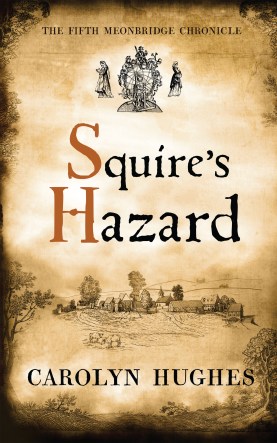
Squire's Hazard Tour BannerToday, I am pleased to welcome Carolyn Hughes to my blog to discuss the topic, “what makes a historical novel seem ‘authentic’” as part of the blog tour for her latest novel, “Squire’s Hazard,” the fifth book in her Meonbridge Chronicle series. Thank you, The Coffee Pot Book Club and Carolyn Hughes, for allowing me to be part of this blog tour. 
I love reading and writing historical fiction. My series of novels, The Meonbridge Chronicles, is set in fourteenth-century rural Hampshire. Though, the last three books, De Bohun’s Destiny, Children’s Fate, and Squire’s Hazard, do have scenes set elsewhere as well. The novels mostly focus on the lives of “ordinary people,” and in particular, the common people of fictional Meonbridge, though both De Bohun’s Destiny and Squire’s Hazard also depict the lives of the gentry too. But the novels are not about politics or war, or royals or heroes, but are rather the “everyday stories of country folk,” and my particular writing pleasure is trying to recreate their world in which readers can immerse themselves. 

And to make that world feel natural requires both “authenticity” and a little “strangeness,” so here are a few thoughts on how I try to achieve this…

Although my novels are not about “history,” history does provide the important factual context in which my characters’ fictional lives are set. The novels are set in a specific time, and each one follows on from the previous one after a two or three years gap. Mostly, what was going on in England as a whole is not important to the Chronicles’ stories. But that isn’t the case for Fortune’s Wheel, the first Chronicle, or the fourth one, Children’s Fate, where what we call the Black Death – plague – underlies the premise for the stories. In Children’s Fate, too, I describe a devastating storm that occurred in January 1363. I write about it because it emphasizes the horror that people had already been suffering in the previous months when the plague was killing children and young people when it must have seemed as if the world was coming to an end.

What was it like to live then? I enjoy depicting what we know or can deduce about how people lived – their homes, clothes, food, tools, and working practices – and showing everyday life as authentically as possible. Portraying the environment, in particular – people’s homes and their interactions with the world outside – can also help to give an authentic-seeming picture.

For example, in my depictions of peasants’ homes, I try to show how generally cramped, dark and smoky they were and, in bad weather, cold and damp. I don’t dwell on the unpleasantness but don’t shy away from it when required. Part of me thinks the grimness would be in our eyes rather than theirs. The Chronicles are told in the voices of the characters, not from the perspective of an omniscient narrator, and my feeling is that the people wouldn’t necessarily notice those things that we would find hard to cope with. Trying to put me into my characters’ shoes, to imagine the minutiae of their daily lives, is what I see so fascinating about writing about the past and what I hope contributes to that sense of authenticity.

Some readers might think I’m obsessed with the weather! Weather does play a big part in my novels, for it surely affected medieval people’s lives far more than it does ours (here in England, at any rate). If you owned only, at most, two sets of clothes, how miserable was it to work outdoors in the rain and come home all wet, with just a small hearth fire (no radiators or tumble dryer…)? Drying clothes must have been so difficult! No book has yet told me exactly what they did, so, putting myself in their shoes, I assume they arranged their clothes around the fire, on some sort of rack, perhaps, and that they possibly slept in their damp clothes – sometimes, anyway – to help dry them out. A pretty ghastly prospect! Yet what else could they do?

Depicting the physical aspects of daily life is important, but almost more important – and yet more difficult – is portraying the intangible aspects. Sexuality, religion, superstition, ideas, and sensibilities, in general, are trickier. The difficulty lies in transporting oneself as a writer into their very different mindsets. Fourteenth-century people must have been like us in many ways, yet also unlike us in many others, and tapping into those dissimilarities is a challenge and, perhaps, one of the principal points – and pleasures – of writing historical fiction.

For example, the Church was central to daily life: in prayers and oaths, influencing people’s view of their position in society, directing how they ran their lives to an extent that we would consider deeply interfering. The fourteenth century was also a world where what we consider natural (or man-made) disasters, such as ruinous weather, famine, and plague, were presumed to be God’s punishment for man’s sin. These aspects of life need to be portrayed in a way that shows the differences in people’s thinking, yet without making them seem alien – they were still individuals with ambitions and concerns, emotions and desires.

Historical fiction is sometimes criticized for failing to portray the past’s strangeness (the “foreign country”). Beyond religion and superstition are aspects of belief that modern readers are likely to find obscure or even bizarre: religious charms, relics, magic and spells, monsters, weird concepts, and seemingly fantastical happenings that today can be explained or dismissed. All of these were normal to people of the time, yet they need careful handling in a novel. “Magic and monsters” might have been part of a medieval person’s ordinary belief, but they are the opposite: we tend to consider them fantastical, not commonplace. And a danger of introducing such elements – however natural they might have been to a medieval mind – is that the novel might seem to the modern reader to be less historical fiction than fantasy. Achieving a sense of naturalness requires a balance between the authentic past and the skeptical present. This aspect of writing historical fiction makes it both a challenge and a pleasure. 

Squire-Final-working.inddBlurb:

How do you overcome the loathing, lust, and bitterness threatening you and your family’s honour?

It’s 1363, and in Steyning Castle, Sussex, Dickon de Bohun is enjoying life as a squire in the household of Earl Raoul de Fougère. Or he would be if it weren’t for Edwin de Courtenay, who’s making his life a misery with his bullying, threatening to expose the truth about Dickon’s birth.

At home in Meonbridge for Christmas, Dickon notices how grown-up his childhood playmate, Libby Fletcher, has become since he last saw her and feels the stirrings of desire. Libby, seeing how different he is, too, falls instantly in love. But as a servant to Dickon’s grandmother, Lady Margaret de Bohun, she could never be his wife.

Margery Tyler, Libby’s aunt, meeting her niece by chance and learns of her passion for young Dickon. Their conversation rekindles Margery’s long-held rancor against the de Bohuns, whom she blames for all the ills that befell her family, including her own servitude. For years she’s hidden her hunger for retribution, but she can no longer keep her hostility in check.

As the future Lord of Meonbridge, Dickon knows he must rise above de Courtenay’s loathing and intimidation and get the better of him. And, surely, he must master his lust for Libby so his own mother’s shocking history is not repeated? Of Margery’s bitterness, however, he has yet to learn…

Beset by the hazards these powerful and dangerous emotions bring, can young Dickon summon up the courage and resolve to overcome them?

Secrets, hatred, and betrayal, but also love and courage – Squire’s Hazard, the fifth MEONBRIDGE CHRONICLE.

Buy Links:

This book is available to read on #KindleUnlimited.

Universal Link: https://books2read.com/u/bW5yJz 

Amazon UK: https://www.amazon.co.uk/Squires-Hazard-Meonbridge-Chronicle-Chronicles-ebook/dp/B0BHKH1QB1/ 

Amazon US: https://www.amazon.com/Squires-Hazard-Meonbridge-Chronicle-Chronicles-ebook/dp/B0BHKH1QB1/ 

Amazon CA: https://www.amazon.ca/Squires-Hazard-Meonbridge-Chronicle-Chronicles-ebook/dp/B0BHKH1QB1/ 

Amazon AU: https://www.amazon.com.au/Squires-Hazard-Meonbridge-Chronicle-Chronicles-ebook/dp/B0BHKH1QB1/ 

The paperback is available at Amazon, Barnes & Noble, and Waterstones. 

Carolyn Hughes authorAuthor Bio:

CAROLYN HUGHES has lived much of her life in Hampshire. With a first degree in Classics and English, she started working life as a computer programmer, then a very new profession. But it was technical authoring that later proved her vocation, as she wrote and edited material, some fascinating, some dull, for an array of different clients, including banks, an international hotel group, and medical instruments manufacturers.

Having written creatively for most of her adult life, it was not until her children flew the nest several years ago that writing historical fiction took centre stage, alongside gaining a Master’s degree in Creative Writing from Portsmouth University and a Ph.D. from the University of Southampton.

Squire’s Hazard is the fifth MEONBRIDGE CHRONICLE, and more stories about the folk of Meonbridge will follow.

You can connect with Carolyn through her website http://www.carolynhughesauthor.com and on social media.

Social Media Links:

Website: http://www.carolynhughesauthor.com 

Twitter: https://twitter.com/writingcalliope 

Facebook: https://www.facebook.com/CarolynHughesAuthor/ 

Book Bub: https://www.bookbub.com/profile/carolyn-hughes 

Amazon Author Page UK: https://www.amazon.co.uk/Carolyn-Hughes/e/B01MG5TWH1/ 

Goodreads: https://www.goodreads.com/author/show/16048212.Carolyn_Hughes 

Book Review: “The Marriage Portrait” by Maggie O’Farrell

62237869A 16-year-old duchess, who lived a sheltered life, died in a remote villa after only being married to her husband, Alfonso Duke of Ferrera, for a mere year. Many suspect that she died of a fever, but there are rumors that her husband had her poisoned. Not much is known about Lucrezia de Medici, Duchess of Ferrara, except her marriage portrait and a brief mention of her in Robert Browning’s poem, “My Last Duchess.” Did she die of a fever, or was there a more sinister plot behind her demise? The mystery around her life and unexpected death have not been discussed much until now in Maggie O’Farrell’s latest novel, “The Marriage Portrait.”

The last book I read by Maggie O’Farrell, “Hamnet,” was such an emotional ride for me, so when I heard that she would dive back into the 16th century with her latest novel, I was excited. I will admit that I had never heard the story of Lucrezia de Medici, so I was curious to see how O’Farrell would tell her tale.

We begin in the villa with Alfonso and Lucrezia, where Lucrezia feels uneasy and fearful for her life, but to understand why we must go back in time. We then jump to the past and Lucrezia’s childhood as the daughter of Cosimo I de Medici, Grand Duke of Tuscany, and his wife Eleanor of Toledo. Lucrezia’s youth should be filled with balls and glamor, but she is different than her siblings and is treated as almost an outcast in her own family. Her only solace is her maid Sofia, who acts more like her mother, and her love of the arts.

As a daughter of nobility, Lucrezia knows that she will have to marry a noble one day, but it comes sooner than expected when her eldest sister dies, and she is betrothed to Alfonso, Duke of Ferrara. Her marriage to Alfonso begins smoothly; Alfonso is loving and caring, allowing Lucrezia to pursue her passions and have the freedom she desires. He even allows for a portrait painted in her honor to show the world how regal his bride is and how much he loves her. However, as time passes, Alfonso’s more erratic side shows its ugly head, and Lucrezia sees how dangerous her husband can be to those who displease him.

I will admit that it took me a while to get used to how this particular book was structured, as O’Farrell jumps from the present to the past in every other chapter and presents Lucrezia’s story in a very artistic way. I am unsure if Lucrezia was an outcast in her family, but I believe she could have been an artist and viewed the world differently than her family. As for Lucrezia’s relationship with her husband Alfonso, I think it is plausible that he had a more erratic side to him, especially when it came to those who displeased him. Still, I am not sure that he was responsible for her death.

This novel was thought-provoking and engaging with an unlikely protagonist in Lucrezia de Medici. Even though you know she will die at the end, you will root for Lucrezia and hope that she can find even the slightest thread of happiness in her short life. I found this an utterly gripping novel, and I hope O’Farrell will write more stories set in 16th-century Italy. If you want a thrilling book about a young noblewoman living during the Italian Renaissance, “The Marriage Portrait” by Maggie O’Farrell should be at the top of your to-be-read list.