
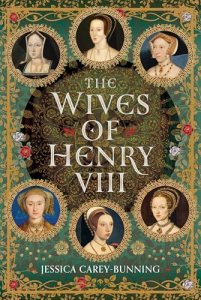
 The wives of Henry VIII have been an area of fascination for history nerds and novices alike for centuries. We all know the stories of Catherine of Aragon, Anne Boleyn, Jane Seymour, Anna of Cleves, Katherine Howard, and Kateryn Parr. However, these stories only offer a glimpse at the lives of these women. They follow the more traditional studies of the Tudor queens, but what happens if we take a more revisionist approach to their lives? What can we learn about these women besides their crowns and who they all married? There is more to their stories, like the minute details that Jessica Carey-Bunning explores in her book, “The Wives of Henry VIII: Rethinking the Stories Behind the Symbols.”
I would like to thank Pen and Sword Books and Net Galley for sending me a copy of this book. I am always looking for a new approach to the Tudor queens. So when I saw that it was a book featuring all six wives with a promised fresh perspective, I decided to give it a chance.
Carey-Bunning has taken a different approach to these six remarkable women. Instead of a biography about their lives, she has chosen to highlight aspects of their lives. We, of course, go in chronological order, starting with Catherine of Aragon. With Catherine, we examine why she was named Catherine and its significance in her family, as well as her finances as the widow of Arthur, and extended through her annulment. We then moved to Anne Boleyn and explored her role in the Chateau Vert pagent as well as her looks, either with the English gable hood or the French hood, and she includes the latest research into what Anne might have looked like. After Anne, we transition to Jane Seymour, to her stance on matters of faith and whether or not she was a popular queen.
Anna of Cleves may have had the shortest reign of all the queens, but it is her education and her faith that Carey-Bunning explores in her section. Katherine Howard also had one of the shortest reigns of any of Henry’s wives, but for different reasons than Anna of Cleves. With Katherine, we explore exactly what kind of influence the young queen had and her connection to her infamous cousin Anne Boleyn. Finally, we examine Kateryn Parr, the 17th century’s fascination with the queen, and the tale of her almost arrest over religious matters.
I found this book refreshing with the new approach to the wives of Henry VIII. I learned new aspects of the queens, which was very nice. Carey-Bunning combined an easy-to-follow writing style with innovative research to give her readers a different way to look at the Tudor wives. If you want to learn something new about the Tudor queens, I think you will enjoy “The Wives of Henry VIII: Rethinking the Stories Behind the Symbols,” by Jessica Carey-Bunning.

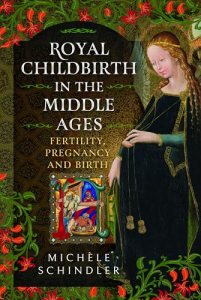 Throughout history, many aspects of life have changed drastically, but one thing has remained the same: the different stages of life—birth, youth, adolescence, adulthood, old age, and death. It is the first stage of life, birth, that tends to get the least amount of attention when it comes to historical research. In recent years, it has been gaining more and more attention, especially when it comes to royal births, which have the most amount of written records. Michele Schindler has chosen to focus on the aspects of medieval childbirth in her latest book, “Royal Childbirth in the Middle Ages: Fertility, Pregnancy and Birth.”
 Have you ever watched a movie, played a video game, or read a novel set in the Middle Ages and wondered if life was really like that? Was it super dirty, grimy, and deadly, or is this a fictional device to show how bad the past was compared to the present? Kathryn Warner has delved into the archives to uncover the truth about what life was like in an average medieval town for her latest book, “Life in the Medieval Town.”
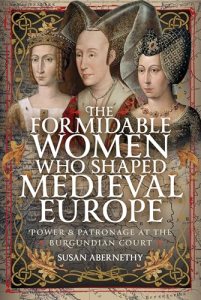 Throughout European history, we tend to think about the countries as a whole when it comes to the political sphere of influence. We think of the big countries like France, Spain, Italy, Germany, Austria, and England as having the most impact, but we have to consider that during the Middle Ages, duchies held immense power. Take, for example, the Duchy of Burgundy, also known as the Burgundian Empire. It was a part of France, but that does not mean that the dukes stayed on the side of the French. The Burgundians used their influence to expand and marry into the medieval European families, affecting European history as a whole. While we tend to focus on the Dukes of Burgundy, we should be paying attention to the women of this duchy. That is why Susan Abernethy chose to focus on these women in her latest book, “The Formidable Women Who Shaped Medieval Europe: Power and Patronage at the Burgundian Court.”
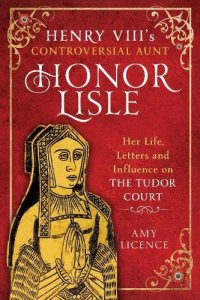 Marrying into the royal family is not all sunshine and rainbows. Of course, we tend to think about those who marry the king, the queen, the prince, or the princess. But we also need to consider the aunts and the uncles of the royals as part of the family. Take, for example, Arthur Plantagenet, the illegitimate son of Edward IV and the uncle of Henry VIII. His second wife, Honor Lisle, would help him rule Calais; however, she is best known for her letters and her devout Catholic faith during the Reformation in England. So why is Honor Lisle considered a controversial figure, and what was the cause of the fall of Honor and Arthur from the royal good graces? Amy Licence explores the life of Henry VIII’s step-aunt in the first full biography dedicated to Honor Lisle, which is entitled “Henry VIII’s Controversial Aunt, Honor Lisle: Her Life, Letters, and Influence on the Tudor Court.”
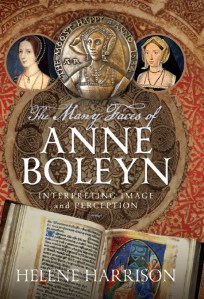 Anne Boleyn, a queen whose story has lived on for centuries. She was the woman who stood between Catherine of Aragon and King Henry VIII. Her daughter, Queen Elizabeth I, was her greatest legacy and her pride and joy. It was her untimely death due to charges that many believe were unfounded. We all have our image of the infamous queen, but how does that change when we switch the type of media we consume? Helen Harrison explores how our idea of Anne Boleyn changed over time in her latest book, “The Many Faces of Anne Boleyn: Interpreting Image and Perception.”
 The year is 1485, and the last Plantagenet king, Richard III, is dead. The young man whose army defeated the king is Henry Tudor, and he is about to start a dynasty that will reshape world history forever. Henry Tudor, now King Henry VII, married the daughter of King Edward IV and Elizabeth Woodville, Elizabeth of York. Their marriage and their children would lay the foundation for the Tudor dynasty, but what was life like for the children who were the first generation of this remarkable dynasty? Aimee Fleming explores the lives of these royal siblings in her latest book, “Tudor Princes and Princesses: The Early Lives of the Children of Henry VII and Elizabeth of York.”
 Throughout history, women have had one major job: giving birth and raising future generations. Each new generation had different ways of dealing with childbirth and raising children, and the Tudors were no exception. While the Tudors lived in the 16th century, the joys and fears of being a mother were similar to those of the modern age. However, the way women approached different stages of life in the 16th century is unique compared to the ways of modern women. So, how did Tudor women approach motherhood? Stephanie Kline hopes to answer this question in her latest book, “Raising the Tudors: Motherhood in Sixteenth-Century England.”
 Throughout history, pandemics have ravaged human populations and changed the course of history. None more so than the Bubonic Plague, also known as the Black Death. It devastated entire families and altered entire countries, primarily in Europe. Although England is an island nation, that does not mean it could not escape the pandemic’s horrors for long. In her latest book, “The Black Death in England: Journal of the Plague Years in the Fourteenth Century, “ Kathryn Warner explores the lives of the victims of the Black Death throughout England during this century.
 Adventures of a Tudor Nerd