
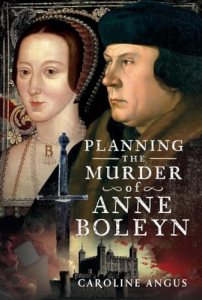
 The 16th century was filled with tales of remarkable women. Still, one of the most defining figures of the century was a woman of noble birth who the King of England fell in love with and decided that he was going to divorce his first wife of over twenty years to marry her. The Great Matter caused a great scandal across Europe, however, it was a love match that would not last long. The relationship between Henry VIII and his second wife Anne Boleyn would turn volatile and in the end, Anne and the men around her would be executed. We often blame Anne Boleyn’s death at the foot of Henry VIII’s right-hand man Thomas Cromwell, but who was behind the death of this famous queen? Caroline Angus has chosen to re-examine the case to find out who was truly responsible for the fall of this famous queen in her latest book, “Planning the Murder of Anne Boleyn.”
I would like to thank Pen and Sword Books and NetGalley for sending me a copy of this book. I have enjoyed previous books by Caroline Angus, so when I heard that she was writing a book about Anne Boleyn’s “ trial,” I was curious to see what new insights she would bring to the case.
Angus begins by explaining to her audience that this case is hard to put together centuries after the fact because papers pertaining to the case were destroyed after the verdict was carried out. She then dives into how the fall of Anne Boleyn and the men around him happened, starting with the aftermath of the Great Matter, and the divorce between Henry VIII and Katherine of Aragon. We see how the Boleyns rose to power and Henry was so infatuated with Anne that he knew she would be the next Queen of England. Angus explores the men and women who served Anne Boleyn and Thomas Cromwell, it was fascinating to see how they would shape the case against the queen. Finally, we get to see the rivalry between Thomas Cromwell and Anne Boleyn develop regarding religious reform issues and Princess Mary’s place in the line of succession.
The second half of this book focuses on the actual fall, trial, and execution of Anne Boleyn and the men who were associated with her. Angus takes the time to do a diary-style section, starting at the time when the idea to remove Anne from power to her actual execution to show her readers how quick this “case” was and to show that Henry wanted her out of his life permanently. She has taken the available information and the gaps left behind to create a plausible case for what truly happened in these few weeks. Angus shows what Princess Mary and Jane Seymour had to do with the fall of Anne Boleyn. We also see that most people knew that Anne Boleyn and the men around her were innocent and didn’t deserve to die, but it was a foregone conclusion as the king wanted them dead.
Overall, I found this enjoyable and enlightening with the new information Angus brought to the table. Yes, there is a bit of repetition of information already shared in previous books about Anne Boleyn, but it was one of the most infamous cases in English history, so it has been examined for centuries. It’s hard to show new information about this case without repeating facts that we already know but I think Angus does an excellent job of balancing the old and the new information about this case. If you want a solid book specifically about the fall of Anne Boleyn, I recommend you read, “Planning the Murder of Anne Boleyn” by Caroline Angus.
 Adventures of a Tudor Nerd