Book Review: “Crown and Sceptre: A New History of the British Monarchy from William the Conqueror to Elizabeth II” by Tracy Borman

England’s history is centuries old, full of colorful characters and change galore. What truly defines the history of England is the monarchy, which has lasted over a thousand years. Over 40 kings and queens left their distinct marks on the history of this proud island nation. While some could maintain the crown with no issues, others had to fight to earn the crown, and a few even died for the crown. While there has been a plethora of books and novels written about individual monarchs and their impacts on the history of England, only a select few have chosen to take the arduous task of telling the story of the British Monarchy from its origins to the modern-day. One such historian who has chosen the latter is Tracy Borman in her book, “Crown and Sceptre: A New History of the British Monarchy from William the Conqueror to Elizabeth II.”

I have been a fan of Tracy Borman and her writing for many years now. She has a way of making history come alive, so when I heard about this book, it was something I knew I wanted to read. I usually don’t read books like this because in the past, I have not been interested in the Stuarts and Hanoverians, but as I have begun to dive more into the Stuarts, I think it was the perfect time to read this book.

Borman begins with a brief introduction to the early kings of England, the Anglo-Saxon kings, to show how different it was from the Norman kings. She has divided the book into sections to highlight the different dynasties; Norman, Plantagenet, Lancaster, York, Tudor, Stuart, Hanoverian, and Windsor. Within each section is a mini-biography of each ruler during that dynasty. While there is not a whole lot of new information, it does give the reader a taste of what each reign was like.

As someone who usually reads about the Normans, Plantagenets, and Tudors, it was a nice review of the basic facts of the kings and queens during this span of history. Reading about the Stuarts, Hanoverians, and Windsors was something different for me and I thoroughly enjoyed it. It made me interested in studying the Stuarts and the Windsors, but I am on the fence about the Hanoverians. What is remarkable about the story is that the monarchy of England could have toppled at any point and did for a few years before it was restored, and continues to this day for over a thousand years.

Overall, I found this an interesting introductory read into the different dynasties that have shaped the English monarchy and the history of England. If you want new research about the individual monarchs, this might not be the book for you. However, if you want a great introductory book on the history of the British monarchy, I highly suggest you read, “Crown and Sceptre: A New History of the British Monarchy from William the Conqueror to Elizabeth II” by Tracy Borman.

Guest Post: “The Percies and the Battle of Shrewsbury” by Mercedes Rochelle

I am pleased to welcome Mercedes Rochelle back to my blog to share an article about the Percy family and the Battle of Shrewsbury as part of the blog tour for her novels The Usurper King and The Accursed King. I want to thank Mercedes Rochelle and The Coffee Pot Book Club for allowing me to be part of this blog tour.

The Percies were such a powerful force in the North they practically acted like rulers in their own kingdom. For much of Richard II’s reign and the beginning of Henry IV’s, Earl Henry Percy and his son, Sir Henry (nicknamed Hotspur) alternated between the wardenships of the East Marches and the West Marches toward Scotland. They were experienced in dealing with the tempestuous Scots, and their retainers were fiercely loyal. When Henry IV returned from exile and began his campaign that led to the throne, the Percies were his staunchest supporters; they provided a large portion of his army. Henry Percy was directly responsible for persuading King Richard to turn himself over to Henry Bolingbroke—the beginning of the end of Richard’s fall. 

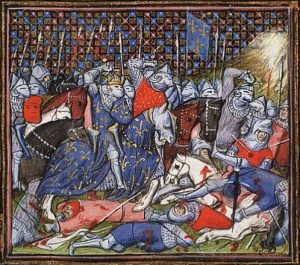
Caption: Froissart Chronicles by Virgil Master, Source: Wikimedia 

Naturally, this was not done out of sheer kindness. Henry Percy expected to be amply rewarded for his services, and at the beginning he was. But the king was uncomfortable about the potential threat of this overweening earl. He soon began to promote his brother-in-law, Ralph Neville the Earl of Westmorland as a counterbalance, chipping away at Percy’s holdings and jurisdictions. Additionally, the Percies felt that they were not being reimbursed properly for their expenses; by 1403 they claimed that the king owed them £20,000—over £12,000,000 in today’s money. But even with all this going on, it’s likely that the earl may have contained his discontent, except for the belligerence of his impetuous son.  

One possible catalyst was Hotspur’s refusal to turn over his hostages taken at the Battle of Homildon Hill. This battle was a huge win for the Percies in 1402, where so many leaders were taken—including the Earl of Douglas—that it left a political vacuum in Scotland for many years to come. Once he learned of this windfall, King Henry insisted that the Percies turn over their hostages to the crown. It was his right as king—even if it was against the code of chivalry— though his highhanded demand was probably not the wisest choice, considering the circumstances. There were many possible reasons he did so. He was desperately short of funds—as usual. It’s possible he may have wanted to retain the prisoners as a means of ensuring Scottish submission. Earl Henry agreed to turn over his hostages, but Hotspur absolutely refused to surrender Archibald Douglas, letting his father take the king’s abuse. One can only imagine that all was not well in the Percy household, either. 

There was more at stake. The king had just returned from a humiliating fiasco in Wales, where he had campaigned in response to the English defeat at Pilleth, where Edmund Mortimer was captured by the Welsh. Mortimer was the uncle of the eleven-year-old Earl of March, considered by many the heir-presumptive to the throne (and in Henry’s custody). Edmund was also the brother of Hotspur’s wife. By the time Henry demanded the Scottish hostages, it was commonly believed that the king had no intention of ransoming Mortimer; after all, he was safely out of the way and couldn’t champion his nephew’s cause. This rankled with Hotspur, and it is possible that he thought to use Douglas’s ransom money to pay for Mortimer’s release himself. 

Hotspur finally rode to London in response to the king’s demands, but he went without Douglas. Needless to say, this immediately provoked an argument. When Hotspur insisted that he should be able to ransom his brother-in-law, Henry refused, saying he did not want money going out of the country to help his enemies. Hotspur rebutted with, “Shall a man expose himself to danger for your sake and you refuse to help him in his captivity?” Henry replied that Mortimer was a traitor and willingly yielded himself to the Welsh. “And you are a traitor!” the king retorted, apparently in reference to an earlier occasion when Hotspur chose to negotiate with Owain Glyndwr rather than arrest him. Allegedly the king struck Percy on the cheek and drew his dagger. Of course, attacking the king was treason and Hotspur withdrew, shouting “Not here, but in the field!” All of this may be apocryphal, but it is certainly powerful stuff. 

The whole question of Mortimer’s ransom became moot when he decided to marry the daughter of Glyndwr and openly declare his change of loyalties on 13 December 1402. No one knows whether Hotspur’s tempestuous interview with King Henry happened before or after this event; regardless, a bare minimum of eight months passed before Shrewsbury. Were they planning a revolt all this time? It is likely that early in 1403 one or both of the Percies were in communication with the Welsh. Owain Glyndwr was approaching the apex of his power, and a possible alliance between him, Mortimer, and the Percies could well have been brewing. It would come to fruition later on as the infamous Tripartite Indenture (splitting England’s rule between them), but by then Hotspur was long dead. 

Caption: BnF MS Franc 81 fol. 283R Henry IV and Thomas Percy at Shrewsbury from Jean de Wavrin- Creative commons license 

No one has been able to satisfactorily explain just why the Percies revolted against Henry IV. Most of the evidence points to their self-aggrandizement. And looking at the three years following his coronation, it became evident that King Henry was not willing to serve as their puppet, nor was he willing to enhance their power at the expense of the crown. The Percies’ ambitions were thwarted by the king’s perceived ingratitude, and the consensus of modern historians is that they hoped to replace him with someone more easily manipulated. 

There was one more Percy involved in all this: Thomas, younger brother of Earl Henry and uncle to Hotspur. He was probably the most able—if the least flamboyant—member of the Percy clan in this period. From soldier to commander, Admiral of England to Ambassador, Captain of Calais, Justiciary of South Wales, he made it all the way to Steward of the Royal Household. And that wasn’t all. He was also Earl of Worcester, which almost made him an equal to his brother, the great Earl of Northumberland.  

His involvement in the Shrewsbury uprising was puzzling. He had much to lose and nothing to gain. Shakespeare notwithstanding, I don’t really think Thomas was the motivating force behind the rebellion that led to the Battle of Shrewsbury. It’s true that his fortunes were waning; the king had recently replaced him as Lieutenant of Wales with the sixteen-year-old Prince Henry. Whether the Percies won or lost the battle, there’s a better-than-even chance that he would rise and fall along with them, whether he participated in the rebellion or not. Was that enough to push him over the edge? I suspect that his affection for Hotspur had a lot to do with it, and in the end, it’s likely he couldn’t conceive of fighting against his own kin. Poor Thomas lost his head the day after the battle, paying a high price for his loyalty. 

THE USURPER KING by Mercedes Rochelle 

Book 4 of The Plantagenet Legacy 

Blurb: 

From Outlaw to Usurper, Henry Bolingbroke fought one rebellion after another. First, he led his own uprising. Then he captured a forsaken king. Henry had no intention of taking the crown for himself; it was given to him by popular acclaim. Alas, it didn’t take long to realize that having the kingship was much less rewarding than striving for it. Only three months after his coronation, Henry IV had to face a rebellion led by Richard’s disgruntled favorites. Repressive measures led to more discontent. His own supporters turned against him, demanding more than he could give. The haughty Percies precipitated the Battle of Shrewsbury which nearly cost him the throne—and his life. 

To make matters worse, even after Richard II’s funeral, the deposed monarch was rumored to be in Scotland, planning his return. The king just wouldn’t stay down and malcontents wanted him back. 

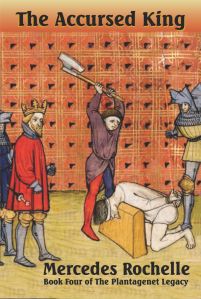
THE ACCURSED KING by Mercedes Rochelle 

Blurb: 

What happens when a king loses his prowess? 

The day Henry IV could finally declare he had vanquished his enemies, he threw it all away with an infamous deed. No English king had executed an archbishop before. And divine judgment was quick to follow. Many thought he was struck with leprosy—God’s greatest punishment for sinners. From that point on, Henry’s health was cursed and he fought doggedly on as his body continued to betray him—reducing this once great warrior to an invalid. 

Fortunately for England, his heir was ready and eager to take over. But Henry wasn’t willing to relinquish what he had worked so hard to preserve. No one was going to take away his royal prerogative—not even Prince Hal. But Henry didn’t count on Hal’s dauntless nature, which threatened to tear the royal family apart.

Buy Links: 

Universal Buy Links: 

The Usurper King: https://books2read.com/u/3nkRJ9  

The Accursed King: https://books2read.com/u/b5KpnG  

The Plantagenet Legacy Series Links: 

Amazon US Series Link 

Amazon UK Series Link 

All titles in the series are available to read on #KindleUnlimited. 

Author Bio

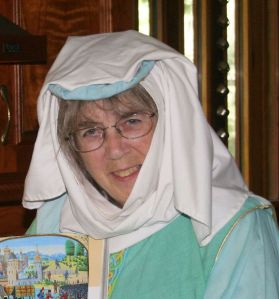
Mercedes Rochelle is an ardent lover of medieval history and has channeled this interest into fiction writing. She believes that good Historical Fiction, or Faction as it’s coming to be known, is an excellent way to introduce the subject to curious readers. 

Her first four books cover eleventh-century Britain and events surrounding the Norman Conquest of England. Her new project is called “The Plantagenet Legacy” taking us through the reigns of the last true Plantagenet King, Richard II, and his successors, Henry IV, Henry V, and Henry VI. She also writes a blog: HistoricalBritainBlog.com to explore the history behind the story.  

Born in St. Louis, MO, she received by BA in Literature at the University of Missouri St.Louis in 1979 then moved to New York in 1982 while in her mid-20s to “see the world”. The search hasn’t ended! 

Today she lives in Sergeantsville, NJ with her husband in a log home they had built themselves. 

Author Links

Website: https://mercedesrochelle.com/   

Twitter: https://x.com/authorrochelle  

Facebook: https://www.facebook.com/mercedesrochelle.net  

Book Bub:  https://www.bookbub.com/authors/mercedes-rochelle  

Amazon Author Page:  https://www.amazon.com/stores/Mercedes-Rochelle/author/B001KMG5P6  

Goodreads: https://www.goodreads.com/author/show/1696491.Mercedes_Rochelle

Book Review: “When Christ and His Saints Slept” by Sharon Kay Penman

When we consider the issue of succession, we often imagine the crown being passed to the next legitimate heir, regardless of gender, but that was not always the case. We think about the struggles that women like Mary I and Elizabeth I endured to secure and stay on the throne, but one woman came before them so close to becoming England’s first ruling queen. She was the daughter of King Henry I and the next in line to the throne after her brother tragically died, but after her father passed away, it was her cousin Stephen who usurped the throne. The war for the crown which would last decades would be known as The Anarchy is the primary focus for Sharon Kay Penman’s novel, “When Christ and His Saints Slept.”

I found this particular novel when I was going used book shopping and after so many people said that it was their favorite novel by Penman after “The Sunne in Splendour,” I knew that I wanted to buy and read it. I have been a fan of books about the struggle between Empress Matilda and King Stephen and the birth of the Plantagenet dynasty, so I wanted to see what kind of spin Penman would give to this story.

Penman begins her novel with a flashback to the last time Stephen saw his father before he went on Crusade in 1101, which was an influential moment in his young life. We then jump forward to Barfleur, Normandy in November 1120, which is where the legitimate male heir of Henry I, William, boarded the White Ship on a voyage he would not survive. The only legitimate child of Henry I, because the man had quite a few illegitimate children, was Empress Matilda (Maude). Her 1st husband, the Holy Roman Emperor died and since they did not have any children, Henry decides that she needs to remarry and his choice for her next husband is Geoffrey of Anjou. To say their relationship was tempestuous would be an understatement, but they were able to have a large family including Henry Plantagenet, the future King Henry II.

It seemed like all Matilda (known as Maude in this novel) had to do in order to secure the crown was sail to England for her coronation. But that’s not what happened. Instead, her dear cousin Stephen and his wife Matilda, stole her crown. If you think Maude is going to let Stephen do what he wants with her inheritance left to her by her father, you thought wrong because instead Maude decides to fight for her rights in the conflict known as the Anarchy. It was a bloody couple of decades for England full of betrayals and sieges. It will soon turn to not only a fight between Maude and Stephen but between their sons Henry and Eustace. This was not just a battle between nobility but, as we see with one of my favorite characters Ranulf Fitz Roy (a fictional character), it was a battle between barons and the illegitimate children of the old king for the future of England.

This was another absolutely brilliant book by Penman. The way she was able to craft such believable characters based on the historical records is nothing but awe-inspiring. It was a mammoth tome but it needed every single page to develop this rich story that I did not want to end. If you are like me and you crave a thrillingly vivid historical fiction novel, you must check out “When Christ and His Saints Slept” by Sharon Kay Penman.

Book Review: “Henry V: The Astonishing Triumph of England’s Greatest Warrior King” by Dan Jones

English history is filled with kings who had to fight for their crown, both at home and away in foreign lands. Men like William the Conqueror, Henry II, Henry IV, Edward IV, and Henry VII can be considered warrior kings, but one stands above them all. He only ruled for a little over nine years, but he proved his worth time and time again, especially against his French adversaries, and secured the crown of France for his young son. He was the son of Henry Bolingbroke, King Henry IV, and the grandson of John of Gaunt. He was Henry V and his story is one of the most remarkable tales in English medieval history, told masterfully in Dan Jones’ latest book, “Henry V: The Astonishing Triumph of England’s Greatest Warrior King.”

I have been a fan of Dan Jones and his books for a few years now and always jump at the chance to read his latest book. When I heard that he was writing a biography about Henry V, it was an instant pre-order for me because it is Dan Jones’ first biography and I did not know much about Henry V minus the main points about his life and reign.

It was a miracle that Henry V became King of England. Henry was the son of Henry Bolingbroke and Mary de Bohun, the grandson of John of Gaunt, and cousin to King Richard II. He was the son of an Appellant lord who was banished from England for opposing Richard II, so the likelihood that he would even be the next Duke of Lancaster was significantly small. Jones shows his audience what Henry’s childhood was like before his father was banished and after he returned and took the throne from Richard II. It was a dramatic change for the young man as it meant that he had to adapt to life as the Prince of Wales, which meant that he had to fight for English control of Wales and against those who also claimed his title, primarily Owain Glyndwr and the Percy family (including Henry Hotspur Percy). The fight for Wales culminated in the Battle of Shrewsbury where Henry Percy died and the army of Henry IV was victorious. Henry V was shot in the face with an arrow and almost died, but Doctor John Bradmore saved his life.

After the arrow incident, we see a different side of the young Prince as he is more mindful of religious matters. When his father Henry IV falls ill, we also see Prince Henry take more of a leading role in politics as part of a council meant to help the king rule England. When Henry IV died on March 20, 1413, the young King Henry V was ready to rule. He believes that to be a strong ruler, he must show it by facing the English’s mortal enemies, primarily France, in battle. He led England to great victories against the French, including the Battle of Agincourt, which was marked as one of the greatest victories for the English during the Wars of the Roses. Henry V was a competent ruler who made England a powerhouse in European history. He was able to secure the French throne for his young son Henry VI, the only child of Henry V and his wife Catherine of Valois before the great warrior king died on August 30, 1422.

I was thoroughly impressed with this biography and I am surprised that it took Dan Jones this long to write a biography. You can tell his passion for the life of Henry V through every page. I hope Jones will write another biography soon. If you are a Dan Jones fan, a medievalist, or just a fan of fantastic biographies, I highly suggest you read, “Henry V: The Astonishing Triumph of England’s Greatest Warrior King” by Dan Jones.

Book Review: “The Lost Queen” by Carol McGrath

The Lost QueenThe Crusades were conflicts predominantly focused on the stories of knights, kings, popes, Christians, and Muslims. We have some stories of women like Eleanor of Aquitaine who joined their husbands in battle. However, some women’s stories tend to get lost in the sands of the past. Take, for example, Eleanor of Aquitaine’s daughter-in-law, Berengaria of Navarre, the wife of Richard the Lionheart. Amid the Third Crusades, she must join Eleanor of Aquitaine on a treacherous journey to meet her husband while he battles for Jerusalem. Can Richard and Berengaria survive the journey to and from the Holy Land and produce the desired heir for the English throne before their enemies can claim victory? Carol McGrath has chosen to tell the tale of the forgotten queen Berengaria of Navarre in her latest novel, “The Lost Queen.”

I would like to thank Carol McGrath and Headline Books for sending me a copy of this novel. I am always looking for new heroes and heroines from the past to read about, whether it is historical fiction or nonfiction. I have heard the name Berengaria of Navarre mentioned in previous books about Plantagenet queens, but she is more of a footnote, so when I heard there was going to be a novel about her life, I knew I wanted to read it.

The year is 1191 and Berengaria of Navarre is meeting her future mother-in-law Eleanor of Aquitaine to embark on a journey to meet her future husband Richard the Lionheart in the Outremer. At the same time, Avelina FitzWilliam is planning her trip to the Outremer to find her husband William FitzWilliam who never returned from the Crusades. Avelina’s journey would not be as glamorous as Berengaria’s as she would go in disguise as a nun. Berengaria must also be wary of her surroundings as Philip of France is against the union altogether as Richard decided to pass on a union with Philip’s sister Alice of France to marry Berengaria.

Berengaria and Avelina were united by chance and became the closest of friends through numerous trials. Not only did they have to deal with the dangerous Alps crossing, but they also had to deal with pirates, Saladin’s army, Crusader factions loyal to Philip of France, Walter of Winchester and Prince John in England, and women like Princess Irene of Cyprus who only had eyes for King Richard. Through all the chaos around them, at the heart of this novel, are two love stories, Berengaria and Richard and Avelina and William.

As someone who knew very little about the life of Berengaria of Navarre, I found this novel positively enthralling. It was filled with twists, turns, high drama, and romance. I loved reading this novel and I was genuinely sad when it ended. McGrath was able to craft a luscious novel that was meticulously researched that any fan of medieval historical fiction novels will adore. If this sounds like you, I highly suggest you read, “The Lost Queen” by Carol McGrath.

The Lost Queen

1191 and the Third Crusade is underway . . .

It is 1191 and King Richard the Lionheart is on crusade to pitch battle against Saladin and liberate the city of Jerusalem and her lands. His mother, the formidable Eleanor of Aquitaine and his promised bride, Princess Berengaria of Navarre, make a perilous journey over the Alps in midwinter. They are to rendezvous with Richard in the Sicilian port of Messina.

There are hazards along the way – vicious assassins, marauding pirates, violent storms and a shipwreck. Berengaria is as feisty as her foes and, surviving it all, she and Richard marry in Cyprus. England needs an heir. But first, Richard and his Queen must return home . . .

The Lost Queen is a thrilling medieval story of high adventure, survival, friendship and the enduring love of a Queen for her King.

Acclaim for Carol McGrath’s ROSE trilogy:
‘Powerful, gripping, and beautifully told’ KATE FURNIVALL on The Silken Rose
‘A tour de force of gripping writing, rich historical detail and complex, fascinating characters’ NICOLA CORNICK on The Stone Rose
‘A beautifully narrated novel’ K J MAITLAND on The Damask Rose

Purchase Linkhttps://tinyurl.com/5n8ab2xv

carol mcgrathAuthor Bio – Following a first degree in English and History, Carol McGrath completed an MA in Creative Writing from The Seamus Heaney Centre, Queens University Belfast, followed by an MPhil in English from the University of London. The Handfasted Wife, first in a trilogy about the royal women of 1066 was shortlisted for the RoNAS in 2014. The Swan-Daughter and The Betrothed Sister complete this highly acclaimed trilogy. Mistress Cromwell, a best-selling historical novel about Elizabeth Cromwell, wife of Henry VIII’s statesman, Thomas Cromwell, was republished by Headline in 2020. The Silken Rose, the first in a medieval She-Wolf Queens Trilogy, featuring Ailenor of Provence, saw publication in April 2020. This was followed by The Damask Rose. The Stone Rose was published in April 2022. Carol is writing Historical non-fiction as well as fiction. Sex and Sexuality in Tudor England was published in February 2022. The Stolen Crown 2023 and The Lost Queen will be published on 18th July 2024. Carol lives in Oxfordshire, England, and in Greece.

Find Carol on her website:

http://www.carolcmcgrath.co.uk.

Follow her on Amazon @CarolMcGrath

https://scribbling-inthemargins.blogspot.com/

https://www.linkedin.com/in/carol-mcgrath-906723a/

https://www.facebook.com/CarolMcGrathAuthor1/

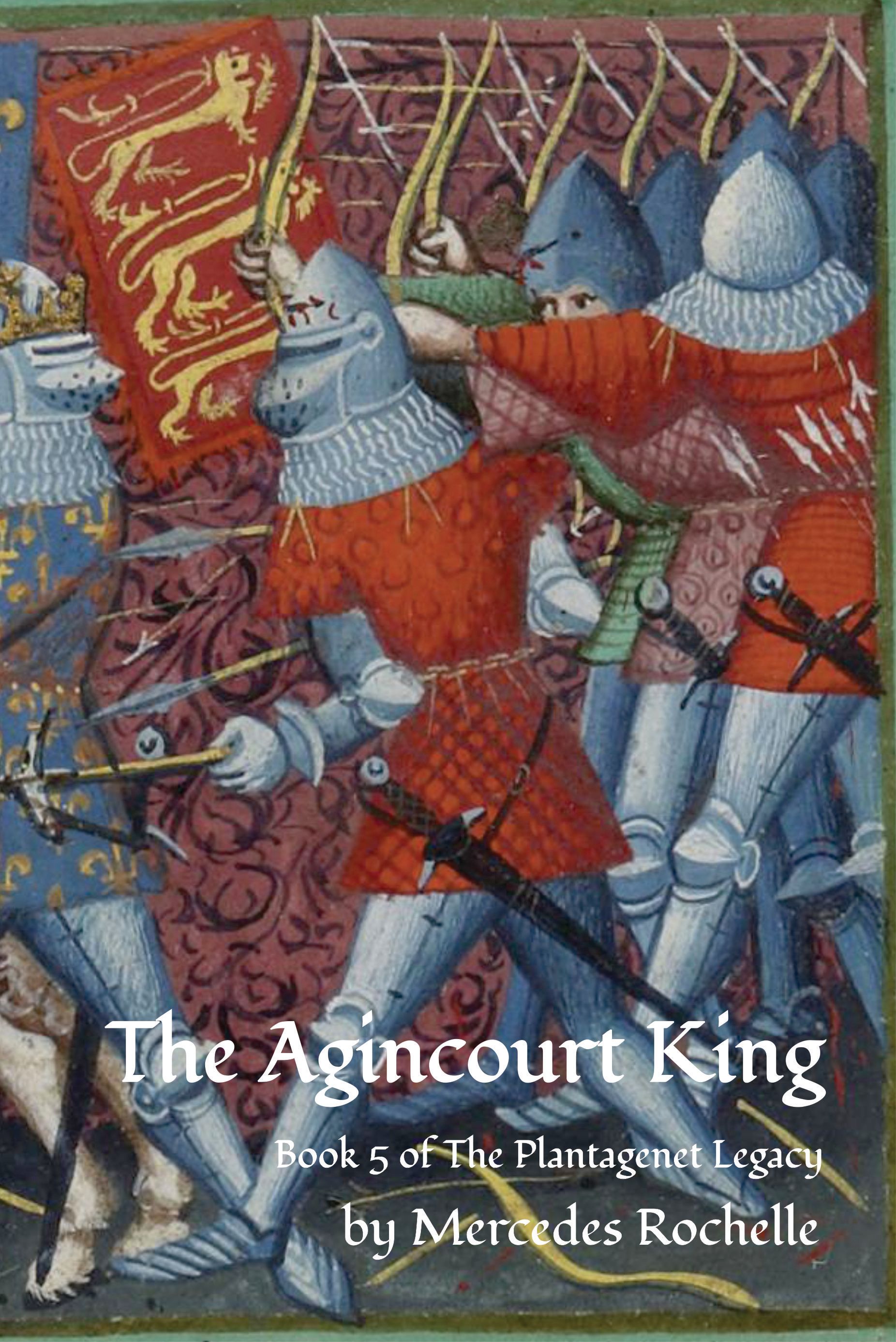
Guest Post: “Excerpt from ‘The Agincourt King’ by Mercedes Rochelle”

PWIzRwyKI am pleased to welcome Mercedes Rochelle back to my blog to share an excerpt from her novel, “The Agincourt King.” I would like to thank Mercedes Rochelle and The Coffee Pot Book Club for allowing me to be part of this blog tour.

THE CABOCHIEN REVOLT IN PARIS 

There was no doubt that France was in turmoil. King Henry IV of England wasn’t even cold in his grave at Canterbury Cathedral when a fierce rebellion broke out in Paris. As usual, King Charles VI had sunk into insensibility and the city simmered uneasily, agitated by John the Fearless, the Duke of Burgundy. Private and public accusations were aimed against the king’s ministers, and the most threatened among them started to leave town for the safety of the provinces. But another consideration had arisen to complicate matters. Louis the Dauphin had reached his sixteenth year and was poised to take on the regency while his father was incapacitated. Already he was chafing under Burgundy’s authority… 

Although today Burgundy was in charge, he was concerned about Louis the Dauphin. To control the heir to the throne, he had arranged a marriage between Louis and his daughter Margaret. Unfortunately, the union was not working out. The lad showed a disturbing independence and tended to reject his wife whenever possible. It was time to teach him a good lesson.  

It didn’t take long to devise a plan. Duke John secretly conversed with Governor Jacqueville (who happened to be the chamberlain) and others of his household. As he conveniently withdrew, the citizens worked themselves into another frenzy under the urging of their governor. Jacqueville mounted a platform and held up his hands for attention. 

“I have a list of traitors the Dauphin harbours under his protection,” he shouted. “They seek to strip you of your rights and privileges. We must take them prisoner! See here, the Duke of Bar is your enemy, and the Dauphin’s chancellor Jehan de Vailly. We must arrest the queen’s brother Duke Louis of Bavaria, members of her household, and her ladies in waiting. I have the list here!”  

Jacqueville waved a paper over his head. He was about to say more when a burly citizen mounted the platform. The crowd cheered and he recognized this man, a well-known mischief-maker who was popular with the people. He was dressed as a common workman, with a swarthy face and hair that stuck up like a brush. He strutted across the platform like he owned the place. 

“I am Simon Caboche, to those who do not know me,” the newcomer called out to much laughter. “I am a skinner of the ParisBoucherie and leader of our butcher’s guild. Follow me to the Hôtel de Guyenne, where we will have a parley with the Dauphin.” He pulled out a white hood—chaperon—from under his belt. “All those who are with me, here is our badge!” And to the governor’s amazement, most of the Parisians had a white hood, too. Who was playing into whose hand?   

Giving Jacqueville a meaningful look, Caboche took charge and led a shouting mob to the Dauphin’s hôtel. By the time they reached the Rue St. Antoine, they were six thousand strong and growing. The men guarding the door didn’t even try to interfere. While the Parisians surrounded the hôtel, the leaders pushed their way inside.  

“Where is he?” bellowed Caboche at the first servant he saw. The man backed against the wall. “Where is the Dauphin?” 

The poor servant blubbered in terror, and Caboche growled at him before continuing down the hall. Two old women carrying linens were just coming out a door when the butcher pointed at them. “Take us to the Dauphin!” he demanded. Looking at each other, the servants froze. 

“Come, friends,” he said more gently. “We won’t hurt you. We need to speak to the Dauphin.” 

One of the women pursed her lips and then gave her bundle to her companion. Jerking her head, she led the intruders to the Dauphin’s private apartment. Nodding his thanks, Caboche shoved open the door with a slam, surprising Louis while he was conversing with the Duke of Bar. 

Louis sprang awkwardly to his feet. “What is the meaning of this?” he cried in an unsteady voice. Unfortunately, the Dauphin did not inspire confidence and he knew it. His short frame was overweight, heavy, and slow. He was already known for keeping late hours and general laziness. Fond of excessive jewellery and rich clothing, he relied on the trappings of royalty to sustain his fragile dignity.  

Caboche stepped forward, flanked by his closest associates. He did not remove his white hood. “Our most redoubted lord,” he said, his voice barely respectful, “I have come with my fellow Parisians, who require, for your welfare and your father’s, that you deliver up certain traitors who are now in your hôtel.”  

Recovering his nerve, the Dauphin was filled with anger. “This is absurd. What you demand is impossible. There are no traitors in this hôtel.”  

“That is not true. I see them right before me.” Caboche nodded toward his victims and some of his men leapt across the room, grabbing the Duke of Bar by the arm; others seized the Dauphin’s chancellor. While Louis turned around in apprehension, his wife screamed. She had thrown her arm around one of his valets, trying to hold him back from two of the butchers who yanked him loose. Another servant was thrown to the floor.  

“Stop this!” cried Louis.  

Caboche gave him a sideways grin. “If you are willing to give them up,” he said, “well and good. Otherwise, we will take them right before your face and punish them as they deserve.” 

“I command you to let them go!” shouted the Dauphin. “My affairs are none of yours.” 

Jacqueville stepped up beside the butcher. “Monseigneur, this is very much our business. You have been badly misled, and your behaviour is that of a spoiled young man. You are sorely in need of correction.” 

“Get out of my sight!” cried the Dauphin. “Guards, help me! Guards!” 

Alerted by the shouting, several of the Dauphin’s men rushed into the room and threw themselves onto the intruders, who enthusiastically fought back. But no sooner had the scuffle begun when the Duke of Burgundy pushed his way into the room, shouting for order. His own men bore halberds and quickly interceded, pushing the antagonists apart. The Cabochiens, as they already called themselves, grouped together, still hanging onto their prisoners.  

Louis whirled around, pointing at his father-in-law. “This is your doing,” he growled. “These are your men. One day you will regret this. I won’t always be under your thumb.” 
LgQJ75mEBlurb:  

From the day he was crowned, Henry V was determined to prove the legitimacy of his house. His father’s usurpation weighed heavily on his mind. Only a grand gesture would capture the respect of his own countrymen and the rest of Europe. He would follow in his great-grandfather Edward III’s footsteps, and recover lost territory in France. 

Better yet, why not go for the crown? Poor, deranged Charles VI couldn’t manage his own barons. The civil war between the Burgundians and Armagnacs was more of a threat to his country than the English, even after Henry laid siege to Harfleur. But once Harfleur had fallen, the French came to their senses and determined to block his path to Calais and destroy him. 

By the time the English reached Agincourt, they were starving, exhausted, and easy pickings. Or so the French thought. Little did they reckon on Henry’s leadership and the stout-hearted English archers who proved, once again, that numbers didn’t matter when God was on their side. 

Buy Links: 

This title is available to read on #KindleUnlimited. 

Universal Buy Link: https://books2read.com/u/mq70Ze  
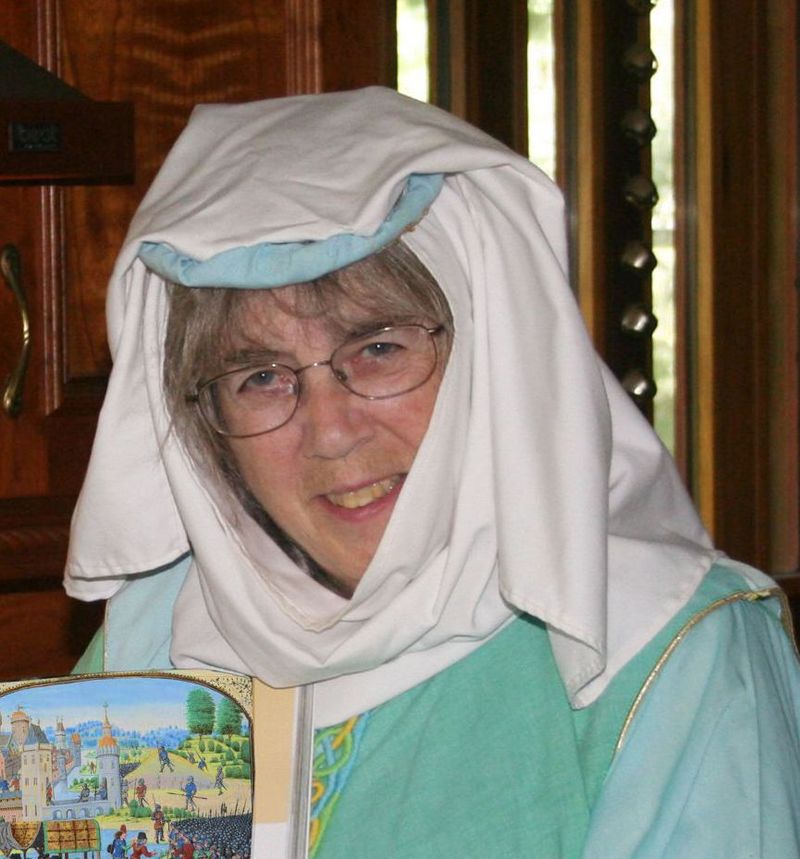
0S8YcxEYAuthor Bio:  

Mercedes Rochelle is an ardent lover of medieval history and has channeled this interest into fiction writing. Her first four books cover eleventh-century Britain and events surrounding the Norman Conquest of England. The next series is called “The Plantagenet Legacy” and begins with the reign of Richard II.  

She also writes a blog: www.HistoricalBritainBlog.com to explore the history behind the story. Born in St. Louis, MO, she received by BA in Literature at the Univ. of Missouri St.Louis in 1979 then moved to New York in 1982 while in her mid-20s to “see the world”. The search hasn’t ended! 

Today she lives in Sergeantsville, NJ with her husband in a log home they had built themselves. 

Author Links

Website: https://mercedesrochelle.com/  

Blog:  https://historicalbritainblog.com/  

Twitter / X: https://x.com/authorrochelle  

Facebook:  https://www.facebook.com/mercedesrochelle.net  

Book Bub: https://www.bookbub.com/authors/mercedes-rochelle  

Amazon Author Page:  https://www.amazon.com/stores/Mercedes-Rochelle/author/B001KMG5P6  

Goodreads: https://www.goodreads.com/author/show/1696491.Mercedes_Rochelle  

Book Review: “Women of the Anarchy” by Sharon Bennett Connolly

Women of the AnarchyCivil wars, clashes between cousins, are known to be full of battles between men on foot and horseback, with their eyes set on the throne of their desired country. Many stories of civil wars tend to leave out the women who often were left on the sidelines, ready to pick up the pieces. The story of the Anarchy is a bit different than other civil wars as one of the main figures was not a man, but Empress Matilda, the daughter of King Henry I and the rightful heiress of England facing off against the man who stole the throne from her, her cousin, King Stephen. However, it was not just Empress Matilda who defined what it meant to be a woman during the Anarchy. In her latest book, “Women of the Anarchy,” Sharon Bennett Connolly tells the stories of the mothers, sisters, and wives who defined this turbulent period that saw the end of one dynasty and the beginning of another.
I want to thank Amberley Publishing for sending me a copy of this book. I have enjoyed Sharon Bennett Connolly’s previous books that I have read, “Ladies of the Magna Carta,” “Silk and Sword,” “Defenders of the Norman Crown,” and “King John’s Right Hand Lady.” When I heard that Connolly was writing about the women who were involved in the Anarchy, I was excited because it is one of my favorite conflicts in history to study. I wanted to see what new information Connolly would present in her book.

Connolly begins by explaining how the conflict around the Anarchy arose and how Empress Matilda and Queen Matilda became the female faces of opposing sides of this civil war. Empress Matilda, the daughter of King Henry I, was the wife of the Holy Roman Emperor Henry V. However, her life took a dramatic turn when her only legitimate brother William Aetheling died on November 25, 1120, when the ship he was on, the White Ship, sank after a night of drunk sailing. As King Henry I’s last living legitimate child, Empress Matilda was the rightful heir to the English throne, even though she was a woman and she was willing to fight with everything in her power to sit on the throne. On the other side of the conflict was Queen Matilda of Boulogne, the wife of King Stephen. Although Queen Matilda or Empress Matilda could not wield a sword in battle, they showed that they were capable of fighting in their own unique ways.

Empress Matilda and Queen Matilda had grandmothers and mothers who showed them what it meant to be a queen and a mother who was willing to fight for their family. Women like Matilda of Flanders, Saint Margaret of Scotland, Matilda of Scotland, and Adeliza of Louvain showed the two Matildas how to help their husbands run a country while maintaining their strong identities as women rulers. However, Connolly does not stop just at the two Matildas when discussing royal women who had to navigate the Anarchy. We are introduced to interesting characters like Isabel de Vermandois, Ada de Warenne, Lucy Countess of Chester, Ela de Talvas, Mary of Boulogne, Isabel Countess of Warenne and Surrey, culminating with the story of Eleanor of Aquitaine.

While other books focus on the Anarchy, by focusing on the two Matildas and other women affected by this conflict, Connolly brings something fresh to this story that is centuries old. It shows how their actions to protect their families brought forth change in England through the birth of the Plantagenet dynasty. This book is rich in details and is so well written as Connolly takes the time to distinguish between the Matildas, which there are quite a few in this book, and explain how the conflict started and finally how it was concluded. I think if you want a fabulous book about the Anarchy and the women who defined this period, I highly recommend you check out, “Women of the Anarchy” by Sharon Bennett Connolly.

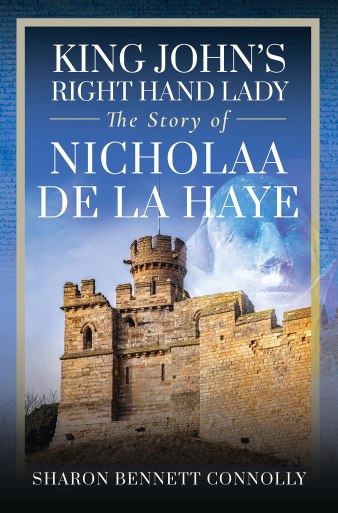
Book Review: “King John’s Right Hand Lady: The Story of Nicholaa de la Haye” by Sharon Bennett Connolly

Nicholaa de la HayeThe year is 1217, and Lincoln Castle is being attacked. King John is dead, and his son Henry III is now king, but chaos still reigns. Noblemen are fighting against each other, and amid this conflict is a woman in her sixties. She is used to the instability of England as she is not only the constable of the castle being besieged, but she has earned the right to be named the first female sheriff of England. She was a daughter, a wife, a mother, a widow, and someone the Plantagenets could depend on. The name of this remarkable woman is Nicholaa de la Haye, and her unbelievable story is told in Sharon Bennett Connolly’s latest book, “King John’s Right Hand Lady: The Story of Nicholaa de la Haye.”
I want to thank Pen and Sword Books and Net Galley for sending me a copy of this book. I remember first hearing the name Nicholaa de la Haye from one of Sharon Bennett Connolly’s other books, “Ladies of Magna Carta: Women of Influence in Thirteenth Century England.” I wanted to learn more about this woman, how she gained the trust of King John, and why she was not only a constable of Lincoln Castle but a sheriff for Lincolnshire.

To understand how Nicholaa de la Haye became the constable of Lincoln Castle, we have to explore the origins of the Haye family and their connection to the Plantagenets. Connolly tracks the family back to the Norman Conquest, but the main focus is on the direct family of Richard de la Haye and Matilda de Verdun, Nicholaa’s parents. The Haye family has a legacy and a deep sense of duty to protect the English royal family from invaders or rebels, which passed on to Nicholaa and her sisters as they were their father’s heiresses. With Richard de la Haye’s death, Nicholaa inherited his role as constable of Lincoln Castle.

Nicholaa de la Haye was married twice to William Fitz Erneis and Gerard de Camville, and she had several children. When her husbands were away or had died, Nicholaa could uphold her birthright as a constable. It was not an easy road, but she did have the backing of King John during the First Baron’s War. Connolly takes the time to explore how John became king, his connection with Nicholaa de la Haye, the Magna Carta crisis, and the First Baron’s War. Before his death, King John named Nicholaa the first female sheriff of England in charge of Lincolnshire. Finally, she had to deal with the siege of Lincoln Castle for three months in 1217, which was just a cherry on top of her whole life experience.

A strong, independent woman who lived a thrilling life and was willing to defend her home of Lincoln Castle even at the age of sixty, Nicholaa de la Haye was an unsung heroine of the thirteenth century. Connolly’s passion for telling Nicholaa’s tale of trials and tribulations exudes on every page. “King John’s Right Hand Lady: The Story of Nicholaa de la Haye” by Sharon Bennett Connolly is the perfect book for anyone who wants a story about the Plantagenets, King John, and the first female sheriff of England. A true triumph in exploring the life of a more hidden figure from the thirteenth century.

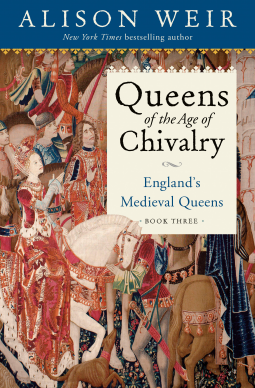
Book Review: “Queens of the Age of Chivalry: England’s Medieval Queens” by Alison Weir

cover263156-mediumWhen we think of the title “medieval queen,” a few things come to mind. They were seen as mere trophy wives who were only suitable for making alliances and giving birth to children. It may be a cruel assessment for a modern audience, but that was the reality of the medieval world. However, the late Plantagenet queens decided to step outside the socially acceptable path for their lives and forged a new one. In Alison Weir’s latest nonfiction book, “Queens of the Age of Chivalry: England’s Medieval Queens,” she explores the lives of five Plantagenet queens who had to adapt quickly to the ever-changing world of late medieval England.

Thank you, Ballantine Books and Net Galley, for sending me a copy of this book. I have read and enjoyed the previous books in England’s Medieval Queens series, and I wanted to see which queens would be included in this book.

The years covered in this book are 1299-1399, a time of turmoil, change, and the plague. During that time, five queens forever left their marks on England: Marguerite of France, Isabella of France, Philippa of Hainault, Anne of Bohemia, and Isabella of Valois. Their royal husbands were Edward I, Edward II, Edward III, and Richard II. Since these queens were foreign brides, it was a balancing act between what their home country expected of them and what England expected their new queen to do, which was, in most cases, to give birth to heirs and to stay out of politics.

We begin with Marguerite of France, who was the second wife of Edward I and the step-mother of Edward II; her most extraordinary claim to fame was to try and prevent her son from ever seeing Piers Gaveston, which sadly did not last long. Isabella of France had to deal with Edward II’s favoritism to not only Piers Gaveston but to Hugh Despenser the Younger. This led her to join Roger Mortimer and rebel against her husband. This decision would create a black cloud around her reputation for centuries.

As part of the rebellion, Edward III married Philippa of Hainault, who was the closest of these five queens to be the ideal medieval queen. She gave Edward III many heirs that would help define future generations. Richard II’s first wife, Anne of Bohemia, was the essence of sophistication, but her death sent him reeling, forcing him to take a child bride named Isabella of Valois.

Being a queen in the late medieval period was not easy, especially with the Black Death, the Hundred Years’ War, the Peasants’ Revolt, and internal struggles were constantly in play, but the five queens mentioned in this book were able to navigate this tumultuous time to create their legacies. Weir once again weaves fun facts and compelling tales of each queen to give her readers her perspective on their true legacies. If you have enjoyed the previous books in “England’s Medieval Queens” series, I would highly recommend you read “Queens of the Age of Chivalry: England’s Medieval Queens” by Alison Weir.

Book Review: “Lady of the English” by Elizabeth Chadwick

15931913The year 1120 was a horrible year for King Henry I. His only legitimate son William died when his ship, The White Ship, sank in the middle of the night. This tragedy left Henry with one option, his legitimate daughter Matilda, the former Holy Roman Empress, would become Queen of England, and her sons would continue the royal line. Unfortunately, Matilda’s throne was taken by Stephen of Blois, and now Matilda must join forces with her stepmother Her stepmother Adeliza has always stood by Matilda’s side. Still, when she remarries after Henry’s death, Adeliza struggles to support the rightful queen but stays loyal to her new husband, who supports Stephen. Matilda and Adeliza are caught in the middle of the Anarchy in Elizabeth Chadwick’s novel, “Lady of the English.”

We are introduced to Matilda at one of her lowest moments when her first husband, Holy Roman Emperor Henry V, dies, and she must go back to England. Her father, Henry I, has decided that Matilda will be his heiress, and she must marry again to secure his legacy if his current wife, Adeliza, cannot give him another heir. Matilda’s second husband is Geoffrey V Duke of Anjou, a braggart and is abusive towards his wife, even though she outranks him. It is a contentious relationship, but Matilda holds her head up high to try and make this arrangement work for her sons, Geffory, William, and the future Henry II.

Unfortunately for Adeliza, she cannot give her husband the heir he desires, which means that the greatest men in the land must swear oaths to honor Matilda as the next Queen of England. The plan is set, but when Henry I dies, Matilda is in France, so her cousin Stephen of Blois takes the opportunity to become the next King of England. Matilda is furious and decides to fight for her right to the English throne while Geoffrey is in Anjou, but then shifts her position that her eldest son, Henry II, will be the next King of England.

After Henry I’s death, Adeliza decides what is best for her is to live the rest of her life in a nunnery, but that is not her fate. A handsome young man named William D’Albini sweeps her off her feet and gives Adeliza the one thing she long desired, a family. Unfortunately, when Stephen becomes King of England, William D’Albini joins forces with the new king, while Adeliza stays loyal to her step-daughter and friend, Matilda.

This is my first time reading a novel by Elizabeth Chadwick, and I loved it so much. The way Chadwick blended elements of fiction with historical facts was nothing short of astounding. From battles to religious moments, politics to intimate moments, Chadwick brought the story of The Anarchy to life for a modern audience. Reading this novel felt like I was transported to 12th century England and showed where Henry II got his strength and determination to rule England. If you want a vivid and compelling novel about two dynamic women in the 12th century, I highly recommend reading “Lady of the English” by Elizabeth Chadwick.