
 When we think about royal relationships from the past, we do not associate them with love; it is more about cementing power. Princes and kings knew how much was at stake, so they tended to have wives for politics and produce legitimate heirs that would inherit their kingdoms. For matters of love and lust, kings and princes would have mistresses, either of noble birth or lower, on the side. These women have been deemed whores and homewreckers but is that a fair assessment of their legacies? Julia A. Hickey takes a closer look at these misunderstood mistresses in her latest book, “Medieval Royal Mistresses: Mischievous Women who Slept with Kings and Princes.”
Thank you, Pen and Sword Books and Net Galley, for sending me a copy of this book. When I saw this title, it intrigued me, and I was hoping to learn something new.
Hickey covers several hundred years in this book, starting around the year 1000 and ending in 1485. We begin with Queen Emma, Aelfgifu, and the confusion of whether Aelfgifu should be considered a mistress. With these Anglo-Saxon and Norman kings of England, we see many relatively hidden mistresses of William I and Henry I (who had quite a few). We then move to the Plantagenets with Henry II, King John, Edward II, Edward III, and Edward IV. Hickey also pays attention to other affairs in different countries, such as King David of Scotland and the Tour de Neste Affair.
Some of these mistresses would be familiar to readers, such as Isabella of Angouleme, Fair Rosamund, Piers Gaveston, Alice Perrers, Katherine Swynford, Isabella of France and Roger Mortimer, Jane Shore, Eleanor Talbot, and Elizabeth Woodville. Many were new to me, including Princess Nest of Wales, whose abduction started a war, Edith Forne Sigulfson, and Elizabeth Wayte. She even included Eleanor of Aquitaine as one of the mistresses mentioned in this book, which I’m afraid I have to disagree with, as most of this stems from the black legend that has tainted her legacy.
I found the information provided in this book rather intriguing, but my one concern about this book was how it was structured. I wish Hickey had sections marked for each king she mentioned in this book so we could distinguish which mistress was associated with which king or prince.
Overall, I found this book enjoyable and informative. It was a bit repetitive, and there were some arguments that I disagreed with. Still, the fact that Hickey could combine nearly 500 years’ worth of history about relatively hidden royal mistresses is quite admirable. Suppose you want a solid introduction to medieval England’s world of royal mistresses. In that case, I recommend you read “Medieval Royal Mistresses: Mischievous Women who Slept with Kings and Princes” by Julia A. Hickey.
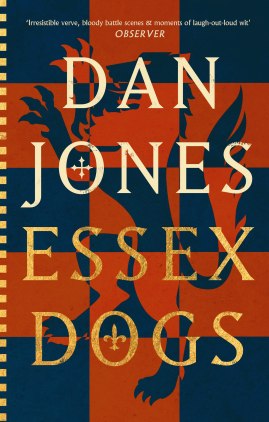 The year is 1346, and numerous English ships have landed on the shores of France. King Edward III, his son Edward of Woodstock, and his lords launched the first stage of what would be known as the Hundred Years’ War. Amongst the English royalty, nobility, and regular soldiers, are companies of men who came of their own accord for money and glory. One company of men consists of ten men known as the Essex Dogs, led by Loveday FitzTalbot. They are not like the other groups. They do not fight for money or glory; they fight for each other. In the horrors of war in a foreign land, can the Essex Dogs keep their promise and stay alive? Dan Jones introduces the world to these ten men and the early stage of the Hundred Years’ War in his first historical fiction novel, “Essex Dogs.”
 When we think about the more intimate moments in the medieval period of European history, a few misconceptions and myths come to mind, thanks to historical fiction and medieval movies. The idea that girls as young as twelve were married off to much older men was the norm, and there were such things as chastity belts. Everyone was filthy and smelled awful, so they only married in the spring when they would take their annual baths. And the brilliant idea that the wealthiest lords of the village were able to have their way with the bride on her wedding day. The latest book by Kathryn Warner, “Sex and Sexuality in Medieval England,” aims to eliminate these myths to reveal the truth of the intimate lives of those who lived during the medieval period.
 English kings are some of the most recognizable monarchs in all of European history, and when we think of Kings of England, a few names pop into our minds. Edward, George, and William tend to be popular, but you cannot study English history without Henry. Eight kings of England were Henry, and they would change the history of England forever. These eight kings give us an entire range of what kingship was like in medieval Europe. From men born to be king to opportunists who decided to take the throne as their own, from saints to warrior kings, the Henrys of English history were a colorful group of characters. Each king has had numerous biographies written about him, but there has never been a collection of biographies about the kings named Henry until now. This is “Harry of England: The History of Eight Kings, From Henry I to Henry VIII” by Teresa Cole.
 In history, the stories of women closest to those who sat on the throne tend to shine a bit brighter than others. Their tales give us great insight into how their respective countries were run and how dangerous it could be to marry someone with royal blood in their veins. However, some of the tales get lost in the annals of the past, only to be discovered much later. One of those tales is the story of Cecily Bonville- Grey, the wife of Thomas Grey Marquis of Dorset. In her own right, an extremely wealthy woman, her marriage into the Grey family would help define the succession issue during the late Tudor dynasty. Her story is finally told in Sarah J. Hodder’s latest book, “Cecily Bonville-Grey- Marchioness of Dorset: From Riches to Royalty.”
 In any dynasty, those closest to the throne are the most at risk of dealing with suspicions and conspiracies. Those who were not next in line for the throne were seen as threats, especially those whose bloodline was a bit stronger than those who sat on the throne. The Tudor dynasty’s biggest threat was the few Plantagenets who still lived at court. The family that had the most Plantagenet blood in their veins and poised the most significant threat was the Pole family. However, one woman who was very close to Henry VIII and his family married a man who had Plantagenet blood in his veins. Her name was Gertrude Courtenay, the Marchioness of Exeter, and her story is finally getting the light it deserves in Sylvia Barbara Soberton’s latest book, “The Forgotten Tudor Women: Gertrude Courtenay: Wife and Mother of the Last Plantagenets.”
 Medieval princes are often viewed as men who will one day be king of their homeland or another country. They are seen as wealthy men with prestige and honor who live lavish lifestyles and go to war to earn titles and estates. One of these noble medieval princes was a man who married three times, including to his most beloved mistress. He was the son of Edward III, the uncle of Richard II, and the father of the queen of Castile and King Henry IV, the first Lancastrian king. His children, grandchildren, and great-grandchildren would rule in different European countries, even though he never had the chance to wear the crown of England or Castile for himself. His name was John of Gaunt, and his story is told in Kathryn Warner’s latest biography, “ John of Gaunt: Son of One King, Father to Another.”
 Today, I am pleased to welcome Sylvia Barbara Soberton back to discuss another forgotten Tudor woman, Gertrude Courtenay, who is the subject of her latest book, “The Forgotten Tudor Women: Gertrude Courtenay. Wife and Mother of the last Plantagenets”.
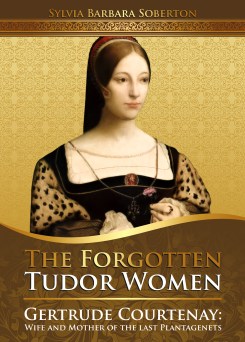 About the Book
 In human history, when citizens have disagreed with a new law or those in charge, they often stage a protest to show their frustration. When their voices are not heard, people often turn to rebellions and revolts to make sure their opinions matter. We might think that revolution and rebellion as a form of protest are modern ideas, but they go back for centuries. Revolutions and rebellions shaped history, no more so than in the middle ages. In his latest book, “Rebellion in the Middle Ages: Fight Against the Crown,” Matthew Lewis examines the origins of the most famous rebellions in medieval England and how they transformed the course of history.
 As the weather gets colder, the leaves turn brilliant colors and fall from their trees, marking the perfect time of the year to snuggle with a blanket, a cup of tea, and a good spooky tale. Many would reach for a modern supernatural story, but ghost tales have been hiding in archives for centuries. One such story comes from the time of King Richard II. It was first found and transcribed from Latin in 1922 by medievalist M.R. James. Dan Jones has taken on the challenge to retell this story for a modern audience. Initially written by an unknown monk of Byland Abbey, this medieval ghost story is called “The Tale of the Tailor and the Three Dead Kings.”
 Adventures of a Tudor Nerd