
 When we think about significant law documents from medieval England, we think about the Doomsday Book, the Assize of Clarendon, and the Statutes of Westminster. These documents would remain significant to England, but there is only one that would transcend its original purpose: the Magna Carta. To many nations, it is the foundation of liberty and justice for all. But, if we take away all the sparkling praise of the present day for the document, what can we discover about the Magna Carta? What was the Magna Carta truly at its heart, and why was it written? Dan Jones examines this document and the circumstances behind its creation in his book, “Magna Carta: The Birth of Liberty.”
I have been wanting to read and review all of the books Dan Jones has published currently, so when I saw this book, I knew I wanted to read it. The Magna Carta and its creation have been an area of interest for me for a while, so I wanted to see what new information Jones could provide to this field.
So how did the Magna Carta gain such a lofty reputation for a document written and sealed over 800 years ago? To understand this question, we need to go back to the reigns of Henry II, Richard the Lionheart, and the infamous King John, the king who was behind the reason why the Magna Carta was necessary. It is by understanding the reigns of his father and brother that we can tell, as an audience, how different John was compared to his Plantagenet ancestors.
John wanted to have a stronger hold on his English subjects, but the barons would not have it. They decided to rebel against John with his high taxes, his stringent laws, and his endless wars. The Magna Carta was a result of discussions and a few drafts, but it was this document that set the guidelines for peace, which lasted for a while. The Magna Carta was reissued a few times after John’s death, but it became an antique lost to time thanks to the Tudors. It was revived during the reign of the Stuarts, and its champion was Sir Edward Coke, who helped draft the Petition of Rights. From this moment on, the Magna Carta grew to become a document of liberty that would be a foundation for nations like the United States of America.
It is quite extraordinary how a document sealed at Runnymede over 800 years ago as a peace agreement between King John and his barons would turn into a symbol of liberty for the Western world. While this is not my favorite book by Dan Jones, as I found it a tad dry, I did find it informative and easy to follow. If you want a book about this remarkable document and its legacy, I recommend you read “Magna Carta: The Birth of Liberty” by Dan Jones.
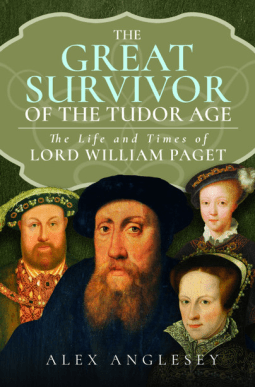 Rulers cannot govern alone. They require a team of men and women behind them to operate as a cohesive unit. The same can be said for rulers during the Tudor dynasty. We know the stories of men like Cardinal Wolsey and Thomas Cromwell, two men who rose through the ranks to prominent seats of power to ultimately have disastrous falls from grace. However, there was a third Tudor politician who should be in this discussion about rags-to-riches stories. He was the son of a common merchant who went to serve most of the Tudor monarchs as an advisor. Conspiracies and rebellions kept him on his toes, but he ultimately survived the Tudor dynasty, which was a difficult thing to achieve. His name was Lord William Paget and his story is told by his descendant Alex Anglesey in his debut book, “The Great Survivor of the Tudor Age: The Life and Times of Lord William Paget.”
 When we think of famous artists in the 15th and 16th centuries, we focus on the great European masters. Michelangelo, Leonardo da Vinci, and Albrecht Durer tend to come immediately to mind. However, one man from Augsburg, Germany, revolutionized how we viewed the Tudor dynasty through portraiture: Hans Holbein the Younger. Many are familiar with his famous works of art and how they influenced how the Tudors have been perceived for centuries, but the man behind the masterpieces has been overlooked. His story and how art was understood in the 16th century is told in Franny Moyle’s latest biography, “The King’s Painter: The Life of Hans Holbein.”
 Adventures of a Tudor Nerd