
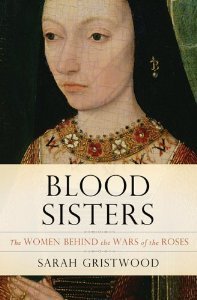
 When it comes to studying wars from the past, we often focus on the men who fought during the battles the strategies that were implemented to win and the plans that backfired spectacularly. So frequently in the study of wars, we forget about the women left behind, but in fact, they had bigger roles to play than sitting on the sidelines. For example, the royal women who lived in England during the conflict known as the Wars of the Roses played an essential role in how the wars concluded. These women are slowly coming into the spotlight in biographies and historical fiction novels, but it is rare to read a book about the Wars of the Roses where the central figures are the women, until now. Sarah Gristwood has taken seven women from this age and weaved their stories into her book, “Blood Sisters: The Women Behind the Wars of the Roses.”
I have been interested in the Wars of the Roses and the women who lived during that period for years. I heard about this book when I started studying this period, but I have never had a chance to read it, until now.
There were so many strong women from this period, but Gristwood narrowed her choices down to seven remarkable women to focus on; Margaret of Anjou, Margaret Beaufort, Elizabeth Woodville, Elizabeth of York, Cecily Neville, Anne Neville, and Margaret of Burgundy. By choosing these women, Gristwood is presenting a story of a conflict that spanned multiple generations, both York and Lancaster, and showing how both the English and Burgundian nobility dealt with the changes that were happening when the Tudors took control.
Gristwood begins with the marriage of Margaret of Anjou and Henry VI. Though she was French by birth, her loyalty was always going to be with her husband’s Lancasterian family. That meant she would eventually become enemies with the proud Cecily Neville, the wife of Richard Duke of York and mother of King Edward IV and King Richard III, but Margaret was allied with Margaret Beaufort, the tenacious mother of King Henry VII, the founder of the Tudor dynasty. The conflict passed onto the daughters of these women, like Anne Neville and Margaret Burgundy, as well as the daughter of Jacquetta of Luxembourg, Elizabeth Woodville. These women would continue the conflict and help seal the fate of the Lancastrians, see the rise and fall of the Yorkists, and the beginning of the Tudor dynasty through the marriage of Elizabeth of York, the daughter of Elizabeth Woodville, and Henry Tudor. This book spans decades and includes events like the disappearance of the Princes in the Tower, well into the Tudor dynasty such as the pretenders, the marriage of Prince Arthur and Catherine of Aragon, the death of Prince Arthur, and the rise of Henry VIII.
This was a delightful look into the Wars of the Roses through the eyes of the women who lived through this period. They were mothers, daughters, wives, queens, fighters, and survivors. They showed that without their tenacity and determination to fight for what they believed was right and for their families. If you are a fan of the women who defined the Wars of the Roses, I highly suggest you read, “Blood Sisters: The Women Behind the Wars of the Roses” by Sarah Gristwood.
 The tales of the Tudor kings are unique in how they became kings of England. We all know the story of how Prince Henry became King Henry VIII. His eldest brother, Prince Arthur, died shortly after he married the Spanish Princess Katherine of Aragon. Much has been discussed about Arthur’s wedding night and death, but not much has been written about his time as the Prince of Wales. In his debut book, “Arthur, Prince of Wales: Henry VIII’s Lost Brother” Gareth Streeter explores the life of the first Tudor prince.
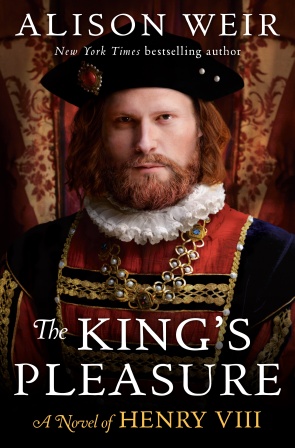 When we think about the Tudor dynasty, we often focus on the women in King Henry VIII’s life and his children, at least when it comes to novels. Writing about this larger-than-life figure, this notorious king and controversial figure in English history, are usually considered ambitious. Few have attempted to write a book about the king’s entire reign, but Alison Weir has embarked on this endeavor in her latest novel, “The King’s Pleasure: A Novel of Henry VIII.”
 Two kings, two rivals from different countries defined the 16th century. One was the spare to his father’s crown, but when his eldest brother suddenly passed away, he became the next Tudor king. The other was the sole heir to his parent’s large kingdom and would become the Holy Roman Emperor. Wars, the Reformation, and family drama kept these two men, Henry VIII and Charles V, busy and at each other’s throats. They would sometimes join and fight for one another’s causes, showing the importance of international politics. With each new scenario, their relationship would shift, either for the best or the worst. Richard Heath has combined the stories of these two monarchs, these “frenemies,” into one joint biography, “Henry VIII and Charles V: Rival Monarchs, Uneasy Allies.”
 Many actors and actresses have portrayed the lives of Henry VIII and his six wives in modern films and dramas. When asking Tudor nerds which Henry VIII stood out the most, the most popular response is Keith Michell in the 1970s BBC series, “The Six Wives of King Henry VIII.” I had not heard about this series until I started “Adventures of a Tudor Nerd.” Many people have wanted me to watch the series solely for the performance of Keith Michell, so when a coworker allowed me to borrow her DVD copy of the series, I finally decided it was time to tackle this legendary series.
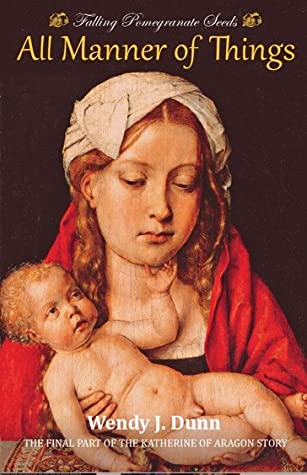 A journey to a foreign land for a long-promised marriage that will unite the royal families of Spain and England. Two friends caught in the middle far away from their beloved Spain. One is Princess Katherine of Aragon, who will marry Prince Arthur. The other is her cousin and close confidant, Maria de Salinas. Their journey like their friendship will last for decades, full of loyalty and love. Katherine’s story has been told many times in different ways, while Maria de Salinas has remained faithfully in the shadows. That is until now. In Wendy J. Dunn’s continuation of her Katherine of Aragon story, “Falling Pomegranate Seeds: All Manner of Things”, Maria de Salinas is the protagonist telling the tragic tale of love and heartache from her perspective.
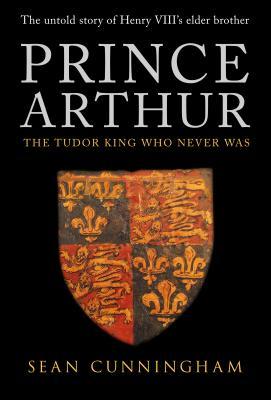 A new dynasty is born out of war and bloodshed. Hope is restored to the land as the remains of the Houses of York and Lancaster are united when Henry VII marries Elizabeth of York. It was not until the birth of their eldest child and heir, Prince Arthur, that the union was truly complete. Arthur was the hope for the nation, but when he tragically died shortly after marrying Catherine of Aragon, he was replaced by his younger brother who would become King Henry VIII. Arthur’s life was indeed very short, but his legacy and untimely death altered the course of history forever. Arthur tends to be a footnote in history, between Henry VII’s and Henry VIII’s reigns, but what was this young prince like? Why did his death leave such a large hole in the plans for the future of the Tudor dynasty? What was his relationship like with his family and those closest to the prince? These questions and more are explored in Dr. Sean Cunningham’s brilliant biography, “Prince Arthur: The Tudor King Who Never Was”.
 Adventures of a Tudor Nerd