
Book Review: “Henry V: The Astonishing Triumph of England’s Greatest Warrior King” by Dan Jones

English history is filled with kings who had to fight for their crown, both at home and away in foreign lands. Men like William the Conqueror, Henry II, Henry IV, Edward IV, and Henry VII can be considered warrior kings, but one stands above them all. He only ruled for a little over nine years, but he proved his worth time and time again, especially against his French adversaries, and secured the crown of France for his young son. He was the son of Henry Bolingbroke, King Henry IV, and the grandson of John of Gaunt. He was Henry V and his story is one of the most remarkable tales in English medieval history, told masterfully in Dan Jones’ latest book, “Henry V: The Astonishing Triumph of England’s Greatest Warrior King.”

I have been a fan of Dan Jones and his books for a few years now and always jump at the chance to read his latest book. When I heard that he was writing a biography about Henry V, it was an instant pre-order for me because it is Dan Jones’ first biography and I did not know much about Henry V minus the main points about his life and reign.

It was a miracle that Henry V became King of England. Henry was the son of Henry Bolingbroke and Mary de Bohun, the grandson of John of Gaunt, and cousin to King Richard II. He was the son of an Appellant lord who was banished from England for opposing Richard II, so the likelihood that he would even be the next Duke of Lancaster was significantly small. Jones shows his audience what Henry’s childhood was like before his father was banished and after he returned and took the throne from Richard II. It was a dramatic change for the young man as it meant that he had to adapt to life as the Prince of Wales, which meant that he had to fight for English control of Wales and against those who also claimed his title, primarily Owain Glyndwr and the Percy family (including Henry Hotspur Percy). The fight for Wales culminated in the Battle of Shrewsbury where Henry Percy died and the army of Henry IV was victorious. Henry V was shot in the face with an arrow and almost died, but Doctor John Bradmore saved his life.

After the arrow incident, we see a different side of the young Prince as he is more mindful of religious matters. When his father Henry IV falls ill, we also see Prince Henry take more of a leading role in politics as part of a council meant to help the king rule England. When Henry IV died on March 20, 1413, the young King Henry V was ready to rule. He believes that to be a strong ruler, he must show it by facing the English’s mortal enemies, primarily France, in battle. He led England to great victories against the French, including the Battle of Agincourt, which was marked as one of the greatest victories for the English during the Wars of the Roses. Henry V was a competent ruler who made England a powerhouse in European history. He was able to secure the French throne for his young son Henry VI, the only child of Henry V and his wife Catherine of Valois before the great warrior king died on August 30, 1422.

I was thoroughly impressed with this biography and I am surprised that it took Dan Jones this long to write a biography. You can tell his passion for the life of Henry V through every page. I hope Jones will write another biography soon. If you are a Dan Jones fan, a medievalist, or just a fan of fantastic biographies, I highly suggest you read, “Henry V: The Astonishing Triumph of England’s Greatest Warrior King” by Dan Jones.
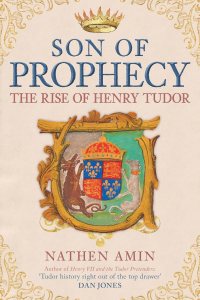
Book Review: “Son of Prophecy: The Rise of Henry Tudor” by Nathen Amin

The date is August 22, 1485, and a young man stands in the middle of a battlefield. He has done what seemed nigh impossible, he defeated the last Plantagenet king Richard III to become the new King of England. His heritage makes this man unique and qualified to start a new dynasty. His mother’s family the Beauforts have been explored quite heavily by historians and authors alike. They see this victory as a change in English history whereas his father’s family sees it as a sign of something deeper. To the Tudors and Henry’s fellow Welshmen, it is the fulfillment of a centuries-old prophecy. So who were Henry Tudor’s ancestors and what did it mean for Henry to be the titular Son of Prophecy? Nathen Amin tells the remarkable story of the Tudors and how their struggles and triumphs led to Henry Tudor taking the throne in his latest book, “ Son of Prophecy: The Rise of Henry Tudor.”

I want to thank Amberley Publishing for sending me a copy of this book. I have enjoyed Amin’s previous books, “The House of Beaufort: The Bastard Line that Captured the Crown” and “Henry VII and the Tudor Pretenders: Simnel, Warbeck, and Warwick,” When I heard that he was writing a book about the origins of the Tudors from the Welsh perspective, I knew I had to read it. I don’t know much about Welsh history, so I was looking forward to learning more. 

Amin begins by explaining that while those who study the life of Henry Tudor know that he was Welsh, they don’t highlight his Welshness as a unique aspect of his life. However, as Amin argues, it is the king’s Welsh heritage that makes his story so fascinating as the Tudor story in Wales spans eight generations and it is the story of warriors and diplomats. We begin with the warrior Ednyfed Fychan, who served Llwelyn ab Iorwerth Prince of Ewynedd during the Welsh War of Independence. Now, for those who are paying attention, you will notice that his surname is not Tudor, but Amin takes the time to explain the origins of the Tudor name as well as how English and Welsh relationships changed over time, starting at the time of the Saxons to the start of the Tudor dynasty. 

What I found fascinating is how the family that would later be known as the Tudors in English history were not afraid to get their hands dirty and be at the forefront of change for Wales. They fought tooth and nail for their Welsh rights and those who considered themselves the Prince of Wales, even if it meant putting their lives at risk. It was the stories of these men who created the foundation for Owen ap Maredudd ap Tudur (Owen Tudor) to leave his native Wales for England, work under Walter Hungerford, fall in love and marry the Dowager Queen Katherine of Valois, and have his sons Edmund and Jasper Tudor. This is the point that most people know as the “origins of the Tudors,” but by going back, Amin is showing his audience the depth of Henry’s Welsh roots and it would be on that battlefield on that August day where that Welsh loyalty would become a defining factor between victory or defeat. 

I was enthralled by this book and the copious amounts of notes that I took while reading. It was so much fun learning about historical events and figures that were unfamiliar to me in the context of the Tudor story. This book will revolutionize how you view the Tudors and how Henry Tudor gained the throne. If you are a Tudor nerd who wants to learn more about the Welsh connections to this dynasty, “Son of Prophecy: The Rise of Henry Tudor” by Nathen Amin is an absolute must-read.

Book Review: “Arthur, Prince of Wales: Henry VIII’s Lost Brother” by Gareth Streeter

Arthur Prince of WalesThe tales of the Tudor kings are unique in how they became kings of England. We all know the story of how Prince Henry became King Henry VIII. His eldest brother, Prince Arthur, died shortly after he married the Spanish Princess Katherine of Aragon. Much has been discussed about Arthur’s wedding night and death, but not much has been written about his time as the Prince of Wales. In his debut book, “Arthur, Prince of Wales: Henry VIII’s Lost Brother” Gareth Streeter explores the life of the first Tudor prince.
I want to thank Pen and Sword Books and Net Galley for sending me a copy of this book. Prince Arthur has been mentioned in numerous accounts of the Tudors, but it is very rare for a book to focus on the young prince. I wanted to see what new information Streeter would bring to the story of the crown prince who would never become king.

Streeter begins his book by exploring the origins of the Tudor line and the significance of King Arthur and ancient Briton kings like Brutus and Cadwaladr. He then dives into the birth and baptism of Prince Arthur, which shows a lot of symbolism that the Tudors wanted to employ to establish their young dynasty. During the part about the baptism of the young prince, Streeter gives his audience a bit of background on those in attendance and the Wars of the Roses.

Most of this book focuses on Arthur’s life as the crown prince and the Prince of Wales, including the duties he was expected to take on. As the heir to the young Tudor dynasty and the son of King Henry VII and Queen Elizabeth of York, he was the hope of the entire country. Unfortunately, the pretenders Perkin Warbeck and Lambert Simnel threatened the fragile peace that Henry VII established. Amid the pretender drama, we see the young prince’s education and the arduous marriage negotiations between Spain and England. Finally, Streeter discusses the relationship between Arthur, Katherine of Aragon, and his family, until his untimely death, which left England with Henry VIII as the only heir to the Tudor dynasty.

For a debut, Streeter has done a great job presenting how he views Prince Arthur’s life and showing new information that Tudor fans alike will find fascinating. As Streeter has said in this book, Prince Arthur was more than just a prince who died. He did live, and his life as the first Tudor prince set the standard for King Henry VIII and Edward VI after him. I thoroughly enjoyed learning about Prince Arthur and look forward to reading the next book Gareth Streeter writes. If you want to learn more about the Tudor prince who never became king, I recommend reading “Arthur, Prince of Wales: Henry VIII’s Lost Brother” by Gareth Streeter.

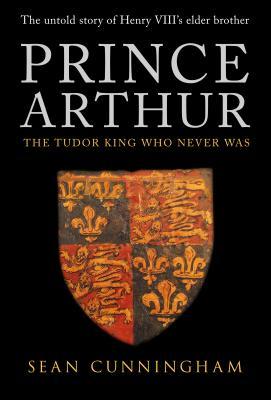
Book Review: “Prince Arthur: The Tudor King Who Never Was” by Sean Cunningham

28999810A new dynasty is born out of war and bloodshed. Hope is restored to the land as the remains of the Houses of York and Lancaster are united when Henry VII marries Elizabeth of York. It was not until the birth of their eldest child and heir, Prince Arthur, that the union was truly complete. Arthur was the hope for the nation, but when he tragically died shortly after marrying Catherine of Aragon, he was replaced by his younger brother who would become King Henry VIII. Arthur’s life was indeed very short, but his legacy and untimely death altered the course of history forever. Arthur tends to be a footnote in history, between Henry VII’s and Henry VIII’s reigns, but what was this young prince like? Why did his death leave such a large hole in the plans for the future of the Tudor dynasty? What was his relationship like with his family and those closest to the prince? These questions and more are explored in Dr. Sean Cunningham’s brilliant biography, “Prince Arthur: The Tudor King Who Never Was”.

I had heard about this book from my friends in the Tudor community for a while now and it sounded so intriguing. In my studies of the Tudor dynasty, I have often treated Prince Arthur as a footnote, but I have felt that there was more to his story than his birth, his marriage to Catherine of Aragon, and his death.

To understand the significance of Prince Arthur and his birth, Cunningham briefly explains how the Tudor dynasty began at the end of the Wars of the Roses. To secure the dynasty, the birth of a male heir was essential. His name itself was seen as a way to connect the Tudors with legendary kings of England’s past. The prince’s baptism was as glamorous as his parents’ coronations and wedding, emphasizing the role that his parents expected their son would play as he grew up.

The bulk of this biography is focused on the education and the political moves that Arthur made while he was Prince of Wales. It may have seemed a bit harsh for his parents to send him away at a young age, but as Cunningham explains thoroughly, this was part of a long-term strategy for Henry VII. Although we don’t know much about Arthur’s character, the way he was raised and how he held control in his northern realm showed us a glimmer of what his reign might have been like if he did live long enough to be the second Tudor king.

It was his marriage to Catherine of Aragon, who would be Henry VIII’s first wife, that was the pinnacle of his young life. Normally, the wedding night would not have been a point of intense focus. However, since it was critical to Henry VIII’s divorce case against Catherine, Cunningham explored as much of that night and what we know as possible. Finally, Cunningham tackles the confusing issue of what killed the prince.

Overall I found this book very enlightening and extremely well researched. Prince Arthur was the most prominent Tudor child born to Henry VII and Elizabeth of York, yet he has never been a focal point for Tudor historians. Cunningham has taken every minute detail of his short life to craft this insightful biography of a prince whose death shaped the course of history forever. This is a masterpiece of a biography. If you would like to learn more about the life of the firstborn Tudor prince, I highly recommend you read, “Prince Arthur: The Tudor King Who Never Was” by Sean Cunningham.

Book Review: “Edward II the Man: A Doomed Inheritance” by Stephen Spinks

34411942._SX318_ (1)When we think of medieval kings of England, we tend to think about strong warriors who did things their own way. Men like Edward I and Edward III often come to mind. Yet, there was a king in between these two legendary warriors whose name lives on in infamy, King Edward II. He is known for his numerous favorites, his relationships with men like Piers Gaveston and Hugh Despenser the Younger, his disagreements with the barons who were trying to help him run the country, his relationship with his equally famous wife and son, Isabella of France and Edward III, and his dramatic death. But who was the man known as King Edward II? What was he really like? Stephen Spinks explores these questions in his latest biography, “Edward II the Man: A Doomed Inheritance”.
I would like to thank Amberley Publishing for sending me a copy of this book. I remember hearing briefly about Edward II’s story in different documentaries that I have watched, but I have never read a biography about him before. This book was rather enlightening.

Spinks naturally begins with the birth of Edward of Caernarfon (the future King Edward II) to his parents, King Edward I and Eleanor of Castile. What is interesting is that Edward was their only son who survived long enough to become king, since his elder brothers would all pass away. His father, Edward I, was truly a warrior king, fighting against Wales and Scotland, yet he accumulated absolutely staggering debts which Edward II had to deal with when he was king. With his father’s victory in Wales, Edward of Caernarfon was made the first English Prince of Wales.

When Edward I died, Edward became King Edward II, with an inheritance filled with issues that would come to define his reign. Edward II had to deal with the crippling debt, war from numerous countries, and barons that were constantly trying to control how he ran the country. On top of all of this, Edward decided to rely heavily on men like Piers Gaveston and Hugh Despenser the Younger, his “favorites”, which really did not sit well with the barons or his wife, Isabella of France. It is the belief of Spinks that Edward’s relationships with Gaveston and Despenser were more than platonic, that they were Edward’s lovers and that is why he always took their advice above his barons and gave them massive rewards. Personally, I am not sure how I feel about this theory since this was the first biography I read about Edward II, and I think I would need to study a bit more before I settle on a theory about this topic.

Another huge topic that Spinks addresses in his book is the split between Edward and Isabella that ultimately led to his downfall and his death. It was interesting to see how even though they did split up, Edward did indeed cared for his family, although he did have a rather unusual way of showing it. His abdication, death, and the stories of how he survived are really compelling and makes you wonder what happened to Edward II after his son became King Edward III.

Overall, I found this book extremely informative. Spinks was able to combine the complex nature of the government that was run by the barons with an easy to understand writing style. Spinks also discusses other theories written by other historians to allow readers to understand why he believes what he believes. After reading this book, I do want to learn more about King Edward II and his reign. If you want a great introductory book into the reign of King Edward II, I highly recommend you read, “Edward II the Man: A Doomed Inheritance” by Stephen Spinks.

Biography: The Princes in the Tower (Edward V and Richard Duke of York)

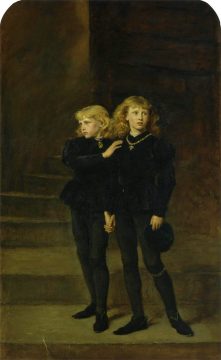
PrincesEdward V (Born November 2, 1470- Date of Death Unknown). Richard Duke of York (Born August 17, 1473- Date of Death Unknown). Sons of King Edward IV and Elizabeth Woodville. Richard was married to Anne Mowbray. Edward V and Richard Duke of York are known as “The Princes in the Tower”. They were placed in the Tower of London after their father’s death and were never seen again. Their disappearances and whether or not they were murdered has become one of the greatest mysteries in history.

Edward and Richard were both the sons of Edward IV and Elizabeth Woodville. Edward IV had married Elizabeth Woodville in secret, causing distrust between Edward and his biggest ally Richard Neville Earl of Warwick. With the rise of the Woodvilles, Warwick feared that they would overthrow his title of the second most powerful man in England.

Warwick decided to side with Edward’s power hungry younger brother George Duke of Clarence, and Louis XI of France, who promised Warwick land in France if he overthrew Edward. Warwick’s plan was to depose Edward and place George on the throne. Warwick had Edward imprisoned in the Tower, but when his reputation began to suffer, he released Edward in October 1469. Warwick and George both decided to reconciled with Edward but Edward never truly trusted either of them ever again.

Warwick knew that if he was going to restore his power, he had to discuss matters with Louis XI and Margaret of Anjou, which meant that he had to defect to the Lancastrian cause, which he did. In September 1470, Warwick and his rebellion made its way to England; Edward was unprepared and was forced to leave England on October 2 and seek aid from his brother in law the duke of Burgundy. His wife Elizabeth Woodville and their children were forced to seek sanctuary at Westminster Abbey. It was there on November 2, 1470 that the future Edward V was born.

Edward returned to England on March 11, 1471. His army defeated Warwick’s army at the Battle of Barnet, where Warwick and John Neville were killed. On May 4, 1471, Edward faced off against the Lancastrian army at the Battle of Tewkesbury, where the Lancastrians were finally defeated and Edward of Westminster was killed. Edward V was created Prince of Wales in June 1471. In 1473, Edward V was moved to Ludlow Castle and was created president of the Council of Wales and the Marches. Edward was in the care of the queen’s brother Anthony, Earl of Rivers, who was a renowned scholar.

Edward’s brother Richard was born on August 17, 1473. In May 1474, he was made Duke of York and the following year, Richard was made a Knight of the Garter. From this point on, the second son of the king was created Duke of York. On June 12, 1476, Richard was created Earl of Nottingham. It was on January 15, 1478 that Richard was married to Anne Mowbray, 8th Countess of Norfolk. The groom was around 4 years old and the bride was 5 years old. On February 7, 1477, Richard was created Duke of Norfolk and Earl Warenne. Richard’s brother Edward was arranged to be married to Anne of Brittany in 1480 to conclude an alliance between England and Brittany, but the marriage never happened. In November 1471, Anne Mowbray died and instead of her Mowbray estates passing onto the next heirs, William, Viscount Berkeley and to John, Lord Howard, Parliament ruled in January 1483 that the estates would pass onto Richard Duke of York.

On April 9, 1483, Edward IV died, leaving his eldest son Edward V to be king at the age of 12. Edward did not hear about his father’s death until April 14, 1483 since he was at Ludlow Castle at the time. Edward IV’s brother Richard Duke of Gloucester was named Lord Protector. On April 29, as previously agreed, Richard and his cousin, the Duke of Buckingham, met Queen Elizabeth’s brother, Anthony Woodville, 2nd Earl Rivers, at Northampton. At the queen’s request, Earl Rivers was escorting the young king to London with an armed escort of 2000 men, while Richard and Buckingham’s joint escort was 600 men. The young king himself had been sent to Stony Stratford. Richard had Earl Rivers, his nephew Richard Grey and his associate, Thomas Vaughan, arrested. They were taken to Pontefract Castle, where they were executed on June 25 on the charge of treason against the Lord Protector after appearing before a tribunal led by Henry Percy, 4th Earl of Northumberland. Richard took the young king under his protection, escorted him to London, and placed him in the Tower for his protection. Elizabeth Woodville took her daughters and Richard Duke of York and fled to sanctuary at Westminster Abbey yet again.

The coronation for Edward V was scheduled for June 1483, but it was postponed. On June 16, it is said that Richard Duke of York joined his brother in the Tower. It was around this time that Richard Duke of Gloucester announced that he believed that Edward IV’s marriage to Elizabeth Woodville had been illegal since Edward IV had a pre-contract marriage arrangement with Lady Eleanor Butler. This meant that his children with Elizabeth Woodville were considered illegitimate, including the young king Edward V and his brother Richard. This meant that the next in line to the throne, Richard Duke of Gloucester, was the rightful king. On June 25, 1483, King Edward V was deposed and Richard Duke of Gloucester became Richard III. We do not know if it is true if Edward IV did indeed enter into a pre-contract marriage with Lady Eleanor Butler.

Edward V and Richard Duke of York were last seen in the Tower in the summer of 1483. We do not know what happened to them. There are theories that they were murdered, which includes a list of suspects including their uncle Richard III as the main suspect. There are also theories that the boys somehow managed to escape the Tower and came back as pretenders like Lambert Simnel or Perkin Warbeck. The simple fact is right now, we do not know what happened to Edward V and Richard Duke of York, “the Princes in the Tower”.

Biography: King Henry IV (aka Henry Bolingbroke)

(Born April 3, 1367- Died March 20, 1413). Son of John of Gaunt and Blanche of mw03072Lancaster. Married to Mary de Bohun and Joan of Navarre. He had 7 children with Mary, including the future Henry V. He was the 1st king from the house of Lancaster.

Henry was the son of John of Gaunt and Blanche of Lancaster and was born at Bolingbroke Castle on April 3, 1367. Early in his life, he became one of the Lords Appellant who were opposed to the rule of Richard II. He stepped down from this role in 1389 and in 1390, went on his first adventure, journeying with the Teutonic Knights to Lithuania. Two years later, he went on a pilgrimage to Jerusalem. During this time, he visited numerous courts in Europe and was held in high regards. He was a handsome young man, but it was early in life where Henry’s ill health that plagued him during his reign started to appear.

Henry was a good person to help the king, however the only one who failed to realize this was Richard II. He banished Henry in 1398 for ten years, but when John of Gaunt died the following year and Henry became the next Duke of Lancaster, Richard II took all of his lands and banished him forever. This was the last straw for Henry. While Richard was occupied with unrest in Ireland, Henry took his chance and invaded England, forcing Richard to abdicate. The next one in line to the throne was Edmund Mortimer, earl of March, but he was only eight years old, so Parliament agreed that Henry would be a better choice to be king. His reign as Henry IV began on September 30, 1399.

However, not everyone was happy with Henry as king. Henry IV’s first rebellion that he had to deal with was by the earls of Kent, Salisbury and Huntingdon, just a month after he became king. Henry took care of this rebellion quickly and violently. It is also believed that this was around the same time that Henry ordered the death of Richard II. A few months after the first rebellion, Henry IV had to deal with a second rebellion in Wales, where Owain Glyn Dwr was declared Prince of Wales in September 1400. This revolt was quickly put down, but Owain evaded capture for several years, leading to guerrilla style warfare.

Owain’s supporters grew not only amongst Welsh barons, but English ones as well, including the Mortimers who were upset that Henry was king and not Edmund, who was Owain’s son in law after he married Owain’s daughter. Another supporter was Henry “Hotspur” Percy, the son of the earl of Northumberland who believed that he did not get the recognition that he deserved after he fought against the Scots. These forces came together and fought against Henry at the battle of Shrewsbury on July 21, 1403, where Henry defeated Hotspur easily and killed him. Henry was not going to let the rebel army get away and by 1408, they were all but eliminated.

Two years before this, in 1406, Henry IV took James I of Scotland hostage and his young heir was sent to France. James was in the English court for 17 years as a hostage and for that time, the relationships between England, Scotland and France were good. Things were looking up for Henry IV, except for his health. Starting in 1406, his health was in decline and there was a serious concern for his life. He tried to govern, but he became more reliant on his Parliament. In 1409, Henry’s son Prince Henry was made chancellor over Thomas Arundel, archbishop of Canterbury. Arundel returned in 1411 when Henry and his council were debating if he should step down in favor of Prince Henry, which Henry refused to do. Henry died in 1413 from some sort of wasting disease at the age of 45. His son Prince Henry would succeed him as Henry V.