
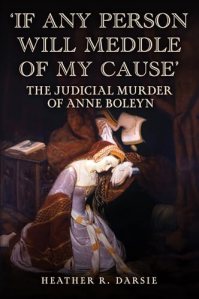
 We all know the story of Anne Boleyn. The story of the English noblewoman who caught the eye of King Henry VIII, who decided to divorce his first wife, Katharine of Aragon, to marry Anne. He broke away from Rome and created the Church of England to do it, but marital bliss did not last long, as a few years later, Anne would leave their three-year-old daughter Elizabeth behind when she was executed by Henry over charges of adultery. We know this version of the story, but what if we look at Anne’s story from a continental European perspective? How does her story change when we view her life through a religious lens? Heather R. Darsie hopes to show her audience a different side of Anne Boleyn in her latest book, “‘If Any Person Will Meddle of My Cause’: The Judicial Murder of Anne Boleyn.”
I would like to thank Amberley Publishing for sending me a copy of this book. I have thoroughly enjoyed Darsie’s previous books because she adds depth to the Tudor dynasty by exploring European sources that are not prevalent in other nonfiction books about the Tudors. When I heard that she was writing a book about the fall of Anne Boleyn, I was curious to see what new information her continental sources would provide to Anne’s story.
So, how do you add something new to Anne Boleyn’s story when it is one of the most discussed topics when it comes to studying the Tudors? Darsie explains that her book is not a typical book about Anne Boleyn, as it focuses briefly on Anne’s life and examines the legal, religious, and international contexts surrounding her life. Each chapter of this book begins with part of a poem by Sir Thomas Wyatt, which is a nice touch as he was an admirer of Anne Boleyn. The first part of the book was a bit of an overview of Anne’s life, but Darsie did not go into much depth about Anne’s fall. Instead, she shows the relationships between England and continental Europe with the different political powerhouses. I found the information about the relationship between England and the German princes particularly interesting. It is these relationships that would prove pivotal in Anne’s life, reign, and fall from grace.
It is truly part two where Darsie shines. It is here that she focuses on the religious aspects of Anne’s fall. We all know that Anne was a bit more radical when it came to her religious views, but Darsie takes it a step further. She shows how England was trying to break from Rome centuries before Henry came along. Then, we get to see the religious reformers of England and of Europe who impacted Anne’s religious leanings. There is also an incident in Munster with the Anabaptists that freaked out Henry VIII very badly. Once you put the pieces together that Darsie lays out, it is quite astounding.
As someone who reads a lot about Anne Boleyn, I am always looking for a new approach to her life. This is exactly what I wanted. By the end, I was speechless, and it brought new life to Anne’s fall and ultimate death. If you are a Tudor nerd and want a new angle to Anne Boleyn’s story, I highly recommend you read “‘If Any Person Will Meddle of My Cause’: The Judicial Murder of Anne Boleyn” by Heather R. Darsie.
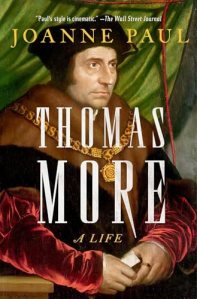 The year is 1535, and an educated scholar, father, writer, and the former Chancellor of England marches to his demise. His crime was staying silent on an issue that the King deemed extremely important: the idea that the King of England should be the Supreme Head of the Church of England, not the Pope. As a Catholic, Sir Thomas More does not agree with this decree and must die. How did one of the most prominent Tudor scholars of his age fall so quickly? Joanne Paul explores the rise and dramatic fall of this infamous Tudor figure in her latest biography, “Thomas More: A Life.”
 We all know the story of the last Tudor monarch, Queen Elizabeth I, who often viewed herself as a female king and who remained a virgin for her entire life. With her death, the Tudor dynasty ended, and a brand new dynasty made its mark on English history. It was a dynasty in England that the son of Elizabeth started I’s rival, Mary Queen of Scots, King James VI of Scotland. King James was not just a king, but a man in love with numerous lovers, and when he fell in love, he fell hard. Gareth Russell explores the life of King James VI/I, who ruled two nations while searching for true love in his latest book, “Queen James: A New History About the Life and Loves of Britain’s First King, James Stuart.”
 Throughout English history, a colorful cast of queens has left their marks in their distinct ways. While the Plantagenet and Tudor queens are more well-known, the Stuart queens and the mistresses of the Stuart kings were dynamic in their unique ways. One of the lesser-known queens was the wife of King Charles II. Though Charles II is known for his numerous mistresses, his wife Catherine of Braganza is not discussed much in England, but in her native Portugal, she is famous. So who was Catherine of Braganza, and what is her legacy in England and Portugal? Susan Abernethy tells the story of this almost forgotten queen in her book, “Charles II’s Portuguese Queen: The Legacy of Catherine of Braganza.”
 The Great Matter was a defining event in the lives of King Henry VIII, Catherine of Aragon, and Anne Boleyn. One of the world’s messiest divorces, it saw Henry VIII trying everything in his bag of tricks to annul his marriage to Catherine of Aragon to marry his new infatuation, Anne Boleyn. While we know that the basis for his argument that he should be able to divorce Catherine comes from the book of Leviticus in the Bible, we often see Henry’s debate through the Catholic and Protestant lenses. However, Henry relied on another group of people who had not been on English soil for centuries, the Jews. What does Jewish law bring to the discussion of the Great Matter and did it help Henry? Jerry Rabow examines this often overlooked aspect of Henry’s road to divorce in his book, “Henry VIII and His Rabbis: How the King Relied on Jewish Law to End His First Marriage- and Why He Failed.”
 Christmas is a time of merriment and joy unless you are in the court of Henry VIII in 1536. Then it is a time of stress and murder. Henry’s second wife Anne Boleyn has only been dead for a few months while his third wife Jane Seymour is slowly adjusting to her new role as queen. A rebellion known as the Pilgrimage of Grace is taking over northern England and the leader Robert Aske wants to visit the court to discuss matters with King Henry VIII. To top it all off, a servant of Queen Jane has been murdered and the only one who can solve the crime is a fool, Will Somers. Can Will Somers connect the dots and save those closest to him, or will the treasonous act be another downfall in such a tumultuous year? This is the premise for the third book in the A King’s Fool Mystery series, “Rebellious Grace” by Jeri Westerson.
 Those born of royal blood are either blessed by being able to sit on the throne or cursed to be under intense scrutiny for fears of treason. That is the case for the Grey sisters. Jane, Katherine, and Mary were the daughters of Henry and Frances Grey and the granddaughters of Mary and Charles Brandon. Their bloodline made them cousins to Mary I and Elizabeth I, which meant they threatened the two queens, especially when Edward VI named Lady Jane Grey his heir. After Mary I executes Jane and their father Henry for treason, the remaining Grey sisters, Katherine and Mary, must survive the treacherous Tudor court or end up like their sister. Can Katherine and Mary survive in a court where their royal blood leaves a target on their backs? Elizabeth Fremantle tells the tale of the lesser-known Grey sisters in her novel, “Sisters of Treason.”
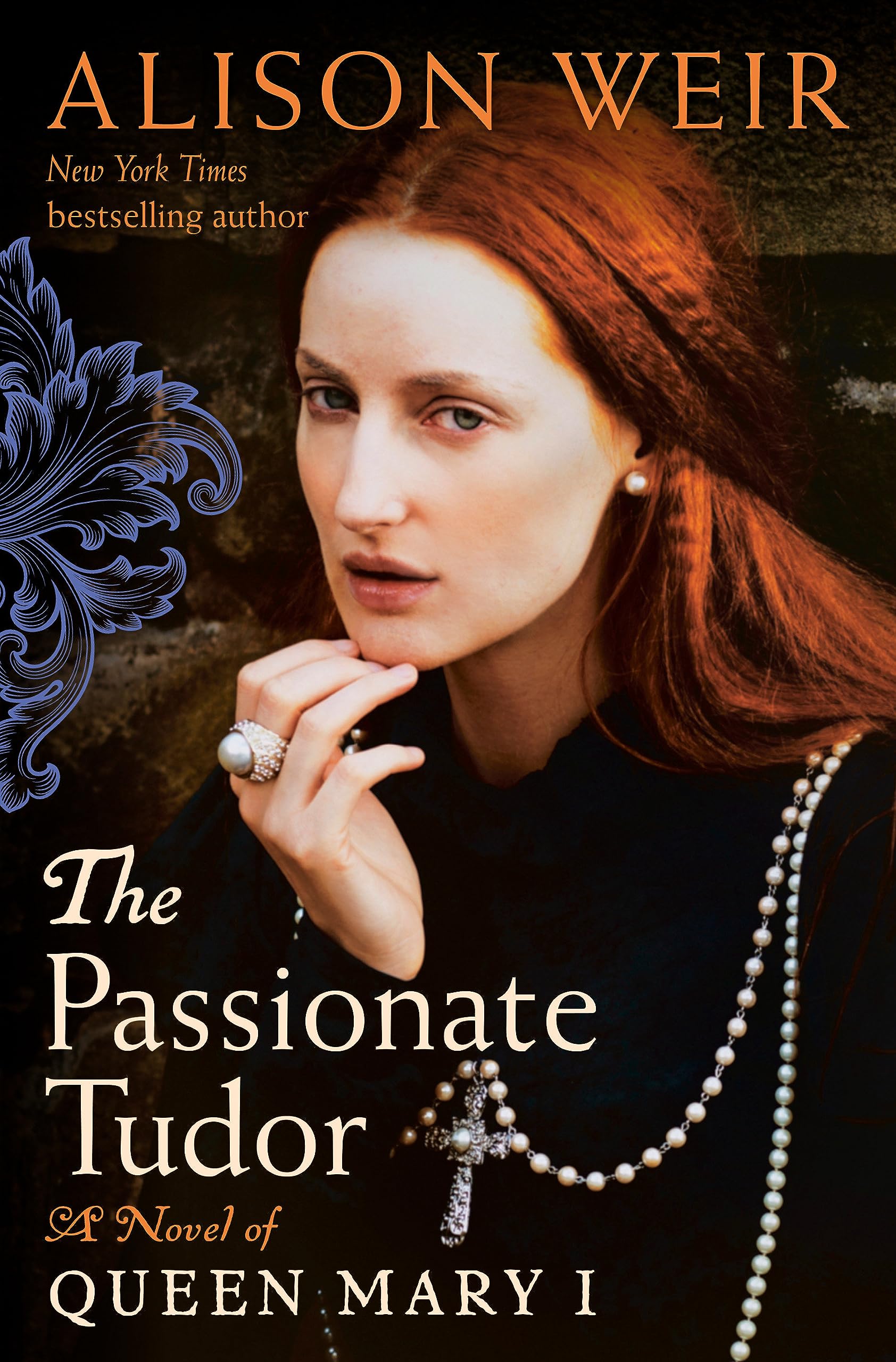 A king’s eldest child is usually the next in line to inherit the throne and become the next ruler. At least that is how the line of succession is supposed to work if the heir is male. Mary I knew this better than anyone. As the eldest daughter of King Henry VIII, she knew that once her mother Katherine of Aragon had a son, Mary would become a pawn in the marriage game. She was willing to accept this fate until her father fell in love with Anne Boleyn. Mary is declared a bastard and must fight for her inheritance and the crown of England while maintaining her Catholic faith. Alison Weir tells the tale of this remarkable woman, from her tumultuous childhood to her short reign that marked her legacy, in her latest novel, “The Passionate Tudor: A Novel of Queen Mary I.”
 The royal dynasties of English history are some of the most popular in European history. We have the Normans, the Angevins, the Plantagenets, who occupied the throne for 300 years, the Scottish Stuarts who saw religious change and political upheaval, the haughty Hanovers, and the current Windsor dynasty. However, one dynasty that has captured the imagination of history nerds for centuries has been the tumultuous Tudors. In book two of Peter Ackroyd’s “The History of England: Tudors,” he explores the stories that made the Tudor dynasty so infamous.
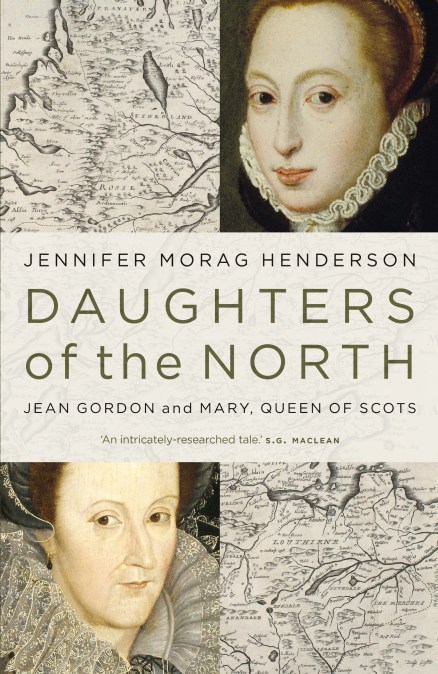 In the late 16th/ early 17th centuries, Scotland was chaotic and full of dynamic characters near or on the throne. People like Mary of Guise, Mary Queen of Scots, Lord Darnley, Earl of Bothwell, the four Maries, and James VI/I show how turbulent the Scottish court was to those around it. However, the stories of those who lived outside the court system and tried their best to maintain control of the country for their monarch tend to fade into obscurity. Take for example the story of Jean Gordon. A noblewoman who was married three times; to James Hepburn, Earl of Bothwell, Alexander Gordon, Earl of Sutherland, and her true love, Alex Ogilive. Jean’s story is full of heartaches, clashing clans, religious squabbles, and loyalty to one’s family, which is told in Jennifer Morag Henderson’s book, “Daughters of the North: Jean Gordon and Mary, Queen of Scots.”
 Adventures of a Tudor Nerd