 I am pleased to welcome Elizabeth St John to my blog to share a guest post about her latest novel, The King’s Intelligencer. I want to thank Elizabeth St John and The Coffee Pot Book Club for allowing me to participate in this blog tour.
The inspiration for The King’s Intelligencer arose from my research for The Godmother’s Secret, centered on the mystery of the missing princes in the Tower of London. During this time, I visited Westminster Abbey, specifically the Chapel of the Innocents, where Sir Christopher Wren’s marble urn—commissioned by Charles II in 1675—allegedly contains the bones of Edward V and Richard, Duke of York. The inscription claims the princes were murdered by their “perfidious uncle Richard the Usurper” and secretly buried in the Tower for 191 years. Standing near the urn, close to where my seventeenth-century character Franny Apsley’s parents, Sir Allen and Frances Apsley, are buried, I began to question the authenticity of this narrative.
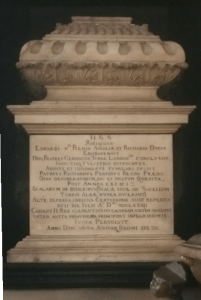
I turned to further research to find out more. Helen Maurer’s paper Bones in the Tower: A Discussion of Time, Place and Circumstance and Annette Carson’s article The Bones in the Urn cast doubt on the identity of the remains. What if these bones weren’t the princes’ at all, but a politically convenient discovery designed to bolster Charles II’s claim to the throne during a period of intense religious and political tension?
This idea gains significance when we consider the political climate of the late 17th century. Charles II ruled during a time of deep religious divides between Protestants and Catholics. Though Charles outwardly professed Protestantism, he secretly favored Catholicism and converted on his deathbed. His brother, James II, was openly Catholic, which led to his eventual overthrow during the Glorious Revolution of 1688. The discovery of the princes’ bones in 1674 provided Charles II with an opportunity to legitimize his reign, portraying himself as a restorer of justice for the murdered princes, and distancing himself from his brother’s Catholic sympathies.
 The timing of the discovery raised questions about whether the bones were used to manipulate public opinion and strengthen Charles’s position. Further research revealed more secrets. I explored the details of the Secret Treaty of Dover, a clandestine agreement between Charles II and Louis XIV of France. In this treaty, Charles promised to declare himself a Catholic in exchange for financial support. This hidden agreement, uncovered years later, underscores the precarious balance of power in 17th-century England and allowed me to link national concerns to my family history.
 In this climate of political maneuvering, espionage became crucial. Intelligencers gathered information covertly, often operating unofficially, and reported back to their patrons the news and gossip that was circulating. This secretive world provided the perfect backdrop for my protagonist, Franny Apsley, who navigates the hidden loyalties, treaties, and espionage of 17th-century England. A friend remarked that these intelligencers hung around coffee shops and eavesdropped on other people…which sounded just the kind of thing Franny would have done.
Franny’s family was deeply involved in real-life espionage. In the third book of The Lydiard Chronicles, Written in Their Stars, we follow her parents, Sir Allen, and Frances Apsley, along with her cousin Nan Wilmot, Countess of Rochester, who were all engaged in covert activities during the English Civil War. Nan cleverly deceived Oliver Cromwell to protect her Royalist family and later negotiated her Parliamentarian relative’s release at the Restoration. Meanwhile, Franny’s brother, Peter Apsley, worked as an intelligencer for Charles II and James II, receiving substantial payments for his covert work. This family history inspired the espionage elements of The King’s Intelligencer, imagining Franny following in their footsteps.
And what about the bones? Even if the present monarch permits DNA testing, the remains may have deteriorated too much to provide conclusive results. If the bones are proven to belong to the princes, we would still lack crucial details—like the cause of death or the identity of their murderer. The mystery of the bones remains unsolved, leaving historians and novelists alike to speculate.
The King’s Intelligencer blends historical fact with fiction, following Franny Apsley as she embarks on a dangerous quest for truth. Uncovering hidden secrets and navigating espionage, Franny’s journey ultimately reveals how personal and national histories intersect. This novel is a companion to The Godmother’s Secret and The Lydiard Chronicles, continuing to explore the secrets buried in the past.
 Blurb:
London, 1674: When children’s bones are unexpectedly unearthed in the Tower of London, England’s most haunting mystery—the fate of the missing princes—is reignited.
Franny Apsley, trusted confidante to Charles II’s beloved niece and heir, Lady Mary Stuart, is caught up in the court’s excitement surrounding the find. Yet, as a dark family secret comes to light, Franny realizes the truth behind the missing princes is far more complex—and dangerous—than anyone suspects. Recruited by her formidable cousin Nan Wilmot, Dowager Countess of Rochester, to discover the truth behind the bones, Franny is thrust into the shadowy world of intelligencers. But her quest is complicated by an attraction to the charismatic court artist Nicholas Jameson, a recent arrival from Paris who harbors secrets of his own.
Pursued by Nicholas, Franny searches for evidence hidden in secret family letters and paintings and uncovers a startling diplomatic plot involving Lady Mary, which causes Franny to question her own judgment, threatens the throne, and sets England on a course for war. With only her courage and the guidance of an enigmatic spy within the royal household, Franny must decide how far she will go to expose the truth—and whether that truth will lead to England’s salvation or her own heartbreak.
In a glittering and debauched society where love is treacherous and loyalty masked, Franny must navigate a world where a woman’s voice is often silenced and confront the ultimate question: What is she willing to risk for the sake of her country, her happiness, and her family’s safety?
A captivating historical novel of conspiracy, passion, and courage, The King’s Intelligencer is one woman’s quest for a truth that could change the fate of a nation. A companion to the critically acclaimed best-selling novels The Godmother’s Secret and The Lydiard Chronicles, The King’s Intelligencer weaves together beloved characters and actual events to bring a suspenseful mystery to life.
Buy Links:
This title is available to read on #Kindle Unlimited.
Universal Buy Link: https://geni.us/KingsIntelligencer
 Author Bio:
Elizabeth St.John’s critically acclaimed historical fiction novels tell the stories of her ancestors: extraordinary women whose intriguing kinship with England’s kings and queens brings an intimately unique perspective to Medieval, Tudor, and Stuart times.
Inspired by family archives and residences from Lydiard Park to the Tower of London, Elizabeth spends much of her time exploring ancestral portraits, diaries, and lost gardens. And encountering the occasional ghost. But that’s another story.
Living between California, England, and the past, Elizabeth is the International Ambassador for The Friends of Lydiard Park, an English charity dedicated to conserving and enhancing this beautiful centuries-old country house and park. As a curator for The Lydiard Archives, she is constantly looking for an undiscovered treasure to inspire her next novel.
Elizabeth’s works include The Lydiard Chronicles, a trilogy set in 17th-century England during the Civil War, and The Godmother’s Secret, which unravels the medieval mystery of the missing princes in the Tower of London. Her latest release, The King’s Intelligencer, follows Franny Apsley’s perilous quest to uncover the truth behind the sudden discovery of the princes’ bones. In Charles II’s court of intrigue and deceit, Franny must decide what she’ll risk—for England’s salvation, her family’s safety, and her own happiness.
Author Links:
Website:
https://www.elizabethjstjohn.com/
Twitter:
https://x.com/ElizStJohn
Facebook:
https://www.facebook.com/ElizabethJStJohn/
LinkedIn:
https://www.linkedin.com/in/elizabethjstjohn/
Instagram:
https://www.instagram.com/elizabethjstjohn/
Threads:
https://www.threads.net/@elizabethjstjohn
Bluesky:
https://bsky.app/profile/elizabethstjohn.bsky.social
Book Bub:
https://www.bookbub.com/profile/elizabeth-st-john
Amazon Author Page:
https://geni.us/AmazonElizabethStJohn
Goodreads:
https://geni.us/GoodreadsElizStJohn

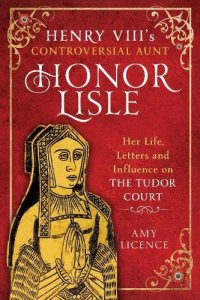 Marrying into the royal family is not all sunshine and rainbows. Of course, we tend to think about those who marry the king, the queen, the prince, or the princess. But we also need to consider the aunts and the uncles of the royals as part of the family. Take, for example, Arthur Plantagenet, the illegitimate son of Edward IV and the uncle of Henry VIII. His second wife, Honor Lisle, would help him rule Calais; however, she is best known for her letters and her devout Catholic faith during the Reformation in England. So why is Honor Lisle considered a controversial figure, and what was the cause of the fall of Honor and Arthur from the royal good graces? Amy Licence explores the life of Henry VIII’s step-aunt in the first full biography dedicated to Honor Lisle, which is entitled “Henry VIII’s Controversial Aunt, Honor Lisle: Her Life, Letters, and Influence on the Tudor Court.”
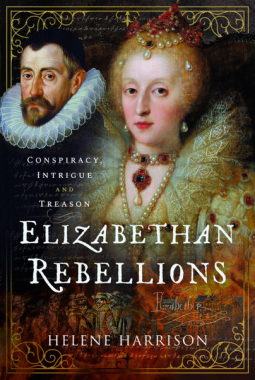 The struggle to be a king or queen in any country during Europe’s medieval or early modern era was only the beginning. They are either the next in line to the throne and inherit the crown, or they sometimes fight to the death to wear it. After the king or queen settles into ruling their respective countries, the real challenge emerges as they have to deal with rebellions and those who commit treason against their monarch. Take, for example, what happened during the reign of Elizabeth I. We consider her reign the “Golden Age” in English history. Still, she had to deal with numerous rebellions and conspiracies surrounding her viewpoints on religion and how she dealt with her cousin, Mary Queen of Scots. In her first book, “Elizabethan Rebellions: Conspiracy, Intrigue, and Treason,” Helene Harrison takes an in-depth look at each rebellion and how they left a mark on Elizabeth I’s reign.
 When we think of famous artists in the 15th and 16th centuries, we focus on the great European masters. Michelangelo, Leonardo da Vinci, and Albrecht Durer tend to come immediately to mind. However, one man from Augsburg, Germany, revolutionized how we viewed the Tudor dynasty through portraiture: Hans Holbein the Younger. Many are familiar with his famous works of art and how they influenced how the Tudors have been perceived for centuries, but the man behind the masterpieces has been overlooked. His story and how art was understood in the 16th century is told in Franny Moyle’s latest biography, “The King’s Painter: The Life of Hans Holbein.”
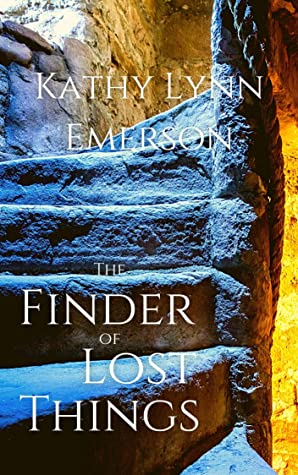 Blanche Wainfleet, a merchant’s wife living in England in 1590, has a reputation for finding items that others have deemed lost. Blanche has a gift for finding mementos important to others, from lost handkerchiefs to pets. However, there is one thing that she is searching for that will prove her greatest challenge yet, finding the truth about her sister’s murder. Blanche’s sister Alison fell in love with a Catholic man and converted to the Catholic faith when there was a war between Catholicism and Protestantism. To uncover the truth, Blanche must infiltrate the Otley family who took Alison in during her final days, but will she discover the truth and come out of the ordeal alive? This is the premise of Kathy Lynn Emerson’s latest novel, “The Finder of Lost Things.”
 The study of the Tudor dynasty has led us on many different adventures throughout the centuries. We have analyzed this period from numerous angles, from the royals and nobles to the essential lives of those who lived in England during this time. We tend to leave the more intimate moments for historical fiction novels and dramas, but one must wonder what those moments might have been like for those who lived in Tudor England. What were the romantic and the more intimate moments like for the Tudors? In her book, “Sex and Sexuality in Tudor England,” Carol McGrath gives her readers an in-depth look at these private moments.
 “Uneasy lies the head that wears the crown.” This famous quote from William Shakespeare’s play Henry IV, Part III has been used throughout the centuries to describe how difficult it is to rule a country for any duration of time. Most kings and queens of the past lasted for a few years, but there was one queen who lasted for a handful of days. She was the successor of Henry VIII’s only male son, King Edward VI, and was meant to replace his eldest half-sister, who would become Queen Mary I. It was a battle between Protestantism and Catholicism with a 17-year-old scholar caught in the middle. Her name was Lady Jane Grey, but many refer to her as the “Nine Day Queen of England”. Lady Jane Grey’s tragically short story, how she became queen, and the consequences of her reign are discussed thoroughly in Nicola Tallis’ beautifully written debut biography, “Crown of Blood: The Deadly Inheritance of Lady Jane Grey”.
 A foreign princess who travels to England to marry the king to establish a strong political alliance. To those who study history, this is a story that has been told numerous times, but what makes this particular story unique is the people involved. The bridegroom was the recently-widowed Henry VIII, the shadow of his former self and notorious throughout Europe for having his second wife Anne Boleyn executed. His new bride to be is the German princess Anna of Kleve. To say that they did not see eye to eye would be an understatement as the marriage did not last long. Her story is often swept under the rug. Anna is often viewed as the “lucky” wife of Henry VIII, but was she? What was Anna’s story and what was her marriage with Henry really like? Alison Weir has taken up the challenge to give her readers a taste of what Anna’s life might have been like in this novel, “Six Tudor Queens: Anna of Kleve, Queen of Secrets”.
 Adventures of a Tudor Nerd