
 I am pleased to welcome Mercedes Rochelle to my blog today to discuss Viking England during the life of Earl Godwine, as part of the blog tour for her novel, “Godwine Kingmaker” of The Last Great Saxon Earls series. I would like to thank Mercedes Rochelle and The Coffer Pot Book Club, for allowing me to be part of this tour.
During Godwine’s rise to power, England lived under Danish rule from 1016-1042, though for some reason we rarely talk about it. That’s a whole generation! Sweyn Forkbeard conquered England in 1013 and was declared king, sending Aethelred the Unready into exile to Normandy along with his sons Edward and Alfred. But mysteriously, Sweyn died after only five weeks on the throne, and the Danelaw immediately declared his second son Canute king of England. However, the southerners had other ideas and recalled Aethelred, who gladly returned and drove the usurper out. This didn’t last long!
By late 1015, Canute came back with a large mercenary army and Wessex submitted to him, although Aethelred was still alive and sulking in London, leaving his son Edmund Ironside to fight his battles. This, too, didn’t last long; King Aethelred took his last breath on 23 April 1016, and London declared Edmund king. Now England had two kings, and so began a treacherous struggle marked by five major battles, men changing sides, a siege of London—where Canute was said to have dug a trench around the city—and many, many dead warriors.
Although Edmund stoutly aided London in its defense against the Danes, he frequently left the city in order to draw Canute away from his siege. It is said Ironside raised five armies that year–one for each battle. The last and most important, the Battle of Assandun took place on October 18 and ended in disaster for the Saxons because of the treachery of Eadric Streona, who took to flight with his forces and turned the tide against Edmund.
This time Canute was determined to end the conflicts. The Saxons withdrew but the Danes followed them up the Severn River into Gloucestershire, finally stopping at an island called Olney (or Alney). There, in deference to the chieftains of the land who had had enough (led by Eadric Streona, who somehow retained the goodwill of Edmund Ironside), the two Kings decided to solve the issue by single combat. This legend comes down to us through the chroniclers, as unlikely as it sounds.

Combat between Canute the Dane and Edmund Ironside, Matthew Paris, Chronica Maiora, Cambridge, Corpus Christi, 26, f. 160 (Wikipedia)
The Saxon King was said to have been the stronger fighter and soon hammered the Dane, breaking his shield and beating him down when Canute called a stop to the fight. “Bravest of youths,” he cried out, “why should either of us risk his life for the sake of a crown?” Edmund paused, considering. “Let us be brothers by adoption,” the Dane continued, “and divide the kingdom, governing so that I may rule your affairs, and you mine.” (Florence of Worcester).
The single combat story is probably apocryphal, but the ensuing treaty is not. According to their agreement, Canute was to rule Northumbria and Danish Mercia, while Edmund was the ruler of Wessex, Essex, East Anglia, and English Mercia. It’s unclear who was supposed to rule London (I found it stated both ways), but in the end, the Londoners were obliged to come up with their own tribute payment to Canute and permit him to anchor his ships in the Thames for the winter, so I guess the result speaks for itself.
Most importantly, it was stated that this treaty excluded brothers and children of the two Kings; if either was to die, all the possessions would revert to the other. And so when Edmund Ironside died suddenly in the winter of 1016, Canute took the crown and made sure to bring the witnesses forward to confirm the terms of the treaty. An exhausted England accepted his claim without demurring. Canute sent Edmund’s children, Edward and Edmund Aetheling, to the King of Sweden in the hopes that they would be murdered, but instead, they were whisked away to Hungary for safekeeping. Then, in a gesture calculated to appease his new countrymen, Canute married Aethelred’s widow, Emma, making a deal with her that their children from previous marriages would be passed over in favor of any issue of their own. This agreement disinherited Edward and Alfred (safely in Normandy) and Canute’s son Harold Harefoot by his handfasted wife Aelfgifu of Northampton. Emma gave birth to Harthacnut, who was sent to Denmark when he was only eight years old as Canute’s representative under a council led by his brother-in-law Ulf. We don’t see him in England again until 1040.
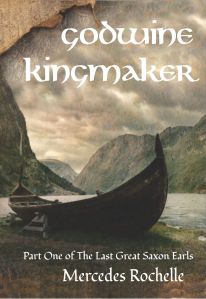 Blurb:
They showed so much promise. What happened to the Godwines? How did they lose their grip? Who was this Godwine anyway, the first Earl of Wessex and known as the Kingmaker? Was he an unscrupulous schemer, using King and Witan to gain power? Or was he the greatest of all Saxon Earls, protector of the English against the hated Normans? The answer depends on who you ask.
He was befriended by the Danes, raised up by Canute the Great, and given an Earldom and a wife from the highest Danish ranks. He sired nine children, among them four Earls, a Queen, and a future King. Along with his power came a struggle to keep his enemies at bay, and Godwine’s best efforts were brought down by the misdeeds of his eldest son Swegn.
Although he became father-in-law to a reluctant Edward the Confessor, his fortunes dwindled as the Normans gained prominence at court. Driven into exile, Godwine regathered his forces and came back even stronger, only to discover that his second son Harold was destined to surpass him in renown and glory.
Buy Links:
This series is available on Kindle Unlimited
Universal Link: https://books2read.com/u/38VrJZ
Amazon UK: https://www.amazon.co.uk/dp/B0BRQMHYWB
Amazon US: https://www.amazon.com/dp/B0BRQMHYWB
Amazon CA: https://www.amazon.ca/dp/B0BRQMHYWB
Amazon AU: https://www.amazon.com.au/dp/B0BRQMHYWB
Audio: https://www.audible.com/pd/Godwine-Kingmaker-Audiobook/B09JFJCY3G
 Author Bio
Mercedes Rochelle is an ardent lover of medieval history and has channeled this interest into fiction writing. She believes that good Historical Fiction, or Faction as it’s coming to be known, is an excellent way to introduce the subject to curious readers. She also writes a blog: HistoricalBritainBlog.com to explore the history behind the story.
Born in St. Louis, MO, she received her BA in Literature at the Univ. of Missouri St. Louis in 1979 then moved to New York in 1982 while in her mid-20s to “see the world”. The search hasn’t ended!
Today she lives in Sergeantsville, NJ with her husband in a log home they had built themselves.
Social Media Links:
Website: https://mercedesrochelle.com/
Twitter: https://twitter.com/authorrochelle
Facebook: https://www.facebook.com/mercedesrochelle.net
Book Bub: https://www.bookbub.com/authors/mercedes-rochelle
Amazon Author Page: https://www.amazon.com/stores/Mercedes-Rochelle/author/B001KMG5P6
Goodreads: https://www.goodreads.com/author/show/1696491.Mercedes_Rochelle
 When we think about royal relationships from the past, we do not associate them with love; it is more about cementing power. Princes and kings knew how much was at stake, so they tended to have wives for politics and produce legitimate heirs that would inherit their kingdoms. For matters of love and lust, kings and princes would have mistresses, either of noble birth or lower, on the side. These women have been deemed whores and homewreckers but is that a fair assessment of their legacies? Julia A. Hickey takes a closer look at these misunderstood mistresses in her latest book, “Medieval Royal Mistresses: Mischievous Women who Slept with Kings and Princes.”
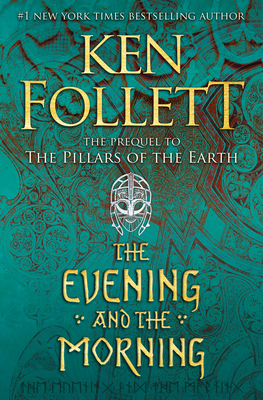 The year is 997 and England is in a dire situation. Fears of invasions from the Welsh and the Vikings leave the Anglo- Saxon residents rattled while those in power take advantage of their citizens. Chaos reigns supreme as those who rule the towns are in constant power struggles between themselves and their king, Ethelred the Unready, with the average villagers caught in the middle, like the villagers of Dreng’s Ferry. It is in this small village where three characters find their lives intertwined with the political and social drama. A young boatbuilder named Edgar endures heartache and sorrow when the Vikings attack his home. A Norman noblewoman named Ragna follows her heart to marry the man she loves and travels to a faraway land but soon finds out how difficult that love can be. Finally, a monk named Aldred works hard for the people while dreaming of transforming his meek abbey into a lively center of learning. Their tales are masterfully woven together in the much-anticipated prequel to the Kingsbridge series by Ken Follett. This is “The Evening and the Morning”.
  Adventures of a Tudor Nerd