 I am pleased to welcome Toni Mount back to my blog today as a stop in her The Colour of Shadows Book Tour. The Colour of Shadows is her eighth Sebastian Foxley murder mystery. Today, Toni will be discussing Children’s Education in Medieval and Tudor England.
In my new Sebastian Foxley murder-mystery novel The Colour of Shadows, set in medieval London, some of the action involves a young scholar, Will Thatcher, studying at St Paul’s Song School in London. Song schools trained choristers – hence the name – for the cathedral to which they were attached. Since all the anthems and responses would be in Latin, this language was taught. In fact, children weren’t permitted even to chat with each other in English and everything was conducted in Latin. The ultimate intention was that every schoolboy would eventually become a cleric, priest, monk, or lawyer; professions carried out mostly in Latin, so an early grounding was vital.
But a child’s education began at home. By the time a boy – and the song school’s were always boys only – went to school, aged about seven, he should already know a few basics, so how did adults regard children’s early education in the fifteenth and sixteenth century? What was considered to be the correct way of raising and training children? Thomas Tusser, the Tudor commentator who generally gave parents good and sensible advice, as would have been applicable for the fifteenth century too, had this to say [I’ve modernised the spelling]:
We find it not spoken so often for nought,
That children were better unborn than untaught,
Some cockneys with cocking are made very fools,
Fit neither for prentice, for plough, nor for schools.
Teach child to ask blessing, serve God, and to church,
Then bless as a mother, else bless him with birch.
Thou housewife thus doing, what further shall need?
But all men to call thee good mother indeed.
This fascinating passage covers all that was required in educating a young child – a task undertaken most usually by its mother or, perhaps, by its nurse, if the mother wasn’t around.
Cockney. We all know the word and these days we often use it to describe a Londoner. It used to be a little more specific, applying only to those born within hearing distance of the bells of St-Mary-le-Bow church in the city. However, as you’ll realise from Tusser’s instructions above, a ‘cockney’ was originally something very different and nothing to do with being born in London. A cockney was a boy-child, spoilt and coddled and therefore effeminate. ‘Cocking Mams’ were over-indulgent mothers whose children would be unsuited in future to being apprenticed, working the land, or even going to school. So Rule no.1 was ‘Do not indulge the child.’
The first thing a child had to learn was the Lord’s Prayer or Paternoster, the Creed or Credo and, until the Reformation, when England became Protestant, the Hail Mary or Ave Maria. The Creed was the litany recited at mass, beginning ‘I believe in one God…’ At a baby’s baptism, the godparents had to promise, not only to keep their godchild safe ‘from the perils of fire and water’ but to teach him these basic recitations of the Christian faith. Since medieval times, these words, originally in Latin and often together with a basic ABC and numbers, were written on horn books. These weren’t really books at all but a sheet of parchment (later paper), covered with a transparent layer of horn to protect it, put in a wooden frame, shaped like a small, square table-tennis bat, complete with a handle, so the child could hold it easily. By Tudor times, they were more often written in English but these hard-wearing teaching aids often passed down the generations and were still popular in the eighteenth century.
Incidentally: a few words about godparents. From medieval times, child-birth had been a women-only affair. The mother might be in labour for days and need every encouragement from her female relatives, friends, and neighbours. These women also had to be on hand to stand as godparents at short notice, if the baby seemed unlikely to live and required immediate baptism. Godparents were also known as ‘godsibs’ or siblings in God. As you can imagine, a group of women, sitting around, waiting for days, perhaps, with not much to do, did a great deal of chatting and, as they ran out of relevant topics to discuss, probably resorted to exchanging rumours. This activity became known as ‘godsibing’ or – as we would call it – gossiping.
Children as young as three or four would be expected to attend church and to understand when to bow their heads or kneel in prayer and to reverence God. They would also join in family prayers with the household as often as the religious faith of the head of the house required. Many Protestant families took the act of reading aloud from the English Bible very seriously. It might be done daily or else, most certainly, on the Lord’s Day – Sunday. Thus, Rule no.2 was ‘Teach the child to respect God and the Church’.
Thomas Tusser’s final instruction would not be appreciated today: the use of corporal punishment. Beating children is now unlawful in most modern societies but the Tudors would have been dismayed by our idea. ‘Bless him with birch’, as Tusser said. In other words, a good thrashing never did anyone any harm and to ‘spare the rod’ was to ‘spoil the child’, as the Bible said. In the Book of Proverbs 13: 24, it states: ‘He who spares the rod hates his son, but he who loves him is careful to discipline him’. The Tudors certainly believed this. Physical discipline was thought vital to achieving both learning and good behaviour and children were expected to take it with good grace, even welcoming it as just one aspect of the best educational methods. It would teach them to respect authority. If a child misbehaved, there was no point in trying to reason with him because children were illogical creatures, as yet incapable of rationalising what was good conduct and what was bad. So Rule no.3 was ‘Do not be lenient: a beating does far more good than harm and is vital to a child’s education.’
One last thing: a medieval or Tudor parent would never have told a child that it was naughty. In those days the word meant you were ‘as nothing’ (naught), so wicked you were less than human. It was a term applied to murders. Shakespeare’s Macbeth was naughty; unruly toddlers were not.
Further reading:
Elizabeth Norton’s ‘The Lives of Tudor Women’ Head of Zeus, 2016.
For images of horn books see https://www.pinterest.co.uk/pin/172262754469747824/
The Colour of Shadows
When Seb Foxley discovers a child’s body in his workshop and another lad goes missing, our medieval sleuth is perplexed at every turn. His investigations take him across London Bridge to Bankside, where he becomes embroiled in the sinister shadows of the city’s underworld. Bankside is a labyrinth of depravity and crime where every harlot intends the downfall of respectable men and every scoundrel has a secret. In a netherworld unlike anything he’s experienced before, can Seb unravel the murky mysteries of The Mermaid Tavern, recover the stolen lad and restore him to his family?
About the Author- Toni Mount
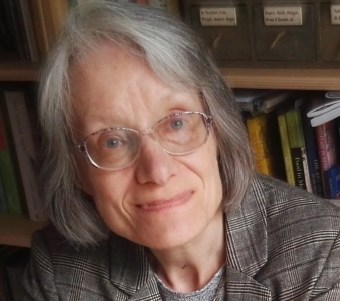
I’m an author, a history teacher, an experienced speaker – and an enthusiastic life-long-learner. I’m a member of the Research Committee of the Richard III Society and a library volunteer where I lead a Creative Writing group. I regularly give talks to groups and societies and attend history events as a costumed interpreter. I write for a variety of history magazines and have created seven online courses for www.MedievalCourses.com
I earned my Masters Degree by Research from the University of Kent in 2009 through study of a medieval medical manuscript held at the Wellcome Library in London. My BA (with First-class Honours), my Diploma in Literature and Creative Writing and my Diploma in European Humanities are from the Open University. My Cert. Ed (in Post-Compulsory Education and Training) is from the University of Greenwich.
I have a strong online following with my various social media and web pages:
www.ToniMount.com
www.SebastianFoxley.com
www.facebook.com/toni.mount.10
www.facebook.com/medievalengland
www.facebook.com/medievalmedicine
www.facebook.com/sebfoxley
www.twitter.com/tonihistorian
My works to date include:
Self-Published
2007 The Medieval Housewife and Women of the Middle-ages
2009 (updated 2015) Richard III King of Controversy
2013 Dare they be Doctors.
Amberley Publishing
2014 (Hb) Everyday Life in Medieval London
2015 (Hb) Dragon’s Blood and Willow Bark: the mysteries of medieval medicine
2015 (Pb) The Medieval Housewife: & Other Women of the Middle Ages
2015 (Pb) Everyday Life in Medieval London
2016 (Pb) Medieval Medicine: Its Mysteries and Science (the renamed paperback version of Dragon’s Blood & Willow Bark)
2016 (Hb) A Year in the Life of Medieval England
2019 (Pb) A Year in the Life of Medieval England
2020 (Hb) The World of Isaac Newton
Pen & Sword
2021 (Pb) How to survive in Medieval England
2021 (Pb) An affectionate look at sex in medieval England
MadeGlobal Publishing
The Sebastian Foxley Medieval Murder Mysteries series:
2016 The Colour of Poison
2016 The Colour of Gold
2017 The Colour of Cold Blood
2017 The Colour of Betrayal
2018 The Colour of Murder
2018 The Colour of Death
2019 The Colour of Lies
2020 The Colour of Shadows
2018 The Death Collector (A Victorian Melodrama)
MedievalCourses.com
2015 Everyday Life of Medieval Folk
2015 Heroes and Villains
2016 Richard III and the Wars of the Roses
2016 Warrior Kings of England: The Story of the Plantagenet Dynasty
2017 Crime and Punishment
2017 The English Reformation: A Religious Revolution
2018 The Roles of Medieval and Tudor Women

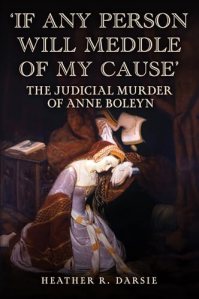 We all know the story of Anne Boleyn. The story of the English noblewoman who caught the eye of King Henry VIII, who decided to divorce his first wife, Katharine of Aragon, to marry Anne. He broke away from Rome and created the Church of England to do it, but marital bliss did not last long, as a few years later, Anne would leave their three-year-old daughter Elizabeth behind when she was executed by Henry over charges of adultery. We know this version of the story, but what if we look at Anne’s story from a continental European perspective? How does her story change when we view her life through a religious lens? Heather R. Darsie hopes to show her audience a different side of Anne Boleyn in her latest book, “‘If Any Person Will Meddle of My Cause’: The Judicial Murder of Anne Boleyn.”
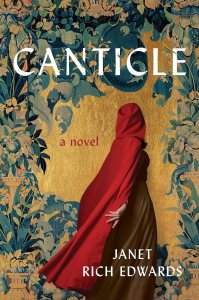 Have you ever believed in something or someone so much that you were willing to do anything to be with them? What if it meant isolating yourself from everyone and everything you loved? Aleys knows this all too well. Born near Bruges during the 13th century, Aleys believes that she is destined for great things and has religious visions. Can this young woman survive both religious and political challenges to make her aspirations of being closer to God a reality, or will she fly too close to the sun and lose everything? Janet Rich Edwards tells Alleys’ tale in her debut novel, “Canticle.”
 Have you ever read about a historical figure and used what they went through to help you get through difficult times? It is as if you read about their life at the perfect time in your life to help you get through your own struggles. Growing up, for me, it was reading about young Elizabeth I. For Ana Garriga and Carmen Urbita, it was reading about 16th and 17th-century nuns, the ones that they were researching for their PhDs. What lessons did Garriga and Urbita find when they were researching two centuries and the nuns who lived during this period? They share the lessons that they learned from the past in their book, “Convent Wisdom: How Sixteenth-Century Nuns Could Save Your Twenty-First Century Life.”
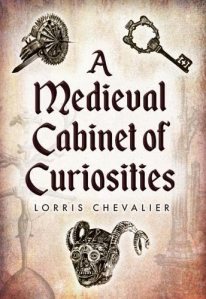 When we think about how we study history, we often consider documents and chronicles that can provide us with dates and the stories of historical figures. However, this is only half the story. We can learn a great deal from the artifacts left behind. Each era left behind its treasure trove of trinkets for archaeologists and historians to discover and interpret their meanings and purposes. One of the most fascinating periods of history was medieval Europe, full of war, religious struggles, artwork, plagues, and technological advances. What types of artifacts were left behind from medieval Europe? Lorris Chevalier explores the trinkets and artifacts left behind in his book, “A Medieval Cabinet of Curiosities.”
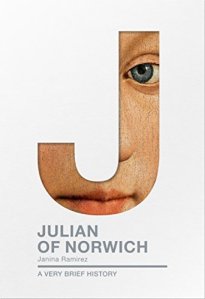 When we think about the most impactful women authors, we often think about writers like Agatha Christie, Mary Shelley, and Jane Austen. However, when it comes to religious texts, we have to go back in time centuries. We think about nuns like Bridget of Sweden and a mother of 14 children named Margery Kempe. Yet, we must include an anchorite who stayed in her cell for almost thirty years. Her book, Revelations of Divine Love, is considered the first great work of English prose, but many people are not familiar with the author until now. Janina Ramirez tells the story of Julian of Norwich and how impactful her book was in her book, “Julian of Norwich: A Very Brief History.”
 Have you ever read a history book and wondered what life was really like for those who lived in the past? To understand a time period and the motives of the people of the past, we have to understand the structure of their society. How they understood things like class, sex, violence, government, and religion is essential for us to understand what separates us from our ancestors. What they ate, what they wore, and where they slept also give a unique insight into the time period. It can be a difficult undertaking to figure out all of the different aspects of the past connect and to present it cohesively, yet acclaimed historian Ian Mortimer has embraced this challenge head-on to tackle one of the most complex periods of the past; the Elizabethan era. His love letter to the Elizabethan age entitled, “The Time Traveler’s Guide to Elizabethan England” is a delightfully imaginative guide to the past.
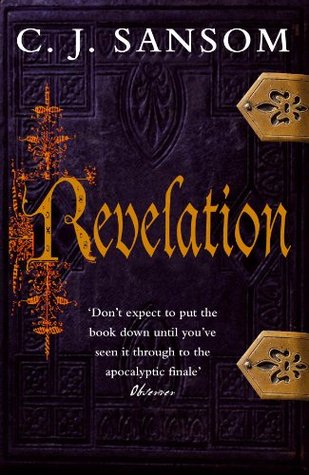 The year is 1543 and King Henry VIII is looking for his sixth and final wife; the recent widowed Catherine Parr has caught his eye. It is her reformist values that make her a valuable asset for Archbishop Cranmer and his faction at court, and a target for others. A friend of Matthew Shardlake is viciously murdered, leading to a horrific discovery of a killer is on the loose. On top of that, Shardlake must defend a young man who has been placed in the Bedlam insane asylum for his radical beliefs. It is up to Shardlake and his intrepid assistant Barak, along with the former monk turned physician Guy Malton, to solve both cases before anyone else becomes the next victim. This is the world that readers are plunged to in the next book in C.J. Sansom’s Shardlake series, “Revelation”.
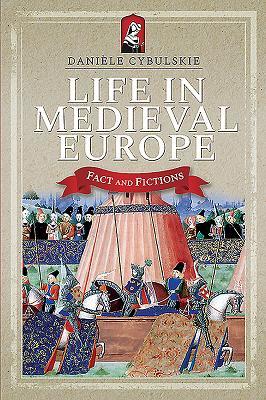 Have you ever read a book, either historical fiction or nonfiction, about medieval Europe and wondered if what the author was writing about was true? What about historical movies or dramas? You know that they probably have the facts about the important people and events correct, or at least you hope, but you wonder about the small details. What did they eat? How did they keep themselves clean and healthy? How did religion and the criminal justice system work in medieval Europe? What was medieval warfare like? These questions and more are explored in Daniele Cybulskie’s enchanting book, “Life in Medieval Europe: Fact and Fiction”.
 The story of the Crusades has been told in many different ways from numerous directions. The epic conflict between Christianity and Islam for the Holy Lands that went on for centuries that has lived in infamy. Many questions have arisen as historians try to separate facts from the myths surrounding this topic. How and why did it start? Why did it continue to go on for so long? Was there really a winner in this conflict? Who were the people who defined this conflict? Dan Jones has taken on the challenge of writing a comprehensive history of this conflict and the people who fought during this time in his latest book, “Crusaders: The Epic History of the Wars for the Holy Lands”.
 Adventures of a Tudor Nerd