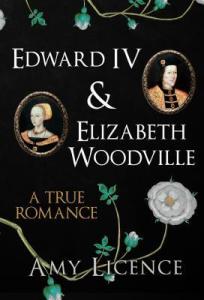
Book Review: “Edward IV & Elizabeth Woodville: A True Romance” by Amy Licence


When we think of a fairy tale romance, we think about stories like Cinderella. A girl of lower status captures the heart of the handsome prince. They overcome the odds and live happily ever after. But that kind of romance only exists in books. The closest story we have to that in medieval English history might be the story of Edward IV and Elizabeth Woodville. A widow who begged the handsome and younger King of England for help, but ended up becoming his wife. It’s a story that any romance-loving history lover will swoon over, but how accurate is that story? What is the real story of Edward IV and Elizabeth Woodville? Amy Licence explores the nature of their relationship in her book, “Edward IV & Elizabeth Woodville: A True Romance.”

I have been reading books by Amy Licence for a few years now, so when I saw this title, I knew I wanted to read it. The Wars of the Roses is one of my favorite areas of history to study, but I have not read a joint biography of Edward IV and Elizabeth Woodville. When I saw this title, I knew that this was a must-read for me.

We begin in 1431 in Rouen, France, where the Maid of Orleans, who we know as Joan of Arc, is about to die on the pyre. In the same town, eleven years later, the future King Edward IV would be born to Cecily Neville and Richard, Duke of York. Edward’s future bride, Elizabeth Woodville, was born around six years after the death of Joan of Arc. Her mother, Jacquetta of Luxembourg, had married below her station after the death of her first husband, John Duke of Bedford passed away; Jacquetta would marry a knight, Sir Richard Woodville, Elizabeth’s father. Jacquetta was close to King Henry VI and Margaret of Anjou, the Lancastrian rulers of England, and Edward IV’s father, Richard, Duke of York, would fight against the Lancastrians for the right to rule England during the conflict that we know today as the Wars of the Roses. To top it all off, Elizabeth was married to Sir John Grey of Groby Old Hall, a man who fought and died for King Henry VI.

In other words, Edward and Elizabeth were on different sides of the Wars of the Roses, but somehow these two found each other after Edward IV became king. The obvious choice for Edward’s bride should have been a foreign princess to create an alliance, but there was something about Elizabeth that convinced Edward to forgo the wisdom of Warwick and marry her. Their court was based on the Burgundian court. They had a large family, but the fight for the crown with the Lancastrian cause and Edward’s own family continued. Just when the throne is secure, Edward passes away. Elizabeth had to fight for her children, fight against her brother-in-law, and join forces with her enemy Margaret Beaufort to help usher in the Tudor dynasty.

Licence was able to present the information not only about this period, but also about Edward and Elizabeth in such a comprehensive way that both novices and experts can understand. She can present theories that she either agrees with or disagrees with respectfully. I thoroughly enjoyed this joint biography as it gave me a better appreciation for the reign of Edward IV and Elizabeth Woodville. If you want to learn more about the Wars of the Roses, the first Yorkist king, and his wife, I highly recommend you read “Edward & Elizabeth Woodville: A True Romance” by Amy Licence.

Book Review: “Marguerite: Hell Hath No Fury” by Judith Arnopp

I would like to thank The Coffee Pot Book Club and Judith Arnopp for sending me a copy of this novel. I have enjoyed her novels about Margaret Beaufort, so when I heard that she was writing a novel about Margaret of Anjou, I was intrigued to see what she could add to her story.

Arnopp begins with Marguerite on the verge of leaving her beloved France to become the new Queen of England. She is to be the bride of the son of King Henry V, King Henry VI. She imagines that her new husband will be similar to his father, a warrior, and that Marguerite will be able to stop the Hundred Years’ War between France and England. Instead, she is married to Henry VI, a man who is extremely devout to his faith, and lives in an England that hates Marguerite. It’s not the picture-perfect situation, but Marguerite tries to make the best of it, including falling in love not only with her husband but also with Somerset and Exeter, men loyal to her husband.

In time, Marguerite does indeed become a mother to Prince Edward, the Lancastrian heir, but it is then that her life truly begins to fall apart. A few months before, King Henry VI fell ill and remained that way for the rest of his life. Marguerite tried to become the Protector of the Realm, but the position went to Richard, Duke of York. Rivalries would turn deadly, and the Lancastrians would face the Yorkists on the battlefield. With the king incapacitated, Marguerite must be a mother, wife, queen, and general to make sure that the Lancastrian cause survives and her family can live to fight for the crown that is rightfully theirs.

This was a very good novel about a woman who was trying to keep her family and her country together while finding love. Arnopp does a great job exploring what life must have been like for Marguerite in a turbulent time. If you want a novel that explores what life was like for the Lancastrian queen during the Wars of the Roses, I recommend you read “Marguerite: Hell Hath No Fury” by Judith Arnopp. 

Blurb: 

Marguerite: Queen of England 

From the moment Henry VI’s new queen, Marguerite of Anjou, sets foot on English soil, she is despised by the English as a foreigner and blamed for the failures of the Hundred Years’ War in France. 

 Her enemies impede her role as the king’s consort, and when Henry sinks into apparent madness, her bid to become regent is rejected. Marguerite must fight, not only for her position but to maintain Henry’s possession of the crown.  

The ambitious Duke, Richard of York, seizes control of the country, thrusting Marguerite aside and inflating the mutual hatred between the houses of York and Lancaster. But the queen refuses to relinquish power and fights determinedly for the rights of her son, Edward of Lancaster. 

The long and bitter civil conflict, which come to be known as the War of the Roses, commences. 

Buy Link: 

Universal Buy Link: https://mybook.to/mhhnf  

This title is available to read on #KindleUnlimited. 

Author Bio

A lifelong history enthusiast and avid reader, Judith holds a BA in English / Creative Writing and a Master’s in Medieval Studies. She lives on the coast of West Wales, where she writes both fiction and non-fiction. She is best known for her novels set in the Medieval and Tudor period, focusing on the perspective of historical women, but recently she has written a trilogy from the perspective of Henry VIII himself. 

Judith is also a founder member of a re-enactment group called The Fyne Companye of Cambria, which is where and why she began to experiment with sewing historical garments. She now makes clothes and accessories both for the group and others. She is not a professionally trained sewer but, through trial, error, and determination, has learned how to make authentic-looking, if not strictly historically accurate, clothing. A non-fiction book about Tudor clothing, How to Dress like a Tudor, was published in 2023 by Pen and Sword. 

She runs a small seaside holiday let in Aberporth and when she has time for fun, likes to garden and restore antique doll’s houses. You can find her on most social media platforms. 

Her novels include: 

A Song of Sixpence: The Story of Elizabeth of York 

The Beaufort Chronicle: the life of Lady Margaret Beaufort (three-book series) 

The Henrician Chronicle: comprising: 

A Matter of Conscience: Henry VIII, the Aragon Years (Book One of The Henrician Chronicle) 

A Matter of Faith: Henry VIII, the Days of the Phoenix (Book Two of The Henrician Chronicle) 

A Matter of Time: Henry VIII, the Dying of the Light (Book Three of The Henrician Chronicle) 

The Kiss of the Concubine: A Story of Anne Boleyn 

The Winchester Goose: at the court of Henry VIII 

Intractable Heart: The Story of Katheryn Parr 

Sisters of Arden: on the Pilgrimage of Grace 

The Heretic Wind: The Life of Mary Tudor, Queen of England 

Peaceweaver 

The Forest Dwellers 

The Song of Heledd 

The Book of Thornhold 

A Daughter of Warwick: The Story of Anne Neville, Queen of Richard III 

Marguerite: Hell Hath no Fury! 

Author Links

Website: http://www.judithmarnopp.com/ 

Blog: http://www.juditharnoppnovelist.blogspot.co.uk/  

Twitter / X: https://twitter.com/JudithArnopp  

Facebook: https://www.facebook.com/thetudorworldofjuditharnopp  

Instagram: https://www.instagram.com/tudor_juditharnopp/  

Threads: https://www.threads.net/@tudor_juditharnopp  

Bluesky: https://bsky.app/profile/jarnopp.bsky.social  

Pinterest: https://www.pinterest.co.uk/jarnopp/  

Book Bub: https://www.bookbub.com/profile/judith-arnopp  

Amazon Author Page: http://author.to/juditharnoppbooks  

Goodreads: https://www.goodreads.com/author/show/4088659.Judith_Arnopp  

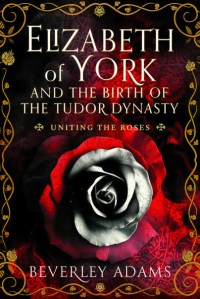
Book Review: “Elizabeth of York and the Birth of the Tudor Dynasty: Uniting the Roses” by Beverley Adams

Throughout English history, some of the most famous queens have been associated with the Tudor dynasty. We have the six wives of Henry VIII (Catherine of Aragon, Anne Boleyn, Jane Seymour, Anna of Cleves, Catherine Howard, and Catherine Parr), Queen Mary I, and Queen Elizabeth I. However, one Tudor queen is often overlooked for her daughters-in-law and granddaughters, the first Tudor queen, Elizabeth of York. So who was Elizabeth of York and what role did she play in the transition between the Plantagenet dynasty and the Tudor dynasty? Beverley Adams hopes to enlighten readers about this remarkable queen in her latest book, “Elizabeth of York and the Birth of the Tudor Dynasty: Uniting the Roses.”

I want to thank Pen and Sword Books and Net Galley for sending me a copy of this book. While I know quite a bit about Elizabeth of York, the Wars of the Roses, and the origins of the Tudor dynasty, I wanted to see how Adams would portray these topics for beginners. 

To begin with, Adams lays out the origins of the conflict that we know today as the Wars of the Roses with Edward III and his sons, John of Gaunt 1st Duke of Lancaster, and Edmund of Langley, 1st Duke of York. This led to a clash between King Henry VI and Richard Duke of York. Elizabeth of York’s father, the future King Edward IV, was the son of Richard Duke of York and he had to fight for his throne. Adams explores Elizabeth’s childhood as the eldest child of Edward IV and his wife Elizabeth Woodville during this tumultuous period of English history, which would form the foundation of what kind of queen she would be in the future.

Everything changed when Edward IV died suddenly, which meant that Elizabeth’s younger brother became Edward V and left Richard Duke of Gloucester as Lord Protector. For some reason, Richard Duke of Gloucester decided to take matters into his own hands, took control of the country, declared the children of Edward IV and Elizabeth Woodville illegitimate (including Elizabeth of York), and was crowned King Richard III in a matter of months. Some resisted the new king including the son of Margaret Beaufort and Edmund Tudor, Henry Tudor. Margaret Beaufort and Elizabeth Woodville arranged a marriage between Henry and Elizabeth that would occur if Henry was able to defeat Richard III and become King of England, which he did at the Battle of Bosworth Field. The rest of this book is dedicated to showing how Elizabeth of York was as a wife, queen, and mother as she dealt with death, treachery from Lambert Simnel and Perkin Warbeck, and triumphs as she was able to see the start of the Tudor dynasty.

I think Adams does a decent job with a book that is an introduction to Elizabeth of York, the Wars of the Roses, and the beginning of the Tudor dynasty. There are some myths that she repeats to debunk, but I feel like, in some places, Elizabeth of York was not the main focus, which was a bit disappointing. Overall, if you want a solid introductory book to the life and times of the first Tudor queen, I would recommend you read, “Elizabeth of York and the Birth of the Tudor Dynasty: Uniting the Roses” by Beverley Adams.

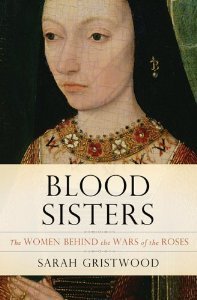
Book Review: “Blood Sisters: The Women Behind the Wars of the Roses” by Sarah Gristwood

Blood SistersWhen it comes to studying wars from the past, we often focus on the men who fought during the battles the strategies that were implemented to win and the plans that backfired spectacularly. So frequently in the study of wars, we forget about the women left behind, but in fact, they had bigger roles to play than sitting on the sidelines. For example, the royal women who lived in England during the conflict known as the Wars of the Roses played an essential role in how the wars concluded. These women are slowly coming into the spotlight in biographies and historical fiction novels, but it is rare to read a book about the Wars of the Roses where the central figures are the women, until now. Sarah Gristwood has taken seven women from this age and weaved their stories into her book, “Blood Sisters: The Women Behind the Wars of the Roses.”

I have been interested in the Wars of the Roses and the women who lived during that period for years. I heard about this book when I started studying this period, but I have never had a chance to read it, until now.

There were so many strong women from this period, but Gristwood narrowed her choices down to seven remarkable women to focus on; Margaret of Anjou, Margaret Beaufort, Elizabeth Woodville, Elizabeth of York, Cecily Neville, Anne Neville, and Margaret of Burgundy. By choosing these women, Gristwood is presenting a story of a conflict that spanned multiple generations, both York and Lancaster, and showing how both the English and Burgundian nobility dealt with the changes that were happening when the Tudors took control.

Gristwood begins with the marriage of Margaret of Anjou and Henry VI. Though she was French by birth, her loyalty was always going to be with her husband’s Lancasterian family. That meant she would eventually become enemies with the proud Cecily Neville, the wife of Richard Duke of York and mother of King Edward IV and King Richard III, but Margaret was allied with Margaret Beaufort, the tenacious mother of King Henry VII, the founder of the Tudor dynasty. The conflict passed onto the daughters of these women, like Anne Neville and Margaret Burgundy, as well as the daughter of Jacquetta of Luxembourg, Elizabeth Woodville. These women would continue the conflict and help seal the fate of the Lancastrians, see the rise and fall of the Yorkists, and the beginning of the Tudor dynasty through the marriage of Elizabeth of York, the daughter of Elizabeth Woodville, and Henry Tudor. This book spans decades and includes events like the disappearance of the Princes in the Tower, well into the Tudor dynasty such as the pretenders, the marriage of Prince Arthur and Catherine of Aragon, the death of Prince Arthur, and the rise of Henry VIII.

This was a delightful look into the Wars of the Roses through the eyes of the women who lived through this period. They were mothers, daughters, wives, queens, fighters, and survivors. They showed that without their tenacity and determination to fight for what they believed was right and for their families. If you are a fan of the women who defined the Wars of the Roses, I highly suggest you read, “Blood Sisters: The Women Behind the Wars of the Roses” by Sarah Gristwood.

Book Review: “On This Day in the Wars of the Roses” by Dan Moorhouse

On this day in the Wars of the RosesThe Wars of the Roses, a conflict that engulfed English politics for over 30 years and heralded a new dynasty, the Tudors. While there were battles and political intrigue galore during this period of unrest, there were also births, marriages, and deaths of powerful figures. Each day during the Wars of the Roses holds significance to nobles and commoners alike. Dan Moorhouse has compiled his years of research into this conflict into his book, “On This Day in the Wars of the Roses.”

I would like to thank Dan Moorhouse for sending me a copy of this book. I have been studying the Wars of the Roses for a few years now and so when I hear about books on the subject, I jump at the chance to read them to see if they bring any new revelations to the period.

Like many other books that focus on historical events of the past, Moorhouse highlights each date, starting from January and ending in December. However, unlike other books, the dates do not go in chronological order by year the entries jump from decade to decade, telling a more comprehensive story of the conflict.

Throughout this book, Moorhouse explores major battles, the disappearances of the Princes in the Tower, the madness of King Henry VI, and plots and executions of nobles and commoners alike. We also get to see how commoners got along during these tumultuous times through advancements in trade, alchemy, military tactics, and marriages. By focusing on the stories of those who were not nobility, Moorhouse is showing that even though this was a conflict for the crown, normal life moved on, as it always does.

Moorhouse is very knowledgeable about the period and can share all that he knows succinctly. He is also able to keep a neutral tone, neither siding with the Lancastrians nor the Yorkists, for the historical facts to speak for themselves. I found myself enjoying this book and the new stories from this conflict that I never knew. If you want a different approach to the Wars of the Roses, I recommend you read, “On This Day in The Wars of the Roses” by Dan Moorhouse.

Book Review: “The Queen’s Rival” by Anne O’Brien

the queen's rivalEngland is in the midst of chaos in a conflict known as the Wars of the Roses. The Yorkist cause is formulating a case to take the throne’s power from Henry VI and the Lancastrians and replace the king with Richard, Duke of York, whose claim to the throne is a bit stronger. Caught in the middle of the Wars of the Roses was one strong and courageous woman who would fight tooth and nail for her family and the Yorkist cause. Her name was Cecily Neville, Duchess of York, and her story is masterfully told in Anne O’Brien’s novel, “The Queen’s Rival.”

A few years ago, I hosted Anne O’Brien to discuss this book as part of a blog tour for The Coffee Pot Book Club. I will admit that this was the first time I had read a novel by Anne O’Brien, but I had heard amazing things about her writing style, so when I saw this novel at a bookstore, it was an instant buy for me.

We begin in the year 1459 and the house of York is facing a disaster. The Yorkists have lost the Battle of Ludford Bridge and must now separate and go into exile. Cecily can only watch as the Lancastrians lay siege to her home, forcing her and her young children to be imprisoned at Tonbridge Castle. This moment might have broken Cecily’s spirit, but Cecily is a proud Neville, willing to fight until the bitter end to see her family safe and secure on the throne of England. Along the way, she must endure heartache (such as the death of her husband Richard Duke of York) and moments of betrayal, such as George, Duke of Clarence, and Richard, Earl of Warwick. Cecily’s name and reputation are dragged through the mud on numerous occasions. However, she gets to witness moments of glory, the crowning of her sons Edward IV and Richard III, and the birth of her grandchildren, to create the House of York.

My favorite aspect of this novel is that the chapters are not written like traditional chapters. The chapters are a series of letters to and from Cecily to her family members or those she considers her enemies to convince them to give her and her family leniency. Cecily’s main correspondences are with her sisters, Anne Duchess of Buckingham, and Katherine Dowager Duchess of Norfolk. One of my favorite characters is the author of England’s Chronicle, who reminds me of a gossip columnist, ready to spill all the secrets and rumors to anyone who will hear it.

I had such a fun time reading this novel. Even though I knew the events of the Wars of the Roses and what would happen, I found it refreshing to read it as a series of letters so that you can sense how the historical figure might have felt during that moment. This may have been my first novel by Anne O’Brien, but it definitely will not be my last. If you want a thrilling novel about the Wars of the Roses from the perspective of Cecily Neville, I highly suggest you read, “The Queen’s Rival” by Anne O’Brien.

Book Review: “Red Rose, White Rose” by Joanna Hickson

20892659One woman is torn between the loyalty to her birth family and the loyalty to her family by marriage. Now, this may sound like the story of Elizabeth of York, but alas, it is not. This story does take place in the fifteenth century, but it is the story of Elizabeth of York’s grandmother, “The Rose of Raby,” Cecily Neville. Born to the proud Neville family, who were proud Lancastrians, Cecily’s father, Ralph Neville, the Earl of Westmorland, arranged a marriage for his daughter to the young and ambitious Richard, Duke of York. She is now one of the most powerful women in England, but with power comes risks of ruin as Cecily has a secret that could be disastrous. War looms between the Red Roses of Lancaster and the White Roses of York, one that will transform English history forever, with Cecily caught in the middle. Her story is told in Joanna Hickson’s novel, “Red Rose, White Rose.”

Hickson begins her book by showing the interaction between Cecily and her half-brother, Cuthbert or Cuddy. Cecily is engaged to Richard Duke of York when she is kidnapped but is later rescued by John Neville, a distant cousin. In John Neville’s care, Cecily Neville’s life takes an unexpected turn, and a secret relationship is formed between the two. Although I know this was a fictitious relationship invented for this book, it still did not sit well with me. I have always thought Cecily was loyal and devoted to her husband and family (even though there were rumors of her and a knight having an affair), so this did not fit my view of Cecily Neville.

The bulk of this novel explores how Cecily and Richard were able to navigate the complex world of 15th-century English politics while their family grew. We also see Cuthbert fall in love and have his own family while he stays by Cecily’s side during such a tumultuous time.

This novel did not spend much time on the Wars of Roses. We get to see the origins of the major battles and how Edward became king, but we don’t see Cecily trying to hold her family together. I wanted to see her interactions with her sons Edward, George, and Richard during their feuding years. I wanted to see her reactions to Edward’s marriage to Elizabeth Woodville and her interactions with her daughter-in-law. In short, I wanted a longer story that focused more on the Wars of the Roses and how Cecily Neville dealt with the changes in her family dynamic due to the throne’s power.

Overall, this novel was enjoyable and well-written. Some elements were included that I disagreed with their concept. The story was engaging and gave Hickson’s audience a sneak-peek into Cecily Neville, Richard Duke of York, and their children. If you want a solid novel about Cecily Neville, I recommend reading “Red Rose, White Rose” by Joanna Hickson.

Book Review: “Cecily Bonville-Grey- Marchioness of Dorset: From Riches to Royalty” by Sarah J. Hodder

60261127._SY475_In history, the stories of women closest to those who sat on the throne tend to shine a bit brighter than others. Their tales give us great insight into how their respective countries were run and how dangerous it could be to marry someone with royal blood in their veins. However, some of the tales get lost in the annals of the past, only to be discovered much later. One of those tales is the story of Cecily Bonville- Grey, the wife of Thomas Grey Marquis of Dorset. In her own right, an extremely wealthy woman, her marriage into the Grey family would help define the succession issue during the late Tudor dynasty. Her story is finally told in Sarah J. Hodder’s latest book, “Cecily Bonville-Grey- Marchioness of Dorset: From Riches to Royalty.”

I want to thank Chronos Books for sending me a copy of this book. I have previously read and enjoyed Hodder’s other books, The Queen’s Sisters and The York Princesses, so I knew I wanted to read it when I heard about this title. I will be honest, I have only heard about Cecily Bonville-Grey from another book about the Grey family, but it was a brief mention, so I was looking forward to reading more about her life.

Cecily Bonville- Grey was the only child of William Bonville and his wife Katherine, the daughter of Richard Neville. Cecily’s uncle was none other than Richard Duke of York. The Bonville men were loyal to King Henry VI, but when the king fell ill, the Bonvilles decided to switch their loyalty during the Wars of the Roses to the Yorkist cause. It was a risky move that would cost William Bonville his life, but in the end, Katherine and Cecily both survived the turmoil of the time. Katherine would marry William Hastings, and Cecily would marry Thomas Grey Marquis of Dorset.

Cecily and Thomas had a large family, and their connection with Richard III and Henry VII would be both rewarding as well as dangerous. With the threats from men like Perkin Warbeck, who wanted to steal the throne from Henry VII, men like Thomas Grey Marquis of Dorset would prove invaluable to refute their claim. Yet it was a double-edged sword as Thomas was often considered a threat to Henry VII. Thomas would die in 1501, leaving Cecily a wealthy widow in need of a second husband, and the man she chose was Lord Henry Stafford. This second marriage allowed the Grey family to flourish and become genuine contenders for the throne, even though that was not Cecily’s intent.

The story of Cecily Bonville- Grey is a delightful read. Sarah J. Hodder shone a light on a woman whose family tends to outshine her. I found Cecily’s story fascinating and gives readers a better understanding of how the transition from the Plantagenets to the Tudors affected those families closest to the throne. Suppose you want another fabulous book about a forgotten woman who lived in the 15th and 16th centuries. In that case, you should check out “Cecily Bonville-Grey- Marchioness of Dorset: From Riches to Royalty” by Sarah J. Hodder.

Book Review: “Rebellion in the Middle Ages: Fight Against the Crown” by Matthew Lewis

58661950In human history, when citizens have disagreed with a new law or those in charge, they often stage a protest to show their frustration. When their voices are not heard, people often turn to rebellions and revolts to make sure their opinions matter. We might think that revolution and rebellion as a form of protest are modern ideas, but they go back for centuries. Revolutions and rebellions shaped history, no more so than in the middle ages. In his latest book, “Rebellion in the Middle Ages: Fight Against the Crown,” Matthew Lewis examines the origins of the most famous rebellions in medieval England and how they transformed the course of history.

I want to thank Pen and Sword Books and Net Galley for sending me a copy of this book. I have been a fan of Matthew Lewis’ books for years now, and I wanted to read his latest book. The topic appealed to me, and I wanted to see something new about these rebellions.

Lewis begins with the Norman invasion and those who resisted William the Conqueror as king to understand the vast history of rebellions in middle ages England. The most famous of these rebels was a man named Hereward the Wake. We then move to the Anarchy, a battle between cousins, Empress Matilda, the rightful heir, and Stephen of Blois, her cousin and the one who would inevitably be King of England. Empress Matilda’s son Henry II would become King Stephen’s heir, but the first Plantagenet king had to endure numerous rebellions from his friend Thomas Becket and his sons.

Moving into the halfway point of the middle ages, Lewis explores how the first and second Barons’ Wars were fought over the rights of the average citizen kings like John were put in their place with the Magna Carta. Some rebellions had other goals, like the deposition of Edward II in favor of his son Edward III and Henry of Bolingbroke’s revolt against his cousin Richard II, and of course, the Wars of the Roses with the deposition of Henry VI. It was not just the nobility that decided to rebel against the monarchy, as we see with the Peasants’ Revolt, led by Wat Tyler, and the Jack Cade Rebellion. The cost for rebellions could be extremely high, as men like Simon de Montfort, Hugh Despenser the Younger, and Richard Duke of York would find out.

Individually, every one of these rebellions would have numerous books dedicated to deciphering the intricacies of why the rebels did what they did. However, Lewis has taken on the mammoth task of combining these tales into one comprehensive nonfiction book easy to read for novices and experts alike. This book is another triumph for Matthew Lewis. If you want an excellent book that examines the origins of medieval rebellions and how they impacted English history, “Rebellion in the Middle Ages: Fight Against the Crown” by Matthew Lewis is the ideal book for your collection.

Book Review: “Cecily” by Annie Garthwaite

55818511._SY475_The Wars of the Roses was a time filled with dynamic figures who fought for the right to restore order to England. We often think about the strong warrior men who marched into battle, facing their inevitable doom just for the chance to wear the crown and rule the land. The women who stood by their husbands’ and sons’ sides were just as strong as their male counterparts, even if they did not wear armor. They were on the sidelines, ensuring that they could create alliances that would prove helpful in future conflicts. The most famous examples of strong women during the Wars of the Roses are Margaret of Anjou, Margaret Beaufort, and Elizabeth Woodville. Yet, there was another woman who stood firmly on the side of the Yorkist cause. She was known as the Rose of Raby and the wife of Richard, Duke of York. Her name was Cecily Neville, and she is the protagonist of Annie Garthwaite’s brilliant debut novel, “Cecily.”

I have been a fan of Wars of the Roses historical fiction for a while now, and so when I heard about this novel, I knew I wanted to read it. I usually don’t comment about the covers of books, but this particular cover was simply gorgeous, which added to my desire to read it. Cecily Neville is one of those characters that is rarely given a chance to shine, so this book was a treat to see how Garthwaite would portray her.

Garthwaite’s novel begins with the execution of Joan of Arc, which was an event that Cecily Neville witnessed with her husband Richard Duke of York. It marked a turning point for the English campaign in France as the young King Henry VI was crowned King of France. Richard Duke of York is a cousin of the young king and is considered next in line to the throne until Henry VI has a son. Richard is given command of the French campaign, with his beloved wife by his side. Cecily and Richard have known the sorrow of losing children, but eventually, their family begins to grow with the birth of their eldest son Edward. More children will follow, including Edmund, George, and little Richard often referred to as Dickon.

The campaign in France does not end well, so Cecily, Richard, and their growing family go back to England. Along the way, Henry VI decides to take Marguerite of Anjou as his bride; Marguerite and Cecily start as friends and allies, but their relationship will eventually sour and turn into rivals. Richard and Cecily will travel to Ireland to help their king to show their loyalty. Still, when Henry VI falls ill, Richard believes that he must protect his king and country from men like Henry Beaufort, Duke of Somerset, who is a favorite of Queen Marguerite.

It was during this conflict that Cecily’s true strength shines through. She not only has to be a mother to her growing family, but she has to act as a political advisor and confidant to her husband while staying loyal to her king and undermining the queen’s authority. It was not a rebellion that Richard and Cecily wanted, but they felt that it was a necessary evil to protect their family and their kingdom. To see Cecily protecting her young children from the Lancastrian as her husband and oldest sons flee to fight another day. When Richard and their son Edmund tragically died at the battle of Wakefield, to see Cecily go through her grief while fighting to give Edward a chance to defend her family’s honor was inspiring.

This novel was a delightful read. Garthwaite portrayed Cecily as a strong, independent wife and mother who would stop at nothing to protect her dear ones. For a debut novel, this is a smash hit. It is unique and tells an engaging story that every fan of the Wars of the Roses will love. I cannot wait for Garthwaite’s next novel. If you want a new book with a heroine that you will adore, check out “Cecily” by Annie Garthwaite.