
 If you go to Fontevrault Abbey in France, you will find two rather extraordinary tombs. These tombs belong to King Henry II and Queen Eleanor of Aquitaine, the first King, Queen of the Plantagenet Dynasty, and the Angevin Empire. Their effigies tell us a lot about the couple that was buried side by side. The husband was restless; his model shows him ready to take action at any moment, with his crown upon his head and a scepter in his hand. His queen lays beside him, reading an unknown book. They seem to be prepared to watch over their kingdom and their family even beyond the grave. Those who know English history recognize their names and understand the family drama behind the scenes. We think we know the truth about Henry and Eleanor, but is there more to their story and their feuding family? In Matthew Lewis’s latest dual biography, “Henry II and Eleanor of Aquitaine: Founding an Empire,” he explores the relationship between this dynamic king and queen and how it shaped European and English history forever.
I would like to thank Amberley Publishing for sending me a copy of this book. I have enjoyed Matthew Lewis’s previous books, and when I heard about this one, I was pleasantly surprised. There is just something so intriguing about the lives of Henry II and Eleanor of Aquitaine, and I could not wait to see how he would approach this famous couple.
Eleanor of Aquitaine was a grand heiress of France who attracted the young French King Louis VII; they would eventually marry and take on the monumental task of protecting French territories and embark on the 2nd Crusade. Eleanor showed her strength and resilience during the Crusade as rumors tried hard to tarnish her good name. Unfortunately, her marriage did not last long as the couple realized that they would never have a male heir.
As soon as they divorced, Eleanor fell in love with a young noble who was the son of Empress Matilda and Geoffrey Duke of Anjou, Henry Plantagenet. Empress Matilda fought hard against her cousin King Stephen for Henry to become Stephen’s heir during The Anarchy. Henry and Matilda would prevail, allowing Henry and Eleanor to become King and Queen of England after Stephen’s death.
It was when Henry became a father when troubles began to arise. His sons, Henry the Younger, Geoffrey Duke of Brittany, Richard, and John, would be a thorn at his side as they fought against each other and Henry for power. Eleanor was woefully caught in the middle as she strived to do what was best for her sons, even if it pitted her against her beloved husband. To top it all off, Henry had to deal with a man who he felt was right to help him reign in the power of the Church; Thomas Becket, Archbishop of Canterbury. The disastrous end to their friendship would be the lowest point in Henry’s reign.
Lewis gives his readers a brand new perspective on the relationship between Henry II and Eleanor of Aquitaine. Although I knew this story rather well before reading this biography, I still found myself entranced by Lewis’s narrative with scrupulous attention to detail. I thought I knew the nature of their relationship, but I was wrong. If you want a biography that is elegant while it challenges your views on the first Plantaganet couple, I highly suggest you read “Henry II and Eleanor of Aquitaine: Founding an Empire” by Matthew Lewis.
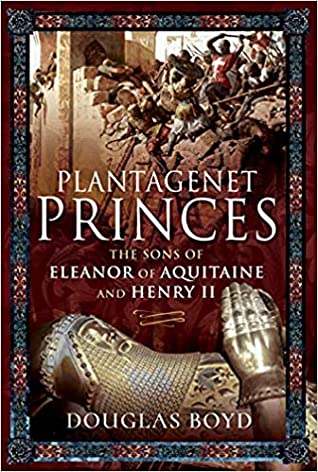 One of the most infamous families in the history of England lasted for over three hundred years and it was filled with numerous princes that fought for their right to rule, much to the chagrin of the Tudor dynasty. The Plantagenet Dynasty was full of scandals and bloodshed, testing the core values of what it meant to be a family and rulers of an emerging country like England. This dynastic clash for power that came to define this dynasty began with Henry II and his sons by his wife Eleanor of Aquitaine. When their father refused to give the boys any true power, which was to be excepted with all princes, his sons waged war against Henry II and their brothers. The stories of these bonds and what ultimately tore them asunder are told in Douglas Boyd’s latest collection of biographies aptly titled, “Plantagenet Princes: The Sons of Eleanor of Aquitaine and Henry II”.
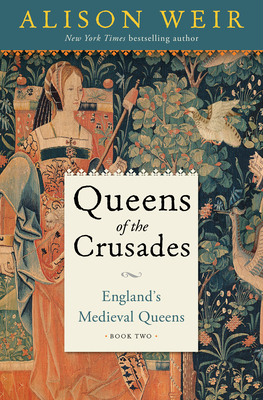 One of the most prominent royal families of English history was the Plantagenets, who reigned for over three hundred years. In the first one hundred years of this family’s infamous history, five kings ruled (the first two are considered kings of the Angevin dynasty): Henry II, Richard I, John, Henry III, and Edward I. These five kings saw England change drastically, but they also participated in the international political landscape of the day, which involved the series of wars that today we simply refer to as the Crusades. The early Plantagenet kings saw much bloodshed and war, but they were not alone in their struggle to keep the dynasty going. These men would not have gotten as far as they did without their wives who stood by their sides. In Alison Weir’s latest installment of England’s Medieval Queens series, “Queens of the Crusades”, she takes a deep dive into the lives of the first five Plantagenet queens to show how remarkable these women truly were to stand beside their husbands during the times of the Crusades in Europe.
 Adventures of a Tudor Nerd