
 One of the most critical years in English history was 1066, when William Duke of Normandy invaded England in the Norman Conquest. Known as William the Conqueror, his strength and ruthlessness made him a legend, but William would not have been the Duke or King of England without his equally formidable wife. Matilda of Flanders stood her ground, became the Duchess of Normandy, had a large family with William, and would become the first crowned Queen of England. Although much has been written about William the Conqueror and the Norman Conquest, Matilda of Flanders has not received the same attention until now. Tracy Borman has written the first biography dedicated to this remarkable woman entitled, “Matilda: Wife of the Conqueror, First Queen of England.”
I enjoyed reading her previous book about Henry VIII and the men who made him, and I wanted to read more books by Tracy Borman. When I heard about this book, it drew me in because I did not know much about Matilda of Flanders and her time, so I wanted to learn more.
Matilda of Flanders, the daughter of Count Baldwin V of Flanders and his wife, Adela, was one of the prominent women in 9th-century Europe. Borman shows how Flanders grew from a lawless society to a significant court that drew the attention of the dukedom of Normandy. Normandy was the home of William, the illegitimate son of Duke Robert I and his mistress Herleva. William shocked Europe when he became his father’s heir as Duke of Normandy and chose Matilda as his wife. To say they had a rocky start was an understatement, but Matilda and William had a large family and solidified Normandy as a powerhouse of Europe.
With the death of Edward the Confessor, William and Matilda saw their opportunity to take a bigger prize, the crown of England. While William had the military know-how to win the crown, it was Matilda who was able to help William with his conquest financially and took care of Normandy while he was taking care of his new kingdom. In return, William had Matilda crowned Queen of England.
However, not everything was perfect for William and Matilda. When their eldest son, Robert Curthose, was fed up with not getting the chance to become the Duke of Normandy as was his birthright, he rebelled, and Matilda decided to support her son over her husband. Matilda was not afraid to speak her mind, even if it felt like she was going beyond what was expected of a woman during that time. Matilda’s death in 1083 impacted the rest of William’s reign as King of England as the king mourned for the woman who could stand toe to toe with the great conqueror.
Borman has taken on the arduous task of telling the tale of Matilda of Flanders, and she absolutely smashes it. This biography is engaging and thought-provoking, revealing who Matilda was when you remove the myths surrounding her life. If you want a delightful biography about the first crowned Queen of England, I highly suggest reading “Matilda: Wife of the Conqueror, First Queen of England” by Tracy Borman.
 In the middle of the night on November 25, 1120, screams could be heard from the English Channel. A ship known as The White Ship hit a rock and began to sink. Those on board were the glamorous English elite, including the legitimate son of King Henry I, William Aetheling. In an era where people feared the sea and could not swim, those on board sank to their watery death on that cold winter night that began with such frivolity. No one knew that night that this one disaster at sea would cause a dynastic struggle that would lead to the founding of the infamous Plantagenet dynasty. In his latest book, “The White Ship: Conquest, Anarchy and the Wrecking of Henry I’s Dream”, Charles Spencer takes his readers on a journey to fully understand the impact that this tragedy had on the English royal family.
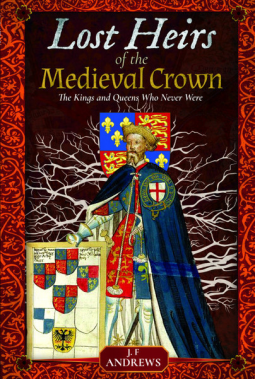 In history, we tend to focus on those who were crowned kings and queens of different nations. Their strengths and their weaknesses. Their accessions and the legacies that they left behind. With every story of someone who triumphed in gaining the throne, there are tales of those who were close to the throne but were never able to achieve the ultimate goal of ruling a nation. These “lost heirs” fall into two categories; either their names live on in infamy or they are thrown into the dust of the past. Who were these men and women and why did they lose their chances to sit on the throne? These questions are explored in J.F. Andrews’ book, “Lost Heirs of the Medieval Crown: The Kings and Queens Who Never Were”.
 Adventures of a Tudor Nerd