
Hello everyone! So a few weeks ago, I made a list of my top 5 Tudor women to study. This time around, I decided to focus on the men of this era. The reason that I have the word Tudor in quotations is that one of the men on this list is technically not a Tudor nor did he serve in the Tudor court. As always, this list is in no particular order and it might change after I do more research on the era. These men at the moment fascinate me and I look forward to learning more about them as I continue my exploration of the Tudor age.
1.) Jasper Tudor
The man in the sidelines who helped make the Tudor dynasty happen.
Brother of Edmund Tudor, half- brother to Henry VI, and uncle to Henry Tudor. A man of many titles, but also a man who spent most of his adult life on the run. Jasper is one of those people who has an epic story, but he really doesn’t get a whole lot of attention and to me, that’s a little sad. I can’t even imagine what was going through his head when he found out that his brother died and that his widow Margaret Beaufort had a son. And that was just in a span of a few months. Now let’s throw in the fact that the time that Jasper was living in was the Wars of the Roses where they basically played musical chairs with the crown of England so one minute his half brother was king of England and the next he was a prisoner. Pretty stressful is putting it mildly. To add insult to injury, Jasper’s nephew Henry, was placed into York households to be raised and to watch over the young boy.
Jasper was always on the run, trying to keep himself and Henry safe. Whether in Wales or in France, where both Jasper and Henry were held as prisoners for very powerful people, Jasper worked hard to keep them alive. You would think that these two would lay low the rest of their lives. You would be wrong. Margaret Beaufort, Henry’s mother, had bigger plans for her son. With Henry VI dead and the Yorks on the throne with Edward IV and then Richard III, Margaret believed that her son was the next rightful king of England. So while Jasper and Henry were overseas in France, Margaret and Jasper orchestrated a coup d’etat. They were able to muster a force for Henry so that he could march against Richard III and on August 22, 1485, their plan worked. Henry was declared king and Jasper went back to his natural place, working for Henry’s good as his right hand man.
As the step brother of a king, I have often wondered why Jasper didn’t seize the crown for himself. This man was full of such intense loyalty for his family and had such an interesting life and yet he chose a life on the sidelines. I want to read biographies on him. Such a dynamic figure in Tudor history.
2.) Henry Tudor (later on Henry VII)
 The man who would become king of England and the patriarch of the Tudor dynasty.
As stated above, Henry’s life started off rough. Always on the run, he never knew his father and he never really got a chance to know his mother that well until after he became king. That all changed at Bosworth Field when Richard III was killed and Henry became king. From rags to riches real quick. But if Henry wanted to end the constant calamity that the Wars of the Roses was causing, he needed to marry the right woman. His mother and Elizabeth Woodville arranged a marriage between Henry and Elizabeth of York, joining the houses of York and Lancaster. It was a brilliant move and helped put an end to the fighting. Henry and Elizabeth would have a large family including two sons, Arthur and Henry, thus starting the Tudor dynasty.
Henry is often thought of as being a mizer and a usurper or being a hero, but who was the true Henry? The more I study him, the more I realize how complicated this man was. He was not just a man who took the throne or a hero who started a brand new dynasty, but a family man and someone who knew heartache and love. There is something about Henry that is intriguing. His descendants might get all the attention for all their drama, but Henry Tudor was a man who built a dynasty out of practically nothing. He had to fight for all that he had against numerous pretenders who believed that he was not the rightful king. Overall, he was a survivor who became king.
3.) Richard III
The “black legend”.
Now I know what you are thinking, Richard III is not a Tudor king or someone who 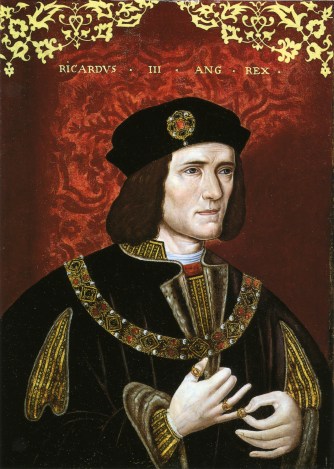 served a Tudor king so why is he on this list? To me, Richard has just as much influence in creating the Tudor dynasty as the Tudors themselves. If you think about it, if he didn’t take the throne, then Henry wouldn’t have marched against him at the Battle of Bosworth Field. It was his death that helped start the Tudor dynasty.
I do tend to berate Richard quite a bit since I believe he did kill his nephews, but there is something about this man that keeps me wanting to learn more about him. I may think that he is a murderer but as a king, I am learning that he was pretty decent. Just like Henry Tudor was just a man who survived, so was Richard. The more I study these two, the more I am realizing how similar they were. Even though Richard only ruled for two years, there is still a lot that we do not know about him. Maybe he was a family man just like Henry. His childhood might have shaped the way he ruled England and how he handled his enemies.
Even though there has been quite a bit of research about Richard III in the last 500 years, he is still a mysterious legend and I look forward to learning more about him and his times.
4.) Henry VIII
 The man. The myth. The legend.
When you hear his name, instantly you think about his multiple marriages and his break from the Roman Catholic Church. But who was Henry VIII the man behind this legend? Henry was second in line to the throne behind his brother Arthur, but when Arthur died shortly after he was married to Katherine of Aragon, the throne passed on to Henry. To say Henry was not prepared for this, nor were his parents, would be the understatement of the year. But he had to carry on in his father’s place when he passed away. The boy who was once a scholar now had to become a king. It was a tall order to fill and it looked like from the very beginning he was doing a pretty good job.
And then things changed rapidly when his attention moved from his first wife to his second, and so on and so forth. Henry’s major flaws were his wandering eyes and his anger. We think we know everything there is to know about Henry, but do we really? This legendary man seems almost too fanciful to be a real human being. But he was. He was flawed like everyone else. Though he was a king, he was still human.
That is what keeps me fascinated about Henry VIII and his life. How did the king figure compare and contrast to the man who was Henry VIII? Who was Henry VIII really? No matter how much I read about him and his reign, its his human aspects and how he dealt with his wives and children that keep me coming back for more. I believe that there is more to Henry VIII than most people realize.
5.) Robert Dudley
The man who almost married the “Virgin Queen”
If you have studied Elizabeth I, you know Robert Dudley. He was the man who stayed by Elizabeth’s side through the good times and the bad, even when he was married not once but twice. His first wife Amy, died when she fell down a flight of stairs, but many believed that Robert had her poisoned so that he could marry the queen. Robert was always close to Elizabeth and some in the court believed that he was too close. But maybe Elizabeth knew this when she suggested that Robert should marry Mary Queen of Scots. This deal, however, fell through when Mary married Lord Darnley.
As Elizabeth grew older, Robert kept trying to propose marriage, but he was become restless. He had affairs with some of Elizabeth’s ladies and would later marry Lettice Knollys, a kinswoman of the Queen. Elizabeth was livid and banished both Robert and Lettice from court. Robert would come back into her good graces; Lettice would not.
Robert loved Elizabeth deeply and many suspect that she loved him back. It is said that after he died, she kept his last letter to her in a chest that she kept close to her. Robert was a man who loved the queen, but he could never have her as his wife.
I have often wondered what Robert felt towards his two wives Amy and Lettice. Did he actually love them or did he use them to get closer to Elizabeth? If he did marry the queen, what would England look like? These are only a few questions that come to my mind when I think of Robert Dudley.
These are my top 5 “Tudor” men to study. Who are your top 5?
 learning and discoveries. While that is true, like any age, there were good elements and bad elements. We tend to overlook the bad elements with Elizabeth’s “Golden Age” and move on to the good elements. However, we cannot get a full image of the age if we only look at the good elements. That is why A.N. Wilson wrote the book “The Elizabethans”:
 On September 8, 1560, a young woman’s body is discovered at Cumnor Place alone at the bottom of the stairs with her neck broken with no other marks on her body. This would have been declared an accidental death by normal people, however the woman was anything but a normal woman; this was the wife of Robert Dudley, Amy Robsart. It was because of who she was and who her husband was that people speculated that foul play was afoot.
  became the Master of the Horse for Elizabeth, Robert changed. He was at home less and Amy had to take over the household affairs. It is through letters that Amy wrote that Skidmore is able to paint a picture for us about how their household worked. The day that Amy died was very peculiar in the fact that she wanted to be left alone; her husband was with the Queen miles away. The original jury found that this was a case of accidental death, however Skidmore decided to take a deeper look into the case. He decided to explore the possibility of accidental death by stairs, the possibility of a medical explanation on why Amy could have fallen down the stairs, and he found the original coroner’s report, which portrays a different story. The amount of research Skidmore pours into this one accidental death is admirable. The one issue I have with the book is the fact that he describes the type of staircases and the details of the coroner’s report but he doesn’t show pictures of these things so it’s a bit hard to visualize what he is talking about.
 Adventures of a Tudor Nerd