
 Today, I welcome Tonya Ulynn Brown to my blog to share an excerpt from her latest historical fiction novel, “The King’s Inquisitor.” I want to thank The Coffee Pot Book Club and Tonya Ulynn Brown for allowing me to be part of this blog tour.
Sheepshearer held up his hand to silence the belligerent man. The king adjusted his seat but did not speak. Instead, Sheepshearer asked, “Where is this mark ye have found?”
The offended man jerked the woman by the arm and pulled her hair up to expose her neck. “There,” he pointed with a stubby finger. James and I both leaned closer to get a better look at the mark. Sheepshearer stepped closer, taking out a small lens and holding it in front of his eye. He didn’t speak for a moment, then pulled a small leather pouch from inside his coat and walked to the table where we sat.
I stared in fascination. I had never seen a witch pricker do his work. I admit that was one of the reasons I had agreed to accompany James this evening. I was intrigued at the method of determining who was a witch and who wasn’t.
The witch pricker removed his coat, then untied a thin strap and unrolled the pouch. Inside were all manner of instruments. Needles of various lengths, pointed rods, some straight and some curved, several surgeon’s lancets with differing widths, a crude sort of pinching device, and a small rod with a severe hook on the end. I shivered as he selected his instrument of choice, then turned and faced the woman.
“It looks like a lover’s mark to me,” I whispered to James. I eyed him to see if he understood my meaning. He was a recently married man, after all, but the queen was the only woman he had been with in his twenty-four years. She had performed her duty, but whether it had been with enjoyment was not something he had shared with even me.
“Perhaps,” he finally said. Yet, he did not move to stop Sheepshearer. I, on the other hand, shifted in my seat. I might have put a lover’s mark or two on a woman. I shuddered at the thought that any woman I had been with would be subjected to such treatment. Still, any woman worth her weight in ale would never allow a bruise to be discovered. Apparently, Geillis Duncan had no choice.
He had chosen a straight blade. The likes of which a man would use to shave the hair from his face. Surely, he did not intend to filet her alive?
At the sight of the chosen instrument, Geillis, too, reacted. She tried to jerk her arm away from Seton, but he held fast. Curling her toes in an attempt to dig her bare feet into the wooden floor, she pushed against Seton, bowing her back and poking a boney elbow into his side. He almost lost hold of her until Sheepshearer motioned for Marley, who up until now had remained uninvolved in the shadows, to come forth and help restrain her.
Once subdued, the woman stiffened her body, straight as a branding rod. There was no pleading, no entreating for mercy, nor cry of innocence. She simply stood, looking straight ahead. The darkness that had overshadowed her face earlier seemed to have settled into a permanent mien.
 Blurb
Blurb
The queen of Scotland is dead. Her almoner’s son, William Broune, has fulfilled his father’s wish that he should serve the king, James VI, at court. William finds himself caught between loyalty to the king or loyalty to his conscience. As William is forced to serve as the king’s inquisitor in the North Berwick witch trials, he must make a decision. Will he do what the king asks and earn the wife, title, and prestige he has always desired, or will he let a bold Scottish lass influence him to follow his heart and do the right thing?
If William doesn’t make the right choice, he may be among the accused.
Trigger warnings: Some violent imagery.
Buy Links
This book is available to read on #KindleUnlimited.
Universal Link: https://books2read.com/u/4NjWD
Amazon UK: https://tinyurl.com/TheKingsInquisitorAmazonUK
Amazon US: https://tinyurl.com/TheKingsInquisitorAmazonUS
Amazon CA: https://tinyurl.com/TheKingsInquisitorAmazonCA
Amazon AU: https://tinyurl.com/TheKingsInquisitorAmazonAU
Barnes and Noble: https://www.barnesandnoble.com/w/the-kings-inquisitor-tonya-ulynn-brown/1141654694
 Author Bio
Tonya Ulynn Brown
Tonya Ulynn Brown is an elementary school teacher. She holds a Master’s degree in Teaching and uses her love of history and reading to encourage the same love in her students. Tonya finds inspiration in the historical figures she has studied, and in the places, she has traveled. Her interest in medieval and early modern British history influences her writing. She resides in rural southeastern Ohio, USA, with her husband, Stephen, two boys, Garren and Gabriel, and a very naughty Springer Spaniel.
Social Media Links:
Website: http://www.tonyaubrown.com
Twitter: http://www.twitter.com/mrsbrownee2u
Facebook: http://www.facebook.com/tonyaubrown
LinkedIn: https://www.linkedin.com/in/tonya-littell-brown-4b58b0b1/
Instagram: http://www.instagram.com/tonyaubrown
Pinterest: http://www.pinterest.com/tonyaulynnbrown
BookBub: https://www.bookbub.com/authors/tonya-ulynn-brown
Amazon Author Page: https://tinyurl.com/AmazonAuthorTonyaUlynnBrown
Goodreads: https://tinyurl.com/GoodReadsAuthorTonyaUlynnBrown
 David Rizzio was one of Mary, Queen of Scots’ favorites at court and the private secretary to the queen. Being a royal favorite would not have been seen as a grave offense in any other country during this time, yet this is Scotland in the 16th century. Scotland was filled with deadly feuds between lords fighting for control of the crown, which would lead to numerous prominent men being murdered, including Rizzio. On March 9, 1566, David Rizzio was murdered in front of Mary, Queen of Scots, while she was several months pregnant. The tale of the grotesque crime and those who witnessed the events of that night are told in Denis Mina’s latest gripping novella, “Rizzio.”
 Two cousins fighting for the right to rule England during the 16th century. One was the daughter of Henry VIII and Anne Boleyn who fought tooth and nail to rule without a man by her side. The other was the daughter of Mary of Guise and King James V of Scotland whose marriage record would prove to be fatal. Elizabeth I and Mary, Queen of Scots, may have been sister queens, but the way they were treated in their own countries differed completely. While Elizabeth I was praised and protected from harm in England, Mary was a scapegoat for so many in Scotland. The way that Mary was used as a pawn even though she wore a crown was nothing short of extraordinary. The story of how these two queens came on a collision course that would leave one queen beheaded and the other forever changed has been told in many different ways from both sides of the tale, but it has rarely been told as a cohesive nonfiction book. That is until Kate Williams’ marvelous biography, “The Betrayal of Mary, Queen of Scots: Elizabeth I and Her Greatest Rival”.
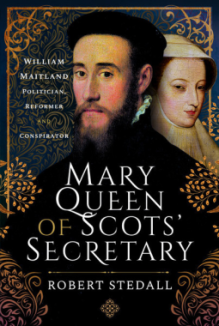 One of the most dynamic queens in 16th century Europe who spent most of her youth in a country that was not her homeland, but was fighting for the right to rule England. Her name was Mary Queen of Scots, the cousin of Queen Elizabeth I. Many know of her tragic tale, but there was a man who was behind the scenes trying to guide Scotland to a brighter future. He was not married to Mary Queen of Scots, but he was influential in her life and choosing who she might marry and who she would end up divorcing. He was a politician and a religious reformer whose decisions would alter history dramatically. His name was William Maitland and he served as Mary’s secretary. He is always mentioned as a footnote in history, until now. Robert Stedall’s latest biography, “Mary Queen of Scots’ Secretary: William Maitland- Politician, Reformer, and Conspirator”, explores the life and legacy of this rather extraordinary secretary.
 The stories of the men behind the English crown can be as compelling as the men who wore the crown themselves. They were ruthless, cunning, power-hungry, and for many of them, did not last long. However, there were a select few who proved loyal to the crown and lived long and eventful lives. They are not as well known as their infamous counterparts, yet their stories are just as important to tell. One such man was the grandfather of two of Henry VIII’s wives and the great-grandfather of Elizabeth I. He lived through the reign of six kings and led his men to victory at the Battle of Flodden against King James IV of Scotland towards the end of his life. Thomas Howard, 2nd Duke of Norfolk had his fair shares of highs and lows, including imprisonment, but his story is rarely told. That is until now. Kirsten Claiden-Yardley has taken up the challenge to explore the life of this rather extraordinary man in her book, “The Man Behind the Tudors: Thomas Howards, 2nd Duke of Norfolk”.
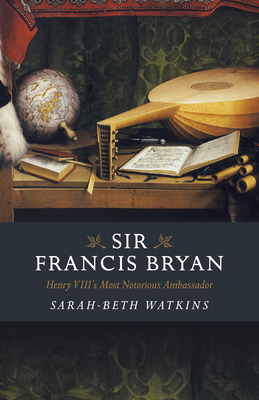 During Henry VIII’s reign, those who were most loyal and the closest to the king did not often last long to enjoy the rewards of his friendship. However, there was one man who stayed in relatively good favor with the king throughout his reign. He was a sailor, a soldier, a diplomat, and acted as an English ambassador mostly in France. He was a cousin to a few of Henry VIII’s wives, a lover of wine, and an infamous womanizer. The name of this rather extraordinary man was Sir Francis Bryan and the story of how he survived the tumultuous reign of Henry VIII is told in Sarah-Beth Watkins’ latest biography, “Sir Francis Bryan: Henry VIII’s Most Notorious Ambassador”.
 When we think of medieval kings of England, we tend to think about strong warriors who did things their own way. Men like Edward I and Edward III often come to mind. Yet, there was a king in between these two legendary warriors whose name lives on in infamy, King Edward II. He is known for his numerous favorites, his relationships with men like Piers Gaveston and Hugh Despenser the Younger, his disagreements with the barons who were trying to help him run the country, his relationship with his equally famous wife and son, Isabella of France and Edward III, and his dramatic death. But who was the man known as King Edward II? What was he really like? Stephen Spinks explores these questions in his latest biography, “Edward II the Man: A Doomed Inheritance”.
 In English history, the story of the royal families tends to capture the imagination of those who study it. Full of dynamic tales of kings and queens, and numerous nobles, these are tales that make it into history books and history classes. We tend to focus on the same kings and queens, who have become the popular royals. But what about those who are left in the dust of those popular royals? Who were the royal women who lived in the shadow of the throne that time has forgotten? What were the lives of these women like? It is these women who are the focus of Erin Lawless’s latest book, “Forgotten Royal Women: The King and I”.
 The children of King Henry VII and Elizabeth of York lived rather eventful and fascinating lives. We all know the stories of Prince Arthur, who tragically died, his younger brother Henry, who would become the notorious King Henry VIII, and Mary, who would become Queen of France and then marry the man she loved, Charles Brandon. The one sibling that many tend to forget about is Margaret Tudor, who would become the wife of King James IV and the mother of King James V and Margaret Douglas. Her love life was quite rocky, but she kept fighting for what she believed was right for her family and her adoptive country of Scotland. This remarkable woman didn’t receive much attention in her lifetime, but Melanie Clegg hopes that people today will know Margaret’s story. This is why she wrote this delightful biography of the Tudor princess turned Queen of Scotland, “Margaret Tudor: The Life of Henry VIII’s Sister”.
  The study of the Tudors tends to focus on England as a country of focus, however the Tudors did affect other countries like Spain, France, and Scotland. Many know the story of Mary, Queen of Scots and her relationship with Elizabeth I, but many do not know the tale of her mother, Marie de Guise. Her tale is one of love for her family and her adoptive country of Scotland. It is of loyalty and strength to do what she believed was right. She was a sister, a daughter, a mother, a queen, and a regent of Scotland. Marie’s story tends to be overshadowed by her daughter’s tragic tale, until now. Her story is the main focus of Melanie Clegg’s latest biography, “Scourge of Henry VIII: The Life of Marie de Guise”.
 Adventures of a Tudor Nerd