
 We all know the story of the last Tudor monarch, Queen Elizabeth I, who often viewed herself as a female king and who remained a virgin for her entire life. With her death, the Tudor dynasty ended, and a brand new dynasty made its mark on English history. It was a dynasty in England that the son of Elizabeth started I’s rival, Mary Queen of Scots, King James VI of Scotland. King James was not just a king, but a man in love with numerous lovers, and when he fell in love, he fell hard. Gareth Russell explores the life of King James VI/I, who ruled two nations while searching for true love in his latest book, “Queen James: A New History About the Life and Loves of Britain’s First King, James Stuart.”
I am a big fan of Gareth Russell’s books, and so when I heard that he was writing a new biography, I jumped at the chance to read it. I didn’t know much about King James VI/I, especially when it comes to his reign in England or his love life, so I was excited to learn more. Plus, I liked the title of this particular edition of this book.
Like any good biography, we have to start at the beginning, or in James’ case, when his mother was still pregnant with him. Even before he was born, some wanted to see James dead, including those who killed David Riccio in front of his mother, Mary Queen of Scots. James would never know his father, Henry Stuart, Lord Darnley, as he was killed at Kirk O’Field when James was very young. Mary Queen of Scots would flee to England, making James King of Scotland. James was raised to be a Protestant king who would navigate plenty of plots against his life. He was not interested in marriage, but he would marry Anna of Denmark, a vivacious queen who brought her love of theater and arts to James’ life, as well as Catholicism and seven children, including Charles I and Elizabeth Stuart, “The Winter Queen” of Bohemia.
When Queen Elizabeth I died in 1603, James took the opportunity and became King of England. James had to deal with the affairs of two nations, try to come up with a brand new translation of the Bible, as well as the witch hunts that were becoming more prevalent during this time. Add to James’ troubles were European politics and the constant fighting between Catholics and Protestants, and you start to understand why he relied so heavily on his favorites, specifically Alexander “Sandy” Lindsay, Robert Carr, 1st Earl of Somerset, and George Villiers, 1st Duke of Buckingham. James’s favorites were his lovers, and they provided him with the love that he was looking for all of his life.
No one writes nonfiction the way Gareth Russell does with such care and an engaging writing style. This is another triumph as he shows that although there were rivalries in love, plots a plenty, and religious ruckus, at the heart of the Jacobean reign was a complex man who had his heart on his sleeve and fell in love quickly and hard. If you want a fabulous biography about a king and the ones he loved the most, I highly recommend you read “Queen James: A New History About the Life and Loves of Britain’s First King, James Stuart” by Gareth Russell.
 English royal history is filled with fantastic stories of triumphs and tribulations, grand romances, and divorces that shook the foundations of the monarchy. It is also filled with struggles over religion, wars both inside England and with foreign nations, and heartbreaking child losses. We often think about the spouses of the Plantagenets and the Tudors when we think about royal romances, but we shouldn’t forget about the dynasties that came after, like the Stuarts. So how did the Stuart dynasty come to be and how did the unions between monarchs and their significant others affect the dynasty and England? Heather R. Darsie explores this often-overlooked dynasty and the stories of their marriages and romances in her latest book, “Stuart Spouses: A Compendium of Consorts from James I of Scotland to Queen Anne of Great Britain.”
 A life of luxury from birth, destined to be crowned King or Queen of England. This is what we often think life must have been like for royal heirs who reached the ultimate destination of a crown and a throne. However, the stories of those who failed to reach the throne are mired in tragedy and heartache. The question of royal succession in England is a complex issue, especially when the heir to the throne dies unexpectedly, leaving doubts on whether a dynasty will survive through blood or dissolve in conflict. How did the deaths of these potential rulers radically transform the fabric of English history as a whole and what can their lives tell us about what kind of rulers they might have been? Ashley Mantle hopes to answer all of these questions and more in his latest book, “Uncrowned: Royal Heirs Who Didn’t Take the Throne.”
 When we think of old homes, we often think of the phrase, “If walls could talk,” because the true treasure of any home is not the floorboards or the walls, but rather the stories of those who lived inside its walls. Take, for example, Hampton Court Palace in England. A home for over 500 years that has seen many architectural and artistic changes in its hallowed halls, but it is the stories of those who stayed for brief periods that truly make this palace spectacular. Stories full of salacious scandals, religious implications, and revelations that would shake England to its core through revolutions. Hampton Court Palace has been the center of English court drama for centuries and finally, these tantalizing tales are being told in a truly remarkable book, “The Palace: From the Tudors to the Windsors, 500 Years of British History at Hampton Court” by Gareth Russell.
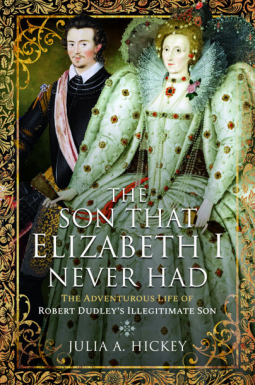 When we study the life of Queen Elizabeth I, the image of a virgin queen who never married tends to come to mind. Of course, she had a man who she favored above all others, Robert Dudley, but he married several times to Amy Robsart and Lettice Knollys. It was with Lettice Knollys that Robert Dudley was able to produce his heir, aptly named Robert Dudley Lord Denbigh, who unfortunately died at a young age. Robert Dudley was left without a legitimate heir, but he did have another son, albeit an illegitimate son, also named Robert Dudley. Julia A Hickey has decided to examine the life of the illegitimate Robert Dudley in her book, “The Son that Elizabeth I Never Had: The Adventurous Life of Robert Dudley’s Illegitimate Son.”
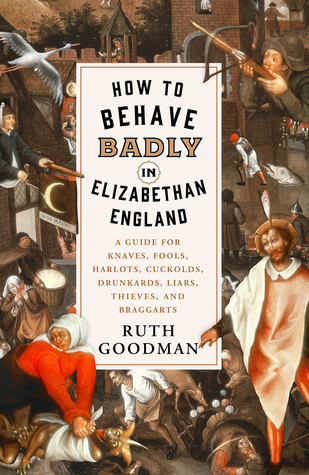 In many books about the different mannerisms and routines of different dynasties, we tend to see how the average person lived in the most prim and proper manner. How they avoided trouble at all costs to provide the best life that they could for their families. Yet, we know that there were those who did not adhere to the rules. They chose to rebel against the natural way of life. Every social echelon had their own rule-breakers, but what were these rules that they chose to break? How are these troublemakers of the past similar and different from our modern-day rebels? Famed experimental archeologist and historian Ruth Goodman takes her readers on a journey through the Elizabethan and the early Stuart eras to show how the drunkards, thieves, and knaves made a name for themselves. The name of this rather imaginative book is “How to Behave Badly in Elizabethan England: A Guide for Knaves, Fools, Harlots, Cuckolds, Drunkards, Liars, Thieves, and Braggarts”.
 Adventures of a Tudor Nerd