
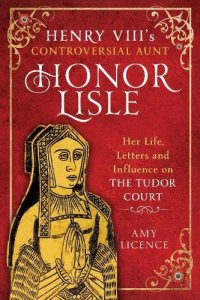
 Marrying into the royal family is not all sunshine and rainbows. Of course, we tend to think about those who marry the king, the queen, the prince, or the princess. But we also need to consider the aunts and the uncles of the royals as part of the family. Take, for example, Arthur Plantagenet, the illegitimate son of Edward IV and the uncle of Henry VIII. His second wife, Honor Lisle, would help him rule Calais; however, she is best known for her letters and her devout Catholic faith during the Reformation in England. So why is Honor Lisle considered a controversial figure, and what was the cause of the fall of Honor and Arthur from the royal good graces? Amy Licence explores the life of Henry VIII’s step-aunt in the first full biography dedicated to Honor Lisle, which is entitled “Henry VIII’s Controversial Aunt, Honor Lisle: Her Life, Letters, and Influence on the Tudor Court.”
I would like to thank Pen & Sword Books and NetGalley for providing me with a copy of this book. I have heard of Honor Lisle and her letters, but I did not know much about her life before this book. I did know that she was married to Arthur Plantagenet, but I had assumed that he was her first husband, so I didn’t know about her life before Arthur. When I saw that Amy Licence was writing a biography about Honor Lisle, I knew I wanted to read it.
Licence begins with the birth of Honor Grenville, Lady Basset, Lady Lisle Plantagenet. She was born in 1493 to Thomas and Isabel Grenville in the small town of Bideford, Devon. Her father served the first Tudor king, Henry VII, as Esquire of the Body, so Honor’s family did have some connection before Honor’s marriage to Arthur. Honor’s mother died a year after she was born, but her father did not die until 1513. In 1515, Honor would marry her first husband, Sir John Basset, and they would have between 7 and 8 children before his death in January 1528.
A year later was a monumental year for England as it was the start of the divorce between Henry VIII and Catherine of Aragon, which would be known as the Great Matter. It was also the year that Honor married Arthur Plantagenet. The couple would move to Calais, where Arthur would rule for his nephew. This is where we get to see the Lisle letters, Honor’s dictated correspondence to prominent figures in Tudor England. Honor and Arthur would go into debt, dealing with the constant threat of war, balance their faith and be loyal to the King, and handle a plot by Reginald Pole that would try to remove Henry VIII from the throne.
I found it so interesting to see Honor’s perspective on the big issues of the Tudor court while staying in France, as well as how life in Calais was different from it was in London during this time. Honor Lisle’s life and letters give us great insight into the reign of Henry VIII from the perspective of someone who was outside of England during the major events of his reign. Licence’s research, combined with an easy-to-follow writing style, makes this a very well-written biography. If you want a biography about a lesser-known Tudor woman and her famous letters, I highly recommend you read “Henry VIII’s Controversial Aunt, Honor Lisle: Her Life, Letters and Influence on the Tudor Court” by Amy Licence.
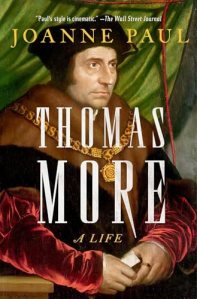 The year is 1535, and an educated scholar, father, writer, and the former Chancellor of England marches to his demise. His crime was staying silent on an issue that the King deemed extremely important: the idea that the King of England should be the Supreme Head of the Church of England, not the Pope. As a Catholic, Sir Thomas More does not agree with this decree and must die. How did one of the most prominent Tudor scholars of his age fall so quickly? Joanne Paul explores the rise and dramatic fall of this infamous Tudor figure in her latest biography, “Thomas More: A Life.”
 The 16th century was dominated by powerful women who left their indelible mark on European history. Take, for example, the aunt of Charles V, the Holy Roman Emperor. No, not Catherine of Aragon, the first wife of Henry VIII. I am talking about a woman who was the daughter of Emperor Maximilian I, was married three times, had no children, and helped raise her nephew Charles V, was an essential part of the Ladies’ Peace, taught Anne Boleyn how to live at court, and was a patroness of the arts and literature. Of course, I am talking about Margaret of Austria, the Governor of the Netherlands. A formidable woman who saw much change and chose to be part of politics, even though she was a woman. Her remarkable story is told in Rozsa Gaston’s novel, “Margaret of Austria: Governor of the Netherlands and Early 16th-Century Europe’s Greatest Diplomat.”
 During the reign of King Henry VIII, the king would elevate well-qualified men to positions of power and prestige. We all know the story of Thomas Cromwell, but it is his mentor, Sir Thomas Wolsey, whose story shows how one can rise from humble beginnings, but whose fate is ultimately tied to the mood of the monarch. The son of a butcher turned scholar who became a priest, a lover, a father, and the closest advisor to the king. His life, his loves, his successes, and his struggles are told in Alison Weir’s latest novel, “The Cardinal.”
 Do you have a favorite painting? One that grabs your attention whenever you look at it and discover something new. Most paintings are from da Vinci, van Gogh, Rembrandt, Picasso, or Michelangelo, just to name a few. However, there is one artist that I feel doesn’t get a whole lot of attention unless you study the 16th century: Hans Holbein the Younger. While Holbein is known for his single portraits, his double portrait, known as The Ambassadors, is stunning to look at and is filled with symbolism. Tracy Borman, in collaboration with the National Gallery, has written a short book about this remarkable painting entitled “Holbein: The Ambassadors.”
 The Great Matter was a defining event in the lives of King Henry VIII, Catherine of Aragon, and Anne Boleyn. One of the world’s messiest divorces, it saw Henry VIII trying everything in his bag of tricks to annul his marriage to Catherine of Aragon to marry his new infatuation, Anne Boleyn. While we know that the basis for his argument that he should be able to divorce Catherine comes from the book of Leviticus in the Bible, we often see Henry’s debate through the Catholic and Protestant lenses. However, Henry relied on another group of people who had not been on English soil for centuries, the Jews. What does Jewish law bring to the discussion of the Great Matter and did it help Henry? Jerry Rabow examines this often overlooked aspect of Henry’s road to divorce in his book, “Henry VIII and His Rabbis: How the King Relied on Jewish Law to End His First Marriage- and Why He Failed.”
 The Tudor court during the reign of King Henry VIII was a treacherous place to be, even for the humble female musician. It was full of men and women vying for a position of power, and they were ready to give anything and everything for that power. This is the world that Kat Cooke finds herself in. After faithfully serving Queen Katherine of Aragon for years, she must switch her loyalties to Anne Boleyn, but when things get dangerous, where will Kat’s loyalties lie? Can Kat survive such turbulent times or sacrifice everything she holds dear? Kat’s story is told in the second book of Caroline Willcocks’ Tudor Queens series, “The Duty of Women.”
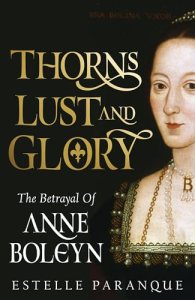 A young woman catches the attention of a king already married to a princess from a faraway kingdom. The king desires the young lady and divorces his wife to marry her. However, there is a catch. The young lady spent some time in the French court of Francis I and Claude of France, whereas the king’s wife was the daughter of the Spanish King and Queen as well as the aunt of the Holy Roman Emperor. The Great Matter of Henry VIII, Anne Boleyn, and Catherine of Aragon is considered one of the messiest divorces in English history and rightfully so when you consider the diplomatic consequences that this divorce would have across Europe. Estelle Paranque highlights the connection between Anne Boleyn and the French court in her latest book, “Thorns, Lust, and Glory: The Betrayal of Anne Boleyn.”
 Marriage has been an integral part of life for centuries. It has been used to create strong alliances and cement love matches. However, once the wedding ceremony is finalized, the facade often fades and the truth about the families is revealed. Jane Parker finally marries the love of her life, George Boleyn, but she soon realizes that her new family is full of ambition, especially her new sister-in-law Anne Boleyn. As one of the greatest marriages of the 16th century is beginning to fall apart, can a new romance be waiting in the wing to rock England and all of Europe to its core and whose side will Jane join in the end? Danielle Marchant continues her exploration of Jane Parker Boleyn, Lady Rochford’s life in her novel, “The Lady Rochford Saga Part 2: Tourmens de Mariage.”
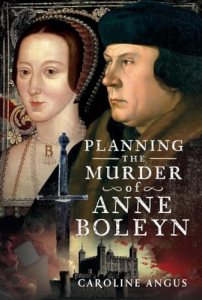 The 16th century was filled with tales of remarkable women. Still, one of the most defining figures of the century was a woman of noble birth who the King of England fell in love with and decided that he was going to divorce his first wife of over twenty years to marry her. The Great Matter caused a great scandal across Europe, however, it was a love match that would not last long. The relationship between Henry VIII and his second wife Anne Boleyn would turn volatile and in the end, Anne and the men around her would be executed. We often blame Anne Boleyn’s death at the foot of Henry VIII’s right-hand man Thomas Cromwell, but who was behind the death of this famous queen? Caroline Angus has chosen to re-examine the case to find out who was truly responsible for the fall of this famous queen in her latest book, “Planning the Murder of Anne Boleyn.”
 Adventures of a Tudor Nerd