
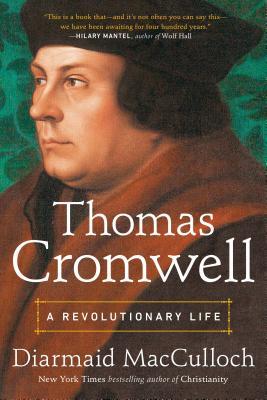
 The stories of King Henry VIII and the men around him have fascinated generations of historians, but there was one man who has received a negative reputation for his actions. He was the supposed son of a butcher who rose to be Henry VIII’s right-hand man, until his dramatic fall in July 1540. Thomas Cromwell was credited for helping Henry with his Great Matter, the fall of Anne Boleyn, the establishment of the Church of England, and the disastrous marriage between Henry and Anna of Cleves. Diarmaid MacCulloch has taken on the challenge to figure out who Thomas Cromwell really was by sifting through all remaining archival records that we have from this extraordinary man. It is in this book, “Thomas Cromwell: A Revolutionary Life” that MacCulloch masterfully explores the story of this man who changed English and European history forever.
Personally, I have never read a book about Thomas Cromwell, but I did want to learn more about his role in Henry VIII’s government. I had heard great things about this particular book and I wanted to read a definitive biography about Cromwell. Although at first, I was a bit intimidated reading something so academically written, I am really glad that I embarked on this journey to discover the truth of this much-maligned historical figure.
MacCulloch dives into the life of Cromwell by trying to piece together his early years and his Italian connections in the clothing trade. Cromwell did not receive a normal education of the day as he almost taught himself, which made him appreciate books and literature even more. It was these connections and his hard work which allowed Cromwell to rise to a position where he was working under Thomas Wosley. The lessons that Cromwell learned from Wosley would be beneficial as he took over as the King’s right- hand man after Wolsey’s fall from grace.
It is the decade that Cromwell served as Henry’s administrative polymath that is MacCulloch’s main focus. This part might trip up casual history students as it is very academic. My suggestion, if you are a casual history student, is to take your time to fully understand the steps that Cromwell took to change the political and religious landscape of England to make sure Henry was happy. It was not always an easy task, but with great risks came great rewards, such as the title of Vice-Gerent in Spirituals. Cromwell’s fingerprints could be seen all over the establishment of the Church of England, the dissolution of the monasteries, and the expanding powers of Parliament. There were those who were not exactly thrilled with all of these changes, however, the only opinion that truly mattered was the one that belonged to Henry VIII, and he was happy with Cromwell’s work.
Cromwell was not just a politician, he was a father to a son named Gregory Cromwell. It was interesting to learn that even after his wife died, Thomas Cromwell never remarried and raised Gregory as a single father. It was when Cromwell got involved in Henry’s personal life that matters got tricky for Cromwell. Obviously, many people are familiar with Cromwell’s role with Anne Boleyn’s fall from grace. However, it was the marriage between Henry and Anna of Cleves that would be the incident that brought Cromwell from the pinnacle of power to death’s door.
MacCulloch’s biography is truly a triumph. It is academic, both in its meticulously researched contents and its writing style, yet it remains engaging and thought-provoking. Although at times, this book was challenging, it was one of those books that you feel proud to read. If you want a fabulous book about the life of Thomas Cromwell as well as the changes that he helped create in the Tudor government and the establishment of the Church of England, “Thomas Cromwell: A Revolutionary Life” by Diarmaid MacCulloch should be included in your collection.
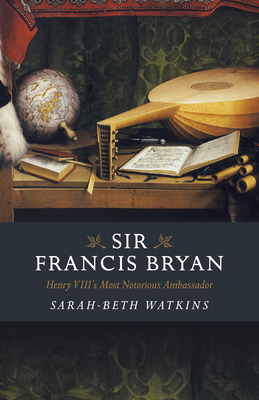 During Henry VIII’s reign, those who were most loyal and the closest to the king did not often last long to enjoy the rewards of his friendship. However, there was one man who stayed in relatively good favor with the king throughout his reign. He was a sailor, a soldier, a diplomat, and acted as an English ambassador mostly in France. He was a cousin to a few of Henry VIII’s wives, a lover of wine, and an infamous womanizer. The name of this rather extraordinary man was Sir Francis Bryan and the story of how he survived the tumultuous reign of Henry VIII is told in Sarah-Beth Watkins’ latest biography, “Sir Francis Bryan: Henry VIII’s Most Notorious Ambassador”.
 There have been certain events in Tudor history that have become as famous as those involved. None more so than the divorce between Henry VIII and Katherine of Aragon so Henry could marry his second wife, Anne Boleyn, also known as “The Great Matter”. We often study this time through the perspectives of the many historians and authors who have written about this topic. But, what if Katherine, Henry, and Anne had a chance to speak for themselves about the events of “The Great Matter”. Thomas Crockett decided to have the main figures of this famous divorce tell their tales in his latest work, “The Great Matter Monologues: Katherine, Henry, Anne”.
 The Tudor dynasty and the enigmatic figures who made this time period so fascinating have been hotly discussed for centuries. Henry Tudor, who became King Henry VII after defeating King Richard III at the Battle of Bosworth Field in 1485. King Henry VIII, the second son whose numerous wives and his split from the Catholic Church made his name infamous in history. King Edward VI, Henry VIII’s beloved son who died before he really could accomplish the reformation that he had planned for England. Queen Mary I, who was the first Queen of England to rule in her own right and wanted to restore the Catholic Church. Finally, Queen Elizabeth I, who never married and led England to a “Golden Age”. Many historians have viewed the Tudor dynasty as a time of great change and England was in a good place. However, G.J. Meyer paints a darker picture of the era in his book, “The Tudors: The Complete Story of England’s Most Notorious Dynasty”.
 The reigns of the Tudor monarchs were full of change, not only in court and in culture, but also when it came to religion. None more so than in the reign of King Henry VIII, especially during the incident known as “The Great Matter”, when the king wanted a divorce from his first wife, Katherine of Aragon. Many people were swept into the chaos of this time, but there are two who were infamous during this time; Thomas Wolsey and Anne Boleyn. These two were adversaries, vying for the attention of the king. They both experienced extreme highs and tragic lows as they navigated the change in England that would be the start of the Reformation. Lynda Telford explores the lives of Thomas Wolsey and Anne Boleyn, as well as the lives of other people who were caught displeasing King Henry VIII during this tumultuous time in her book, “Tudor Victims of the Reformation”.
 Adventures of a Tudor Nerd