
 April 15, 2019, will be a dark day for Paris and the world. We watched in horror as the magnificent Notre Dame Cathedral burned. For centuries, it stood as the symbol of medieval Paris, and in minutes, it was engulfed in flames. While so many of us felt helpless, Ken Follett decided to do something to help rebuild the great cathedral. He wrote this book, “Notre Dame: A Short History of the Meaning of Cathedrals,” with the proceeds going to the charity La Fondation du Patrimoine.
While I did not have the chance to buy this book when the fundraiser was initially happening, I wanted a copy. After President Macron announced his plans to rebuild Notre Dame, which was finished in 2024, it seemed like the perfect time to read a book like this and reflect on the cathedral’s significance.
As this is a relatively short book for Follett, less than a hundred pages, I will also keep this review relatively short. Follett begins in the year 2019 and how he felt when he watched on television as Notre Dame burned. He had visited the famous cathedral for decades, starting in 1966, and since one of his most famous books, The Pillars of the Earth was about the construction of a cathedral, Follett has a deep connection to cathedrals even though, as he stated, he is not a very religious man.
He then jumps back to the story of how the cathedral was constructed, beginning in the year 1163 when Bishop Maurice du Sully decided that Notre Dame Cathedral needed to be bigger if it was going to compete with other cathedrals in Paris. Follett explains how cathedrals were constructed, why we do not have the original construction plans for Notre Dame, and how men and women helped construct these remarkable buildings. We then flash forward to the year 1831 when Victor Hugo found inspiration for his novel Notre Dame de Paris, or as we know it now The Hunchback of Notre Dame. It was written after the French Revolution and the cathedral had fallen into a state of disrepair. A contest was held to see who could repair the cathedral, which was won by a young architect Eugene Viollet-le-Duc. It took him twenty years to restore the cathedral to its former glory. Finally, we enter the end of World War II on August 26, 1944, when France was liberated and General Charles de Gaulle had his famous victory march down the Champs-Elysees.
I found this little book a delight to read for the historical information about the famous cathedral, but also the emotional side. I found it fascinating how a building centuries-old can still create a sense of wonder for those who are not very religious. It was interesting to read this book after the most recent reconstruction was finished as there was a sense of mourning but also a hope that Notre Dame, this ever-resilient cathedral, would rise from the ashes once again. If you want a short book that focuses on the history of Notre Dame with a sense of hope and wonder even after the fire, I would recommend you read, “Notre-Dame: A Short History of the Meaning of Cathedrals” by Ken Follett.
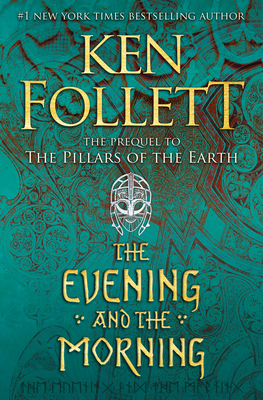 The year is 997 and England is in a dire situation. Fears of invasions from the Welsh and the Vikings leave the Anglo- Saxon residents rattled while those in power take advantage of their citizens. Chaos reigns supreme as those who rule the towns are in constant power struggles between themselves and their king, Ethelred the Unready, with the average villagers caught in the middle, like the villagers of Dreng’s Ferry. It is in this small village where three characters find their lives intertwined with the political and social drama. A young boatbuilder named Edgar endures heartache and sorrow when the Vikings attack his home. A Norman noblewoman named Ragna follows her heart to marry the man she loves and travels to a faraway land but soon finds out how difficult that love can be. Finally, a monk named Aldred works hard for the people while dreaming of transforming his meek abbey into a lively center of learning. Their tales are masterfully woven together in the much-anticipated prequel to the Kingsbridge series by Ken Follett. This is “The Evening and the Morning”.
  known as the Hundred Years’ War, and the massively destructive illness that we know today as either “the Black Death” or “the Black Plague”. This was a time of despair, but it was also a time where we see a shift from old traditions of the church and the state. It is also two centuries after the events of Ken Follett’s massively popular book, “The Pillars of the Earth”. Follett explores how the people of Kingsbridge survived during this tumultuous time in his second book of the Kingsbridge series, “World Without End”.
 When one thinks about epic tales stories of adventures and romance tend to come to mind. One hardly thinks about the construction of a magnificent building as an “epic tale” with monks and builders as the main characters. We see cathedrals as these massive buildings from the past used as churches, but we rarely think about how they were constructed and why. Who were the people who decided to make these spectacular buildings and what might have their lives have been like? These are just some of the questions that Ken Follett wanted to try and answer in his monumental historical fiction masterpiece, “The Pillars of the Earth”.
 Adventures of a Tudor Nerd