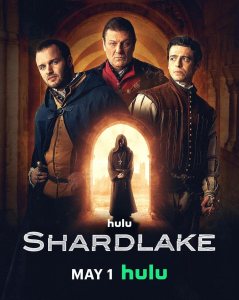
 The year is 1536 and England is amid great religious change. King Henry VIII and his top advisor Thomas Cromwell wanted to close the top monasteries in the country so they initiated the dissolution of the monasteries. One such religious house is St. Donatus monastery in Scarnsea, so Cromwell sends one of his commissioners, Robin Singleton, to investigate the monastery and persuade the monks to leave their home. However, things do not go to plan and Singleton is brutally murdered. Now, Cromwell must rely on a lawyer named Matthew Shardlake and Jack Barak to solve the murder case and close the monastery once and for all. With a house full of secrets, suspicion, and monks fearful of the future, can Shardlake and Barak solve the case before they become the next victim?
This is the premise of the latest Tudor drama on Disney +, called Shardlake, based on the first book in the Matthew Shardlake series by C.J. Sansom, titled “Dissolution.” I remember falling in love with this book series when I first read it about four years ago and I did hope that one day, it would be turned into a television series because Sansom’s writing style was so vivid and his characters leaped off the pages. When it was first announced that Disney + was going to produce this show, it was exciting to know that it was finally going to be adapted for television, but it was also nerve-wracking because since it is one of my favorite Tudor book series, I was hoping that it would do the book justice.
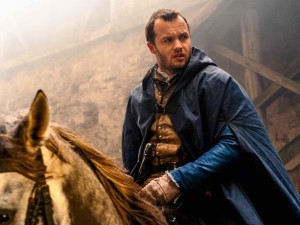
I decided that before the show was due to release, I was going to reread “Dissolution” as I forgot the story and how it played out in the book. This was a joy as Sansom’s writing style is still vibrant and filled with many twists and turns. I was hoping that the show could capture the sense of excitement and danger and how he recreated the Tudor world that Sansom in his books for his readers, especially after it was announced that CJ Sansom passed away two days before the show premiered. I wanted the show to honor Sansom’s legacy and craft as a wonderful storyteller and extremely passionate about the Tudor dynasty.
As I have recently read “Dissolution” right before watching “Shardlake”, I feel like I cannot keep this review as spoiler-free as I would have liked, so this is your warning, I will be spoiling some things in the show and the book.
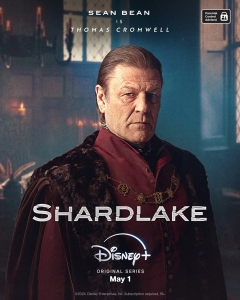
Before we dive into the story, we have to set out our cast of characters, starting with Matthew Shardlake, played brilliantly by Arthur Hughes. Hughes can present Shardlake in such a believable way that it feels like he jumped off the pages. We also have Jack Barak, the funny playboy who adds some light notes to the story, played by Anthony Boyle. I am not going to lie, I was shocked that they decided to replace Mark Poer with Jack Barak, but once I saw the interactions between Shardlake and Barak on set, it made sense. Wrapping up the main actors is Thomas Cromwell played masterfully by Sean Bean. When the casting was announced about Bean being Cromwell, it was hard to picture the historical figure, but when I saw him on the screen having his first scene with Shardlake about the relics, my doubts vanished. He does an excellent portrayal of Thomas Cromwell.
I must applaud the casting crew for creating such a diverse cast, just as diverse as the book that it is inspired by. Some of my standouts include Ruby Ashbourne Serkis as Alice, Irfan Shamji as Brother Guy, and Joe Barber as Simon Whelplay. Regarding the casting of Babou Ceesay as Abbot Fabian, I did not have a problem with it because I think he did a great job portraying a character in a fictional drama based on a historical fiction novel. The one character that I was a bit confused about was the inclusion of Norfolk played by Peter Firth, as he was not in the original story and didn’t add much to the story as a whole.
I think as a whole, the costumes did look relatively decent. However, a few, especially Dr. Goodhap’s outfit, looked synthetic and threw off the illusion of it being a Tudor period drama. I also wanted to see more head coverings for the male characters and for Alice, although the clothing colors were not as dark as I feared. I liked the addition of the relics, the parrot, and the manuscripts to add depth to the drama, and the use of candles instead of torches, always a major plus for history nerds when watching historical dramas.
One of my big issues was the monastery of St. Donatus itself. It has been reported that they filmed in Hungary, Romania, and Austria, primarily at Hunedoara Castle and Kruezenstein Castle. That is a big red flag for authenticity. They may be beautiful locations, but they were not an English monastery during the 16th century when monasteries were dissolved. You can tell that it was not filmed in England and it does take away from the illusion that is so important when it comes to historical dramas; you want to be transported to the location that the author had in mind, especially when Sansom included a map on the monastery in his book.
Now let’s address the elephant in the room, the story of the “Shardlake” series. For the most part, the Shardlake television series stays pretty close to the story, except for a few glaring exceptions. When they mentioned the holy relic went missing, they did not mention the beheaded bird on the altar, which is probably for the best because it is a rather disturbing image. We also have the scenes with Simon Whelplay, who is portrayed as a nervous youth who is constantly getting into trouble. His death plays out a little differently in the book, as he slips and falls in the bathhouse, whereas in the show, he plummets from a tower. In both cases, it is revealed that he was drugged with belladonna. I did feel a bit sad that they didn’t flesh out the relationship between Brother Guy and Shardlake as that was my favorite friendship in the book series. They could have easily had a scene where we could see the potential for their friendship to grow past the monastery.

The two major issues I had were inclusions to the plot of the story. I did not like the addition of Norfolk as a big-name villain for Shardlake because, in the book series, the major historical figures took a back seat to the original characters Sansom created. My biggest issue with this show was Barak’s character arc. At first, I thought it was an odd choice to include him over Mark Poer in the series, but then they decided to combine character traits, like Barak falling for Alice which felt so wrong, luckily he does not run away with her. And then Barak randomly killed Goodhap and got away with it. He admitted to Shardlake that he killed Goodhap and it felt like Shardlake ignored the entire issue, which feels completely off for Shardlake. If they do make another season and they have the actors playing Shardlake and Barak back, it is just going to feel a bit awkward between them.
Overall, I thought the “Shardlake” series was a decent adaptation of the Matthew Shardlake series by C.J. Sansom, but the books will always be superior. If you want to jump into the Tudor world with a murder mystery filled with twists and turns, you should check out “Shardlake” on Disney +, and if you want to read the book series, check out the Matthew Shardlake series by CJ Sansom.
What are your opinions about the “Shardlake” series on Disney + and what is your favorite book written by CJ Sansom?
If you are curious about my views about the Matthew Shardlake book series by CJ Sansom, you can find my review here: https://adventuresofatudornerd.com/2020/09/27/book-series-review-the-matthew-shardlake-series-by-c-j-sansom/
Sources for Images and Cast Information:
https://www.imdb.com/title/tt27390563/fullcredits/?ref_=tt_cl_sm
https://www.rottentomatoes.com/tv/shardlake

 The year is 1540, and King Henry VIII is looking for a wife. He has been a widower for over three years, and his councilor Thomas Cromwell believes that a foreign alliance will be the best path forward for England, so he arranges a marriage between Henry and Anne of Cleves. In theory, it should be a good match, but it falls apart quickly. To top it all off, one of Anne of Cleves’ Maid of Honour brought her own drama to court that ended with a murder. Can Will Somers, the King’s Fool, navigate the drama at court while dealing with his own love life, or will the mystery of the missing body prove too much for him to handle? This is the premise of the next book in the King’s Fool Mysteries series called “Devil’s Gambit.”
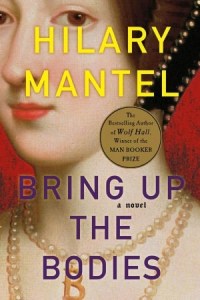 The year is 1535, and Henry VIII is growing bored with his current wife, Anne Boleyn. His eyes are wandering yet again, and this time his sights are set on Jane Seymour. Anne Boleyn had failed to give him his desired son, so Henry decided that it was only fitting for his right-hand man, Thomas Cromwell, to take down a queen. It’s Cromwell’s biggest challenge yet, but it could also become Cromwell’s defining moment. Hilary Mantel explores the pivotal months that pitted Cromwell against the Boleyns in her second book in the Wolf Hall trilogy, called “Bring Up the Bodies.”
 During the reign of King Henry VIII, the king would elevate well-qualified men to positions of power and prestige. We all know the story of Thomas Cromwell, but it is his mentor, Sir Thomas Wolsey, whose story shows how one can rise from humble beginnings, but whose fate is ultimately tied to the mood of the monarch. The son of a butcher turned scholar who became a priest, a lover, a father, and the closest advisor to the king. His life, his loves, his successes, and his struggles are told in Alison Weir’s latest novel, “The Cardinal.”
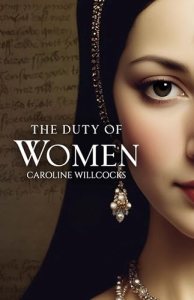 The Tudor court during the reign of King Henry VIII was a treacherous place to be, even for the humble female musician. It was full of men and women vying for a position of power, and they were ready to give anything and everything for that power. This is the world that Kat Cooke finds herself in. After faithfully serving Queen Katherine of Aragon for years, she must switch her loyalties to Anne Boleyn, but when things get dangerous, where will Kat’s loyalties lie? Can Kat survive such turbulent times or sacrifice everything she holds dear? Kat’s story is told in the second book of Caroline Willcocks’ Tudor Queens series, “The Duty of Women.”
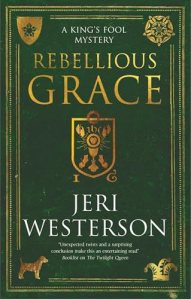 Christmas is a time of merriment and joy unless you are in the court of Henry VIII in 1536. Then it is a time of stress and murder. Henry’s second wife Anne Boleyn has only been dead for a few months while his third wife Jane Seymour is slowly adjusting to her new role as queen. A rebellion known as the Pilgrimage of Grace is taking over northern England and the leader Robert Aske wants to visit the court to discuss matters with King Henry VIII. To top it all off, a servant of Queen Jane has been murdered and the only one who can solve the crime is a fool, Will Somers. Can Will Somers connect the dots and save those closest to him, or will the treasonous act be another downfall in such a tumultuous year? This is the premise for the third book in the A King’s Fool Mystery series, “Rebellious Grace” by Jeri Westerson.
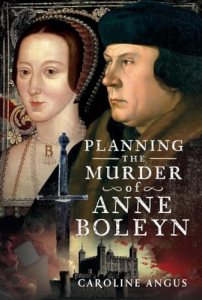 The 16th century was filled with tales of remarkable women. Still, one of the most defining figures of the century was a woman of noble birth who the King of England fell in love with and decided that he was going to divorce his first wife of over twenty years to marry her. The Great Matter caused a great scandal across Europe, however, it was a love match that would not last long. The relationship between Henry VIII and his second wife Anne Boleyn would turn volatile and in the end, Anne and the men around her would be executed. We often blame Anne Boleyn’s death at the foot of Henry VIII’s right-hand man Thomas Cromwell, but who was behind the death of this famous queen? Caroline Angus has chosen to re-examine the case to find out who was truly responsible for the fall of this famous queen in her latest book, “Planning the Murder of Anne Boleyn.”
 Greenwich Palace is a Tudor palace full of glamour, intrigue, and murder. A musician has been found murdered in the chambers of the current wife of King Henry VIII, Anne Boleyn. Only one person can solve this crime while protecting the royal family. No, he is not a knight or a lawyer, but a fool. No, an actual fool or jester of the court of Henry VIII, Will Somers. A man who is loyal to his king Henry VIII, but can he save his second wife from the murderer lurking in the shadows? Jeri Westerson’s Will Somers follows the clues to uncover the truth to protect those who are the most important to him in book two of A King’s Fool Mystery series, “The Twilight Queen.”
 The 1520s in England were a raucous time. As the years pass, King Henry VIII’s desire for a legitimate son grows and his resentment towards his wife Katherine of Aragon increases. Henry has decided to divorce his wife of over 20 years to marry a new fling, Anne Boleyn, who would surely give him the son and heir. All of Europe, especially the Pope, is horrified at the direction Henry is taking, but one man stands firmly on the side of the King. Thomas Cromwell rose through the ranks to become Henry VIII’s right-hand man, even though he had rather humble origins. Can Thomas Cromwell help the man who made him and survive the king’s wrath? Hilary Mantel explores the origins of Cromwell’s rise and The Great Matter in the first book in her Thomas Cromwell trilogy, “Wolf Hall.”
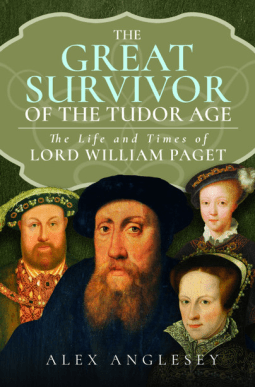 Rulers cannot govern alone. They require a team of men and women behind them to operate as a cohesive unit. The same can be said for rulers during the Tudor dynasty. We know the stories of men like Cardinal Wolsey and Thomas Cromwell, two men who rose through the ranks to prominent seats of power to ultimately have disastrous falls from grace. However, there was a third Tudor politician who should be in this discussion about rags-to-riches stories. He was the son of a common merchant who went to serve most of the Tudor monarchs as an advisor. Conspiracies and rebellions kept him on his toes, but he ultimately survived the Tudor dynasty, which was a difficult thing to achieve. His name was Lord William Paget and his story is told by his descendant Alex Anglesey in his debut book, “The Great Survivor of the Tudor Age: The Life and Times of Lord William Paget.”
 Adventures of a Tudor Nerd