
 For centuries, fairy tales have entertained and taught lessons to those young and young at heart. One of the most memorable stories was the tale of Rapunzel, the maiden a witch kidnapped because her parents stole a Rapunzel plant from her while Rapunzel’s mother was pregnant. For years, Rapunzel languished in a Tower, her hair growing exponentially until a rogue/ prince climbs her hair and rescues the damsel in distress. The witch dies and Rapunzel and her hero live happily ever after. At least, that is how the story has been passed down to us throughout the centuries, but where did the story come from and how are the stories of three women from different generations and countries connected? Kate Forsyth weaves together the stories of three women and their fates into one delightful novel called, “Bitter Greens.”
I want to thank Allison & Busby and Net Galley for sending me a copy of this novel. When I am not reading historical fiction or nonfiction, I do enjoy reading fairy tales retold, so when I heard about this novel and how it would explore the origins of the story of Rapunzel, it was intriguing to me.
Forsyth breaks down her novel into three separate narratives based on the lives of three women. We begin with Charlotte-Rose de la Force, a woman who weaves stories on a whim at the court of the Sun King Louis XIV. Charlotte is the person who gave the Rapunzel story some of the main characteristics that we are familiar with from the Italian origin story by Giambattista Basile. Her life choices have caused the king to send Charlotte to exile in a convent. It is in the convent that Charlotte meets Soeur Seraphina and she learns the story of Margherita and Selena Leonelli.
Margherita is the daughter of a mask maker and his wife. When she turns 7, a sorceress named La Strega Bella tells her parents that it is time to pay for their crime of stealing bitter greens. La Strega Bella wants to raise Margherita as her child, so she kidnaps Margherita, changes her name to Petrosinella, and places her in a convent. When Margherita turns 12, she is taken from the convent, placed in a tower, and given her characteristically long hair.
The question is why did La Strega Bella take Margherita from her parents just to put her in a tower with such long hair? It is through Selena Leonelli’s story that we can discover the truth about La Strega Bella. A woman who had to survive in the dark days of the plague in the early 16th century when her family died, she learned how to use spells and the power of plants from a woman named Sibillia. Life was not always fair for Selena, but then she met a man named Tiziano, who we know as Titian, and she inspired his art. Selena is afraid of growing old and wants to stay young forever, so she comes up with a dark and twisted plan.
This novel is dark and full of tragedies, love, and adventures. While I did enjoy reading it, there were a few historical inaccuracies, such as the plague doctor uniform was not introduced until the 17th century, not the 16th century. If you want a dark version of a fairy tale retold with a historical twist, I think you will enjoy “Bitter Greens” by Kate Forsyth.
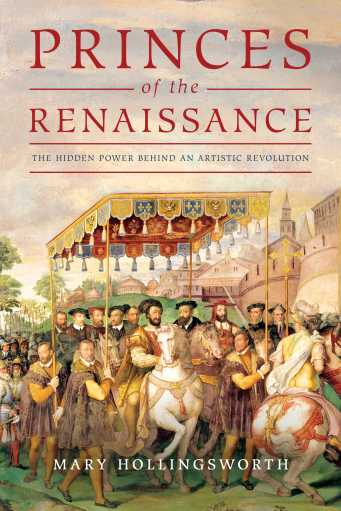 The 15th and 16th centuries were full of dynamic political and religious reforms, but they were also known for cultural changes throughout Europe. The medieval foundations started to crumble, and the early modern age emerged. One of the centers of change was Italy, a series of states with their rulers vying for power and prestige. These rulers would help finance masterpieces in art, literature, and architecture, but it was their rivals that threatened to tear the Renaissance society apart. In “Princes of the Renaissance: The Hidden Power Behind an Artistic Revolution,” Mary Hollingsworth explores the lives of the men and women who helped shape the Renaissance.
 Adventures of a Tudor Nerd