(Born around 1437- Died June 8, 1492). Daughter of Jacquetta of Luxembourg and 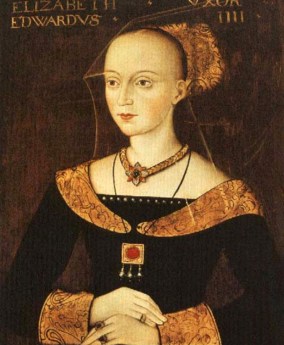 Richard Woodville. Married to Sir John Grey and King Edward IV of England. Mother of Thomas Grey, Marquess of Dorset, Richard Grey, Elizabeth, Queen of England, Mary of York, Cecily, Viscountess Welles, Edward V, King of England, Margaret of York, Richard, Duke of York, Anne, Lady Howard, George, Duke of Bedford, Catherine, Countess of Devon and Bridget of York. Elizabeth Woodville was the woman who Edward IV fell in love with and married, much to the chagrin of Warwick. Elizabeth was the mother of the Princes in the Tower and Elizabeth of York, the mother of the Tudor Dynasty.
Elizabeth Woodville was the eldest child of Richard Woodville and Jacquetta of Luxembourg, born around 1437 at Grafton Regis, Northamptonshire. Her parents marriage was controversial because they married for love and without King Henry VI’s permission. Jacquetta was previously married to the brother of King Henry V and, although the Woodvilles were wealthy landowners, they were still considered genteel rather than nobles. Jacquetta was considered the second lady at court, next to the Queen Margaret of Anjou and Elizabeth was able to become one of the maids of honor for Queen Margaret of Anjou. With her high position at court, Elizabeth was able to marry well with her first marriage. She married Sir John Grey of Groby in 1452 and during this time, Elizabeth became one of the four ladies of the bedchamber to Margaret of Anjou. In 1461, Sir John Grey would die at the Second Battle of St. Albans, fighting for the Lancastrian cause, leaving Elizabeth a widow with two infant sons, Thomas and Richard Woodville.
Elizabeth Woodville’s sons, Thomas and Richard, did not receive the Bradgate inheritance that they deserved. Elizabeth went into mourning for two years at her family home at Grafton Regis in Northamptonshire. After the Yorkist victory a few weeks later at Towton, Edward IV, the new king, stopped by at Grafton Regis for a couple of days, where it is said he fell in love with Elizabeth Woodville. It is said that he saw her under an oak tree, waiting for him to arrive and to plead her case to get her sons’ inheritance, but there is no evidence that this actually happened. The couple married in secret sometime in May 1464.
At this time, Richard Neville “The Kingmaker” Earl of Warwick, was working on a marriage alliance with France. When Warwick and the Council found out about the marriage, they were rightfully upset. Not only did the King marry a woman who was a widow and not a princess, but now her relations were able to capitalize in the marriage market. Three of Elizabeth’s sister married sons of earls and her brother John, who was in his 20s at the time married Katherine Duchess of Norfolk, who was widowed three times and was in her 60s, causing quite a scandal. On May 16, 1465, Elizabeth was crowned queen consort and the following year, she gave birth to the couple’s first child, Elizabeth of York. Elizabeth of York’s godparents were her grandmother Jacquetta of Luxembourg and Warwick.
In 1469, Warwick decided to rebel against Edward IV and join the Lancastrian cause to put Henry VI back on the throne. After the Battle of Edgecote Moor, Elizabeth’s father Richard and her brother John were arrested and executed on August 12 at Kenilworth. Elizabeth’s mother Jacquetta was arrested by Warwick on the charges of witchcraft. These charges were dropped in February 1470.
In September 1470, Warwick invaded England and placed Henry VI back on the throne, forcing Edward IV to flee and Elizabeth and her children sought sanctuary at Westminster Abbey. During this time, Elizabeth gave birth to her first son, the future Edward V. In total, Elizabeth and Edward would have 10 children, including Richard Duke of York. Edward IV returned and defeated Warwick at the Battle of Barnet in April 1471. When Margaret of Anjou returned, she formed an army to march against Edward IV, which forced Elizabeth to seek shelter at the Tower of London. After the Battle of Tewkesbury, Elizabeth exited the Tower and Margaret of Anjou and Henry VI entered it; Henry VI would later die in the Tower. Elizabeth’s mother Jacquetta would die on May 30, 1472.
Life returned to a normal pace for Elizabeth Woodville and her family. In January 1477, she watched as her young son Richard Duke of York was married to Anne Mowbray; both the bride and groom were not over the age of 5 when the wedding happened. Another marriage, arranged between Elizabeth’s daughter Elizabeth of York and the Dauphin of France, fell through. Shortly afterward, Elizabeth’s world changed forever when her husband Edward IV died April 9, 1483 and Elizabeth was made queen dowager.
Elizabeth’s son was named Edward V and his uncle Richard Duke of Gloucester was named Lord Protector. On April 29, as previously agreed, Richard and his cousin, the Duke of Buckingham, met Queen Elizabeth’s brother, Anthony Woodville, 2nd Earl Rivers, at Northampton. At the queen’s request, Earl Rivers was escorting the young king to London with an armed escort of 2000 men, while Richard and Buckingham’s joint escort was 600 men. The young king himself had been sent to Stony Stratford. Richard had Earl Rivers, his nephew Richard Grey and his associate, Thomas Vaughan, arrested. They were taken to Pontefract Castle, where they were executed on June 25 on the charge of treason against the Lord Protector after appearing before a tribunal led by Henry Percy, 4th Earl of Northumberland. Richard took the young king under his protection, escorted him to London, and placed him in the Tower for his protection. After hearing about what had happened, Elizabeth Woodville took her children, including her daughters and her youngest son Richard Duke of York, and fled to sanctuary in Westminster Abbey.
Gloucester wanted Elizabeth to hand over her son Richard Duke of York. Elizabeth was very reluctant to hand over her son to his uncle, but eventually she did. Richard was said to have been informed with information that Edward V was illegitimate because Edward IV had entered into a previous marriage contract. On June 25, Parliament agreed that Edward V was illegitimate and the following day, June 26, Richard was proclaimed king. His joint coronation with his wife Anne Neville would occur on July 6, 1483, and his title was confirmed in an act of Parliament called the Titulus Regius, which was passed in January 1484.
We do not know what happened to the Princes in the Tower, Edward V and Richard Duke of York. They disappeared from sight after the summer of 1483, which has led many to speculate that Richard III had them murdered. At this point we cannot confirm or deny this theory. We don’t even know if they were murdered at all. It still remains one of the biggest unsolved mysteries in history.
Elizabeth Woodville was now known as Elizabeth Grey and she decided to side with the Duke of Buckingham and Margaret Beaufort to put Margaret’s son Henry Tudor on the throne. Henry Tudor was the closest male Lancastrian heir and in order to cement this new alliance, Elizabeth and Margaret arranged that Henry would marry Elizabeth of York. Buckingham’s rebellion against Richard would fail and he would be killed on November 2, 1483. In December 1483, Henry made an oath at a cathedral in Rennes, France to marry Elizabeth of York. At Richard III’s first Parliament in January 1484, he stripped Elizabeth Woodville of all of her lands that were granted to her during the reign of Edward IV. On March 1, 1484, Elizabeth and her daughters left sanctuary after Richard III promised not to harm them and to arrange marriages for all of Elizabeth Woodville’s daughters. There were rumors that after Anne Neville in March 1485, Richard III’s wife, died that he was seeking to marry Elizabeth of York, but there is no evidence to support this claim.
Later in August 1485, Henry Tudor invaded England and was able to defeat Richard III at the Battle of Bosworth on August 22, Henry became King Henry VII of England. Henry would marry Elizabeth of York, revoke the Titulus Regius and restore Elizabeth Woodville’s title and honors of queen dowager. The last five years of Elizabeth Woodville’s life she spent at Bermondsey Abbey. She was present for the birth of her grandchildren including Margaret Tudor and Henry Tudor, the future Henry VIII. Elizabeth of York and her sister Cecily Woodville would often visit their mother. Elizabeth Woodville died at the Abbey on June 8, 1492 and she was buried with her husband King Edward IV in St George’s Chapel in Windsor Castle.

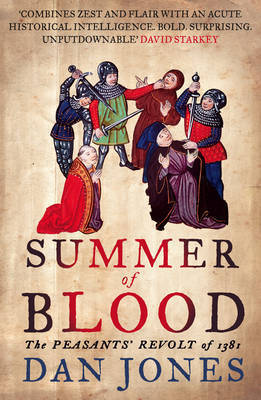 The year was 1381, and England was engulfed in chaos. A band of ruffians and revolters descended on London to achieve political change and a fair chance for the lower classes who suffered greatly from war and plague. The young King Richard II watched as men like Wat Tyler and the preacher John Ball led this ragtag army to his doorstep, fighting against his advisors, like John of Gaunt, to end a poll tax that was their last straw. Why did this ragtag army march on London? How did men like Ball and Tyler convince the masses to march against their sovereign and his government? How did this revolt end, and did the people get what they wanted due to their revolution? Dan Jones brings the bloody story of the first significant revolution by the English people to life in his book, “Summer of Blood: The Peasants’ Revolt of 1381.”
 Today, I am pleased to welcome Sylvia Barbara Soberton back to discuss another forgotten Tudor woman, Gertrude Courtenay, who is the subject of her latest book, “The Forgotten Tudor Women: Gertrude Courtenay. Wife and Mother of the last Plantagenets”.
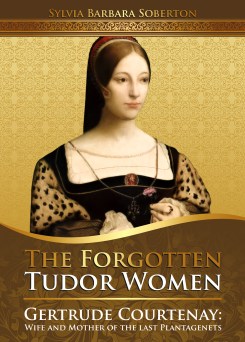 About the Book
 In history, we tend to focus on the stories of the men and women who shaped the era. This is obviously important, but the locations where the events of the past happened are equally as important. Sadly, many of the buildings that the men and women from the past knew no longer exist. However, there are a few, especially from the Tudor period, that we can still visit. Suzannah Lipscomb explored over 50 of these remarkable buildings and decided to tell their tales in her book, “A Journey Through Tudor England”.
 Adventures of a Tudor Nerd