
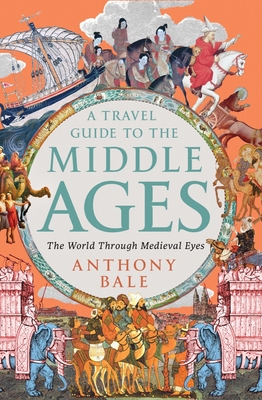
 When we think about travel in the Middle Ages, we often think of wealthy nobles or those who went to war fighting in foreign lands. However, that is merely a misconception. Travel was open to everyone, from the wealthy, the poor, the pious pilgrims, and the merchants. Each group had their reasons for traveling to different countries. Still, they all wrote down their experiences to tell future generations about their encounters and encourage others to explore the world, both the known and unknown parts. Anthony Bale has compiled many of these accounts into one comprehensive book called, “A Travel Guide to the Middle Ages: The World Through Medieval Eyes.”
I want to thank W. W. Norton & Company and Net Galley for sending me a copy of this book. I am always looking for a new element to study about the past, especially the Middle Ages. When I saw this title and the concept that it was going to explore beyond Europe, it intrigued me as I tend to focus on medieval Europe and I wanted to expand my knowledge of the medieval world as a whole.
Bale begins by giving his readers a bit of a foundation for understanding the travel guide genre’s origins, the directions as they were understood by those living in the medieval world, and how medieval Europeans understood the layout of the world through the mappae mundi. He also explains the origins of one of the first globes, the Behaim Globe( also known as the Erdapfel), which was created by Martin Behaim who came from a family of merchants.
Every good travel saga needs a starting point and this one happens to begin in England where pilgrims set out for a journey to Rome and Jerusalem. Along the way, Bale introduces his readers to the main cities of Europe, sites of pilgrimage, dangerous passes, and tips like how to understand foreign languages and exchange rates between the different currencies. Once we reach Italy and later Jerusalem, our focus moves away from pilgrimage to exploration and trade. Bale tends to focus on testimonies from pilgrims, merchants, and diplomats to paint a picture of the Western world heading to the East, as far as Japan (Cipangu) and Ethiopia in Africa. He does show some Eastern travelers coming to the West towards the end, but I wish we could see more of those interactions and more female voices in this book.
Overall, I found this book informative and a fascinating read to see how people in the Middle Ages saw the world around them. There were some dry spots along the way, but I think for those who want an introductory book to how medieval Europeans viewed the world through their travels, it would be a great book. If this sounds like you, check out, “A Travel Guide to the Middle Ages: The World Through Medieval Eyes” by Anthony Bale.
 In history, we tend to focus on the stories of the men and women who shaped the era. This is obviously important, but the locations where the events of the past happened are equally as important. Sadly, many of the buildings that the men and women from the past knew no longer exist. However, there are a few, especially from the Tudor period, that we can still visit. Suzannah Lipscomb explored over 50 of these remarkable buildings and decided to tell their tales in her book, “A Journey Through Tudor England”.
 Adventures of a Tudor Nerd