
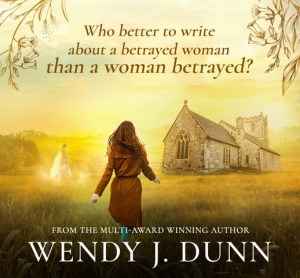
 Have you ever wondered what it might be like for a historical fiction writer during their writing process? How do they balance both their own lives and the lives of their characters? While we can read author interviews to find out what goes on in an author’s mind, why not take a fun twist of a historical fiction author writing about a historical fiction writer writing her first historical fiction novel? Meet Lucy Ellis, a new writer who is writing her first novel about the death of Amy Robsart while recovering from cancer and going through a divorce. Can Lucy finish her novel about Amy Robsart before her life and her health come crashing down? Wendy J. Dunn tells the tale of two women betrayed in her latest novel, “Shades of Yellow.”
I would like to thank Wendy J. Dunn and The Coffee Pot Book Club for sending me a copy of this novel. I am a fan of Dunn’s writing style, especially when it comes to her novels, so when I heard she was writing a new novel, I knew I wanted to read it before I knew the premise. The idea of a novel about writing a historical fiction novel was very intriguing, and to throw in the story of Amy Robsart in the mix adds to the complexity of this idea, which I love.
We begin with Lucy Ellis about to leave Australia for a research trip to England. Her mother does not want her to go because Lucy’s doctor found something concerning. Lucy is a survivor of breast cancer and is on the verge of a divorce from her husband, Ben, and she is nearing her 30th birthday. Life is hitting her hard, but along the way, she found a historical figure that she resonates with: Amy Robsart. She wants to tell the story of what really happened to Amy in her first novel, so she has to do research in England to make it more authentic.
Once in England, Lucy meets up with her aunt Jo, her cousin Max, and her grandpa, who is a blind author. We get to see her novel-writing process and bits of the novel while Lucy deals with a whole host of family drama. While the main focus of this book is Lucy’s story, sprinkled within are flashes of Amy’s life, how she felt about her husband Robert Dudley, and her rival in love, Elizabeth I. It is by studying Amy’s life that Lucy learns how to embrace life’s challenges and realize that she has people around her who love her.
It takes a lot of skill to write not just one novel, but a novel within a novel, but Dunn nails it perfectly. I would love to read the finished novel about Amy Robsart one day. This novel takes the aspects of a dual timeline novel and flips it on its head in such an innovative way. If you want a contemporary novel about healing between two women centuries apart and their strengths to keep fighting when life throws so many obstacles their way, I highly recommend you read “Shades of Yellow” by Wendy J. Dunn.
 Blurb:
During her battle with illness, Lucy Ellis found solace in writing a novel about the mysterious death of Amy Robsart, the first wife of Robert Dudley, the man who came close to marrying Elizabeth I. As Lucy delves into Amy’s story, she also navigates the aftermath of her own experience that brought her close to death and the collapse of her marriage.
After taking leave from her teaching job to complete her novel, Lucy falls ill again. Fearing she will die before she finishes her book, she flees to England to solve the mystery of Amy Robsart’s death.
Can she find the strength to confront her past, forgive the man who broke her heart, and take control of her own destiny?
Who better to write about a betrayed woman than a woman betrayed
Buy Link:
Universal Buy Link: https://books2read.com/u/mqPGgd
This title is available to read on #KindleUnlimited.
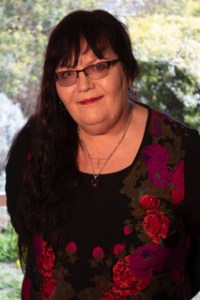 Author Bio:
WENDY J. DUNN is a multi-award-winning Australian writer fascinated by Tudor history – so much so she was not surprised to discover a family connection to the Tudors, not long after the publication of Dear Heart, How Like You This, her first Anne Boleyn novel, which narrated the Anne Boleyn story through the eyes of Sir Thomas Wyatt, the elder.
Her family tree reveals the intriguing fact that one of her ancestral families – possibly over three generations – had purchased land from both the Boleyn and Wyatt families to build up their holdings. It seems very likely Wendy’s ancestors knew the Wyatts and Boleyns personally.
Wendy gained her PhD in 2014 and tutors in writing at Swinburne University of Technology, Australia. She loves walking in the footsteps of the historical people she gives voice to in her books.
Author Links:
Website: http://www.wendyjdunn.com/
Newsletter: https://wendyjdunn.substack.com/
Facebook: https://www.facebook.com/authorwendyjdunn
Instagram: https://www.instagram.com/wendyjdunnauthor/
Threads: https://www.threads.com/@wendyjdunnauthor
Bluesky: https://bsky.app/profile/wendyjdunn.bsky.social
Book Bub: https://www.bookbub.com/profile/wendy-j-dunn
TikTok: https://www.tiktok.com/@wendyjdunn
Amazon Author Page: https://www.amazon.com/stores/Wendy-J.-Dunn/author/B004FRTZFA
Goodreads: https://www.goodreads.com/author/show/197156.Wendy_J_Dunn
LinkedIn: https://www.linkedin.com/in/dr-wendy-dunn-6358181a
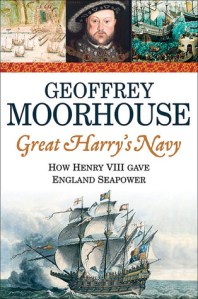 One would assume that, since England is an island nation, its navy has been its strength since its foundation. That, however, was not always the case. While there were naval battles during the Middle Ages, it was not a navy like we know today. The concept of the Royal Navy was founded during the time of the Tudors, especially under the reign of Henry VIII. So, how did Henry VIII turn a navy from 7 ships to over fifty ships that could stand with other European navies? Geoffrey Moorhouse examines the creation of the English navy in his book, “Great Harry’s Navy: How Henry VIII Gave England Sea Power.”
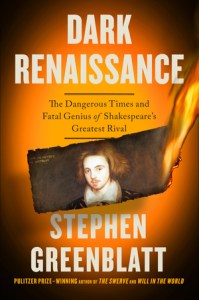 Sixteenth-century England was a time of great change. There were religious changes as the crown passed from one member of the Tudor family to another. Wars and illnesses like the plague and the sweating sickness were rampant. However, this was also a time of an explosion of the arts, particularly of the theatre. We see men like William Shakespeare and Ben Jonson rise from obscurity to write plays that would propel them to become phenomena. There was a third playwright who should be included in this list. He was the son of a cobbler who was educated at Cambridge University. A brilliant man who wrote groundbreaking plays while he was a spy for her majesty Queen Elizabeth I, his cause of death when he was only in his twenties would remain a mystery for centuries. Christopher (Kit) Marlowe’s story is told in Stephen Greenblatt’s latest book, “Dark Renaissance: The Dangerous Times and Fatal Genius of Shakespeare’s Greatest Rival.”
 One of the greatest threats to England during the reign of Elizabeth I was the Spanish Armada, under the orders of King Philip II of Spain. In the year 1587, the Spanish ships were spotted off the coast of Devon. Fear grips the country, but one woman is up to the task of keeping her beloved Dartington Hall and its inhabitants from harm. Roberda Chapernowne knows what it means to fight for those she loves and is willing to do it again while her husband, Gawen, is away in Ireland fighting for the Queen after he almost divorced Roberda. Roberda’s life turns upside down when Gawen returns home. Can they rekindle their relationship, or will they fall into despair and ruin? Rosemary Griggs concludes Roberda and Gawen Chapernowne’s stories in her latest novel, “Mistress of Dartington Hall.”
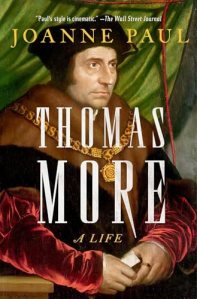 The year is 1535, and an educated scholar, father, writer, and the former Chancellor of England marches to his demise. His crime was staying silent on an issue that the King deemed extremely important: the idea that the King of England should be the Supreme Head of the Church of England, not the Pope. As a Catholic, Sir Thomas More does not agree with this decree and must die. How did one of the most prominent Tudor scholars of his age fall so quickly? Joanne Paul explores the rise and dramatic fall of this infamous Tudor figure in her latest biography, “Thomas More: A Life.”
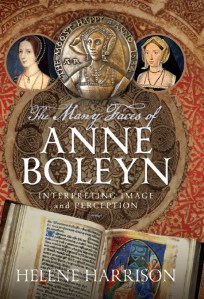 Anne Boleyn, a queen whose story has lived on for centuries. She was the woman who stood between Catherine of Aragon and King Henry VIII. Her daughter, Queen Elizabeth I, was her greatest legacy and her pride and joy. It was her untimely death due to charges that many believe were unfounded. We all have our image of the infamous queen, but how does that change when we switch the type of media we consume? Helen Harrison explores how our idea of Anne Boleyn changed over time in her latest book, “The Many Faces of Anne Boleyn: Interpreting Image and Perception.”
 In each era throughout history, we see how men and women adapt to the struggles and triumphs of the age. Take, for example, the 16th century, primarily in Tudor England. It was a time of great religious changes and dynamic rulers who would change the course of European history forever. While men had the most power, except for a handful of women, the majority of women struggled to survive each stage of life. So, what was life truly like for Tudor women? Elizabeth Norton explores this topic in her book, “The Lives of Tudor Women.”
 Throughout history, women have had one major job: giving birth and raising future generations. Each new generation had different ways of dealing with childbirth and raising children, and the Tudors were no exception. While the Tudors lived in the 16th century, the joys and fears of being a mother were similar to those of the modern age. However, the way women approached different stages of life in the 16th century is unique compared to the ways of modern women. So, how did Tudor women approach motherhood? Stephanie Kline hopes to answer this question in her latest book, “Raising the Tudors: Motherhood in Sixteenth-Century England.”
 Everyone knows the story of William Shakespeare—the famed poet, actor, and playwright who revolutionized English literature forever. There have been a series of debates about whether or not Shakespeare truly wrote the plays or someone else did. Well, what if a group of women employed William Shakespeare as a sort of spokesperson for their plays? Can this group of women survive to write another day? This is the premise of DJ Nix’s novel. “The Shakespeare Secret.”
 During the reign of King Henry VIII, the king would elevate well-qualified men to positions of power and prestige. We all know the story of Thomas Cromwell, but it is his mentor, Sir Thomas Wolsey, whose story shows how one can rise from humble beginnings, but whose fate is ultimately tied to the mood of the monarch. The son of a butcher turned scholar who became a priest, a lover, a father, and the closest advisor to the king. His life, his loves, his successes, and his struggles are told in Alison Weir’s latest novel, “The Cardinal.”
 Adventures of a Tudor Nerd