
 The Great Matter was a defining event in the lives of King Henry VIII, Catherine of Aragon, and Anne Boleyn. One of the world’s messiest divorces, it saw Henry VIII trying everything in his bag of tricks to annul his marriage to Catherine of Aragon to marry his new infatuation, Anne Boleyn. While we know that the basis for his argument that he should be able to divorce Catherine comes from the book of Leviticus in the Bible, we often see Henry’s debate through the Catholic and Protestant lenses. However, Henry relied on another group of people who had not been on English soil for centuries, the Jews. What does Jewish law bring to the discussion of the Great Matter and did it help Henry? Jerry Rabow examines this often overlooked aspect of Henry’s road to divorce in his book, “Henry VIII and His Rabbis: How the King Relied on Jewish Law to End His First Marriage- and Why He Failed.”
I want to thank Amberley Publishing for sending me a copy of this book. Obviously, as a Tudor nerd, I am very familiar with the Great Matter, but when I saw that it was focusing on Jewish law and how it pertained to this case in particular. I have some knowledge of theological debates from college, so I wanted to see how in-depth Rabow would go.
Rabow begins by exploring the phenomenon known as Tudormania before diving into a brief history of the Jewish people in England before Henry VIII’s reign. He then takes the time to provide background information about the Great Matter, including discussing the Leviticus Prohibitions, which would be the base of Henry’s argument for his divorce. I have to say that the way Rabow covered the Tudor portion of this book felt like he oversimplified things or made assertions about their characters that felt generic.
When it comes to the main topic, Rabow spends a bit of time explaining Jewish law and the different Jewish traditions. This foundation is important because different Jewish traditions understand the Leviticus Prohibitions in different ways. One tradition believes in a levirate marriage, which allows a brother to marry his sister-in-law if his brother dies without an heir. So essentially what happened when Henry married Catherine after Arthur died. To say Henry was not thrilled with this branch of Jewish tradition would be an understatement. Rabow shows his audience how Henry VIII relied on Jewish scholars in Italy to help defeat the Pope’s gridlock on the matter.
I think the theological matters and the history of the Jewish people and scholars were interesting in this book. Where it fell short for me was when Rabow entered the Tudor court. Overall, it was an interesting book with a unique twist on the story of the Great Matter. If you want a book that explores the Great Matter with a twist, I suggest you read, “Henry VIII and His Rabbis: How the King Relied on Jewish Law to End His First Marriage- and Why He Failed” by Jerry Rabow.
 Have you ever had an incident that was so impactful that it defined your entire life from that moment on? For Anne Howard, Countess of Arundel, it was the death of her younger brother, George. She vows vengeance against those who were behind his untimely demise. In the present day, Sarah must return to her godmother’s home, which holds a lot of memories, mostly painful. It is in the halls of this ancient house that Sarah meets Anne through a book of poetry. Can these two women find peace or will the truths bring even more disasters? Clare Marchant tells the stories of these two women, the tragedies and the poetry that unite them, in her latest novel, “The Shadow on the Bridge.”
 When we think about live theater, we often think about big actors, elaborate sets, and glittery costumes. The world of the Tudor theater, especially during the reign of Elizabeth I, was similar in some ways, but there was an element of danger. Richard Shakespeare, an actor in the Lord Chamberlain’s Men company and a former thief, knew the dangers of Tudor theater life better than anyone. When a manuscript is stolen, suspicion lands squarely on Richard’s shoulders. Can Richard clear his name, or will it be his final curtain call? Bernard Cornwell tells the story of Richard Shakespeare and the debut of A Midsummer’s Night Dream in his novel, “Fools and Mortals.”
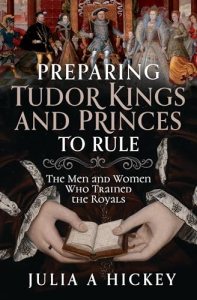 In life, when it comes to a new skill or job, you must be trained to become good at it. The same can be said for the monarchy, which in a sense is a job that encompasses one’s entire life. You have to understand different languages, rhetoric, the arts of dancing, and music, as well as diplomacy and physical activities if you want to rule a nation. It may seem like a lot for one person to handle, but from the moment of their birth, a prince or princess has a team of people behind them to make sure that they are ready to either rule their home country or create an alliance with other nations. The Tudors knew how important educating their future monarchs was for the survival of the dynasty. Julia A. Hickey examines the people behind the teams raising the future Tudor monarchs in her book, “Preparing Tudor Kings and Princes to Rule: The Men and Women Who Trained the Royals.”
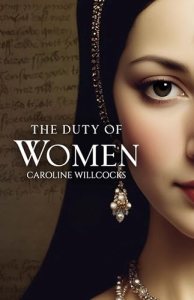 The Tudor court during the reign of King Henry VIII was a treacherous place to be, even for the humble female musician. It was full of men and women vying for a position of power, and they were ready to give anything and everything for that power. This is the world that Kat Cooke finds herself in. After faithfully serving Queen Katherine of Aragon for years, she must switch her loyalties to Anne Boleyn, but when things get dangerous, where will Kat’s loyalties lie? Can Kat survive such turbulent times or sacrifice everything she holds dear? Kat’s story is told in the second book of Caroline Willcocks’ Tudor Queens series, “The Duty of Women.”
 The life of a 16th-century princess is not all that it is cracked up to be. You can have jewels, and glamorous dresses, attend the glittering yet treacherous court, and have numerous homes. You must marry the person the king says you should marry to create strong alliances for the kingdom, so the concept of marrying for love is not in your vocabulary. You had to ensure your opinions were kept in line with the monarch’s views so you didn’t meet a disastrous end. In other words, the closer you are to the throne, the more scrutiny is forced upon you. No one understood this advice better than Mary Tudor, the daughter of King Henry VII and the younger sister of Henry VIII. She was a daughter, a sister, a wife, a queen, a duchess, and a mother. Her remarkable story is told in Amy McElroy’s book, “Mary Tudor: Queen of France.”
 Christmas is a time of merriment and joy unless you are in the court of Henry VIII in 1536. Then it is a time of stress and murder. Henry’s second wife Anne Boleyn has only been dead for a few months while his third wife Jane Seymour is slowly adjusting to her new role as queen. A rebellion known as the Pilgrimage of Grace is taking over northern England and the leader Robert Aske wants to visit the court to discuss matters with King Henry VIII. To top it all off, a servant of Queen Jane has been murdered and the only one who can solve the crime is a fool, Will Somers. Can Will Somers connect the dots and save those closest to him, or will the treasonous act be another downfall in such a tumultuous year? This is the premise for the third book in the A King’s Fool Mystery series, “Rebellious Grace” by Jeri Westerson.
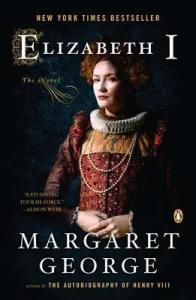 The stories of queens have been told in numerous ways for centuries, but one of the most famous queens in human history is the Virgin Queen, Elizabeth I. The daughter of Anne Boleyn and Henry VIII who famously decided not to marry any man and instead devout her entire life to serve England’s people. That does not mean she was subservient to others she demanded respect and adoration from her subjects. Most stories of Elizabeth I begin in her golden years, but what could a novel about the queen’s silver years tell us about her personality, her reign, and the people who choose to follow or rebel against the famous queen? Margaret George gives her readers an innovative look at the titular queen in her novel, “Elizabeth I.”
 When we think about the great female minds of the 16th century, we often think about those closest to the throne. Women of privilege who were destined to rule or to be a queen consort in a far-off land where their education would be imperative for the success or failure of their respective dynasty. However, some women did not live a life of glitz and glamor and received an equally impressive education. One such woman was the daughter of the great statesman Sir Thomas More, Margaret More Roper. Her remarkable story is told in the debut book by Aimee Fleming, “The Female Tudor Scholar and Writer: The Life and Times of Margaret More Roper.”
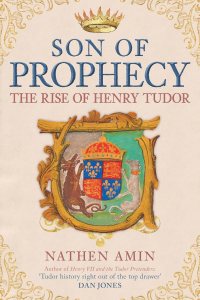 The date is August 22, 1485, and a young man stands in the middle of a battlefield. He has done what seemed nigh impossible, he defeated the last Plantagenet king Richard III to become the new King of England. His heritage makes this man unique and qualified to start a new dynasty. His mother’s family the Beauforts have been explored quite heavily by historians and authors alike. They see this victory as a change in English history whereas his father’s family sees it as a sign of something deeper. To the Tudors and Henry’s fellow Welshmen, it is the fulfillment of a centuries-old prophecy. So who were Henry Tudor’s ancestors and what did it mean for Henry to be the titular Son of Prophecy? Nathen Amin tells the remarkable story of the Tudors and how their struggles and triumphs led to Henry Tudor taking the throne in his latest book, “ Son of Prophecy: The Rise of Henry Tudor.”
 Adventures of a Tudor Nerd