Book Review: “Women’s Lives in the Tudor Era” by Amy McElroy

Women's Lives in the Tudor EraWhen we think about the Tudor dynasty, we often think about the famous men and women who defined the era. An era full of change in all aspects of life, from religious and political, to the arts and literature. Throughout these changes, we tend to focus on how they affected the lives of Tudor men, but there is a growing field of interest in the lives of the average Tudor women and how their lives were affected. In her latest book, “Women’s Lives in the Tudor Era,” Amy McElroy explores women’s life stages in 16th-century England and how their roles changed.

I want to thank Pen and Sword Books and Net Galley for sending me a copy of this book. I enjoyed McElroy’s debut book, “Educating the Tudors,” and when I heard that she had another book about Tudor women, I knew I wanted to read it.

McElroy explains that like the centuries before and since the 16th century, it was riddled with negative views of women in all aspects of life. Women were seen as beneath men, which corresponded with the teachings of Aristotle. Wives, mothers, and daughters were supposed to be obedient and seen rather than heard. However, when we look at the different stages of life, we cannot separate the roles of women from everyday life.

To understand what it meant to be a Tudor woman, McElroy breaks down life into different stages, starting in childhood, going through adolescence, becoming a wife and mother, working life for women, how women relaxed, embracing widowhood, and finally, wills and death. Each stage of life is represented in a chapter in this book. McElroy takes the time to explore what it meant to be a woman at each stage of life and how their social standings changed. We see women receiving an education, going through courtships, getting married and becoming wives, starting their own families and the dangers of childbirth, how women earned a living, what they would do as recreational activities, and how they would survive if their husbands died. In each chapter, McElroy highlights women of different social statuses to show how they survived during the Tudor time.

This was an engrossing and utterly fascinating book. Some elements were completely new information for me, which was quite thrilling. The amount of details that McElroy included in such a short amount of pages was incredible. Another brilliant book by McElroy. If you want a fascinating glimpse into the lives of Tudor women, I highly recommend you read, “Women’s Lives in the Tudor Era” by Amy McElroy.

Guest Post: “Snippet from ‘A Matter of Time’ by Judith Arnopp”

A Matter of Time Tour BannerI am pleased to welcome Judith Arnopp back to my blog to share a snippet from her latest novel. “A Matter of Time.” I would like to thank Judith Arnopp and The Coffee Pot Book Club for allowing me to be part of this blog tour.

June 1541 Henry and Katherine Howard on royal progress

Brandon is not with us this night, having ridden ahead to make preparation for our stay with him at Grimsthorpe, but I am content with Katherine beside me, a few musicians, and her favourite ladies and my closest gentlemen. We grow merry, the youngest members of the party dancing into the early hours. The music rises and falls, the fire crackles, while I sit and eat and watch, with my foot resting on a stool. 

When they form up for the next dance, Katherine is partnered by Culpepper, and they make an elegant pairing. I look on enviously as the steps of the dance take them close together. Their elbows hook, and then they part again, Katherine’s hand reluctantly extended toward him as the dance dictates. Surrounded by the gaiety of the company, yet not part of it, I grow bored, longing for my bed. I’ve admitted to nobody how the journey is taking its toll, on both my health and my spirits. I close my eyes, rest my head on the back of my chair and thank God for the good company. The words of a song I wrote long ago jangle in my mind.

Pastime with good company

I love and shall until I die;

A Matter of Time CoverBlurb:

With youth now far behind him, King Henry VIII has only produced one infant son and two bastard daughters. More sons are essential to secure the Tudor line and with his third wife, Jane Seymour dead, Henry hunts for a suitable replacement.

After the break from Rome, trouble is brewing with France and Scotland. Thomas Cromwell arranges a diplomatic marriage with the sister of the Duke of Cleves but when it comes to women, Henry is fastidious, and the new bride does not please him. The increasingly unpredictable king sets his sights instead upon Katherine Howard and instructs Cromwell to free him from the match with Cleves.

Failure to rid the king of his unloved wife could cost Cromwell his head.

Henry, now ailing and aging, is invigorated by his flighty new bride but despite the favours he heaps upon her, he cannot win Katherine’s heart. A little over a year later, broken by her infidelity, she becomes the second of his wives to die on the scaffold, leaving Henry friendless and alone.

But his stout heart will not surrender and leaving his sixth wife, Katheryn Parr, installed as regent over England, Henry embarks on a final war to win back territories lost to the French more than a century before. Hungry for glory, the king is determined that the name Henry VIII will shine brighter and longer than that of his hero, Henry V.

Told from the king’s perspective, A Matter of Time: Henry VIII: the Dying of the Light shines a torch into the heart and mind of England’s most tyrannical king.

Buy Links:

Universal Buy Links to the three titles in the series:

 A Matter of Conscience: https://mybook.to/amoc

A Matter of Faith: https://mybook.to/amofaith 

A Matter of Time: https://mybook.to/amot

Judith Arnopp PembrokeAuthor Bio:

A lifelong history enthusiast and avid reader, Judith holds a BA in English/Creative writing and an MA in Medieval Studies. She lives on the coast of West Wales where she writes both fiction and non-fiction. She is best known for her novels set in the Medieval and Tudor period, focusing on the perspective of historical women but recently she has been writing from the perspective of Henry VIII himself.

Judith is also a founder member of a re-enactment group called The Fyne Companye of Cambria which is when she began to experiment with sewing historical garments. She now makes clothes and accessories both for the group and others. She is not a professionally trained sewer but through trial, error and determination has learned how to make authentic-looking, if not strictly historically accurate clothing. Her non-fiction book, How to Dress like a Tudor was published by Pen and Sword in 2023.

Her novels include:

A Song of Sixpence: The Story of Elizabeth of York

The Beaufort Chronicle: The Life of Lady Margaret Beaufort (three-book series)

A Matter of Conscience: Henry VIII, the Aragon Years (Book One of The Henrician Chronicle)

A Matter of Faith: Henry VIII, the Days of the Phoenix (Book Two of The Henrician Chronicle)

A Matter of Time: Henry VIII, the Dying of the Light (Book Three, Coming soon)

The Kiss of the Concubine: A Story of Anne Boleyn

The Winchester Goose: at the court of Henry VIII

Intractable Heart: The Story of Katheryn Parr

Sisters of Arden: on the Pilgrimage of Grace

The Heretic Wind: The Life of Mary Tudor, Queen of England

Peaceweaver

The Forest Dwellers

The Song of Heledd

Previously published under the pen name – J M Ruddock.

The Book of Thornhold

A Daughter of Warwick: The Story of Anne Neville, Queen of Richard III

Author Links:

Website: www.judithmarnopp.com

Blog: http://www.juditharnoppnovelist.blogspot.co.uk/

Twitter: https://twitter.com/JudithArnopp

Facebook: https://www.facebook.com/thetudorworldofjuditharnopp

LinkedIn: www.linkedin.com/in/judith-arnopp-ba999025

Instagram: https://www.instagram.com/tudor_juditharnopp/

Threads: tudor_juditharnopp@threads.net

Bluesky: https://bsky.app/profile/jarnopp.bsky.social

Pinterest: https://www.pinterest.co.uk/jarnopp/

Book Bub: https://www.bookbub.com/profile/judith-arnopp

Amazon Author Page: https://author.to/juditharnoppbooks

Goodreads: https://www.goodreads.com/author/show/4088659.Judith_Arnopp

Book Review: “Queen, King, Ace” by Olivia Hayfield

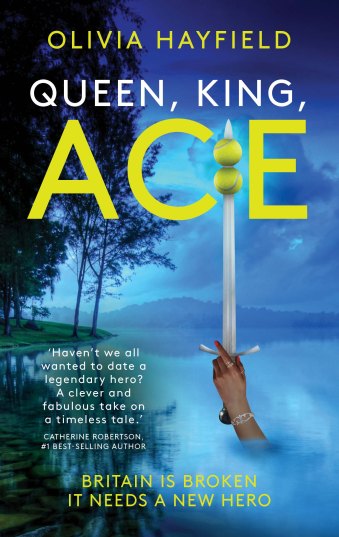
Queen King AceEngland is in desperate need of a hero. After the Covid pandemic and the Brexit debacle, England is in despair, and only one man can save the day. He does not wield a sword, but a tennis racket and his fair maiden is the badass CEO of the Rose Corp. Ace Penhelagon and Eliza Rose seem like a picture-perfect pair, but every rose has thorns that protect it from a dark past. What dark secrets do these two hide away from the flashes of the paparazzi and can love endure over fate? Olivia Hayfield’s latest novel, “Queen, King, Ace,” is a modern love story that combines the elements of the Arthurian myths with the Tudor dynasty to answer the question of what might King Arthur and Queen Elizabeth be like in the 21st century.

I would like to thank Sue Copsey/ Olivia Hayfield for sending me a copy of this novel. I have seen Hayfield’s previous modern historical retellings, “Notorious”, “Wife After Wife,” and “Sister to Sister” online on social media, and they have looked intriguing, but I have yet to read one. When I heard the premise of this novel, it intrigued me as I was not sure how a modern story with the Tudors and the court of King Arthur would work out.

We begin our modern Tudor/ Arthurian adventure with Eliza Rose, the new CEO of Rose Corp, discussing with Terri Robbins-More about a new tennis phenom named Ace Penhelagon and their planned interview with him for their magazine, The Rack. Eliza agrees to the interview and asks her right-hand man, best friend, and writer extraordinaire, Will Bardington, to write the article. A chance encounter blossoms into a romance between Eliza and Ace, but obstacles get in the way.

Eliza is dealing with the aftermath of the murder of someone whom she considered a soul mate, Kit Marley, who was also very close to Will. Ace is on track to complete the Golden Slam, which is when a tennis player wins the Australian Open, the French Open, Wimbledon, the US Open, and the Olympic gold medal, which is a tall order for any athlete. From the meddling press to stalkers and parents questioning their intentions, it seems like fate is throwing everything it has at this young couple. The final twist in this tale was something I was not expecting and kept me on the edge of my seat. When I finished reading this novel, I wanted to read Hayfield’s other modern historical retellings.

This book may have not been a book that I thought I would enjoy in the concept alone, being a modern retelling of the Tudors and the Arthurian myths, but by the end, I was engrossed in the tale and a bit sad that it ended. I am a fan of modern tales from time to time, but the fact that Hayfield added a Tudor/Arthurian twist was a bit of fun searching for those little Easter eggs. If you are a fan of contemporary fiction, the Tudors, and the Arthurian legend, you should check out, “Queen, King, Ace” by Olivia Hayfield.

Book Review: “Normal Women: Nine Hundred Years of Making History” by Philippa Gregory

Normal WomenThe field of history for centuries has been focused on men and the struggles that mankind has had to endure for society to survive. We tend to get only a mere glimpse at the lives of women when they are next to powerful men. Some will write about women, mostly royal women, who lead extraordinary lives and left an imprint on the past. But what about those who lived ordinary lives? What about the women who lived daily, fighting to survive every obstacle? What can we learn about history through the eyes of ordinary women? Philippa Gregory has taken on the mammoth task of trying to answer these questions and more with her tome, “Normal Women: Nine Hundred Years of Making History.”

I would like to thank Harper Collins and Net Galley for sending me a copy of this book. I have had an interesting background regarding Philippa Gregory’s books. When I was in middle school/ high school, I started reading novels by Gregory and I became fascinated with the stories that she was weaving. It was only when I read other books that disproved some of the things that Gregory had included in her novels that I stopped reading them. When I saw this book and its praise, I decided to give Gregory another shot because, in the end, I enjoyed her writing style.

As the title suggests, Gregory covers over nine hundred years of English women’s history, from the Norman Conquest to the modern day. It is a daunting undertaking, but the way Gregory presents the information is so easy to follow that it allows the depth of the subject material to sink in without it being too overwhelming. Each part of this book focuses on a different era in the history of England and has segments that highlight important developments during the era when it comes to women’s roles in society. As readers, we can see changes in society like how the church accepted women, how society accepted women, what kind of rights women had, what jobs women could do for money, how women viewed relationships with men as well as other women, and how men viewed women’s nature.

Unlike Gregory’s previous books and novels, the focus of this book is not the women who wore crowns, but women who lived everyday lives and survived whatever life handed them. Mothers, wives, daughters, soldiers, protesters, doctors, factory workers, Suffragettes, guild widows, pirates, highwaywomen, and women husbands are all represented in this book. By including small snippets of stories from women of every walk of life over centuries, Gregory allows her readers to discover more about these women for themselves, which is an exciting prospect.

I am so glad I read this book and gave Philippa Gregory a second chance. This book was fresh, innovative, challenging at times, and overall a fascinating read. By letting the facts and the stories of these women speak for themselves, Gregory presents the past in a way that is both inspirational and heartbreaking, raw and real. If you want to learn more about English women’s history or you are a fan of Philippa Gregory, I highly suggest you read, “Normal Women: Nine Hundred Years of Making History” by Philippa Gregory.

Book Review: “The Twilight Queen” by Teri Westerson

The Twilight QueenGreenwich Palace is a Tudor palace full of glamour, intrigue, and murder. A musician has been found murdered in the chambers of the current wife of King Henry VIII, Anne Boleyn. Only one person can solve this crime while protecting the royal family. No, he is not a knight or a lawyer, but a fool. No, an actual fool or jester of the court of Henry VIII, Will Somers. A man who is loyal to his king Henry VIII, but can he save his second wife from the murderer lurking in the shadows? Jeri Westerson’s Will Somers follows the clues to uncover the truth to protect those who are the most important to him in book two of A King’s Fool Mystery series, “The Twilight Queen.”

I would like to thank Severn House and Net Galley for sending me a copy of this novel. I have not read any of Jeri Westerson’s previous novels, including the first book of the A King’s Fool Mystery series, so I was going into this one completely blind. What caught my eye about this book was the concept that Will Somers, a character who is not featured much in Tudor novels, acts as an armchair detective trying to protect Henry VIII and Anne Boleyn.

This mystery takes place in April 1536, when Anne Boleyn is nervous that her husband has lost interest in her and has chosen his next bride. To make matters worse, she comes back from a night of revelry to find a dead body in her chambers. What can a queen do but call on a man who recently solved a murder mystery, Will Somers, her husband’s fool.

Will Somers is a complex character. He tries to balance keeping his monarch entertained while speaking his mind about those closest to the king, especially Thomas Cromwell and Anne Boleyn. Will is married to Marion Greene, the illegitimate daughter of the Yeoman of the Records, Lord Robert Heyward, whom he loves, but Somers has his affairs with men at court, like his lover in this book, Nicholas Pachett.

While I did enjoy the characters of Will, Marion, and Nicholas, I felt that the whole love triangle situation distracted me from the actual mystery. I feel like you can do a love story and a mystery together in the same novel, but in this instance, it felt a bit too much. There were a lot of good ideas, but it felt a bit rushed in a 250-page novel. Some elements made it feel a bit too modern than Tudor for my taste. Overall, I think some elements could be better, but I did feel attached to the main characters of Will, Marion, and Nicholas.

I think as my first dive into Westerson’s Tudor world, it was a bit rushed with compelling characters, but I do want to go back and read the first book in this series as well as see what kind of mystery Westerson will come up with next for Somers to solve. I think if you want an unconventional Tudor mystery that has an unlikely sleuth as the protagonist, you should check out “The Twilight Queen” and A King’s Fool mystery series by Jeri Westerson.

Book Review: “Wolf Hall” by Hilary Mantel

Wolf HallThe 1520s in England were a raucous time. As the years pass, King Henry VIII’s desire for a legitimate son grows and his resentment towards his wife Katherine of Aragon increases. Henry has decided to divorce his wife of over 20 years to marry a new fling, Anne Boleyn, who would surely give him the son and heir. All of Europe, especially the Pope, is horrified at the direction Henry is taking, but one man stands firmly on the side of the King. Thomas Cromwell rose through the ranks to become Henry VIII’s right-hand man, even though he had rather humble origins. Can Thomas Cromwell help the man who made him and survive the king’s wrath? Hilary Mantel explores the origins of Cromwell’s rise and The Great Matter in the first book in her Thomas Cromwell trilogy, “Wolf Hall.”
“Wolf Hall” is a novel that I have meant to read for a while now. I have heard from the Tudor community how great this novel is plus I saw the advertisements for the television show of the same name. I just never picked it up until I went into a used bookstore, saw it on a shelf, and decided to give it a try.

We are introduced to our main protagonist Thomas Cromwell, getting beaten bloody by his father, a drunkard blacksmith, Walter Cromwell. His childhood is harsh, but his sister Kat and her husband Morgan Williams convince Thomas to run away from his home. Thomas becomes a soldier fighting for the French and spends some time in Italy before he goes back to his native England to become a lawyer, working his way up to work with Cardinal Thomas Wolsey. Thomas Cromwell married Liz Wykys and had three children; Gregory, Anne, and Grace. The first part of the book focuses on Cromwell’s service to Wolsey, Wolsey’s fall from grace, and the tragic deaths in his family.

The majority of this novel focuses on Cromwell’s rise in power to become King Henry VIII’s right-hand man. The main issue that Cromwell must focus on is The Great Matter, the divorce of King Henry VIII from his first wife Katherine of Aragon so that he could marry Anne Boleyn. It is a taboo topic, but Henry realizes that the Pope will not go with his plan. While navigating the tumultuous Tudor court and his home life, Cromwell also has to come up with a plan to make Anne Queen of England and Henry the Supreme Head of the Church of England. A tall task for anyone, but this is Cromwell, a man who will do whatever it takes to succeed.

Reading this particular novel was a struggle for me, not because of the contents, but rather Mantel’s unique writing style. It took me a long time, almost 200 pages, to get into this novel and become invested in the story. There were points in reading this novel where I wanted to give up and wait until I had access to the audiobook to try again, but I chose to keep reading. Once I did get invested in Cromwell’s tale and the ones who surrounded the powerful figure, I was hooked. I think if the beginning was not so convoluted, this would have been an almost perfect novel, except for how she portrayed figures like Mary Boleyn, Jane Rochford, and George Boleyn, which I did not agree with, but that is my own opinion.

This novel is an arduous adventure, but it almost mirrors the same rigorous journey Cromwell took from the son of a drunkard blacksmith to one of the most powerful men in Tudor England. I think I need to take a break from this trilogy to truly digest what I have read before tackling the other two books, but I understand why Mantel and this novel are so beloved in the community. If you want to tackle this book, I would suggest taking your time in the first two hundred pages of this novel before you dive in completely. “Wolf Hall” by Hilary Mantel is a uniquely complex yet unforgettable look at Thomas Cromwell and the Tudor era that will make you question if you know the truth of Cromwell’s story.

Book Review: “The Light in the Labyrinth: The Last Days of Anne Boleyn” by Wendy J. Dunn

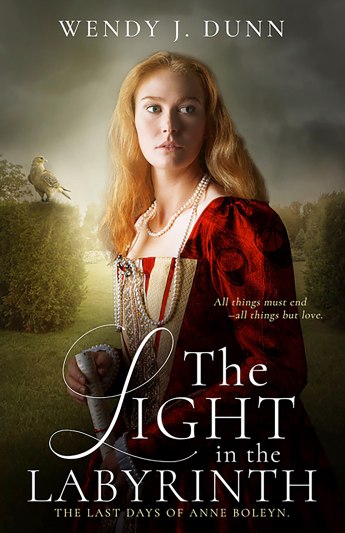
The light in the labyrinthThe year is 1535 and a young girl whose mother was a shining light at court, dreams of getting away from her family and joins her aunt at court. Her name is Kate Carey, the daughter of Mary (Boleyn) Carey, and her aunt is Queen Anne Boleyn. Little does Kate know that the court life she desires is full of danger and enemies around every corner. In the labyrinth of court life, Kate must navigate it successfully to come out alive, even as her aunt’s reign is coming to an end and a secret is revealed that will radically change her life forever. Wendy J. Dunn tells Kate Carey’s story in her young adult novel, “The Light in the Labyrinth: The Last Days of Anne Boleyn.”
I would like to thank Wendy J. Dunn for sending me a copy of this novel. I do love a good young adult novel and so when I heard about Wendy Dunn releasing a new edition of a young adult Tudor novel that she had written previously, I knew I wanted to read it.

We begin with a dispute between Kate and her mother Mary. Kate is upset with her mother after she remarries William Stafford when her father William Carey dies. She wants to get away from home and go to the court of Henry VIII where her aunt, Anne Boleyn, sits as queen. Reluctantly, Mary agrees to Kate’s request and allows Kate to join her brother Harry Carey in court.

Kate’s entrance to the glittery Tudor court comes at a crucial point. Anne Boleyn is pregnant with what she hopes will be the son she and Henry desire. Kate is surrounded by her cousins including Meg Lee, her uncle George, and of course her aunt Anne. Along the way, Kate falls head over heels in love with Francis Knollys and learns a secret about her father that will rock her small world forever. However, Kate learns that love in court is a double-edged sword that can have deadly consequences.

When King Henry VIII had his jousting accident, Anne suffered a miscarriage and lost her son who would have been her savior. The fall of Anne Boleyn was nothing short of tragic, but to see it from her young niece Kate’s perspective added layers of depth and emotion that I was not prepared to read. I have read so many different accounts of the death of Anne Boleyn, both fiction and nonfiction, but Kate Carey’s version hit me emotionally that I was almost in tears by the end.

Dunn has not only shown that she is a brilliant author of historical fiction but also a fantastic young adult historical fiction writer. It is not just the main story, but the poetry and the two short stories that show how much love Dunn has for Kate Carey. A true triumph of a novel that I did not want to end. I do hope she will write more young adult historical fiction novels set in the Tudor era. If you want a heartbreakingly spectacular novel set in the Tudor age, I highly suggest you read, “The Light in the Labyrinth: The Last Days of Anne Boleyn” by Wendy J. Dunn.

Book Review: “The Lady Rochford Saga- Part 1: Into the Ranks of the Deceived” by Danielle Marchant

Into the Ranks of the DeceivedThe tragedies of the Boleyns and the Howards left many with scars and heartache, none more so than Jane Parker. The daughter of Henry Parker, Lord Morley, Jane is seen to be destined for a great marriage and a successful career at court. As one of the ladies to serve Queen Catherine of Aragon, Jane witnesses the splendor, glam, and intrigue needed to survive in the court of Henry VIII. Danielle Marchant has taken inspiration from what she has studied about Jane Parker to create “The Lady Rochford Saga- Part 1: Into the Ranks of the Deceived.”

I would like to thank Danielle Marchant for sending me a copy of this novel. I have wanted to read more about Jane Parker/Jane Boleyn since reading “The Raven’s Widow” by Adrienne Dillard.

The novel begins with Henry Parker and his wife Alice Parker attending the Tudor court of Henry VIII and Katherine Parr during Christmas. Their daughter Jane recently died, but now they must pick up the pieces while keeping their daughter’s memory alive. We then jump back to when Jane first enters the court of Henry VIII and Catherine of Aragon as a shy, naive girl.

As an audience we see Jane grow from a girl into a woman in love with the debonair George Boleyn. Jane gets close to Mary and Anne Boleyn as they move from the French court to Henry VIII’s court, trying to navigate scandals and typical court drama. Marchant chooses to show the glamorous Field of the Cloth of Gold and the identity of Henry VIII’s “Mistress Parker” from Jane’s perspective, which was a unique twist to the tale.

I think it is a decent start to a trilogy about Jane Boleyn, but I do wish it was a single long novel instead of three short books, so the audience can be more immersed in the story. I think Marchant does have a passion for the Tudor dynasty and I think her stories will get better the more she writes. If you want a series about Jane Boleyn written by an independent author, you should check out, “The Lady Rochford Saga- Part 1: Into the Ranks of the Deceived,” by Danielle Marchant.

Book Review: “The Last Days of Henry VIII: Conspiracies, Treason, and Heresy at the Court of the Dying Tyrant” by Robert Hutchinson

The Last Days of Henry VIII

King Henry VIII, who ruled as a tyrant for almost 40 years, is dying. He caused mayhem and mischief by marrying six wives, killing two of them, with the dissolution of the monasteries, the creation of the Church of England, and his international policies. In short, it was a hot mess towards the end of his reign. So how did the last few months of King Henry VIII play out and how was he honored by those closest to the throne? Robert Hutchinson takes an in-depth look into this tumultuous period in history in his book, “The Last Days of Henry VIII: Conspiracies, Treason, and Heresy at the Court of the Dying Tyrant.”

I found this particular book in a used bookstore one day and decided to try it. I have heard of Robert Hutchinson, but I have never read any of his books. 

Hutchinson begins with the day that King Henry VIII breathed his last breath on January 28, 1547. He is no longer the glamorous Renaissance prince, but rather he is a hugely obese man with festering wounds on his legs. The years have taken their toll on the king, but no one feels sympathy for the man. He has made so many around him live in abject terror for decades. Now, it is time for a fresh start with the reign of King Edward VI, his beloved son.

We then jump back in time so that Hutchinson can show his readers exactly why King Henry VIII was feared towards the end of his life. He starts with the last three marriages of Henry VIII, Anne of Cleves, Catherine Howard, and Katherine Parr. The way that Hutchinson characterized Anne of Cleves and Catherine Howard in this book irked me quite a bit, even though I know this book is older and there is new research about both queens that contradicts Hutchinson’s perspective. 

Multiple marriages were not the only concern during the last years of Henry VIII’s life as he had to deal with heretics, international politics, and how the country should be run after his death. What I found truly fascinating about this book is the sources that Hutchinson used to tell the tale of the last years of Henry VIII’s life. They show how chaotically terrifying Henry’s court was towards the end. Hutchinson shows how the ambitious men around Edward VI tried to take control, but failed miserably as Edward VI, Mary I, and Elizabeth I ruled with just as much vigor as their powerful father. Finally, we see what happened to Henry VIII’s earthly remains and why his marvelous tomb vanished, leaving a simple marker to indicate where he and his beloved Jane Seymour were buried. 

Hutchinson does his due diligence to show how maniacal Henry VIII was, especially towards the end of his life. He does not mince words in his opinions about Henry and his court, which I may not agree with completely, but he makes strong arguments for his opinions. Overall, a very well-written and informative book. If you want a book that explores the final years of the infamous king, I would suggest you check out, “The Last Days of Henry VIII: Conspiracies, Treason, and Heresy at the Court of the Dying Tyrant” by Robert Hutchinson.

Book Review: “The Great Survivor of the Tudor Age: The Life and Times of Lord William Paget” by Alex Anglesey

The Great SurvivorRulers cannot govern alone. They require a team of men and women behind them to operate as a cohesive unit. The same can be said for rulers during the Tudor dynasty. We know the stories of men like Cardinal Wolsey and Thomas Cromwell, two men who rose through the ranks to prominent seats of power to ultimately have disastrous falls from grace. However, there was a third Tudor politician who should be in this discussion about rags-to-riches stories. He was the son of a common merchant who went to serve most of the Tudor monarchs as an advisor. Conspiracies and rebellions kept him on his toes, but he ultimately survived the Tudor dynasty, which was a difficult thing to achieve. His name was Lord William Paget and his story is told by his descendant Alex Anglesey in his debut book, “The Great Survivor of the Tudor Age: The Life and Times of Lord William Paget.”

I would like to thank Pen and Sword Books and Net Galley for sending me a copy of this book. I have heard the name William Paget in previous books that I have read about the Tudors, but he is one of those figures that felt like a footnote to me. When I heard that there was going to be a biography about Paget, I wanted to read it and learn more about this Tudor politician.

Alex Anglesey, the current Marquess of Anglesey, tells the story of how when he was a child living in the family home of Plas Newydd. Anglesey was able to use family letters to piece together the story of his ancestor, William Paget, a man of low status who rose through the ranks and served four Tudor monarchs.

The beginning of Paget’s international political career was traveling all across Europe to convince other European countries to accept the Great Matter. During this time, William married Anne Preston and they had nine children. He was the secretary for both Queen Jane Seymour and Anne of Cleves, and he witnessed the dissolution of the monasteries before making his way into the Privy Council as a clerk.

Paget’s first major role was as the English ambassador to France during the reign of King Francis I and gave news to the king about the downfall of Katherine Howard, but it did not last long as he was needed back in England to become Secretary of State. He was King Henry VIII’s private secretary towards the end of his life and helped craft Henry’s last will and testament. After siding with Edward Seymour during the reign of Edward VI, William barely survived a stay in the Tower of London, but he did. During Mary I’s reign, he helped organize the marriage between Mary I and Philip and witnessed the infamous burnings of Protestants. Paget only saw a few years of Elizabeth’s reign before he passed away.

Anglesey shows how Paget and his family were able to survive the Tudor dynasty by staying neutral on matters like religion while still promoting peace. I did find this book a bit dry in places and some of the references to the modern age felt a bit out of place. Overall, it was informative and not a bad read for a debut book. If you want to learn more about a lesser-known political figure who lived during the Tudor dynasty, I suggest you read, “The Great Survivor of the Tudor Age: The Life and Times of Lord William Paget” by Alex Anglesey.