Guest Post: “Gilded Power – The Jewelry Legacy of the Tudors” by Sam Mee

I am pleased to welcome Sam Mee, founder of the Antique Ring Boutique, to my blog today to share an article about Tudor jewelry.

Jewelry was predominantly religious in the austere Middle Ages, focusing on relics, devotional rings, and crosses. But the Tudor rulers developed it as a way to project their own royal power and authority. Clothing fashions of the time emphasized structure, and monarchs like Henry VIII and Elizabeth I integrated jewelry to proclaim their status and divine favor. 

This was the age of portraiture, when the elite commissioned likenesses as propaganda. Hans Holbein the Younger depicted Henry VIII in a way that showed off his jewels and chains of office as much as his formidable bulk (and codpiece). Holbein’s most famous image of Henry is a 1537 mural that, while destroyed by fire in 1698, is still known through copies. It shows the King with a powerful stance and wearing multiple chains and rings to further emphasized his authority and wealth.

Holbein portrait, public domain image: https://upload.wikimedia.org/wikipedia/commons/thumb/f/f9/After_Hans_Holbein_the_Younger_-_Portrait_of_Henry_VIII_-_Google_Art_Project.jpg/1024px-After_Hans_Holbein_the_Younger_-_Portrait_of_Henry_VIII_-_Google_Art_Project.jpg

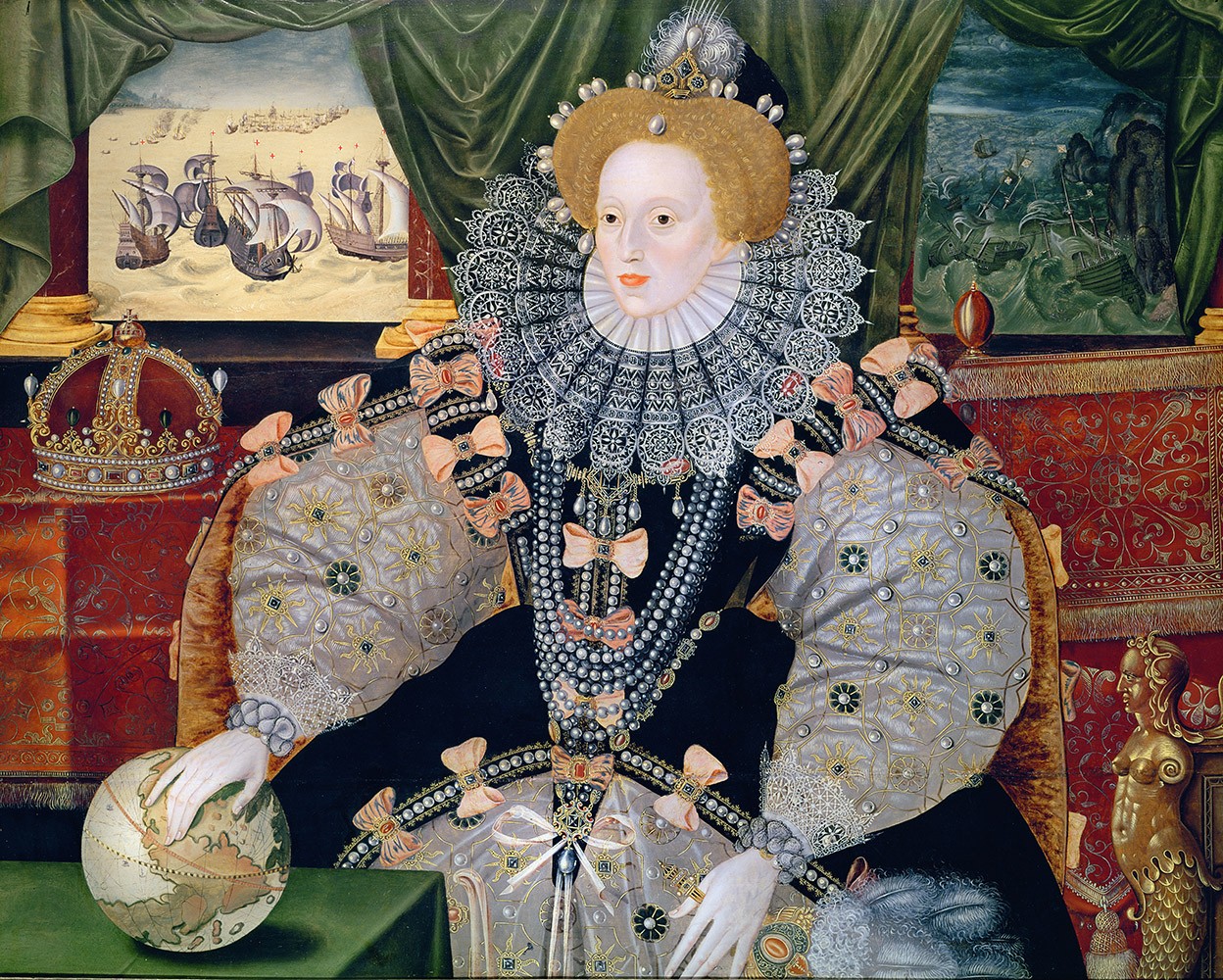
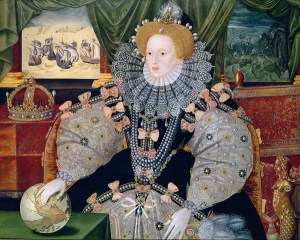
Three similar Armada portraits of Elizabeth I were painted after England defeated the Spanish Armada. They take allegory even further. The Queen is almost encased in pearls. Her gown is embroidered with them, they sit on her hair, and pearl ropes hang from her neck, all to symbolize chastity and divine protection. More explicitly, her hand rests on the globe as a symbol of empire. Her powerful warships are visible in the background behind her gem-encrusted crown, signifying divine authority. 
Armada portrait, public domain image: https://upload.wikimedia.org/wikipedia/commons/7/7b/Elizabeth_I_%28Armada_Portrait%29.jpg

In fact, Elizabeth I was rarely painted without pearls – other examples include the Darnley Portrait (c1575) and Rainbow Portrait (c1600). The pearls repeatedly symbolized the Virgin Queen’s chastity and wealth in bodily form.

The sumptuary laws

If gems and clothing signified power, then rulers needed to control who wore what. Medieval 15th-century sumptuary laws started to codify this across Europe. A 1463 English statute restricted who could wear “royal purple”, while a 1483 act restricted velvet to knights and lords and satin for gentry with a yearly income of £40.

Tudor England was an intensely hierarchical society, and so the laws were tightened further. Elizabeth’s 1574 Act of Apparel spelled out in detail who could wear what – her rules set which fabrics hats could be made of and dictated the length of swords, depending on the wearer’s standing. Check out the list here: https://midtudormanor.wordpress.com/sumptuary-laws/

Jewelry was also regulated with gold chains, heavy pearls, and precious stones reserved exclusively for the nobility. 

Enforcement was patchy but real, with surviving court records showing individuals tried for breaches and fined. These laws were somewhat symbolic, though. They were a way to make hierarchy visible rather than consistently enforced. Ambitious merchants and courtiers often flaunted jewels beyond their rank, with monarchs turning a blind eye.

Fashion at court

Jewelry was inseparable from clothing at court. Goldsmiths worked hand in hand with tailors, and jewels were sewn directly into doublets and headdresses.

We know Henry VIII wore vast gold chains and pendants and even occasionally jeweled codpieces. Courtiers followed suit with jeweled hat badges, enameled rings, and ornate girdle books (these were tiny, jeweled prayer books that hung from belts). They also wore gold pearl earrings. Women sported pearls, rubies, and diamonds on top of layered dresses made from richly embroidered fabrics. 

Anne Boleyn’s necklace – a large gold “B” with three drop-pearls dangling from it – is one of the period’s most famous jewels. It’s a very personal bit of jewelry that symbolized her individuality and status. (It survives only in portraits – its whereabouts after her 1536 beheading is not known).

Anne Boleyn’s B necklace, public domain image: https://upload.wikimedia.org/wikipedia/commons/f/f2/Anne_boleyn.jpg

Global trends and treasures

The rise in the prominence of jewelry was part of a wider trend of expanding horizons – culturally, societally, geographically, and economically. Spain’s influx of New World gold and silver boosted Europe’s wealth, with England claiming its own share through figures like Sir Walter Raleigh and Sir Francis Drake.

There’s extraordinary archaeological evidence of this, not just from the images of the time but from the Cheapside Hoard, discovered in 1912 beneath a London cellar. It’s a collection of more than 400 pieces. There are emerald rings, diamond pendants, and enameled chains with gems sourced from Colombia, India, Burma, and Brazil. The treasure shows that London goldsmiths had access to a global supply of jewels long before the height of the empire. 

Together with portraits, the Hoard is the richest record we have of Tudor jewelry, showing how jewels were actually made. You can read more about it here: https://www.londonmuseum.org.uk/collections/london-stories/jewels-cheapside-hoard/

Evolution of Tudor Jewelry

New fashions, new materials, and new freedoms (for some). Tudor jewelers developed new techniques to match these wider changes in society, combining medieval traditions with Renaissance artistry. Enameling reached new heights, and these techniques were carried forward into Georgian mourning jewelry and even into Victorian revival pieces.

Foil-backing was widely used in Tudor times to enhance jewels. Thin sheets of colored foil were placed behind gems like diamonds, rubies, or rock crystal to enhance their brilliance. This technique remained common until the 18th century, when more advanced diamond cutting began to produce inherent sparkle.

Gem cutting itself advanced in the Tudor period. Gemstones are rarely cut in bespoke shapes but tend to use standardized cuts designed to maximize brilliance or colour. This has been true since the Renaissance. Earlier medieval gems were typically worn as cabochons (smooth, polished domes), which enhanced colour but not brilliance. Then, from the late 15th century, jewelry began to experiment with faceting, where flat surfaces were cut at angles to reflect light, and Tudor lapidary work played a key role in the development and take-up of new techniques:

  • Cabochon: The oldest approach. A smooth, rounded dome without facets. Used in the medieval period for sapphires, garnets, and emeralds.
  • Point cut: This simple cut shaped a diamond into a pyramid with four sides. Mostly common in the 15th century.
  • Table cut: Developed in the late 15th century, this removed the top of the pyramid to create a flat “table” facet. It meant increased brilliance and became standard in Tudor jewelry.
  • Rose cut: Emerged in the 16th century as diamond saws and polishing technology improved. This had a flat base and a domed top covered in triangular facets to resemble a rosebud. The rose cut was popular until the 19th century.
  • Old mine cut: An 18th-century development. It’s a squarish cut combined with a high crown, deep pavilion, and large culet. It was the forerunner of the modern brilliant cut.

You can read more about the evolution from medieval jewelry techniques here. (https://historicalbritainblog.com/the-debt-antique-jewellery-owes-to-the-middle-ages-guest-post-by-samuel-mee/)

Settings in Tudor times typically enclosed the stone with gold, but Tudor jewelers began experimenting with more open settings to admit light. It was the Stuart era that really saw the development of the claw setting for diamonds, where the gem was held with tiny metal arms to allow much more light to pass through, dramatically increasing sparkle.

Tudor trends can be seen in subsequent centuries: 

  • Georgian jewelers turned enamel and foil into sentimental jewelry such as portrait miniatures (also common in Tudor times) and mourning rings.
  • Victorian designers enjoyed historical revival, and they often deliberately echoed Tudor styles, such as heavy Holbein-like gold chains and memento mori skulls.
  • Edwardian jewelers drove a revival of Elizabethan-style pears and combined them with lace-like platinum settings.
  • Art Deco designs were modernist in geometry but had a strong revivalist theme from Egyptian motifs to statement designs that matched 16th-century theatricality.

Surviving themes

Tudor jeweler was many things: regulated, global, technical, and symbolic. It was constrained by law, used as propaganda, and yet pushed at boundaries. It was part of the evolution of techniques and materials that developed over several hundred years as jeweler changed to become ever more personal. And even specific gem traditions persisted. The Tudor love of pearls was echoed in the Edwardian era. Tudor foiling foreshadowed Georgian brilliance. Tudor enameling was revived multiple times in the centuries that followed. Let’s just hope the codpiece doesn’t return. 

About the Author

Sam Mee is the founder of the Antique Ring Boutique (https://www.antiqueringboutique.com/), which sells rings from the Georgian, Victorian, Edwardian, and Art Deco eras. He has several guides on his website for buying rings from different historical periods. EG, you can learn more about ring cuts and foiling in the guide to Georgian rings: https://www.antiqueringboutique.com/en-us/pages/georgian. He is a member of both Lapada (https://lapada.org/dealers/antique-ring-boutique/) and BADA (https://www.bada.org/dealer/antique-ring-boutique). 

Guest Post: “Spotlight for ‘Bess-Tudor Gentlewoman’ by Tony Riches

I am pleased to welcome Tony Riches to my blog to share a blurb for his latest novel, “Bess-Tudor Gentlewoman.” I would like to thank Tony Riches and The Coffee Pot Book Club for allowing me to participate in this blog tour. 
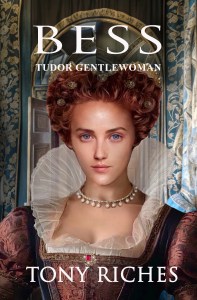
Blurb: 

Bess Throckmorton defies her notorious background and lack of education to become Queen Elizabeth’s Gentlewoman and trusted confidante. 

Forced to choose between loyalty and love, duty and desire, will she risk her queen’s anger by marrying adventurer Sir Walter Raleigh without permission? 

Entangled in a web of intrigue, from the glittering Palace of Whitehall to the cells of the Tower of London, Bess endures tragedy and injustice, becoming a resilient, determined woman who takes nothing for granted. 

Can she outwit her enemies, protect her family, and claim her destiny in a world where women are pawns and survival is a game of deadly consequences? 

This is the true story of the last of the Elizabethans, which ends the story of the Tudor dynasty – and introduces their successors, the Stuarts. 

Buy Link: 

Universal Buy Link: https://mybook.to/BESS  

This title is available to read on #KindleUnlimited. 

Author Bio: 

Tony Riches is a full-time UK author of Tudor historical fiction. He lives with his wife in Pembrokeshire, West Wales, and is a specialist in the lives of the early Tudors. 

As well as his Elizabethan series, Tony’s historical fiction novels include the best-selling Tudor trilogy and his Brandon trilogy (about Charles Brandon and his wives). 

For more information about Tony’s books, please visit his website, and his blog, The Writing Desk, and find him on social media. 

Author Links

Website: https://www.tonyriches.com/  

Blog: http://tonyriches.blogspot.co.uk/  

Twitter / X: https://twitter.com/tonyriches  

Facebook: https://www.facebook.com/tonyriches.author/  

Instagram: https://www.instagram.com/tonyriches.author/  

Bluesky: https://bsky.app/profile/tonyriches.bsky.social  

Amazon Author Page: https://www.amazon.co.uk/stores/Tony-Riches/author/B006UZWOXA  

Goodreads: https://www.goodreads.com/author/show/5604088.Tony_Riches  


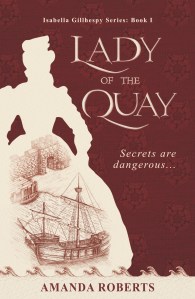
Guest Post: “Snippet from ‘Lady of the Quay’ by Amanda Roberts”

Eating alone at the vast table, which could seat a dozen people with ease, did nothing to improve my attitude or my mood, and I vowed that unless I was entertaining, I would take my meals in my closet from now on. Yes, I had to try to think of it as my closet now. I retired there after I had eaten, and although I relished the silence, I was not yet comfortable with the void that my father’s absence left in the space. With the shutters closed to deny the outside world, I settled by the fire and tried to cocoon myself in memories of him, but I could no longer trust my own mind. To keep secrets had not been in his nature, and yet that is what he had done. And these were not just any old secrets; they were big, black, ugly ones. How was I supposed to reconcile the man I thought I had known so well with the person I was now discovering? He had been the pivot of my existence for most of my life, my moral and spiritual guide, and a person respected by all who knew him, but who was he really? 

Blurb: 

Knowing she is innocent is easy … proving it is hard. 

1560, Berwick-upon-Tweed, northern England 

Following the unexpected death of her father, a series of startling discoveries about the business she inherits forces Isabella Gillhespy to re-evaluate everything she understands about her past and expects from her future. 

Facing financial ruin, let down by people on whom she thought she could rely, and suspected of crimes that threaten her freedom, Isabella struggles to prove her innocence. 

But the stakes are even higher than she realises. In a town where tension between England and her Scottish neighbours is never far from the surface, it isn’t long before developments attract the interest of the highest authority in the land, Sir William Cecil, and soon Isabella is fighting, not just for her freedom, but her life. She must use her wits and trust her own instincts to survive. 

Lady of the Quay introduces an enticing new heroine who refuses to be beaten, even as it becomes clear that her life will never be the same again. 

From the author of the award-winning ‘The Woman in the Painting’. 

Buy Link: 

Universal Buy Link: https://books2read.com/u/317rQa  

This title is available to read on #KindleUnlimited. 

Author Bio: 

Amanda Roberts has worked as an Editor in business-to-business magazines for over 30 years, specialising in out-of-home coffee, vending and foodservice/catering, including Editor of the global gastronomy title: ‘Revue internationale de la Chaîne des Rôtisseurs’. 

She currently freelances, editing UK-based healthcare titles – HEFMA Pulse, Hospital Food + Service and Hospital Caterer. She is a member of the Society of Authors, the Historical Novel Society and West Oxfordshire Writers. She also volunteers for Tea Books (part of Age UK) to run a book club/reading group for elderly people in the community. 


Author Links: 


Website: https://amandarobertsauthor.co.uk/  

Facebook: https://www.facebook.com/profile.php?id=100095191090333  

Instagram: https://www.instagram.com/amanda_roberts_author/  

Book Bub: https://www.bookbub.com/books/lady-of-the-quay-isabella-gillhespy-series-book-1-by-amanda-roberts  

Amazon Author Page: https://www.amazon.com/stores/Amanda-Roberts/author/B00N0RQBAI   

Goodreads: https://www.goodreads.com/book/show/231816264-lady-of-the-quay  

Blog Update: 500,000 Views! Thank You All So Much!

Hey my fellow history nerds!

I know this is not the kind of post that you normally see on the blog; it’s usually something you will see on the Facebook page, but this was such a big milestone that I felt like it warranted a blog post. 

As you can tell from the title of the post, Adventures of a Tudor Nerd has officially crossed over 500,000 views, which is insane to think about. Seven years ago, when I started after I was a guest author for Rebecca Larson’s blog, Tudor Dynasty. It was a lot of fun, but Rebecca said that I should try writing my own history blog. I wasn’t sure what I could write about since all I am passionate about are history and books, so I decided to give history book blogging a try and post book reviews.

And the rest was history.

I wasn’t sure if anyone would be interested in what I had to say when it came to history books, but you guys have been such an amazing community. I started with the Tudors because that was the dynasty that I felt the most comfortable discussing, but as time has gone on, I have added even more periods of the past; the Anglo-Saxons and the Vikings, the Plantagenets and the wider medieval world, the Wars of the Roses, the Tudors, and most recently the Stuarts. It’s been fun to share my thoughts on books with all of you, but I also believe that authors should be able to promote their books on my blog through guest post, to bring things full circle. Finally, I enjoy talking about TV shows and movies that I have watched and want to rant about, as well as poetry that I find profound. 

I have been blown away by the amount of love and support that I have received over the years. I am just a history nerd with a love for the past and books. Thank you all so much for being part of this crazy, amazing adventure. To the publishers and authors I have worked with, thank you for allowing me to read some truly amazing books, and thank you for becoming mycolleagues and friends. 

This has been such an unbelievable journey so far, and I can’t wait to continue to embark on even more history adventures.

Keep on taking your own history adventures and never stop learning from the past.

Here’s to more history adventures!

-Heidi

Book Review: “The House of Echoes” by Alexandra Walsh

A love that can get through any obstacle even when the couple is married to other people is considered very rare. However, star-crossed lovers at court were practically unheard of, especially multiple couples from the same family. Anne Brandon knows how rare these matches are as her father Charles Brandon married the sister of King Henry VIII. Now she must figure out her feelings about romance while navigating court life. In the modern day, Caroline Harvey has relationship problems while she navigates the loss of her famous writer, grandfather Dexter Blake. How are these two women from different centuries connected and can they fight for who they love or are they destined to be alone? Alexandra Walsh tells both women’s stories in her novel, “The House of Echoes.”
I want to thank Boldwood Books and Net Galley for sending me a copy of this novel. The concept of this novel and the cover were what pulled me into the story. I know about the children of Charles Brandon and Mary Tudor, but when it comes to Charles’ other children, I don’t know much. I wanted to learn a bit about Anne Brandon and have a good time with the story of Caroline Harvey.

We begin with the story of Caroline Harvey as she returns home to England from America after a bad break-up with her former fiance Travis Hibbert. She is the personal assistant to her grandfather, the recluse writer Dexter Blake, the author of the Ether Heracles book series. Dexter Blake is dying and it is up to her and her family to announce it to the rest of the world while releasing the last book in the series and making movies about the books. While the world mourns Dexter’s death, Caroline is given the gift of Dexter’s home and she begins researching the history of the house, which will lead her to an old fling Gideon and his book store Ten-to-Midnight. It is through Caroline’s research that she discovers the story of Anne Brandon and the truth about her life.

Meanwhile, in Tudor England, Anne Brandon is getting used to being the step-daughter of Mary Tudor, the sister of King Henry VIII. She is not used to court life, but she has friends who will become famous like Anne Boleyn and Margaret More Roper. As a young girl, Anne falls head over heels in love with Randall Hanworth and she believes that she is destined to marry him. However, fate and her father have someone else in mind; Edward Grey 3rd Baron of Powis, which made Anne Baroness of Powis. That doesn’t mean it was a happy marriage as the couple never had any children. Anne lived throughout the reign of Henry VIII, saw two of his wives beheaded including her friend Anne Boleyn, and had a great falling out with her father Charles Brandon before he died, which meant that she was left out of his will. Anne was willing to fight for the lands that she believed rightfully belonged to her and the love of her life Randall.

This was a fun novel with so many twists and turns, including one at the end that I did not see coming. I especially love the little details that Walsh included especially coming up with blurbs for each of the Dexter Blake books as well as the inner workings of the Brandon household. As someone who reads a lot about the Tudors, it was refreshing to read about Tudors that were new to me. If you want a fresh take on the Tudor with a modern twist, I greatly recommend you read, “The House of Echoes” by Alexandra Walsh.

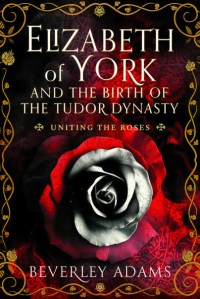
Book Review: “Elizabeth of York and the Birth of the Tudor Dynasty: Uniting the Roses” by Beverley Adams

Throughout English history, some of the most famous queens have been associated with the Tudor dynasty. We have the six wives of Henry VIII (Catherine of Aragon, Anne Boleyn, Jane Seymour, Anna of Cleves, Catherine Howard, and Catherine Parr), Queen Mary I, and Queen Elizabeth I. However, one Tudor queen is often overlooked for her daughters-in-law and granddaughters, the first Tudor queen, Elizabeth of York. So who was Elizabeth of York and what role did she play in the transition between the Plantagenet dynasty and the Tudor dynasty? Beverley Adams hopes to enlighten readers about this remarkable queen in her latest book, “Elizabeth of York and the Birth of the Tudor Dynasty: Uniting the Roses.”

I want to thank Pen and Sword Books and Net Galley for sending me a copy of this book. While I know quite a bit about Elizabeth of York, the Wars of the Roses, and the origins of the Tudor dynasty, I wanted to see how Adams would portray these topics for beginners. 

To begin with, Adams lays out the origins of the conflict that we know today as the Wars of the Roses with Edward III and his sons, John of Gaunt 1st Duke of Lancaster, and Edmund of Langley, 1st Duke of York. This led to a clash between King Henry VI and Richard Duke of York. Elizabeth of York’s father, the future King Edward IV, was the son of Richard Duke of York and he had to fight for his throne. Adams explores Elizabeth’s childhood as the eldest child of Edward IV and his wife Elizabeth Woodville during this tumultuous period of English history, which would form the foundation of what kind of queen she would be in the future.

Everything changed when Edward IV died suddenly, which meant that Elizabeth’s younger brother became Edward V and left Richard Duke of Gloucester as Lord Protector. For some reason, Richard Duke of Gloucester decided to take matters into his own hands, took control of the country, declared the children of Edward IV and Elizabeth Woodville illegitimate (including Elizabeth of York), and was crowned King Richard III in a matter of months. Some resisted the new king including the son of Margaret Beaufort and Edmund Tudor, Henry Tudor. Margaret Beaufort and Elizabeth Woodville arranged a marriage between Henry and Elizabeth that would occur if Henry was able to defeat Richard III and become King of England, which he did at the Battle of Bosworth Field. The rest of this book is dedicated to showing how Elizabeth of York was as a wife, queen, and mother as she dealt with death, treachery from Lambert Simnel and Perkin Warbeck, and triumphs as she was able to see the start of the Tudor dynasty.

I think Adams does a decent job with a book that is an introduction to Elizabeth of York, the Wars of the Roses, and the beginning of the Tudor dynasty. There are some myths that she repeats to debunk, but I feel like, in some places, Elizabeth of York was not the main focus, which was a bit disappointing. Overall, if you want a solid introductory book to the life and times of the first Tudor queen, I would recommend you read, “Elizabeth of York and the Birth of the Tudor Dynasty: Uniting the Roses” by Beverley Adams.

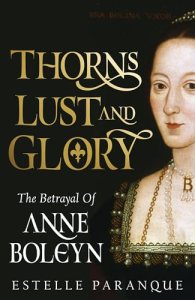
Book Review: “Thorns, Lust, and Glory: The Betrayal of Anne Boleyn” by Estelle Paranque

A young woman catches the attention of a king already married to a princess from a faraway kingdom. The king desires the young lady and divorces his wife to marry her. However, there is a catch. The young lady spent some time in the French court of Francis I and Claude of France, whereas the king’s wife was the daughter of the Spanish King and Queen as well as the aunt of the Holy Roman Emperor. The Great Matter of Henry VIII, Anne Boleyn, and Catherine of Aragon is considered one of the messiest divorces in English history and rightfully so when you consider the diplomatic consequences that this divorce would have across Europe. Estelle Paranque highlights the connection between Anne Boleyn and the French court in her latest book, “Thorns, Lust, and Glory: The Betrayal of Anne Boleyn.”

I want to thank Hachette Books and Net Galley for sending me a copy of this book. I heard that Estelle Paranque was writing a new book about the 16th century, but when I heard that it dealt with Anne Boleyn’s connections with the French court, I jumped at the chance to read it. While I do know quite a bit about the rise and fall of Anne Boleyn, it is her connection with the French court that I have never really explored in depth.

Paranque begins her book by examining the meeting between King Henry VIII and King Francis I with Anne Boleyn at Calais between October 25th and 27th, 1532. This was a significant meeting as it was right before Henry and Anne married in secret and they desired that Francis would support their side in the Great Matter. But how did they get to this meeting in Calais? This is where this book shines as Paranque takes the time to show her audience what life was like for Anne in the French court and the connections that she forged with women like Louise of Savoy, Claude of France, and Marguerite of Angouleme Queen of Navarre. It was fascinating to see how the Boleyns were able to use their connections to forge alliances with the French court that would prove useful in the future.

Possibly my favorite part of this book was seeing how the diplomatic channels across Europe interacted with one another during the Great Matter, the queenship of Anne Boleyn, and the fall of the Boleyns. I think we so often overlook that there were diplomats who were working on the sidelines to convey messages between kings and emperors to form or strengthen alliances. While many might consider the way Paranque wrote the correspondence and dialogue between diplomats and the monarchy as hard to get used to because she does insert emotions, I believe it adds depth to the story because they were human beings not in a vacuum. They had feelings about what was happening around them, passionate feelings in fact, and that should be displayed to readers.

While the actual events of this book were not new to me, the way that Paranque was able to present the information and show the men behind the scenes was fascinating. It presents the relationship between Henry VIII and Anne Boleyn in a different more complex light. If you want a different angle to the rise and fall of Anne Boleyn, I recommend you read, “Thorns, Lust, and Glory: The Betrayal of Anne Boleyn” by Estelle Paranque.

Book Review: “Stuart Spouses: A Compendium of Consorts from James I of Scotland to Queen Anne of Great Britain” by Heather R. Darsie

English royal history is filled with fantastic stories of triumphs and tribulations, grand romances, and divorces that shook the foundations of the monarchy. It is also filled with struggles over religion, wars both inside England and with foreign nations, and heartbreaking child losses. We often think about the spouses of the Plantagenets and the Tudors when we think about royal romances, but we shouldn’t forget about the dynasties that came after, like the Stuarts. So how did the Stuart dynasty come to be and how did the unions between monarchs and their significant others affect the dynasty and England? Heather R. Darsie explores this often-overlooked dynasty and the stories of their marriages and romances in her latest book, “Stuart Spouses: A Compendium of Consorts from James I of Scotland to Queen Anne of Great Britain.”

I want to thank Pen and Sword Books and Net Galley for sending me a copy of this book. I didn’t know much about the Stuarts before reading this book, except for those associated with the Plantagenets and the Tudors. I wanted to learn more about the Stuarts because I tend to stop after the death of Elizabeth I, so when I heard that Darsie was writing a book about the consorts of the Stuart dynasty, it was intriguing to me.

Darsie begins by explaining that she will be exploring the entirety of the Stuart dynasty, starting with its patriarch Walter Fitzalan, Stewart of Scotland for David I of Scotland in the 1100s. It is a fascinating story of how the family went from serving the monarchy to being the rulers of Scotland, all the way up to 1406 when James I became King of Scotland. The first royal consort that Darsie discusses might be familiar to anyone who knows about the origins of the Tudors, Joan Beaufort. We then track the Scottish story of the Stuarts through the death of Mary Queen of Scots through their significant others such as Mary of Guelders, Margaret of Denmark, Margaret Tudor, Madeleine of Valois, Marie de Guise, Francis II of France, Henry Stewart Lord Darnley, and James Hepburn 4th Earl of Bothwell.

It was under James VI of Scotland that things changed drastically for both England and Scotland as James became King James I of England with the death of Elizabeth I, and so James’ wife Anna of Denmark became the first Stuart Queen of England. This is the segment that I thoroughly enjoyed because they were new stories for me. We have Henriette Marie of France, a Catholic queen who married Charles I who was a Protestant, which did not have a happy ending as we get to see the English Civil War play out and the execution of Charles I on January 30, 1649. Darsie also includes the stories of the women who married Oliver Cromwell and his son Richard Cromwell, both Lord Protectors of England when the monarchy was not popular. Eventually, the Stuarts returned to their place on the English throne with Charles II and his queen Catherine of Braganza; followed by the women who married James Stewart Duke of York, Anne Hyde and Mary of Modena. James would become James II before the Glorious Revolution led by William of Orange, which led to the co-rulers William III and Mary II. Finally, we reach the tragic tale of Queen Anne of Great Britain and her Prince Consort George of Denmark.

I was so impressed with the amount of stories over centuries that Darsie was able to cover in this book. It was a fantastic introduction to Scottish Stuart history, how the dynasty survived, and created international relationships that allowed England to thrive. There were tales of tragedies, but there were also alliances that created stronger bonds, religious rifts, and romances. This was another triumph for Darsie and it is a book that made me interested in reading more about the Stuarts. If you are like me and you want a book that is a fantastic introduction to the Stuart monarchs and their consorts, I highly recommend you read, “Stuart Spouses: A Compendium of Consorts from James I of Scotland to Queen Anne of Great Britain” by Heather R. Darsie.

Book Review: “Courting the Virgin Queen: Queen Elizabeth I and Her Suitors” by Carol Ann Lloyd

As humans, we love a good love story. Tales of courtships, grand confessions of love, over-the-top weddings, and marriages that last decades. These seem like high expectations, especially when we compare these expectations to royal courtships of the past. The majority of royals married and they were more focused on political matches instead of love. However, few chose a different path altogether, they decided to be single. One of the most famous monarchs with a single status was Queen Elizabeth I of England, the Virgin Queen So why did Elizabeth stay single throughout her reign, and how did she navigate her numerous suitors? Carol Ann Lloyd tries to answer these questions in her latest book, “Courting the Virgin Queen: Queen Elizabeth I and Her Suitors.”

I want to thank Pen and Sword Books and Net Galley for sending me a copy of this book. I enjoyed Lloyd’s previous book, “The Tudors by the Numbers,” so when I heard about this book and that it would be about Elizabeth I and her romances, I knew I wanted to read it.

Lloyd breaks her book down into sections focusing on the suitors and the aspects that made her reign rather unique. While she was a child, Elizabeth’s primary purpose was to create a powerful alliance with another country, however, issues of legitimacy and religion hampered any real chance of her marrying anyone before she became queen. Once she was crowned, the marriage market became even more complicated as she not only had a great number of eligible suitors both in England and abroad, she needed to make sure her kingdom was secure and that she remained in power. She had to balance her natural and her political body of a ruler, a task that was difficult for a man to accomplish let alone a queen whose legitimacy and religious standings were on shaky grounds.

I think Lloyd did a great job of presenting new information about Elizabeth I, her suitors, and how different aspects of courting affected how the queen ruled. I will say that the way the book was organized did hinder my enjoyment of this book a little bit. I think it would have made more sense to have the aspects of Elizabeth’s courting and how it affected her reign before diving into her numerous suitors and why things didn’t go so well, which led to Elizabeth becoming the titular Virgin Queen.

Overall, I did find this a rather informative and fascinating read. If you want a solid book about Elizabeth I and her numerous romances, I recommend you read, “Courting the Virgin Queen: Queen Elizabeth I and Her Suitors” by Carol Ann Lloyd.

Book Review: “The History of England Vol. II: Tudors” by Peter Ackroyd

TudorsThe royal dynasties of English history are some of the most popular in European history. We have the Normans, the Angevins, the Plantagenets, who occupied the throne for 300 years, the Scottish Stuarts who saw religious change and political upheaval, the haughty Hanovers, and the current Windsor dynasty. However, one dynasty that has captured the imagination of history nerds for centuries has been the tumultuous Tudors. In book two of Peter Ackroyd’s “The History of England: Tudors,” he explores the stories that made the Tudor dynasty so infamous.

I saw this book at a used bookstore and picked it up. I just read the previous book in this series, “Foundation” and wanted to see how Ackroyd would tackle the tricky Tudors.

Ackroyd, unfortunately, does not start with the patriarch of the Tudor dynasty, Henry VII, instead, he starts with his infamous second son, Henry VIII, and his coronation. Ackroyd did include a bit of information about Henry VII’s reign in his previous volume, but I think it would have made much more sense to have included his story in this book to show the dynasty from beginning to end. When it comes to the reign of Henry VIII, his martial affairs take a backseat to the more religious and political aspects of his reign. The theme of religious changes goes throughout this book as Ackroyd explores the reigns of Edward VI, Mary I, and Elizabeth I, the children of Henry VIII.

While I did find some of the facts in this book informative, I did have issues with this book. When it comes to the characterization of the women in this book, especially Mary I, it felt like a repetition of some of the old tropes (like Bloody Mary). There were also stories and dialogue that Ackroyd had included that felt similar to historical fiction rather than historical facts, which was a bit distracting, especially for a chronicle.

Overall, I felt like this book was just okay, but quite a bit of the information presented in this book could be disproven with the latest research about the Tudors (of course this book is over 10 years old). I think this is a fine introductory book to the Tudor dynasty and the religious changes that happened during the 16th century in England. If this sounds intriguing to you or if you have read “Foundation,” “The History of England Vol. II: Tudors” by Peter Ackroyd might be something you would be interested in reading.