Today, I am pleased to welcome Sarah Kennedy to my blog to discuss the historical aspect of her latest novel Queen of Blood. Thanks to the Coffee Pot Book Club and Sarah Kennedy for allowing me to be part of this tour.
The most obvious historical aspect of my latest novel, Queen of Blood, is the Wyatt Rebellion, which occurred early in the reign of Mary Tudor (“Bloody Mary”). It was carried out, unsuccessfully, by a group of men who opposed her rule and her marriage to Philip of Spain. The uprising was soon put down, partly because some of the other nobles who were initially involved in the plot failed to raise their armies, and so the band that descended on London was small—and they did not get the support from Londoners that they expected.
That’s the historical context of the book, and it may be the most compelling part of the narrative for some readers. But it’s not the historical aspect that interests me the most. As in all of the novels in my Tudor series, The Cross and the Crown, the element that draws me in the most is the daily lives of everyday people. We know quite a lot about the lives of royals and nobles—and life was not easy even for people with vast resources of wealth and land—but my attention is always on people who lacked these privileges. I’ve always had sympathy for ordinary people who found (and still find) themselves tossed and turned by changes in their governments and their cultures; such changes occurred dramatically during the Tudor years in England.
I try to imagine what daily life was like, particularly for women, who had to worry about childbirth (or the inability to bear children); maintaining and running a household (or working in a household); and caring for extended family members. Just thinking about the number of chores and tasks that had to be accomplished every day, just to stay alive, is exhausting. Women like my main character, Catherine, sometimes had to keep the books for their husbands’ businesses; sometimes had to work in the business (Catherine’s current husband is a wool dealer), and they surely had to stop everything sometimes to show a young maid how to pluck a chicken correctly or how to make soap. I think, too, about the bodily needs that we take for granted today: staying clean; treating wounds and injuries; maintaining personal hygiene during menstruation, pregnancy, breastfeeding, and childbirth.
Can you imagine how time-consuming and difficult it was just to get through a day with enough food, shelter, and clothing?
My Catherine is fortunate in that she knows how to read and write because she was raised in a convent. She knows quite a lot about herbs and medicines, so she generally knows what to do if someone in her household falls ill or, say, cuts herself. She also has maids to help out around the house. But having a household staff means looking out for those people, and that job often fell to the lady of the house.
Now, when all of that daily toil is combined with turmoil in the government and the religion of the country, everything becomes more complicated. England, at the beginning of Mary Tudor’s reign, was Protestant. The convents and monasteries had been closed, and their lands and goods seized by the Crown. Mary, of course, remained Catholic, and one of her goals was to return England to Rome.
This goal was supported by some, opposed by others, and just entirely frustrating and confusing to many. A person could be arrested, imprisoned, and possibly executed for failing to submit to the current requirements of the current church, and I’m sure that this created anxiety, anger, and resentment. Which prayers was a person supposed to say? In what language? What if those requirements violated a person’s conscience? Those were questions that, under the Tudor monarchs, ordinary people often simply had to keep to themselves. They had to follow the rules or suffer the consequences, even if the rules were completely different from what they had been in the previous year.
So, on top of all the necessary daily, drudging work, everyday people were forced to submit to the requirements of church attendance, following the dictates from the throne. It’s no wonder that people rebelled. And it’s no wonder that those rebellions were met with force from the court.
People often adapt to the circumstances in which they find themselves if they can. And if they can’t? If they don’t understand the enormous changes, or don’t approve of them, or can’t bear them? The possible answers to those questions are at the center of my historical interest, and those questions, to me, are the most important historical aspect of my Cross and Crown series.
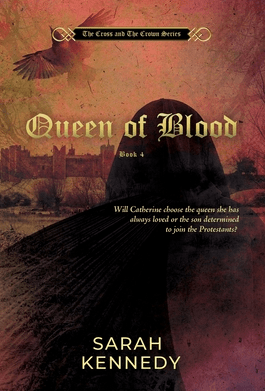 (Blurb)
Queen of Blood, Book Four of the Cross, and the Crown series continue the story of Catherine Havens, a former nun in Tudor England. It is now 1553, and Mary Tudor has just been crowned queen of England. Still a Roman Catholic, Mary seeks to return England to its former religion, and Catherine hopes that the country will be at peace under the daughter of Henry VIII. But rebellion is brewing around Thomas Wyatt, the son of a Tudor courtier, and when Catherine’s estranged son suddenly returns from Wittenberg amid circulating rumors about overthrowing the new monarch, Catherine finds herself having to choose between the queen she has always loved and the son who seems determined to join the Protestants who seek to usurp her throne.
Buy Links
Universal Link: mybook.to/QueenofBloodBookFour
Amazon UK: https://www.amazon.co.uk/dp/1950586758
Amazon US: https://www.amazon.com/Queen-Blood-Sarah-Kennedy/dp/1950586758
Amazon CA: https://www.amazon.ca/dp/1950586758
Amazon AU: https://www.amazon.com.au/dp/1950586758
 Author Bio
Sarah Kennedy
Sarah Kennedy is the author of the Tudor historical series, The Cross and the Crown, including The Altarpiece, City of Ladies, The King’s Sisters, and Queen of Blood. She has also published a stand-alone contemporary novel, Self-Portrait, with Ghost, as well as seven books of poems. A professor of English at Mary Baldwin University in Staunton, Virginia, Sarah Kennedy holds a Ph.D. in Renaissance Literature and an MFA in Creative Writing. She has received grants from both the National Endowment for the Arts, the National Endowment for the Humanities, and the Virginia Commission for the Arts.
Social Media Links:
Website: http://sarahkennedybooks.com
Twitter: https://twitter.com/KennedyNovels
Facebook: https://www.facebook.com/sarah.kennedy.520125
Amazon Author Page: https://www.amazon.com/Sarah-Kennedy/e/B0054NFF6W
Goodreads: https://www.goodreads.com/author/show/6538009.Sarah_Kennedy

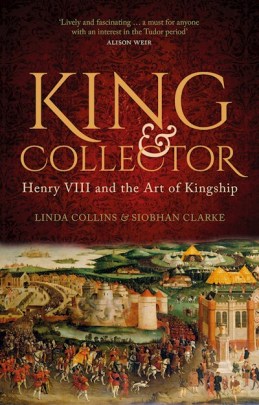 When we think of the legacy of King Henry VIII, a few descriptions come to mind—married six times, father of three children who would be the king and queens of England one day. We often see him as a man conflicted with religious changes and someone who could be tyrannical when dispatching his enemies and those closest to him. We don’t usually associate Henry VIII with a collector and patron of fine art, but his collection would help bring the Royal Collection to life. The artwork that Henry VIII commissioned and collected tells how he wanted to be viewed by the world. In “King and Collector: Henry VIII and the Art of Kingship,” Linda Collins and Siobhan Clarke peel back the layers of Tudor propaganda to show the truth about King Henry VIII and the artists who made his ideal image.
 When it comes to studies into the Tudor dynasty, many different approaches have been taken in the past. We have examined every monarch, their spouses, how they lived, what they wore, and the various political events that defined the dynasty. The list is endless to the different studies that have been done with the Tudors, yet there are still new areas of study that are being explored. One of those areas of study is how individuals with disabilities survived in the past. How did society treat those who had disabilities, and what rights did they have according to the laws of the land? In her first non-fiction book, “Disability and the Tudors: All the King’s Fools,” Philippa Vincent-Connolly explores the lives of famous fools and monarchs with disabilities to discover how they were treated by Tudor society.
 When we think about love, we have ideas about how people fall in love through dating and wooing one another. Sweet words and gestures. Flowers and chocolate. Dates at fun venues and romantic dinners. This is a more modern interpretation of romance and love, which was vastly different than the concept of courtly love that was common in royal circles in medieval Europe. What exactly was courtly love, and how did it play a role in the Tudor dynasty? Sarah Gristwood explores this topic in her latest nonfiction book, “The Tudors in Love: The Courtly Code Behind the Last Medieval Dynasty.”
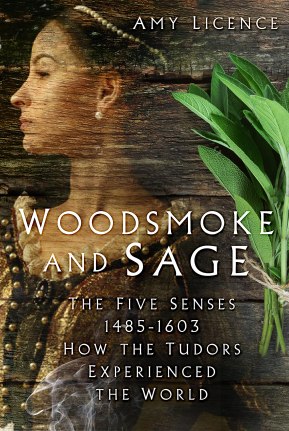 When we study history, we tend to focus on specific dates, certain people, and the stories that transformed countries forever, no matter how much of an impact they made. What is difficult about studying history is understanding how they experienced life. What did they see? How did they communicate? What did they hear during a typical day? What smells wafted through the air? How did their view on how the body worked affected what they ate and how they cured their illnesses? In her latest nonfiction book,” Woodsmoke and Sage: The Five Senses 1485-1603: How the Tudors Experienced the World”, Amy Licence has taken on the challenge of explaining the Tudor world that they knew through their senses.
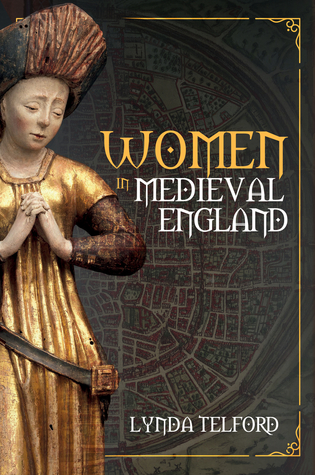 As students of history, we understand that aspects of society change all of the time, and sometimes the change is rapid, and other times it is positively glacial. One of those aspects of culture that we have seen slow and gradual change pertains to women’s rights. Today, women have more rights than they did in the past, and they can have careers, but is this a novel concept? What were the lives of women like in other periods of history, like the medieval period? In Lynda Telford’s book, “Women in Medieval England,” she explores women’s lives from the Anglo-Saxons to the Tudors to give us a picture of what rights and responsibilities women had during this period.
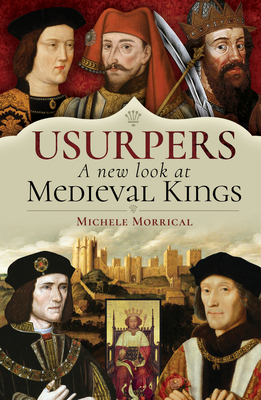
 A man who was young and had charisma would attract the attention of the Virgin Queen herself, yet that attention came with a price. The young man could not do what he desired and was buried in debt. His anger could not be quenched and he would end up rebelling against the very queen who brought him so much glory and honor. This rebellion would lead to his execution. The man’s name was Robert Devereux, 2nd Earl of Essex, and his story is told in Sarah-Beth Watkins’ latest bite-size biography, “Elizabeth I’s Last Favourite: Robert Devereux, 2nd Earl of Essex”.
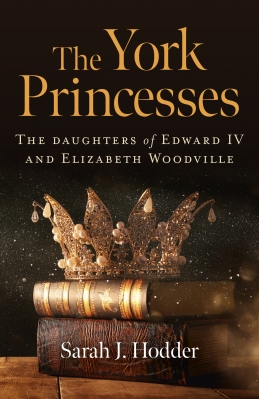 The life of a medieval princess was not a life of luxury that we often see in fantasy films. It can be filled with lovely gowns and castles, but it can change in an instance. Take, for example, the lives of the daughters of King Edward IV and Elizabeth Woodville. One minute their father was King of England and life was comfortable; the next minute, they were in the sanctuary, hoping and praying that they would be able to be reunited with their father one day. Their lives were planned out for them when their father was alive, but when Edward IV died unexpectedly in April 1483, the princesses found their world taking another turn. We know what happened with the eldest daughter, Elizabeth of York, as she married Henry VII and became the first Tudor queen, but what about her sisters? In her second book, “The York Princesses: The Daughters of Edward IV and Elizabeth Woodville”, Sarah J. Hodder explores what happened to Elizabeth of York and her sisters once the House of York fell and the Tudors became the new dynasty.
 Adventures of a Tudor Nerd