
Blog Update: 500,000 Views! Thank You All So Much!

Hey my fellow history nerds!

I know this is not the kind of post that you normally see on the blog; it’s usually something you will see on the Facebook page, but this was such a big milestone that I felt like it warranted a blog post. 

As you can tell from the title of the post, Adventures of a Tudor Nerd has officially crossed over 500,000 views, which is insane to think about. Seven years ago, when I started after I was a guest author for Rebecca Larson’s blog, Tudor Dynasty. It was a lot of fun, but Rebecca said that I should try writing my own history blog. I wasn’t sure what I could write about since all I am passionate about are history and books, so I decided to give history book blogging a try and post book reviews.

And the rest was history.

I wasn’t sure if anyone would be interested in what I had to say when it came to history books, but you guys have been such an amazing community. I started with the Tudors because that was the dynasty that I felt the most comfortable discussing, but as time has gone on, I have added even more periods of the past; the Anglo-Saxons and the Vikings, the Plantagenets and the wider medieval world, the Wars of the Roses, the Tudors, and most recently the Stuarts. It’s been fun to share my thoughts on books with all of you, but I also believe that authors should be able to promote their books on my blog through guest post, to bring things full circle. Finally, I enjoy talking about TV shows and movies that I have watched and want to rant about, as well as poetry that I find profound. 

I have been blown away by the amount of love and support that I have received over the years. I am just a history nerd with a love for the past and books. Thank you all so much for being part of this crazy, amazing adventure. To the publishers and authors I have worked with, thank you for allowing me to read some truly amazing books, and thank you for becoming mycolleagues and friends. 

This has been such an unbelievable journey so far, and I can’t wait to continue to embark on even more history adventures.

Keep on taking your own history adventures and never stop learning from the past.

Here’s to more history adventures!

-Heidi

Guest Post: “Spotlight for ‘Oscar’s Tale’ by Chris Bishop”

I am pleased to welcome Chris Bishop to my blog today to share a spotlight for his novel, “Oscar’s Tale.” I want to thank Chris Bishop and The Coffee Pot Book Club for allowing me to participate in this blog tour.

Blurb: 

Oscar’s Tale is that of a Saxon boy who sets out to find and rescue his father who has been taken by Viking slavers.  

The story begins in 877, just prior to the Viking attack on Chippenham in which King Alfred was routed. Against this backdrop, Oscar is obliged to set out on his all but impossible quest and quickly becomes embroiled in all that’s going on in Wessex at this turbulent time, culminating in him playing a small but important part in the battle at Edington. 

But this is not just a story about blood thirsty battles and fearsome warriors, it’s about a boy struggling to live up to his father’s reputation as a warrior and trying to find his place in a dangerous and uncertain world. For that, he is forced to confront many dangers and earn the respect of others who are far above his station. Along the way he also finds love – albeit at a cost far higher than most would have been willing to pay. 


‘For is it not the wish of every man that his son will achieve more in life than he did?’ 

Buy Link:

Universal Buy Link: https://books2read.com/u/bwQQ99  

Author Bio 

Chris was born in London in 1951. After a successful career as a Chartered Surveyor, he retired to concentrate on writing, combining this with his lifelong interest in Anglo Saxon history. 

His first novel, Blood and Destiny, was published in 2017 and his second, The Warrior with the Pierced Heart, in 2018 followed by The Final Reckoning in 2019 and Bloodlines in 2020.  Together they form a series entitled The Shadow of the Raven, the fifth and final part of which – The Prodigal Son was published in 2023. 


Chris has published numerous blogs about various aspects of Anglo Saxon history and is a member of the Historical Writers’ Association. 


Author Links


Website:

www.chrisbishopauthor.com  

Twitter:

https://x.com/CBishop_author  

Goodreads:

https://www.goodreads.com/author/show/207271.Chris_Bishop  

Book Review: “Murder in Anglo-Saxon England: Justice, Weregild, Revenge” by Annie Whitehead

What’s better than snuggling up on a cold winter’s day and reading a murder mystery? How about an entire book about historical murders and the laws about murder and revenge? While we do have murder mysteries in every century and every walk of life, the farther back into the past we go, the more difficult it can be to discern fact from fiction. Take, for example, the stories of murder, betrayal, and revenge in Anglo-Saxon England. Annie Whitehead hopes to reveal a deeper understanding of this period through numerous murder cases in her latest book, “Murder in Anglo-Saxon England: Justice, Weregild, Revenge.”
I want to thank Amberley Publishing for sending me a copy of this book. I have read a few of Annie Whitehead’s books, including “Mercia: The Rise and Fall of a Kingdom,” and “Women of Power in Anglo-Saxon England,” so when I heard that she was writing a new book about this era, I knew I wanted to read it. Whitehead has always been able to make this era come alive, so I hoped to learn more about this period in English history.

Whitehead begins by explaining that she will cover close to a hundred cases of murder and revenge in this book from the 7th century to the 11th century. Each chapter focuses on a different kingdom: Northumbria, Mercia, East Anglia, and Wessex, as well as a different concept like laws, women killers, and Anglo-Saxon saints. It is a lot of ground to cover in a book, but she also decided to include the different law codes that defined the era and how murder was dealt with in a legal sense. Whitehead also decided to take on myths and legends of how saints and martyrs were killed, as well as the mythological killing method of the Blood Eagle employed by the “Vikings.”

There are so many colorful stories full of betrayal, political intrigue, and legal implications. These stories and myths of killings tell us more about the period of the past. Anglo-Saxon England was not a lawless society as we do see how taxes like weregild and their punishments for murder evolved. These were not just some stories written down on paper. The men, women, and children lived and ultimately died at a time when England was figuring out its identity. Although most of these incidents are isolated cases of murder and revenge, the St. Brice’s Day Massacre saw the execution of many Danish men on English soil.

I found this book extremely informative and easy to follow. Whitehead does it again and makes the world of Anglo-Saxon England come alive with her extensive research and her writing style. I may be a novice to the Anglo-Saxon period in English history, but it is books like this that make me want to continue to study this era. If you are interested in murder mysteries from the Anglo-Saxon world, I highly recommend you read “Murder in Anglo-Saxon England: Justice, Weregild, Revenge” by Annie Whitehead.

Book Review: “Foundation: The History of England From Its Earliest Beginnings to the Tudors” by Peter Ackroyd

FoundationEngland is a nation that is rich in history and conflicts galore. Through the centuries, England has seen so much change. Many of us know the stories of the medieval and the Tudor kings and queens of England, covered in numerous books, but Peter Ackroyd has taken this concept a step forward. Ackroyd embarked on an epic quest to chronicle the history of England from its prehistoric origins to the modern age. In “Foundation: The History of England From Its Earliest Beginnings to the Tudors,” Peter Ackroyd begins his epic journey into the past to explore the origins of English history.
This book is one that I have seen every time I go to a bookstore and look at the history nonfiction section. I have heard great things about Ackroyd and this series, however, I have yet to read any of his books. It was always an intriguing book to me, but it was one that I never read until now.

Ackroyd has decided to begin his book with one of the most ancient sites in all of England, Stonehenge, explaining that before the first stone was set in Stonehenge, the origins of England were centuries old. We travel through the Stone Age, the Bronze Age, the Iron Age, and into Roman Britain before we dive into the time of the Anglo-Saxons and the Viking invasions. There is a lot of history to cover in less than a hundred pages, but Ackroyd can get his point across about how much change England went through during that time and that it continued to grow throughout the following centuries.

We see the impact that the Norman Conquest and William the Conqueror’s reign. The fall of the Normans with the death of King Stephen led to the rise of the Plantagenets and the reign of King Henry II. It was the Plantagenets that Ackroyd focuses the bulk of this book on as the dynasty lasted over 300 years and witnessed much change. From the Crusades, the Hundred Years War, and the Wars of the Roses, to the Black Death, rebellions, and religious changes, the Plantagenets saw England through major highs and lows. It was not just the monarchs that Ackroyd highlights in this book, he also examines how normal life changed with each dynasty and through the centuries, which adds a bit of depth to his examination of the past. Ackroyd concludes with the fall of Richard III and the rise of Henry VII and the Tudor dynasty. I wish Ackroyd would have waited until his next book to discuss the reign of Henry VII, but it is a minor qualm in the long run.

Overall, I found this an enjoyable and informative read. This is not only a tale of warring kings but a story of the people of England and what makes England so unique. A story whose origins are centuries old, but are rich and vivid in details. I look forward to seeing how Ackroyd will chronicle the Tudors and the rest of England’s history. If you want a book that explores as much of the beginnings of England’s story through multiple dynasties and dramatic changes, I would suggest you read, “Foundation: The History of England From Its Earliest Beginnings to the Tudors” by Peter Ackroyd.

Book Review: “Sword Song”(Book Four of the Saxon Stories series) by Bernard Cornwell

sword songThe year is 855, and the country that one day will be known as England is relatively peaceful. The Danes have their kingdom in the north, while the Saxons, under King Alfred, rule Wessex in the south. Uhtred of Bebbanburg, a Saxon man raised by Danish warriors, lives with his wife Gisela and his children in Wessex, where he is sworn to protect Alfred and his family. It is a touchy alliance, but when rumors about a dead man speaking reach Uhtred’s home, he knows that he must pick up Serpent-Breath once again and make a choice that could change the direction of England as a whole. What do the dead man and new Viking invaders have in plan for Uhtred, and how will it affect Wessex and the rule of King Alfred? Another engaging adventure for Uhtred of Bebbanburg is book four of The Saxon Tales, “Sword Song” by Bernard Cornwell.
As someone who has grown to love the adventures of Uhtred of Bebbanburg, first from the TV show “The Last Kingdom” and now through the books, I wanted to continue the journey through the books. There is something so compelling about this Saxon world that Bernard Cornwell crafted with love and attention.

We join Uhtred and his men, Sihtric and Finan, on a night raid where they come across a brand new batch of Vikings. When Uhtred returns home, Aethelwold tells him how a dead man was brought back to life and says that he would be the King of Wessex and Uhtred would become King of Mercia. A far-fetched tale, but Uhtred decides that he must check it out, even if that means breaking his oath to Alfred. It is when he hears the dead man speak himself that he meets Haesten, and he hears about the Viking brothers Siegfried and Erik, who have lofty ambitions.

Meanwhile, in Alfred’s court, Alfred’s daughter Aethelflaed marries Aethelred of Mercia to form a strong alliance. It looks like it is a perfect match. Behind closed doors, Aethelred is abusive to Aethelflaed when Siegfried and Erik attack. Uhtred and Aethelred must reluctantly work together for the survival of Wessex and England as a whole.

Epic battles, twisted political ploys, and romance all intertwine in this novel as Uhtred works hard to fulfill his oath to Alfred. “Sword Song” is a bit slower in pace compared to the first three books in the series, but I see it as Cornwell showing that not every adventure with Uhtred is going to be fast-paced. There will be times when he has to negotiate and think methodically to ensure his mission is complete and no one he cares about will be harmed. It is a different side to Uhtred of Bebbanburg’s story, but it is one that I appreciate. If you have enjoyed the first three books in the Saxon Tales series, you need to read “Sword Song” by Bernard Cornwell.

Book Review: “The Pale Horseman (Book Two of the Saxon Stories series) by Bernard Cornwell

68528._SY475_England is in danger of falling to its Danish invaders. The kingdoms of East Anglia, Northumbria, and Mercia have already fallen; all that stands in the way of complete Danish domination is Wessex and its king Alfred. Yet this king is more of a saint than a warrior, so Alfred desperately needs a man who knows how to fight. A man like Uhtred of Bebbanburg is a skilled warrior even though he doesn’t always see eye to eye with Alfred on matters of faith. When Alfred and his family become fugitives, he must rely on Uhtred to help restore him and his family to ensure Wessex does not fall. This is the premise of book two of The Saxon Stories series by Bernard Cornwell, “The Pale Horseman.”

Cornwell begins this book where we left off in “The Last Kingdom” after the battle of Cynuit and the death of Ubba by Uhtred. Uhtred believes that he will be treated as a hero by Alfred and will receive rewards, but he is wrong. Instead of going straight to Alfred after the battle, Uhtred dallies to rescue his Christian wife Mildrith and his son Uhtred, which allows his rival Odda the Younger to take credit for Ubba’s death. Furious at his king, Alfred shows how naive he is, forcing Alfred to humiliate Uhtred in front of the entire royal court by penance; Uhtred decides to take his men and his friend Leofric on some raids in the northern part of England.

Uhtred falls for the beguiling beauty and shadow queen Iseult during this raiding expedition, even though he still has a wife and child at home. Torn between his sworn loyalty to the Saxons through Alfred and the love for the Danes that raised him as a boy and taught him to fight, Uhtred must find his path and follow his destiny wherever it may lead. Unfortunately, destiny’s path for Uhtred and Alfred led to the near-collapse of Wessex when the Danes invaded, forcing Alfred and his family to seek refuge in the most unlikely of locations, in the middle of a swamp. It is here when everything seems so dark, and all hope is lost when Alfred and Uhtred choose to bury the hatchet for the time being and fight for an idea of a united England.

Cornwell expanded the world of Uhtred and Alfred to give us a glimpse of the conflicts that shaped England in the 9th century. With the growing conflicts, Cornwell grows his colorful cast of characters. We are introduced to Aethelwold, the slimy nephew of Alfred who desires the crown., the warrior nun Hild who is willing to fight for what she believes, and the vicious Viking leader Steapa. With new conflicts come new elements of grief, loss, rage, and renewing hope in our characters as they struggle to survive in such a turbulent time.

If you want to embark on another adventure with Uhtred of Bebbanburg after reading “The Last Kingdom,” I recommend reading “The Pale Horseman” by Bernard Cornwell. I enjoyed “The Pale Horseman” just as I did when I read “The Last Kingdom.” Cornwell’s writing style is so engaging that sometimes it didn’t feel like I was reading but watching these stories play out on the page.

Book Review: “The Last Kingdom”(Book One of the Saxon Stories series) by Bernard Cornwell

68527England in the 9th century was a land full of dangers and was deeply divided in the form of four main kingdoms; Northumbria, East Anglia, Mercia, and Wessex. One by one, the kingdoms began to fall to the Danes until there was only Wessex that stood in the way of complete conquest. There was a young man who became a king who stood in the way of the invaders. His name was King Alfred the Great, but he was not alone in his quest to unite all of England. His right-hand man was a Northumbrian nobleman who lost his birthright, was raised by the Danes, and had to choose a side in this conflict. His name was Uhtred of Bebbanburg, and his story begins in the first novel of The Saxon Stories series by Bernard Cornwell, “The Last Kingdom.”

This is not my first adventure into the world of The Last Kingdom. Like so many others, I have enjoyed the Netflix series based on this book series. Once I finished the television series, I wanted to read the books to see what other adventures Uhtred had during his lifetime.

Uhtred is our narrator throughout this journey in 9th century England, albeit a bit older. He began his tale in 866 when he was Osbert, the second son of Lord Uhtred of Bebbanburg, and the day the Danes attacked his home. When his older brother Uhtred is slain, Osbert takes up the name of Uhtred and is baptized by the priest Beocca. After a fierce battle, Uhtred’s father is killed, and he is adopted by Ragnar, the leader of the same Danes who have taken everything from him. Uhtred is at first treated as a mere enslaved person, but Ragnar and his family begin to treat Uhtred as one of their own as if he was a Dane. During the time with Ragnar, he is introduced to Ragnar the Younger and Brida.

To see how the Danes raised Uhtred and how he learned to fight in the shield wall was spectacular, and it shows why even though he was born in Northumbria, he believes he is a Dane. Uhtred’s relationship with Ragnar and his family is broken when one of Ragnar’s enemies kills Ragnar and his family, except for Ragnar the Younger, and Thyra. Uhtred and Brida flee and are reunited with Beocca, who introduces Uhtred to the young man who will become King Alfred and one of his military men, Leofric. All Uhtred wants to do is recover Bebbanburg, but destiny changes one’s direction in life.

This is the first book that I have read by Bernard Cornwell, and it was brilliant. The way he could craft a remarkable beginning to Uhtred’s epic tale is astounding. The interactions between Uhtred and those who come to shape him into the legendary man are enjoyable and eye-opening. Cornwell was able to weave the differences in the Danish and Saxon cultures to create a diverse world, one that is vibrant as it is deadly.

The battle sequences set this novel and this series apart from other historical fiction series that I have read. From minor skirmishes to savage shield walls and bloody sea battles, Cornwell was able to create some of the most realistic battle sequences I have ever read.

“The Last Kingdom” by Bernard Cornwell is a triumph. An absolute joy to read and one that I cannot recommend enough for anyone who wants a fantastic historical fiction adventure into 9th century England. I look forward to many more adventures with Uhtred of Bebbanburg.

Book Review: “River Kings: A New History of the Vikings from Scandinavia to the Silk Roads” by Cat Jarman

53242328 (1)When we think of Vikings, a few images come to mind. It is either the cartoonish image of warriors with horned helmets or blood-soaked warriors from TV shows like The Vikings. They are seen as men and women who fight Christians in England and France and sometimes into North America, but we do not see them in the east. With archaeological digs and discoveries being made recently, what can the artifacts tell us about the Viking world? In “River Kings: A New History of the Vikings from Scandinavia to the Silk Roads,” Dr. Cat Jarman takes her readers on a journey of discovery, following the trail of a single carnelian bead.
I have read a few books about Vikings, and of course, I have watched historical dramas about this period, but I wanted to know more. When I heard about this particular title, I was captivated by the prospect of learning something new about these warriors that have interested us for centuries.

Dr. Cat Jarman is a bioarchaeologist and field archaeologist passionate about discovering the truth about the Viking Age. She explains how each discovery was made and what scientific processes to discover the truth. We can figure out where these people might be from and what they ate during their lives through the teeth and bones of the bodies. But what is left beside the bodies gives us clues into what the Vikings were doing during their lifetimes, giving us a better understanding of these men and women from Scandanavia.

We began our journey in 2017 when Dr. Jarman possessed a single carnelian bead. The bead was discovered in Repton, along with a mass burial that included the bodies of a father and son. This single bead takes her on a journey to discover why the Vikings had this kind of bead and what other artifacts she found along the way might tell us about this group of people. From DNA analysis to silver coins that might have been used to buy enslaved people, statues of women in armor, nails from ships used to transport the warriors across the sea and rivers, and graffiti that was left behind give us hints about the Viking lifestyle.

Before I read this book, I thought Vikings and their journeys were limited to England, France, and Scandinavia because they are the most popular stories. Still, the Vikings traveled as far as the Middle East and perhaps India and the Silk Road. The way Dr. Jarman balanced scientific and archaeological research with the historical and mythological narrative into a thrilling book to read.

“River Kings: A New History of the Vikings from Scandinavia to the Silk Roads” by Cat Jarman is a masterpiece that anyone who loves history, Vikings, or archaeology will adore. If you think you know the history of the Viking Age, I urge you to read this brilliant book. I can’t wait to hear more about Dr. Cat Jarman’s research into this age and what else will be discovered soon.

Book Review: “Mercia: The Rise and Fall of a Kingdom” by Annie Whitehead

38243840._SY475_England’s history is full of daring moves and colorful characters, but it is also very ancient compared to other countries. We often considered the “start” of English history in school as the Norman Conquest in 1066. Nevertheless, this was just a stage in the massive story of the island. We have to consider those who called England their home; those who knew England, not as a unified country, but seven kingdoms known as the heptarchy. The most famous of these seven kingdoms was Wessex, the last kingdom, but their mortal enemy had a rich history of their own. Mercia was a thriving kingdom for hundreds of years, with colorful characters that many people are not familiar with. Annie Whitehead has taken the tales of this forgotten kingdom to the forefront with her book, “Mercia: The Rise and Fall of a Kingdom.” 
I would like to thank Amberley Publishing for sending me a copy of this book. I was looking forward to learning about the Mercians and why their stories are significant in Anglo-Saxon England. My knowledge about this kingdom is minutiae, although I know some famous figures, including Lady Godiva, Penda, and Aethelflaed, from other books written by Whitehead. 

Whitehead begins her journey into this kingdom’s rich history with the story of the 7th-century ruler Penda, the Pagan King of Mercia. His tale of surviving savage battles and making Mercia into a powerhouse set the standard for Mercian kings that would follow. His son and successor, Peada, would bring Christianity to Mercia, and the diocese of Lichfield, which still exists today, would be formed shortly afterward. Mercia was a kingdom that fought for survival against the remaining six realms of the heptarchy, especially against Wessex. Of course, it was not just other Anglo-Saxons that the Mercians were pitted against, as we see the rise of the Vikings with their Great Heathen Army and  Welsh princes fight for control of the isle. 

Mercia’s kings would fall into obscurity as Mercia turned from a kingdom to an earldom with the uniting of the heptarchy into one nation under one king. We know about Mercia’s history through scant details included in annuls and accounts written by men like Henry of Huntingdon and Bede and chronicles like the Anglo-Saxon Chronicle. Whitehead has combed every source to give her readers the most comprehensive history of a realm that has been forgotten over time. The very nature is academic, yet Whitehead tries to engage those armchair historians who might be familiar with characters like Godiva, Aethelbad, and Offa with tales of murder and intrigue. My advice for future readers of this title is to take notes as there is a plethora of information, especially royal genealogy. 

Mercia is a bit out of my comfort zone when it comes to my knowledge of its history, but that just made reading this title even more thrilling. If you want a story of one of the ancient Anglo-Saxon kingdoms of England, you should check out, “Mercia: The Rise and Fall of a Kingdom” by Annie Whitehead. Whitehead has brought the tales of Mercia to a modern audience in the best way possible.

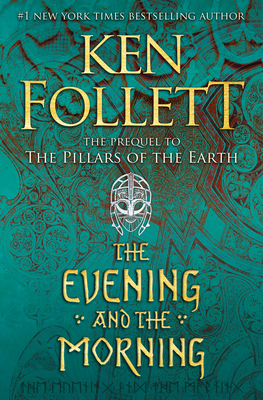
Book Review: “The Evening and the Morning” by Ken Follett

49239093The year is 997 and England is in a dire situation. Fears of invasions from the Welsh and the Vikings leave the Anglo- Saxon residents rattled while those in power take advantage of their citizens. Chaos reigns supreme as those who rule the towns are in constant power struggles between themselves and their king, Ethelred the Unready, with the average villagers caught in the middle, like the villagers of Dreng’s Ferry. It is in this small village where three characters find their lives intertwined with the political and social drama. A young boatbuilder named Edgar endures heartache and sorrow when the Vikings attack his home. A Norman noblewoman named Ragna follows her heart to marry the man she loves and travels to a faraway land but soon finds out how difficult that love can be. Finally, a monk named Aldred works hard for the people while dreaming of transforming his meek abbey into a lively center of learning. Their tales are masterfully woven together in the much-anticipated prequel to the Kingsbridge series by Ken Follett. This is “The Evening and the Morning”. 

When I heard that Ken Follett was writing a prequel to his Kingsbridge series, I was ecstatic. I read the Kingsbridge series a few years ago for the first time and I fell in love with the town of Kingsbridge. I wanted to know more about the origins of this town and I wanted another engrossing tale of strength and struggle, which Follett delivers in this brilliant novel. 

Follett introduces his audience to his colorful cast of characters with a Viking raid in the small village of Combe, the home of Edgar the boatbuilder. He lost everything that he cared about in one night, so he and his remaining family must pick themselves up and rebuild their lives in the town of Dreng’s Ferry. Edgar shows grit and determination as he realizes what is truly important in his life. Ragna is a vivacious Norman noblewoman who fell head over heels in love when she met a charming Englishman named Wilwulf. She decides to leave everything that she knows behind to marry a man she believes she knows very well. However, she soon realizes that Wilwulf and his family are not who she imagined. Ragna fights with vigor for what she believes is right for her immediate family and the people she has sworn to protect from her husband’s family. Her tenacity and courage to weather the storms that life throws her way are truly admirable. Finally, there is the academic monk Aldred who wants to pursue knowledge to better humanity. He believes that Dreng’s Ferry can become greater than what the people believe is possible, which often puts him on a political collision course with Wilwulf’s power-hungry family. 

The stories of these three dynamic protagonists are interwoven to create a sensational prequel to the fabulous Kingsbridge series. This novel is riveting with the gorgeous storytelling that readers have come to expect from Ken Follett. What I love is that Follett’s focus is not on the royal family, King Ethelred and Queen Emma, but the people who built England from the ground up. It is the nobles and the village people that had to endure every decision and mistake that the crown made. They were the ones who suffered when raiders like the Vikings pillaged towns and killed their loved ones. They were the ones who had to fight back time after time to make sure that their families survived. To focus on three people from three different walks of life gives the audience a complete picture of the fictitious town of Dreng’s Ferry. 

I applaud Follett for going back and giving his fans the prequel to the Kingsbridge series that they craved. To see how the town of Dreng’s Ferry became King’s Bridge was a delight. I had to slow down my reading pace to make sure I was fully immersed in the tale that Follett wrote. I loved every minute of reading this prequel and now I want to reread the Kingsbridge series. If you are a fan of Ken Follett’s Kingsbridge series or if you want to jump into a series that is a fabulous historical escape, “The Evening and the Morning” is a must-read. A sensational prequel to one of my all-time favorite historical fiction series.