Book Review: “The Empty Throne” (Book 8 of the Saxon Stories Series) by Bernard Cornwell

There’s nothing like a quest to keep a man going, even on the brink of death, but in the case of Uhtred of Bebbanburg, he has several quests. His main goal is to reclaim his birthright, Bebbanburg, but he also wants to help fulfill Alfred’s dream of uniting the kingdoms to create England. However, life can present even more challenges, and Uhtred knows this all too well. Uhtred not only has to save a royal heir and his daughter, but he also must find the sword that wounded him and place a woman on a throne to rule in a time when women were seen rather than heard. It’s a lot to do, but if anyone is up to the task, it is Uhtred of Bebbanburg. The question is, will he survive? Bernard Cornwell brings us another action-packed novel full of adventures in book 8 of the Saxon Stories series, “The Empty Throne.”

Cornwell begins with Uhtred, the young Uhtred, who is serving Lady Aethelflaed as she fights against the Danes. Their enemies believe the elder Uhtred is dead, but he is far from it. Unfortunately, Uhtred the elder was injured during his fight with Cnut, and the injury is causing him pain. But a little pain is not going to stop Uhtred from fulfilling his oaths. He finds out that Lord Aethelhelm is after Aethelstan, the illegitimate son of King Edward, who actually might be legitimate. Aethelstan is staying safe with Uhtred’s daughter Stiorra, but when Uhtred realizes they are in danger, he rushes to their aid. What Uhtred does not realize is that his daughter Stiorra is a pagan and is stronger than he thinks.

Once things are settled with his family, Uhtred receives word that Lady Aethelflaed will be fighting for the throne of Mercia as her husband Aethelred is dying. It’s a risky endeavor, as women did not rule during this time, but Uhtred the Elder comes up with a plan to make sure she becomes Aethelflaed, Lady of the Mercians. Finally, Uhtred must find Cnut’s sword Ice-Spite, and the journey will lead him to Wales, a great battle, and one of Uhtred’s children leaving on their own adventure.

This is so far my favorite book in the series. The fact that we got to see Aethelflaed become the Lady of the Mercians while Uhtred stood by her side. We got to see Uhtred the Younger and Stiorra grow up in this book and start on their own paths. And of course, we get to see Uhtred of Bebbanburg and his men being badasses in battle. Such a fun and thrilling novel, and I can’t wait to see where Cornwell takes this series. If you are a fan of the first seven books in the Saxon Stories series, you will love “The Empty Throne” by Bernard Cornwell.
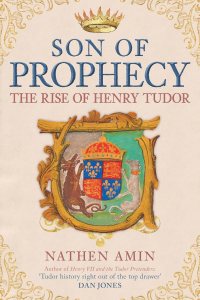
Book Review: “Son of Prophecy: The Rise of Henry Tudor” by Nathen Amin

The date is August 22, 1485, and a young man stands in the middle of a battlefield. He has done what seemed nigh impossible, he defeated the last Plantagenet king Richard III to become the new King of England. His heritage makes this man unique and qualified to start a new dynasty. His mother’s family the Beauforts have been explored quite heavily by historians and authors alike. They see this victory as a change in English history whereas his father’s family sees it as a sign of something deeper. To the Tudors and Henry’s fellow Welshmen, it is the fulfillment of a centuries-old prophecy. So who were Henry Tudor’s ancestors and what did it mean for Henry to be the titular Son of Prophecy? Nathen Amin tells the remarkable story of the Tudors and how their struggles and triumphs led to Henry Tudor taking the throne in his latest book, “ Son of Prophecy: The Rise of Henry Tudor.”
I want to thank Amberley Publishing for sending me a copy of this book. I have enjoyed Amin’s previous books, “The House of Beaufort: The Bastard Line that Captured the Crown” and “Henry VII and the Tudor Pretenders: Simnel, Warbeck, and Warwick,” When I heard that he was writing a book about the origins of the Tudors from the Welsh perspective, I knew I had to read it. I don’t know much about Welsh history, so I was looking forward to learning more. 

Amin begins by explaining that while those who study the life of Henry Tudor know that he was Welsh, they don’t highlight his Welshness as a unique aspect of his life. However, as Amin argues, it is the king’s Welsh heritage that makes his story so fascinating as the Tudor story in Wales spans eight generations and it is the story of warriors and diplomats. We begin with the warrior Ednyfed Fychan, who served Llwelyn ab Iorwerth Prince of Ewynedd during the Welsh War of Independence. Now, for those who are paying attention, you will notice that his surname is not Tudor, but Amin takes the time to explain the origins of the Tudor name as well as how English and Welsh relationships changed over time, starting at the time of the Saxons to the start of the Tudor dynasty. 

What I found fascinating is how the family that would later be known as the Tudors in English history were not afraid to get their hands dirty and be at the forefront of change for Wales. They fought tooth and nail for their Welsh rights and those who considered themselves the Prince of Wales, even if it meant putting their lives at risk. It was the stories of these men who created the foundation for Owen ap Maredudd ap Tudur (Owen Tudor) to leave his native Wales for England, work under Walter Hungerford, fall in love and marry the Dowager Queen Katherine of Valois, and have his sons Edmund and Jasper Tudor. This is the point that most people know as the “origins of the Tudors,” but by going back, Amin is showing his audience the depth of Henry’s Welsh roots and it would be on that battlefield on that August day where that Welsh loyalty would become a defining factor between victory or defeat. 

I was enthralled by this book and the copious amounts of notes that I took while reading. It was so much fun learning about historical events and figures that were unfamiliar to me in the context of the Tudor story. This book will revolutionize how you view the Tudors and how Henry Tudor gained the throne. If you are a Tudor nerd who wants to learn more about the Welsh connections to this dynasty, “Son of Prophecy: The Rise of Henry Tudor” by Nathen Amin is an absolute must-read.

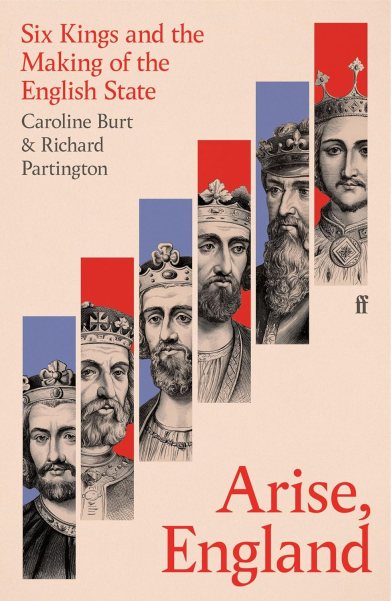
Book Review: “Arise, England: Six Kings and the Making of the English State” by Caroline Burt and Richard Partington

Arise, EnglandLike many other countries, England has been through growing pains when it comes to reforming its political, military, and judicial systems. None more so than the pains of the medieval period, specifically from 1199 to 1399. In those two centuries, there were six Plantagenet kings, each with a different style of being king and a different way of changing England with each reign. We often think that the biggest change to England’s political history during this time was the Magna Carta, but in fact, that was only just the beginning. Caroline Burt and Richard Partington have combed the archives to do a deep dive into each reign of these Plantagenet kings, examining the political and judicial changes that happened in a short period. Their comprehensive book is entitled, “Arise, England: Six Kings and the Making of the English State.”
I want to thank Faber & Faber for sending me a copy of this book. I have seen this particular title circulating on social media and after the endorsement it received from Dan Jones, I decided to give it a shot. I am not a huge fan of political history as I find it a tad dry, but I wanted to give myself a challenge.

This book is broken into six different chapters, a chapter for each king and their reign, but the chapters are separated by sections focusing on distinct aspects of their reigns. The six kings that Burt and Partington have chosen to highlight in this book are King John, Henry III, Edward I, Edward II, Edward III, and Richard II. In these two centuries, England experienced so much change, starting with the Magna Carta, the Black Death, plenty of revolts, overthrowing kings, the establishment of what we now consider Parliament, and the relationship between the king and his nobles. That does not include external forces such as Ireland, Scotland, Wales, and France wanting to conquer England as their own. When you consider how much these kings had to face, it is no wonder that they had to change England’s political system gradually.

Personally, this book was a bit of a struggle for me with how dense and the amount of information that was presented. While it offered great insight and was meticulously researched, there were parts for me that were dry to read. If you do want to read this as a casual read, I would suggest taking it slow so that you can fully understand everything that is being presented. If you are someone who likes political history and how it changed over centuries in England, “Arise, England: Six Kings and the Making of the English State” by Caroline Burt and Richard Partington might be the book for you.

Guest Post: “His Castilian Hawk” by Anna Belfrage- AudioBook Blast

His Castilian Hawk Tour BannerToday, I am pleased to welcome to my blog Anna Belfrage to promote the audiobook for her novel, “His Castilian Hawk.” Thank you, Anna Belfrage and The Coffee Pot Book Club, for allowing me to participate in this tour. 

Blurb:

For bastard-born Robert FitzStephan, being given Eleanor d’Outremer in marriage is an honour. For Eleanor, this forced wedding is anything but a fairy tale. 

Robert FitzStephan has served Edward Longshanks loyally since the age of twelve. Now he is riding with his king to bring Wales under English control once and for all. 

Eleanor d’Outremer—Noor to family—lost her Castilian mother as a child and is left entirely alone when her father and brother are killed. When ordered to wed the unknown Robert FitzStephan, she has no choice but to comply. 

Two strangers in a marriage bed are not accessible. Things are further complicated by Noor’s blood ties to the Welsh princes and by covetous Edith, who has warmed Robert’s bed for years. 

Robert’s new wife may be young and innocent, but he is soon to discover that she is not only spirited and proud but also brave. Because when Wales lies gasping and Edward I exacts terrible justice on the last prince and his children, Noor is determined to save at least one member of the House of Aberffraw from the English king.

Will years of ingrained service have Robert standing with his king, or will he follow his heart and protect his wife, his beautiful and fierce Castilian hawk?

His Castilian Hawk audiobook coverBuy Links: 

The Kindle ebook of this title is available to read on #KindleUnlimited.

Universal Link: http://myBook.to/HISHAWK

Audible Amazon: https://www.audible.com/pd/His-Castilian-Hawk-Audiobook/B0BLPXJL8M 

Bingebooks : https://bingebooks.com/book/the-castilian-hawk 

NOOK (Barnes and Noble): https://www.barnesandnoble.com/w/his-castilian-hawk-anna-belfrage/1137734133 

Chirp: https://www.chirpbooks.com/audiobooks/his-castilian-hawk-by-anna-belfrage 

Libro: https://libro.fm/audiobooks/9789198507249 

Storytel: https://www.storytel.com/se/sv/books/3555095 

Scribd: https://www.scribd.com/audiobook/600535465/His-Castilian-Hawk 

Kobo & Walmart: https://www.kobo.com/us/en/audiobook/his-castilian-hawk 

Google Play: https://play.google.com/store/audiobooks/details/Anna_Belfrage_His_Castilian_Hawk?id=AQAAAEBCAX5BLM 

Audiobooks: https://www.audiobooks.com/audiobook/his-castilian-hawk/640346 

Anna BelfrageAuthor Bio:

Anna Belfrage

Had Anna been allowed to choose, she’d have become a time traveler. As this was impossible, she became a financial professional with two absorbing interests: history and writing. Anna has authored the acclaimed time-traveling series The Graham Saga, set in 17th-century Scotland and Maryland, and the equally acclaimed medieval series The King’s Greatest Enemy, set in 14th-century England.

Anna has also published The Wanderer, a fast-paced contemporary romantic suspense trilogy with paranormal and time-slip ingredients.

Her Castilian Heart is the third in her “Castilian” series, a stand-alone sequel to her September 2020 release, His Castilian Hawk. Set against the complications of Edward I’s invasion of Wales; His Castilian Hawk is a story of loyalty, integrity—and love. In the second installment, The Castilian Pomegranate, we travel with the protagonists to the complex political world of medieval Spain. This latest release finds our protagonists back in England—not necessarily any safer than the wilds of Spain!

Anna has also authored The Whirlpools of Time, in which she returns to the world of time travel. Join Duncan and the somewhat reluctant time-traveler Erin on their adventures through the Scottish Highlands just as the first Jacobite rebellion is about to explode! 

Anna’s books have been awarded the IndieBRAG Medallion, she has several Historical Novel Society Editor’s Choices, and one of her books won the HNS Indie Award in 2015. She is also the proud recipient of various Reader’s Favorite medals and has won different Gold, Silver, and Bronze Coffee Pot Book Club awards.

Find out more about Anna and her books, and enjoy her eclectic historical blog on her website, http://www.annabelfrage.com.  

Social Media Links:

Website: http://www.annabelfrage.com

Twitter: https://twitter.com/abelfrageauthor

Facebook: https://www.facebook.com/annabelfrageauthor

Instagram: https://instagram.com/annabelfrageauthor

Book Bub: https://www.bookbub.com/profile/anna-belfrage

Amazon Author Page: http://Author.to/ABG

Goodreads: https://www.goodreads.com/author/show/6449528.Anna_Belfrage

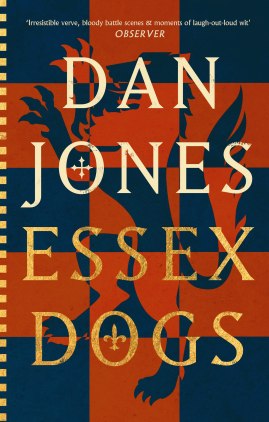
Book Review: “Essex Dogs” by Dan Jones

60841074The year is 1346, and numerous English ships have landed on the shores of France. King Edward III, his son Edward of Woodstock, and his lords launched the first stage of what would be known as the Hundred Years’ War. Amongst the English royalty, nobility, and regular soldiers, are companies of men who came of their own accord for money and glory. One company of men consists of ten men known as the Essex Dogs, led by Loveday FitzTalbot. They are not like the other groups. They do not fight for money or glory; they fight for each other. In the horrors of war in a foreign land, can the Essex Dogs keep their promise and stay alive? Dan Jones introduces the world to these ten men and the early stage of the Hundred Years’ War in his first historical fiction novel, “Essex Dogs.”
I have read nonfiction books by Dan Jones for years now, and I have thoroughly enjoyed the amount of detail he puts into each book. When Dan Jones announced that he would dive into the world of historical fiction, I was fascinated to see how well he could handle the transition from historical nonfiction to fiction. I was pleasantly surprised by how this amazingly gripping novel.

This story, from the landing in France to the Battle of Crecy, is told through the eyes of Essex Dogs, a rag-tag group of men from England, Scotland, and Wales. Each man has a past that they are trying to run away from, but their loyalty to each other unites them to finish their forty days of service to King Edward III. Some Essex Dogs include the pint-size fighter Pismire, the strong Scotsman, and the loyal Millstone. We also have crazy priest Father, the young and naive archer Romford, and their fearless leader, who will do anything to keep his group together, Loveday FitzTalbot.

I love the colorful interactions that the Essex Dogs had between one another and with the actual people who were involved in the campaign to Crecy. Each soldier’s struggles, from injuries and drug use to strategies and the punishments for not following royal commands, were written brilliantly. However, one area in which Jones excelled was portraying the brutality of war. The battles and skrimmages Jones included were so believable that I had to collect my breath after each battle before I went back to ensure the Essex Dogs were okay. Even the fights between companies were thrilling and will stay with me for a long time ( I am looking at you, chapter 12).

I honestly did not know what to expect when I ordered this book back in February, but it was a masterpiece. I can’t believe it took Dan Jones this long to write historical fiction, but I cannot wait for the next book in this trilogy. It is easily one of my favorite historical fiction novels of this year. If you want an electrifying novel with a compelling cast of characters set at the beginning of the Hundred Years’ War, “Essex Dogs” by Dan Jones is a must-read.

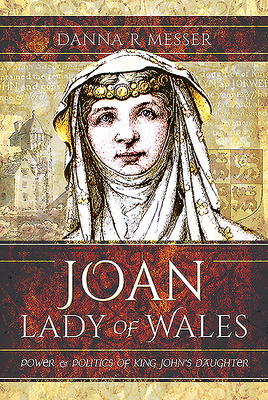
Book Review: “Joan, Lady of Wales: Power and Politics of King John’s Daughter” by Danna R. Messer

51351935Medieval women held many different titles that defined their roles and their connections. Mothers, daughters, and wives tended to be the most popular and the most common. Titles such as queen, political diplomat, and peace weaver tend to be rare and given to women of power. Yet, these words accurately depict a unique woman who lived during the Angevin/ Plantagenet dynasty. She was the illegitimate daughter of the notorious King John and the wife of Llywelyn the Great, a Prince of Wales. She worked tirelessly to establish peace between England and Wales, yet she has not received much attention in the past. Her name was Joan, Lady of Wales, and her story is brought to life in Danna R. Messer’s book, “Joan, Lady of Wales: Power and Politics of King John’s Daughter”.

I would like to thank Pen and Sword Books and Net Galley for sending me a copy of this book. I did not know much about Joan, except what I read about her in Sharon Bennett Connolly’s latest book, “Ladies of Magna Carta: Women of Influence in Thirteenth-Century England”. She sounded really interesting so when I heard about this book by Messer, I wanted to read it to learn more about Joan.

As someone who did not know a lot about Joan or medieval Wales, I found this book informative and enjoyable. Messer takes the time to explain what life was like for a royal Welsh couple, like Joan and Llywelyn, and why their marriage made such an impact in the long run. On paper, it was a princess from England marrying a prince from Wales, but what made this union so unique was the fact that Joan was the illegitimate daughter of King John and yet she was treated like a beloved legitimate child. Of course, this marriage was first and foremost, a political match, but it seemed to have developed into a strong and loving partnership, that endured 30 years of trials and tribulations.

One of the major trials that Joan had to deal with was to prevent England and Wales from going to war against each other. Truly a monumental challenge for, as Messer meticulously points out, Llywelyn and either King John or King Henry III were constantly having disagreements. I could just picture Joan getting exasperated that she had to try to calm things down between England and Wales every single time. Her diplomatic skills were truly remarkable, especially with how much influence she possessed in both countries.

Probably the most controversial event in Joan’s life is her affair with William de Braose, which led to his execution and her imprisonment. Messer does a good job explaining what we know about this situation. Unfortunately, like many events in Joan’s life, Messer has to use a bit of guesswork to try and put together the clues about Joan and figure out what happened. It can be a bit frustrating, but we have to remember that Joan lived over 800 years ago and women were not recorded as detailed as they are now or even 500 years ago. I think we can give Messer a pass on guessing where Joan was and what her role was in certain events.

Overall, I found this book enlightening. I think Messer’s writing style is engaging and she was dedicated to finding out the truth, as far as the facts would take her. I think this is a fantastic book for someone who needs an introduction to medieval Welsh royal lifestyle, the power of royal Welsh women, and of course, a meticulously detailed account of the life of Joan, Lady of Wales. If this describes you, check out “Joan, Lady of Wales: Power and Politics of King John’s Daughter” by Danna R. Messer.

Book Review: “The Castle in the Wars of the Roses” by Dan Spencer

When one thinks about Medieval Europe and buildings, we tend to focus on the luxurious castles with their impenetrable walls. It is a rather glamorous image, but the problem is it is not accurate. Castles were used for defensive measures to protect the kingdom from attacks, either from outsiders or, in some cases, from within. Medieval warfare and castles go hand in hand, but one conflict where we tend to forget that castles play a significant role is in the civil war between the Yorks and the Lancasters, which we refer to today as The Wars of the Roses. Dr. Dan Spencer has scoured the resources that are available to find out the true role of these fortresses, both in England and in Wales, in this complex family drama that threw England into chaos. His research has been compiled in his latest book, “The Castle in the Wars of the Roses”.
I would like to thank Pen and Sword Books and Net Galley for allowing me the opportunity to read this book. I enjoy studying the Wars of the Roses and when I heard that this book was coming out soon, I knew that I wanted to read it.

To understand this transition that castles and the roles they played during this tumultuous time undertook, Spencer, takes us on a journey from the Norman Conquest to the 1450s. It was informative to see how castles transformed to fulfill different roles over distinct periods.

Spencer’s book shares some similarities with previous books that I have read about the Wars of the Roses in the fact that it does highlight the main battles and the main people who were vital in this conflict. However, Spencer’s book dives a bit deeper into the military aspects of the wars to show what makes this conflict so unique. What makes the Wars of the Roses so fascinating is that, compared to other famous medieval wars, castles were not the central focus for battles. Instead, castles during this period were used for garrisons, headquarters for military commanders, and as tools to show political favor for whoever was on the throne.

The true strength of this particular book is Spencer’s meticulous research and his scrupulous attention to detail. He was able to combine narrative, administrative, financial, military, and architectural records to create an illuminating manuscript that gives an extra layer of depth to the Wars of the Roses. It did take me a while to get used to all of the minor characters and the castles that I had never heard of before, but once I did, it was absorbing. We tend to focus on the major characters during the 15th century, but they would not be as legendary as they are today without the help of countless men who have been forgotten for centuries. The one problem that I did have with this book is a minor issue and that was when he said Henry VII married Elizabeth Woodville, not Elizabeth of York.

Overall, I found this book extremely enlightening. I thought that I knew quite a bit about the Wars of the Roses, but Spencer was able to surprise me with the amount of new information that he included in this tome. It opened a new aspect of this conflict that I never considered before. If you are someone who enjoys studying the Wars of the Roses and medieval castles, “The Castle in the Wars of the Roses” by Dan Spencer is a book that you should include in your collection.

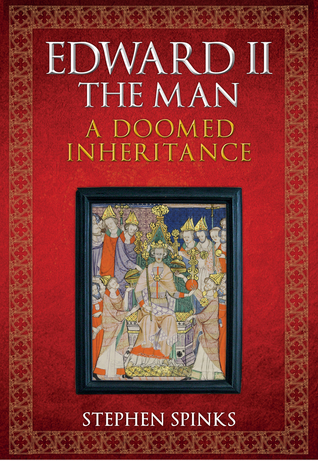
Book Review: “Edward II the Man: A Doomed Inheritance” by Stephen Spinks

34411942._SX318_ (1)When we think of medieval kings of England, we tend to think about strong warriors who did things their own way. Men like Edward I and Edward III often come to mind. Yet, there was a king in between these two legendary warriors whose name lives on in infamy, King Edward II. He is known for his numerous favorites, his relationships with men like Piers Gaveston and Hugh Despenser the Younger, his disagreements with the barons who were trying to help him run the country, his relationship with his equally famous wife and son, Isabella of France and Edward III, and his dramatic death. But who was the man known as King Edward II? What was he really like? Stephen Spinks explores these questions in his latest biography, “Edward II the Man: A Doomed Inheritance”.

I would like to thank Amberley Publishing for sending me a copy of this book. I remember hearing briefly about Edward II’s story in different documentaries that I have watched, but I have never read a biography about him before. This book was rather enlightening.

Spinks naturally begins with the birth of Edward of Caernarfon (the future King Edward II) to his parents, King Edward I and Eleanor of Castile. What is interesting is that Edward was their only son who survived long enough to become king, since his elder brothers would all pass away. His father, Edward I, was truly a warrior king, fighting against Wales and Scotland, yet he accumulated absolutely staggering debts which Edward II had to deal with when he was king. With his father’s victory in Wales, Edward of Caernarfon was made the first English Prince of Wales.

When Edward I died, Edward became King Edward II, with an inheritance filled with issues that would come to define his reign. Edward II had to deal with the crippling debt, war from numerous countries, and barons that were constantly trying to control how he ran the country. On top of all of this, Edward decided to rely heavily on men like Piers Gaveston and Hugh Despenser the Younger, his “favorites”, which really did not sit well with the barons or his wife, Isabella of France. It is the belief of Spinks that Edward’s relationships with Gaveston and Despenser were more than platonic, that they were Edward’s lovers and that is why he always took their advice above his barons and gave them massive rewards. Personally, I am not sure how I feel about this theory since this was the first biography I read about Edward II, and I think I would need to study a bit more before I settle on a theory about this topic.

Another huge topic that Spinks addresses in his book is the split between Edward and Isabella that ultimately led to his downfall and his death. It was interesting to see how even though they did split up, Edward did indeed cared for his family, although he did have a rather unusual way of showing it. His abdication, death, and the stories of how he survived are really compelling and makes you wonder what happened to Edward II after his son became King Edward III.

Overall, I found this book extremely informative. Spinks was able to combine the complex nature of the government that was run by the barons with an easy to understand writing style. Spinks also discusses other theories written by other historians to allow readers to understand why he believes what he believes. After reading this book, I do want to learn more about King Edward II and his reign. If you want a great introductory book into the reign of King Edward II, I highly recommend you read, “Edward II the Man: A Doomed Inheritance” by Stephen Spinks.

Book Review: “Forgotten Royal Women: The King and I” by Erin Lawless

38507412._SY475_In English history, the story of the royal families tends to capture the imagination of those who study it. Full of dynamic tales of kings and queens, and numerous nobles, these are tales that make it into history books and history classes. We tend to focus on the same kings and queens, who have become the popular royals. But what about those who are left in the dust of those popular royals? Who were the royal women who lived in the shadow of the throne that time has forgotten? What were the lives of these women like? It is these women who are the focus of Erin Lawless’s latest book, “Forgotten Royal Women: The King and I”.
I would like to thank Pen and Sword Books for sending me a copy of this book. The title of this book initially caught my eye and I really wanted to see what royal women Erin Lawless would be discussing in this particular book.

Lawless has decided to write about thirty different royal women, from Scota to Princess Charlotte, covering several centuries of vivacious women. Some of these women I have encountered in my own studies, like Margaret Pole, Margaret Tudor, Eleanor Cobham, and Mary Grey( who are obviously women from the Tudor dynasty). Others were women that I have never heard of, like Gwellian ferch Gryffydd and Isabella MacDuff, who lead armies for their respective countries, Wales and Scotland respectfully, to fight against the English. Grace O’Malley, also known as Granuaile, who was Queen of Umaill, chieftain of the O Maille clan, and a pirate from Tudor Ireland. And of course, plenty of royal women who married for love and suffered the consequences.

These tales are truly tantalizing, yet they are tragically too short as Lawless only spends a few pages on each woman. Just as you are starting to really get into the story, you move onto another lady and her history. It may seem a little bit unfair, but I think it should be noted that Lawless did this with a rather important purpose behind it. Lawless wanted to give an introduction to the lives of these women, both the fictional tales and the facts so that readers would be intrigued and decide to study more about them. It’s a great strategy to get more people interested in studying the obscure and forgotten royal women in history. Of course, I wanted more details, but that is because I love having a plethora of information about a subject in books that I read, yet in this case, I think the amount of details works in Lawless’s favor.

The one thing that I really wish Lawless did include was a bibliography or a list of books that helped her with her own research when it came to this book. I really like seeing an author’s research in the back of biographies or history books, especially for a book that covers different topics, so that I can have a starting point for my own personal research.

Overall, I found this book incredibly enjoyable. It is certainly a conversation starter for those who discuss the English monarchy. Lawless has a delightful writing style that feels like you are having a casual history conversation with her. This book is small in size, but it could be the stepping stone for new research for those novice historians who want to write about someone who has been stuck in the shadow for centuries. If you would like to read short stories about royal women who have stayed in the background for a long time, I highly recommend you read “Forgotten Royal Women: The King and I” by Erin Lawless.

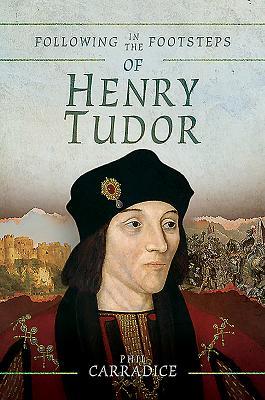
Book Review: “Following in the Footsteps of Henry Tudor: A Historical Journey From Pembroke to Bosworth” by Phil Carradice

43972620In the study of history, we tend to look at the beginning and the end of a battle and why they were fought. We rarely pay attention to the march that led to the battle, but when we do, there is a distinct reason why. One particular case is of Henry Tudor’s march to the Battle of Bosworth Field. It is a tale that started from his birth at Pembroke Castle to being an exile and then from an exile to being King of England. The story of how an exile became a king and founded the infamous Tudor dynasty deserves attention. Phil Carradice believed that it was time for the story of the first Tudor king and his march to destiny to be told in his latest book, “Following in the Footsteps of Henry Tudor: A Historical Journey From Pembroke to Bosworth”.

I would like to thank Pen and Sword Books for sending me a copy of this book. This is the second book in the “Following in the Footsteps” series that I have read, so I was cautiously optimistic. I wanted to learn more about Henry Tudor’s march to Bosworth and I certainly did in this book.

Carradice begins his book with a novel-like description of Henry, or “Harri”, and his uncle Jasper Tudor landing in Wales. As a reader, I was a bit confused about the direction that Carradice was taking by using this approach since this is a historical non-fiction book instead of historical fiction, but Carradice was able to tie it in nicely. He then explains, rather briefly, the conflict known as the Wars of the Roses and how England got to the point where it was Henry Tudor versus King Richard III for the throne. It is this information that is crucial for readers to understand Henry’s motive for claiming the throne and how it was an arduous task to achieve. It was in these early chapters that we see how Henry went from a regular boy to an exile who became a thorn in the side of the Yorkist Kings Edward IV and Richard III.

The bulk of Carradice’s book deals with what happens after Henry Tudor and his men land in Wales. He deals with issues of exactly where Henry landed and why the traditional place for the landing does not make a whole lot of sense. Carradice also takes on the legends that surrounded the different locations during the march and compared them to the facts that we do know about the march, primarily from Polydore Vergil. The one problem that I had with this book was that Carradice did not include a map of the march. I was not familiar with the locations, particularly the Welsh locations, so it was difficult to visualize the distances. What I did appreciate was the fact that as the battle approached, Carradice showed how both Henry and Richard III must have been feeling and how their decisions on that fateful day made all the difference.

Overall, I was pleasantly surprised by this book. It may be small, but it is rather mighty with all the information that it contains. Carradice’s writing style makes this book feel like a historical fiction novel with a plethora of information one expects from a historical nonfiction book. If you want a great introduction book to Henry Tudor’s march to Bosworth Field and the beginning of the Tudor dynasty, I highly recommend you read, “Following in the Footsteps of Henry Tudor: A Historical Journey From Pembroke to Bosworth” by Phil Carradice.