
 Weddings are supposed to be happy occasions to unite two families through the bonds of love, at least in our more modern sense of the ceremony. However, in the past, weddings were ceremonies that would unite families through contracts to create powerful alliances—hardly a romantic endeavor. One of the grandest weddings of the 16th century was meant to unite France, which led to bloodshed between Catholics and Huguenots. Minou Joubert and her family are invited to the wedding of Marguerite de Valois and Henri of Navarre in Paris, but the decision to attend the lavish event leads her family on a path full of tears and heartbreak. The story of the Joubert family’s struggle to fight for the faith they strongly believe in and to unite their broken family is masterfully told in Kate Mosse’s novel, “The City of Tears.”
This is a book that I found when I was going used book shopping one day. I had heard about Kate Mosse and her novels, so I wanted to give them a try. I didn’t realize that it was the second book in a series until after I brought it home, but the premise of this novel was so intriguing that I couldn’t wait to read it. So I decided to read the books out of order to see if this would be a series that I would enjoy reading.
We begin our tale with one of the Joubert descendants from the 1800s going to the house that her ancestors lived in in Amsterdam. I am not sure where this particular storyline will lead, but I am excited to find out. We then join the family Joubert in the year 1572 as they are debating whether or not to go to Paris for the royal wedding; even though it is a great honor to receive an invitation, the problem is that the Jouberts are a Huguenot family. Their mortal enemy, Vidal or Cardinal Valentin, is always looking for a way to harm Minou and her husband Piet no matter what, even if it means sending assassins to hurt those closest to them. Even with the danger and the tragedies that befall them before the journey, they still choose to take a risk and go to Paris.
Paris was one of the biggest cities of its time and with big cities comes excitement and risks of danger. On the day of the wedding, everything ran smoothly, but three days later, on St. Bartholomew’s Day, a massacre of the Huguenots happened on the streets of Paris and the Joubert family lost their precocious daughter Marta and Minou’s brother Aimeric in the midst of the chaos. Now, Minou and Piet must take their remaining family members and flee with Cornelia van Raay to her native Amsterdam. What they did not realize was that religious change was also brewing in Amsterdam, which they also had to navigate. To top it all off, the life they left behind in France decided to rear its head as reunions and plots against the Jouberts were afoot. The Jouberts must face every challenge head-on if they have any hope of seeing a brighter future.
I enjoyed reading this novel. It may have taken me a moment to get into the story as this is book two in a series so getting used to the characters and their background, but once I did, I became super attached to them. I found it extremely fascinating to read about France and the Netherlands during the 16th century in historical fiction because even though France features pretty commonly in this era’s historical novels, the Netherlands is a new area to explore. I was so enthralled by this novel that I bought the first and third novels in this series and I am looking forward to reading more books by Kate Mosse. I would suggest if you want to start this season, start with the first book, “The Burning Chambers.” If you have started this series and want to see what happens next, I highly suggest you read, “The City of Tears” by Kate Mosse.
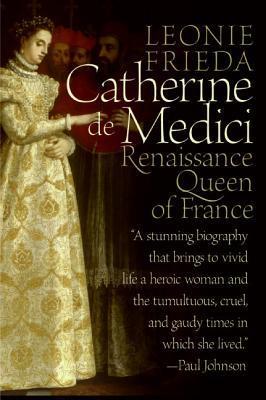 When we think about women rulers in the 16th century, some names, like Queen Mary I, Queen Elizabeth I, and Mary Queen of Scots, come to mind. However, another woman should be included in this list as her life helped keep the Valois dynasty alive and well in France, even though she was Italian by birth. Her name has been tainted with dark legends of poisoning, deadly incidents, and the infamous St. Bartholomew’s Day Massacre. This notorious queen was Catherine de Medici, and Leonie Frieda has chosen to shed some light on the myths and mysteries surrounding this misunderstood woman in her biography, “Catherine de Medici: Renaissance Queen of France.”
 Adventures of a Tudor Nerd