The fifteenth century in England was a time of war. Between a usurper king, fighting with France, and fighting amongst themselves, an English king must be prepared to go into battle at any moment, and his queen must be ready to support him in any way. During this period, there were five kings and queens, and while the kings get a lot of attention, it is the queens who should get their flowers for what they did in times of distress. Alison Weir explores the lives of the final five Plantagenet queens in her final book in the England’s Medieval Queens series, entitled “Queens at War.”
I would like to thank Ballantine Books and NetGalley for providing me with a copy of this book. I am a big fan of Weir’s books, and I have thoroughly enjoyed her England’s Medieval Queens series. I wanted to see which queens Weir would focus on in this book and how she would approach their lives.
The years covered in this last book are 1399-1485, covering the reigns of Henry IV, Henry V, Henry VI, Edward IV, and Richard III. The queens featured in this book are Joan of Navarre, Katherine of Valois, Margaret of Anjou, Elizabeth Woodville (spelled Widville in this book), and Anne Neville. While I am familiar with the stories of Katherine, Margaret, Elizabeth, and Anne, Joan is a less well-known figure to me. Weir gives her readers a bit of background information about how Joan of Navarre was Henry IV’s second wife after his first wife, Mary de Bohun, died. Joan was married previously as well, to John IV de Montfort, Duke of Brittany. While she did have children with John, she never had royal children with Henry IV. Weir shows how Joan was treated as the stepmother to King Henry V after he married Katherine of Valois.
Weir explores Katherine of Valois’ relationships with both Henry V, the warrior king, and Owen Tudor, the man she fell in love with after the death of Henry V. We get to see how Katherine’s son, Henry VI, and his wife, Margaret of Anjou, dealt with the rising Yorkist faction. With her husband taking ill, it was Margaret of Anjou who was the figurehead for the Lancastrian cause in a conflict that would be known as the Wars of the Roses. Eventually, a young man named Edward IV would become King of England, and he shook the English court by marrying an English woman, Elizabeth Widville (Woodville). Finally, Weir explores the downfall of the Plantagenet dynasty and the end of the young Yorkist regime with Richard III and his wife Anne Neville.
Overall, I found this an informative and easy-to-follow book. It was a bit of a review for me as I am familiar with this period, but I found myself learning new information in this book, which was exciting. I think if you want to learn about 15th-century queens or if you are a fan of England’s Medieval Queens series, I recommend you read “Queens at War” by Alison Weir.
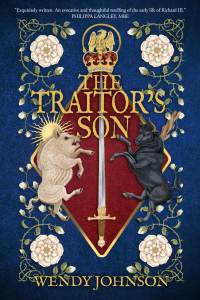
I am pleased to welcome Wendy Johnson to my blog today to share information about her research for her novel, “The Traitor’s Son.” I would like to thank Wendy Johnson and The Coffee Pot Book Club for allowing me to participate in this blog tour.
I’ve been fascinated by the period known retrospectively as the Wars of the Roses since childhood, so when I came to write ‘The Traitor’s Son’ I already had a grounding in the history. Over the years, I’ve amassed a number of secondary sources: biographies of the principal figures, battlefield histories, political commentaries, and so on, and these have proved invaluable in forming the backbone of the novel. These days, a great deal of primary sources are digitally transcribed, and can be a valuable means of verifying details which would be more difficult to access.
My intention was always to underpin my fiction with fact. I didn’t want to invent things for the sake of the story—for me, the events of the fifteenth century are in themselves dramatic and exciting enough without the need for fabrication. But of course, the duty of a historical novelist is to add flesh to the bones, to bring the past to life, and this is essential as the reader has to be able to empathise with the characters and understand their motivation. So, how did I go about researching the lives of Edward IV, Richard Neville, earl of Warwick— and of course, my protagonist, young Richard Plantagenet, the future Richard III?
I do feel as though I’ve grown up with these figures—the first castle I ever visited as a child was Raby Castle, in County Durham, home to the dynamic Neville family, and a fascination for this remarkable dynasty was formed. My lifelong interest in Richard III himself was kindled during a visit to Middleham Castle, Yorkshire, at the age of eight and has remained with me ever since. I’ve always had a sense of what I feel my characters were really like, but of course, that wasn’t enough: to write a believable novel, I needed to fully research their lives and the events which formed them, before I could consider recreating them on paper. Biographies proved extremely helpful, most providing a clear background to the lives of each individual and helping to form a realistic picture of that particular person, what their personalities may have been, and, in particular, who and what may have influenced them. This was significantly important when it came to Richard himself.
The frustrating thing about the study of the fifteenth century is that, although some primary sources do survive, they are fewer in number than those of the following century, and those that do survive are mostly official documents. It would be wonderful if we could consult, for example, a greater number of personal letters from those concerned. We do have some, but once again, these tend to be letters composed in an official capacity. Those which remain, however, can help cast small rays of light on the people as individuals, for example, the letter sent by a youthful Edward IV, and his brother Edmund, to the Duke of York, thanking him for the gowns he has sent them and requesting him to deal with ‘the odious rule’ of Richard Croft and his brother, fellow trainee knights, who appear to have been bullying them. Although my novel does not cover this earlier period, the letter is illustrative of the comfortable relationship the sons of York had with their father. Likewise, Richard’s letter to his mother, written as king and signed ‘your most humble son’, requesting her ‘daly blessing to my synguler comfort’ offers a small insight into the affection and respect he bore for her. Although such correspondence is rare, many documents having been destroyed in the following century, letters like these do provide a glimpse of both Edward and Richard’s closeness to their parents.
The relationships of the York family, one to another, are the focus of ‘The Traitor’s Son’. Rather than a sweeping saga, I very much wanted to keep the action close, concentrating on Richard and his brothers, Edward IV and George, duke of Clarence, their sister, Margaret, mother, Cecily—and the man, whom I believe played a huge part in young Richard’s upbringing, his cousin and mentor, Richard Neville, earl of Warwick. Research into the life of Richard III indicates a deep reverence for the memory of his father, the Duke of York. York’s death in battle, when Richard was only eight years old, and the danger in which the family was placed thereafter, must have had a devastating effect on the boy. According to the Centre for Male Psychology…research shows the father-child relationship is an important one. In fact, it can be more influential than the mother-child relationship. This is especially true for the 8-12 year old child as they try to make sense of the outside world…’ i This observation helped confirm my theory that following the death of the Duke of York, it would have been natural for Richard to have searched for a father figure in his life, and that this figure could well have been his cousin, Warwick.
Regarding locations, I found I could call on personal experience for some, but had to research others. Having grown up close to Middleham, I know the castle inside and out, so it was very easy to imagine the scenes set within its walls. The city of York, which was very familiar to Richard, remains in part unchanged, and again, it was an easy matter to reimagine his time there. Warwick Castle is another fortress I’ve visited in person, although naturally there have been additions since the days of Richard Neville. London needed to be researched carefully, as very little remains from the medieval period. I found an amazing resource on the Internet entitled the Agas Map of Early Modern London, which uses the Civitas Londinium, a detailed woodcut created in 1561. This incredible, interactive tool allows the user to search for particular streets, churches, parishes, gates, and so on. Highlighting these on the map, it becomes possible to visualise the city at a time not too distant from the period in which my novel is set. For Richard’s exile in the Low Countries, both at the age of eight and again at eighteen, I had to rely on published histories and on images and information I found online. A visual recreation of the Bishop’s Palace at Utrecht (where Richard and his brother, George, resided following their father’s defeat) was extremely useful, as was a delightful video I found of the adjacent tower, the Dom Toren, which actually featured the sound of its bells—so different in their melody from the chimes which would have been a constant accompaniment to life in London.
My favourite element of the writing process will always be the creative part—seeing the characters in my mind’s eye, imagining their emotions and bringing them to life—but my greatest desire with the novel was to create an authentic narrative, and that meant remaining true to the facts and to the people who populate its pages. These were, after all, real people, and I felt I had a duty to portray them with respect and in the most accurate way I could. Therefore, research and facts remain twin components of ‘The Traitor’s Son’.
Blurb:
Caught between a king and a kingmaker, young Richard Plantagenet knows he’ll have to choose…
1461: Richard, Duke of York, King by Right, has been branded a traitor and slain by his Lancastrian foes. For his eight-year-old son—Richard Plantagenet—England has become a dangerous place.
As the boy grapples with grief and uncertainty, his elder brother, Edward, defeats the enemy and claims the throne. Dazzled by his glorious sibling, young Richard soon discovers that imperfections lurk beneath his brother’s majestic façade. Enter Richard Neville, Earl of Warwick—cousin, tutor, luminary—whose life has given him everything but that which he truly craves: a son. A filial bond forms between man and boy as they fill the void in each other’s lives. Yet, when treachery tears their world asunder, Richard faces an agonizing dilemma: pledge allegiance to Edward—his blood brother and anointed king—or to Warwick, the father figure who has shaped his life and affections.
Painfully trapped between duty and devotion, Richard faces a grim reality: whatever he decides will mean a fight to the death.
In “The Traitor’s Son”, Wendy Johnson weaves a tapestry of loyalty, love, and sacrifice against the backdrop of England’s turbulent history. Through the eyes of a young Richard III, readers are transported into a world where every choice is fraught with peril, and the bonds of kinship are tested to their limits.
Perfect for fans of Hilary Mantel, Annie Garthwaite, and Sharon K. Penman.
Praise for The Traitor’s Son:
“Exquisitely written. An evocative and thoughtful retelling of the early life of Richard III.”
~ Philippa Langley, MBE
“Sometimes the perfect use of the written word takes my breath away. Not very often, but this book is it. A wonderful story written so beautifully that I shall not forget it for a long time. Everything to my mind is perfect. The language, the story, the pacing. Just wonderful.”
~ Kindle Customer, 5* Amazon Review
“Wonderfully woven story of a young Richard III. Woven with a sure knowledge of the history and a realistic telling of a story about a young boy finding his way through tragedy and triumph, uncertainty, and a legacy he cannot escape. Brilliant debut which promises more and more.”
~ Cris, 5* Amazon Review
“I loved this novel, it was beautifully written, extremely atmospheric, the characters’ personalities came through perfectly, can’t wait for the next instalment.”
~ Linda Hayward, 5* Amazon Review
“Really enjoyed this book. Holds the reader enthralled from the first paragraph to the last. The next volume can’t be released soon enough.”
This title is available to read on #KindleUnlimited.
OLYMPUS DIGITAL CAMERA
Author Bio:
Wendy Johnson has a lifelong passion for medieval history, its people, and for bringing their incredible stories to life. Her specific areas of interest are the fifteenth century, the Wars of the Roses, and Richard III in particular. She enjoys narratives that immerse the reader in the past and tries faithfully to recreate the later Middle Ages within her own writing. She has contributed to a number of historical anthologies and was a runner-up in the Woman and Home Short Story Competition 2008.
Wendy is also a founder member of Philippa Langley’s Looking for Richard Project, which located the king’s lost grave in 2012. She co-authored Finding Richard III: the Official Accountof Research by the Retrieval and Reburial Project in 2014, and in 2019 received the Richard III Society’s Robert Hamblin Award.
THE TRAITOR’S SON, volume one in a Richard III trilogy, is Wendy’s debut novel, and she is currently working on the sequel.
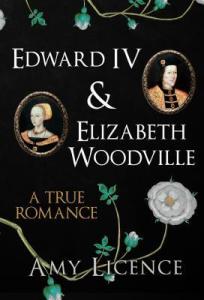
When we think of a fairy tale romance, we think about stories like Cinderella. A girl of lower status captures the heart of the handsome prince. They overcome the odds and live happily ever after. But that kind of romance only exists in books. The closest story we have to that in medieval English history might be the story of Edward IV and Elizabeth Woodville. A widow who begged the handsome and younger King of England for help, but ended up becoming his wife. It’s a story that any romance-loving history lover will swoon over, but how accurate is that story? What is the real story of Edward IV and Elizabeth Woodville? Amy Licence explores the nature of their relationship in her book, “Edward IV & Elizabeth Woodville: A True Romance.”
I have been reading books by Amy Licence for a few years now, so when I saw this title, I knew I wanted to read it. The Wars of the Roses is one of my favorite areas of history to study, but I have not read a joint biography of Edward IV and Elizabeth Woodville. When I saw this title, I knew that this was a must-read for me.
We begin in 1431 in Rouen, France, where the Maid of Orleans, who we know as Joan of Arc, is about to die on the pyre. In the same town, eleven years later, the future King Edward IV would be born to Cecily Neville and Richard, Duke of York. Edward’s future bride, Elizabeth Woodville, was born around six years after the death of Joan of Arc. Her mother, Jacquetta of Luxembourg, had married below her station after the death of her first husband, John Duke of Bedford passed away; Jacquetta would marry a knight, Sir Richard Woodville, Elizabeth’s father. Jacquetta was close to King Henry VI and Margaret of Anjou, the Lancastrian rulers of England, and Edward IV’s father, Richard, Duke of York, would fight against the Lancastrians for the right to rule England during the conflict that we know today as the Wars of the Roses. To top it all off, Elizabeth was married to Sir John Grey of Groby Old Hall, a man who fought and died for King Henry VI.
In other words, Edward and Elizabeth were on different sides of the Wars of the Roses, but somehow these two found each other after Edward IV became king. The obvious choice for Edward’s bride should have been a foreign princess to create an alliance, but there was something about Elizabeth that convinced Edward to forgo the wisdom of Warwick and marry her. Their court was based on the Burgundian court. They had a large family, but the fight for the crown with the Lancastrian cause and Edward’s own family continued. Just when the throne is secure, Edward passes away. Elizabeth had to fight for her children, fight against her brother-in-law, and join forces with her enemy Margaret Beaufort to help usher in the Tudor dynasty.
Licence was able to present the information not only about this period, but also about Edward and Elizabeth in such a comprehensive way that both novices and experts can understand. She can present theories that she either agrees with or disagrees with respectfully. I thoroughly enjoyed this joint biography as it gave me a better appreciation for the reign of Edward IV and Elizabeth Woodville. If you want to learn more about the Wars of the Roses, the first Yorkist king, and his wife, I highly recommend you read “Edward & Elizabeth Woodville: A True Romance” by Amy Licence.
The year is 1535, and an educated scholar, father, writer, and the former Chancellor of England marches to his demise. His crime was staying silent on an issue that the King deemed extremely important: the idea that the King of England should be the Supreme Head of the Church of England, not the Pope. As a Catholic, Sir Thomas More does not agree with this decree and must die. How did one of the most prominent Tudor scholars of his age fall so quickly? Joanne Paul explores the rise and dramatic fall of this infamous Tudor figure in her latest biography, “Thomas More: A Life.”
Joanne Paul is slowly becoming one of my favorite nonfiction writers. Her debut, “The House of Dudley,” was spectacular, and when I heard that she was writing a biography about Thomas More, I knew I wanted to read it. I know the basic information about Thomas More’s life and his books about the Wars of the Roses and Utopia, but I wanted a book that gives more details about his life.
Thomas More was the son of the lawyer John More and his wife Agnes, born in 1478. A child of the Wars of the Roses, the shifting sands of the political landscape of his youth will prepare him for the tumultuous Tudor court of his adulthood. While he recalls the reign of King Richard III in his book about the period, it should be noted that he was a boy during the king’s reign.
Thomas became a scholar who specialized in Humanism and created a community of like-minded scholars and artists, including men like Desiderius Erasmus. Thomas More would marry twice, to Jane Colt, the mother of his children, Margaret, Elizabeth, Cecily, and John, and Alice Harpur. He would ensure that all his children received a proper Humanist education, and his children, especially Margaret, were praised for their scholarly abilities. He would begin to write like he was running out of time and create one of his most famous works about politics, Utopia, as well as go toe to toe against Martin Luther himself.
More would continue his academic pursuits, even when he captured the attention of King Henry VIII, who would appoint him Chancellor of England. While a great honor, Thomas did not agree with the King on the Great Matter as he believed Queen Katherine of Aragon was the rightful wife of King Henry VIII. He would persecute those whom he deemed as heretics as a devout Catholic man, and it was ultimately his faith that would lead to his earthly doom. When Henry VIII decided that he wanted his people to swear an oath that Henry VIII was the Supreme Head of the Church of England instead of the Pope. As a devout Catholic, Thomas More’s silence was deafening, and he was condemned as a traitor to the crown, destined to be executed.
Even though Thomas More was a controversial figure of the Tudor era for Ricardians and Protestants alike, we in the modern age can learn a lot from his life and apply it to our own time. Paul does it again, as this is a stunning biography of a man who was a scholar and an outspoken Catholic in a time when the King’s power was becoming dangerous. The way she weaves the historical facts, including More’s numerous pieces of writing, with a narrative that is easy to follow is astounding. Truly, this is the definitive biography on Sir Thomas More. If you want a fabulous biography on such an infamous figure of the Tudor age, I highly recommend you read “Thomas More: A Life” by Joanne Paul.
I would like to thank The Coffee Pot Book Club and Judith Arnopp for sending me a copy of this novel. I have enjoyed her novels about Margaret Beaufort, so when I heard that she was writing a novel about Margaret of Anjou, I was intrigued to see what she could add to her story.
Arnopp begins with Marguerite on the verge of leaving her beloved France to become the new Queen of England. She is to be the bride of the son of King Henry V, King Henry VI. She imagines that her new husband will be similar to his father, a warrior, and that Marguerite will be able to stop the Hundred Years’ War between France and England. Instead, she is married to Henry VI, a man who is extremely devout to his faith, and lives in an England that hates Marguerite. It’s not the picture-perfect situation, but Marguerite tries to make the best of it, including falling in love not only with her husband but also with Somerset and Exeter, men loyal to her husband.
In time, Marguerite does indeed become a mother to Prince Edward, the Lancastrian heir, but it is then that her life truly begins to fall apart. A few months before, King Henry VI fell ill and remained that way for the rest of his life. Marguerite tried to become the Protector of the Realm, but the position went to Richard, Duke of York. Rivalries would turn deadly, and the Lancastrians would face the Yorkists on the battlefield. With the king incapacitated, Marguerite must be a mother, wife, queen, and general to make sure that the Lancastrian cause survives and her family can live to fight for the crown that is rightfully theirs.
This was a very good novel about a woman who was trying to keep her family and her country together while finding love. Arnopp does a great job exploring what life must have been like for Marguerite in a turbulent time. If you want a novel that explores what life was like for the Lancastrian queen during the Wars of the Roses, I recommend you read “Marguerite: Hell Hath No Fury” by Judith Arnopp.
Blurb:
Marguerite: Queen of England
From the moment Henry VI’s new queen, Marguerite of Anjou, sets foot on English soil, she is despised by the English as a foreigner and blamed for the failures of the Hundred Years’ War in France.
Her enemies impede her role as the king’s consort, and when Henry sinks into apparent madness, her bid to become regent is rejected. Marguerite must fight, not only for her position but to maintain Henry’s possession of the crown.
The ambitious Duke, Richard of York, seizes control of the country, thrusting Marguerite aside and inflating the mutual hatred between the houses of York and Lancaster. But the queen refuses to relinquish power and fights determinedly for the rights of her son, Edward of Lancaster.
The long and bitter civil conflict, which come to be known as the War of the Roses, commences.
This title is available to read on #KindleUnlimited.
Author Bio:
A lifelong history enthusiast and avid reader, Judith holds a BA in English / Creative Writing and a Master’s in Medieval Studies. She lives on the coast of West Wales, where she writes both fiction and non-fiction. She is best known for her novels set in the Medieval and Tudor period, focusing on the perspective of historical women, but recently she has written a trilogy from the perspective of Henry VIII himself.
Judith is also a founder member of a re-enactment group called The Fyne Companye of Cambria, which is where and why she began to experiment with sewing historical garments. She now makes clothes and accessories both for the group and others. She is not a professionally trained sewer but, through trial, error, and determination, has learned how to make authentic-looking, if not strictly historically accurate, clothing. A non-fiction book about Tudor clothing, How to Dress like a Tudor, was published in 2023 by Pen and Sword.
She runs a small seaside holiday let in Aberporth and when she has time for fun, likes to garden and restore antique doll’s houses. You can find her on most social media platforms.
Her novels include:
A Song of Sixpence: The Story of Elizabeth of York
The Beaufort Chronicle: the life of Lady Margaret Beaufort (three-book series)
The Henrician Chronicle: comprising:
A Matter of Conscience: Henry VIII, the Aragon Years (Book One of The Henrician Chronicle)
A Matter of Faith: Henry VIII, the Days of the Phoenix (Book Two of The Henrician Chronicle)
A Matter of Time: Henry VIII, the Dying of the Light (Book Three of The Henrician Chronicle)
The Kiss of the Concubine: A Story of Anne Boleyn
The Winchester Goose: at the court of Henry VIII
Intractable Heart: The Story of Katheryn Parr
Sisters of Arden: on the Pilgrimage of Grace
The Heretic Wind: The Life of Mary Tudor, Queen of England
Peaceweaver
The Forest Dwellers
The Song of Heledd
The Book of Thornhold
A Daughter of Warwick: The Story of Anne Neville, Queen of Richard III
The Wars of the Roses are ending, and with it comes uncertainty about who will lead the country. On one side is King Richard III, who many believe killed his nephews to become King of England; on the other is Breton Henry, Henry Tudor, who believes he is the rightful king due to his bloodline. However, there is a third player in this entire debacle. A young farm boy named John Collan may spend his days daydreaming and studying to his heart’s content, but he is destined for more. A path that will lead him to hobnob with nobility and become the enemy of a king who just sat on his throne. Just who is John Collan, and how did this boy go from the farm to a life of infamy? Jo Harkin tells the story of how John Collan became Lambert Simnel in her novel, “The Pretender.”
I would like to thank Knopf and Net Galley for sending me a copy of this novel. As someone who reads a lot about the Wars of the Roses, I tend to gravitate towards the main players and the nobility. However, there was something about a novel all about one of the pretenders, Lambert Simnel, that piqued my curiosity. Plus, the fact that this was the author’s first foray into historical fiction was a nice touch. I wanted to see how well Harkin would do with an obscure figure and her first historical fiction novel.
We begin with John Collan, a son of a farmer who dreams of being a scholar and running away from a rather vicious goat. John’s father, Will Collan, is a pretty wealthy man, but he is also connected to a man named Maister Richard Simons, who agrees to tutor John at Oxford. Such a remarkable turn of luck for a farm boy, but why choose him over others? Maister Simons explains that Will Collan is not John’s father. His name is not even John. He is to be known as Lambert Simnel, and his true father is none other than George, Duke of Clarence, which makes him Edward, Earl of Warwick. It’s a lot to take in, but then John/Lambert is taken to both Burgundy and Ireland so that he can gain powerful allies such as Margaret, Dowager Duchess of Burgundy, John de la Pole, 1st Earl of Lincoln, and the Earl of Kildare.
John/Lambert continues to study, falls in love with a girl named Joan, is crowned king, and even goes to war against the Tudor king. But the boy will soon learn the bitter taste of betrayal and the heartache of losing those he loves the most to try and wrest the crown from Henry VII. While the dialogue was at times borderline vulgar, I did enjoy most of the story until the aftermath of the Battle of Stoke Field. It was when John/Lambert was held captive that it fell flat, and it was a bit difficult to follow along for me. I also wish Harkin had included some sort of author’s note or explanation of her research to help those who are new to Lambert Simnel’s story understand why she wrote the novel in the way she did.
Overall, I think this was a decent novel. It is ambitious to tackle an obscure figure like a pretender as a protagonist of a historical novel, but I think Harkin does a good job. It makes you wonder what must have been going on when this young man decided that he was going to take on a crowned king. Such a small footnote in history makes one compelling tale. If you want a novel about someone who does not get enough attention, I recommend you read “The Pretender” by Jo Harkin.
I know this is not the kind of post that you normally see on the blog; it’s usually something you will see on the Facebook page, but this was such a big milestone that I felt like it warranted a blog post.
As you can tell from the title of the post, Adventures of a Tudor Nerd has officially crossed over 500,000 views, which is insane to think about. Seven years ago, when I started after I was a guest author for Rebecca Larson’s blog, Tudor Dynasty. It was a lot of fun, but Rebecca said that I should try writing my own history blog. I wasn’t sure what I could write about since all I am passionate about are history and books, so I decided to give history book blogging a try and post book reviews.
And the rest was history.
I wasn’t sure if anyone would be interested in what I had to say when it came to history books, but you guys have been such an amazing community. I started with the Tudors because that was the dynasty that I felt the most comfortable discussing, but as time has gone on, I have added even more periods of the past; the Anglo-Saxons and the Vikings, the Plantagenets and the wider medieval world, the Wars of the Roses, the Tudors, and most recently the Stuarts. It’s been fun to share my thoughts on books with all of you, but I also believe that authors should be able to promote their books on my blog through guest post, to bring things full circle. Finally, I enjoy talking about TV shows and movies that I have watched and want to rant about, as well as poetry that I find profound.
I have been blown away by the amount of love and support that I have received over the years. I am just a history nerd with a love for the past and books. Thank you all so much for being part of this crazy, amazing adventure. To the publishers and authors I have worked with, thank you for allowing me to read some truly amazing books, and thank you for becoming mycolleagues and friends.
This has been such an unbelievable journey so far, and I can’t wait to continue to embark on even more history adventures.
Keep on taking your own history adventures and never stop learning from the past.
Medieval wars were not just fought on the battlefield. They also fought in court through marriage alliances and politics. While we often think about wars and men, we should also consider the women who played their parts either in exile or glistening palaces. We often think about medieval queens like Margaret of Anjou as these strong women who fought in their ways, but we have to consider the wife of Richard Neville Earl of Warwick, known as the Kingmaker; her name was Anne Beauchamp Countess of Warwick. The relationship between Margaret of Anjou and Anne Beauchamp has not been discussed much until now. Anne O’Brien tells the stories of these two women and the wars that bound them together in her latest novel, “The Queen and the Countess.”
I want to thank Orion Publishing and Net Galley for sending me a copy of this novel. What attracted me to this novel was the cover at first and then the description. I love reading novels about the Wars of the Roses, so when I saw it was a novel featuring both Margaret of Anjou and Anne Beauchamp Countess of Warwick, it was a must read for me.
We begin in the year 1480 as both Margaret and Anne reflect on their lives while they are in exile. Then, we get a flashback to the famous Love Day “celebration” of 1458, when members of the Lancaster and York families joined hands as a way to try to mend the rift that was bound to tear the country apart. It is the idea of King Henry VI that his wife, Margaret of Anjou, joins hands with the Duke of York. It is a complete and utter failure as the Wars of the Roses kick off in full force. Since the King is very weak, it is Margaret who must take the reigns of government to protect the Lancaster family and the throne for not only her husband but also for their only son, Prince Edward.
On the other side of the conflict is Anne Beauchamp Countess of Warwick, the wife of Richard Neville, Earl of Warwick, also known as the King Maker. She is the mother of two daughters, Isabel and Anne, but she desires a son. Being on the rebellious Yorkist side means that Anne is directly an enemy of Margaret of Anjou, but something remarkable happens: the two women form a thorny friendship. For over twenty years, the relationship between Anne and Margaret ebbs and flows as the crown passes from Henry VI to Edward IV like a ping-pong ball. Both Anne and Margaret understand what it means to lose their husbands and children whom they love; they know the glory of victory, the terror of defeat, and the uncertainty of being in exile.
I enjoyed this novel very much. It gave more depth and heart to the conflict as a whole, as well as a better understanding of both women. Anne O’Brien was able to create such dynamic characters and a thrilling novel that any fan of medieval novels will enjoy. If you are a fan of novels set during the Wars of the Roses featuring strong women, I highly suggest you read, “The Queen and the Countess” by Anne O’Brien.
Throughout English history, some of the most famous queens have been associated with the Tudor dynasty. We have the six wives of Henry VIII (Catherine of Aragon, Anne Boleyn, Jane Seymour, Anna of Cleves, Catherine Howard, and Catherine Parr), Queen Mary I, and Queen Elizabeth I. However, one Tudor queen is often overlooked for her daughters-in-law and granddaughters, the first Tudor queen, Elizabeth of York. So who was Elizabeth of York and what role did she play in the transition between the Plantagenet dynasty and the Tudor dynasty? Beverley Adams hopes to enlighten readers about this remarkable queen in her latest book, “Elizabeth of York and the Birth of the Tudor Dynasty: Uniting the Roses.”
I want to thank Pen and Sword Books and Net Galley for sending me a copy of this book. While I know quite a bit about Elizabeth of York, the Wars of the Roses, and the origins of the Tudor dynasty, I wanted to see how Adams would portray these topics for beginners.
To begin with, Adams lays out the origins of the conflict that we know today as the Wars of the Roses with Edward III and his sons, John of Gaunt 1st Duke of Lancaster, and Edmund of Langley, 1st Duke of York. This led to a clash between King Henry VI and Richard Duke of York. Elizabeth of York’s father, the future King Edward IV, was the son of Richard Duke of York and he had to fight for his throne. Adams explores Elizabeth’s childhood as the eldest child of Edward IV and his wife Elizabeth Woodville during this tumultuous period of English history, which would form the foundation of what kind of queen she would be in the future.
Everything changed when Edward IV died suddenly, which meant that Elizabeth’s younger brother became Edward V and left Richard Duke of Gloucester as Lord Protector. For some reason, Richard Duke of Gloucester decided to take matters into his own hands, took control of the country, declared the children of Edward IV and Elizabeth Woodville illegitimate (including Elizabeth of York), and was crowned King Richard III in a matter of months. Some resisted the new king including the son of Margaret Beaufort and Edmund Tudor, Henry Tudor. Margaret Beaufort and Elizabeth Woodville arranged a marriage between Henry and Elizabeth that would occur if Henry was able to defeat Richard III and become King of England, which he did at the Battle of Bosworth Field. The rest of this book is dedicated to showing how Elizabeth of York was as a wife, queen, and mother as she dealt with death, treachery from Lambert Simnel and Perkin Warbeck, and triumphs as she was able to see the start of the Tudor dynasty.
I think Adams does a decent job with a book that is an introduction to Elizabeth of York, the Wars of the Roses, and the beginning of the Tudor dynasty. There are some myths that she repeats to debunk, but I feel like, in some places, Elizabeth of York was not the main focus, which was a bit disappointing. Overall, if you want a solid introductory book to the life and times of the first Tudor queen, I would recommend you read, “Elizabeth of York and the Birth of the Tudor Dynasty: Uniting the Roses” by Beverley Adams.
The world of King Arthur and his Knights of the Round Table is filled with stories of adventures and romance. Many authors have tried to tell these tales in a way that will allow their books to live for centuries, but none were more successful than Sir Thomas Malory and his book Le Morte Darthur. King Arthur, Lady Guinevere, Sir Lancelot, Merlin, and Sir Gawain embark on numerous adventures including the Lady of the Lake, Camelot, the sword Excalibur, and the Quest for the Holy Grail. These tales were the epitome of chivalry and valiant knights in shining armor, but the author behind them was anything but perfect. Sir Thomas Malory has had his fair share of time in a prison cell. Who was Sir Thomas Malory and why did his book about King Arthur and the Knights of the Round Table still resonate with readers centuries after it was written? In his latest novel, “A Good Deliverance,” Toby Clements hopes to reveal the truth of this famous author whose story has been overshadowed by the myths he wrote down in his legendary tome.
I would like to thank Faber Books for sending me a copy of this novel. I have heard about the book Morte Darthur, as it is considered one of the most prominent texts about King Arthur, but when it comes to the author himself, I know nothing about his life. When I heard about this novel, the premise intrigued me enough to read it.
Clements begins his novel with Malory’s surprise arrest at a very old age. Malory is unsure why he has returned to prison as he has tried to live an honest life after he spent some time in the same cell over 20 years ago. He is at the mercy of King Edward IV. While imprisoned, waiting for word from his lawyer, Malory befriends a boy who is the son of one of the jailers named Brunt and he tells the young man his tale. Malory was the son of a knight who fought under King Henry IV in the search for the Welsh miscreant Owen Glendower. We get to see Malory become a knight and his fascination for King Arthur and the Knights of the Round Table that would become his magnum opus Morte Darthur. We see Malory’s moments of glory and utter defeat, his rivals, and the women that he admired from afar. Through Malory, we get to see how England changed, starting with Henry IV to his son Henry V, the young King Henry VI, and finally the first Yorkist King Edward IV. We also get to witness events such as the year of the 3 popes, the coronation of Henry V, Agincourt, the death of Jeanne d’Arc, the coronations of King Henry VI, and the beginning of the conflict known as the Wars of the Roses.
In a way, Clements created his Arthurian legend for Sir Thomas Malory with the way he chose to write this novel. However, it was the structure of this novel that bothered me when I was reading it, specifically the bullet points that Clements chose to include. When I am reading a novel, I want to read a cohesive piece, but the bullet points made it feel messy, which was probably used to simulate Malory as a storyteller figuring out what he wants to say to his young audience and what he wants to omit, however, it was just irritating for me to read. I don’t mind bullet points in nonfiction books, but it just doesn’t work for me in historical fiction. As for the main character, Sir Thomas Malory is okay, but there were moments where he rubbed me the wrong way. I did, however, enjoy his relationship with the boy.
Overall, it was a decent book. I think there were elements that I didn’t enjoy entirely, but the way Clements was able to incorporate the changes of the 15th century with the Arthurian legends to tell the story of this author was very unique. I think if you are a fan of Sir Thomas Mallory, the Arthurian legends, or the events of the 15th century, you might enjoy, “A Good Deliverance” by Toby Clements.

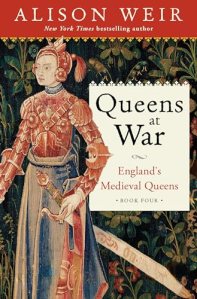 The fifteenth century in England was a time of war. Between a usurper king, fighting with France, and fighting amongst themselves, an English king must be prepared to go into battle at any moment, and his queen must be ready to support him in any way. During this period, there were five kings and queens, and while the kings get a lot of attention, it is the queens who should get their flowers for what they did in times of distress. Alison Weir explores the lives of the final five Plantagenet queens in her final book in the England’s Medieval Queens series, entitled “Queens at War.”
 I am pleased to welcome Wendy Johnson to my blog today to share information about her research for her novel, “The Traitor’s Son.” I would like to thank Wendy Johnson and The Coffee Pot Book Club for allowing me to participate in this blog tour.
 Blurb:
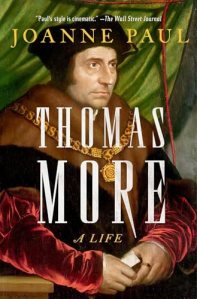 The year is 1535, and an educated scholar, father, writer, and the former Chancellor of England marches to his demise. His crime was staying silent on an issue that the King deemed extremely important: the idea that the King of England should be the Supreme Head of the Church of England, not the Pope. As a Catholic, Sir Thomas More does not agree with this decree and must die. How did one of the most prominent Tudor scholars of his age fall so quickly? Joanne Paul explores the rise and dramatic fall of this infamous Tudor figure in her latest biography, “Thomas More: A Life.”
 Blurb:
 Author Bio
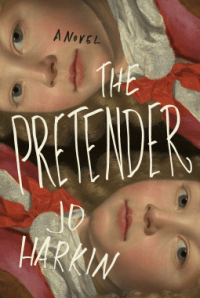 The Wars of the Roses are ending, and with it comes uncertainty about who will lead the country. On one side is King Richard III, who many believe killed his nephews to become King of England; on the other is Breton Henry, Henry Tudor, who believes he is the rightful king due to his bloodline. However, there is a third player in this entire debacle. A young farm boy named John Collan may spend his days daydreaming and studying to his heart’s content, but he is destined for more. A path that will lead him to hobnob with nobility and become the enemy of a king who just sat on his throne. Just who is John Collan, and how did this boy go from the farm to a life of infamy? Jo Harkin tells the story of how John Collan became Lambert Simnel in her novel, “The Pretender.”
 Medieval wars were not just fought on the battlefield. They also fought in court through marriage alliances and politics. While we often think about wars and men, we should also consider the women who played their parts either in exile or glistening palaces. We often think about medieval queens like Margaret of Anjou as these strong women who fought in their ways, but we have to consider the wife of Richard Neville Earl of Warwick, known as the Kingmaker; her name was Anne Beauchamp Countess of Warwick. The relationship between Margaret of Anjou and Anne Beauchamp has not been discussed much until now. Anne O’Brien tells the stories of these two women and the wars that bound them together in her latest novel, “The Queen and the Countess.”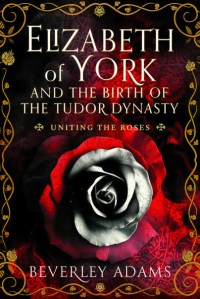
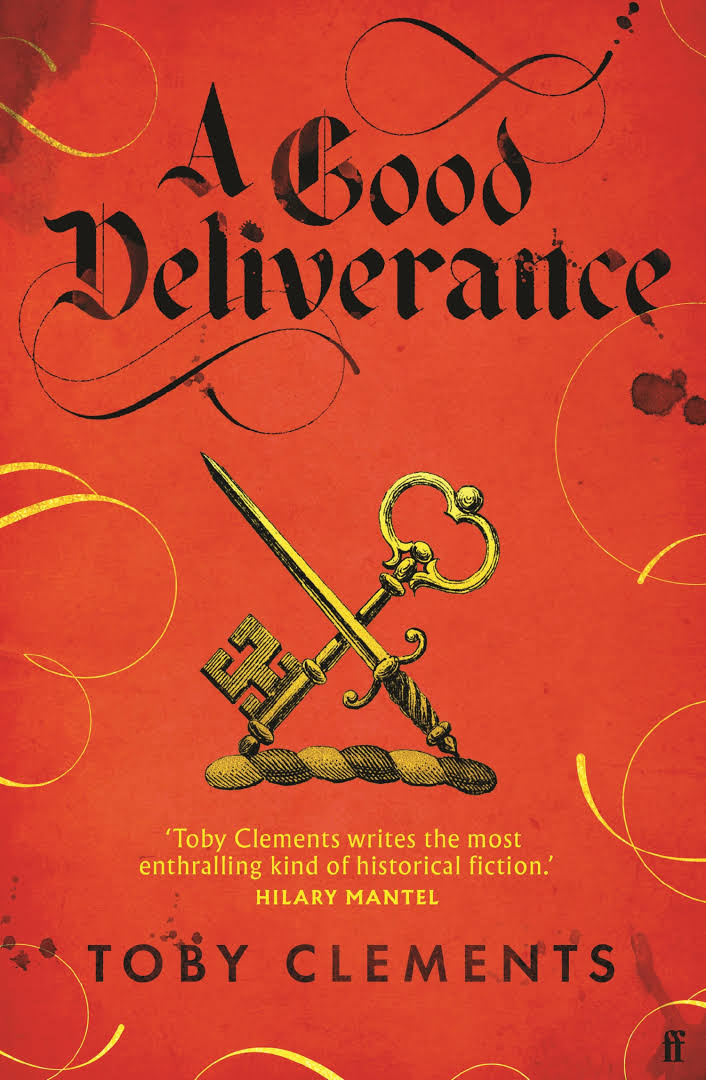 The world of King Arthur and his Knights of the Round Table is filled with stories of adventures and romance. Many authors have tried to tell these tales in a way that will allow their books to live for centuries, but none were more successful than Sir Thomas Malory and his book Le Morte Darthur. King Arthur, Lady Guinevere, Sir Lancelot, Merlin, and Sir Gawain embark on numerous adventures including the Lady of the Lake, Camelot, the sword Excalibur, and the Quest for the Holy Grail. These tales were the epitome of chivalry and valiant knights in shining armor, but the author behind them was anything but perfect. Sir Thomas Malory has had his fair share of time in a prison cell. Who was Sir Thomas Malory and why did his book about King Arthur and the Knights of the Round Table still resonate with readers centuries after it was written? In his latest novel, “A Good Deliverance,” Toby Clements hopes to reveal the truth of this famous author whose story has been overshadowed by the myths he wrote down in his legendary tome.
 Adventures of a Tudor Nerd