
 In 1483, King Edward IV’s family received a devastating announcement; the king in the prime of his life died, leaving the throne to his young son Edward V. However, neither Edward V nor his younger brother Richard of York would ever see the throne. Instead, they were taken to the Tower of London by their protector, Richard of Gloucester, for protection, never to be seen again. For over five hundred years, many theories have emerged about what happened to the princes in the tower and who might have possibly killed the boys. In MJ Trow’s latest book, “The Killer of the Princes in the Tower: A New Suspect Revealed”, he works hard to uncover the truth of what might have happened to the sons of King Edward IV.
I would like to thank Net Galley and Pen and Sword Books for sending me a copy of this book. When I first heard about this particular title, I was curious yet skeptical. There are so many books and theories about the princes in the tower. I questioned how this one would differ from those who are experts in this field. So, of course, I decided that I wanted to read this book to find out.
Trow’s approach to this case is to treat it like an investigation that modern police would do. First, we must examine the bodies or the lack of bodies in this case. Trow does mention the bodies that were found in the Tower in the 1600s and the examination of the bones in the 1900s. As it is hard to accurately determine if these are indeed the princes without further DNA analysis of the bones, Trow goes into what we know about the case, the actual facts from sources that he claims are dubious. He tends to use the works of Shakespeare and Thomas More quite a lot although he is hypercritical of both sources.
It is here where Trow actually presents his main discussion of the book; who was the killer of the princes in the tower. He starts with the usual suspects (Richard III, Henry VII, Margaret Beaufort, and the Duke of Buckingham), which he quickly dismisses. Then, Trow dives into the more obscure suspects. I actually found some of the people who he suggested ridiculous suspects because of who they were and their connections to the princes. I had never heard some of the theories he suggested in this section and I considered them a bit of a stretch. The person that Trow actually believes could have been the murderer is an intriguing character and he does make a compelling case for him committing the heinous act.
For me, it was Trow’s research and how he presented his case that was extremely poor when I was reading this book. I wanted Trow to move away from the more ridiculous suspects to focus on his main suspect and develop his theory. When he discusses his theory, he uses modern examples of similar cases to prove his point. I think he would have made a stronger case if he showed examples closer to the date of when the princes were killed.
In general, I found this book rather different than other books that are about the princes in the tower. There were some compelling theories and the suspect that Trow believes did the deed was not someone that I remotely considered. I think this book will definitely have people talking about this new suspect. If you want to know MJ Trow’s opinion about who he thinks killed the princes, consider reading “The Killer of the Princes in the Tower: A New Suspect Revealed.”
 The year 1483 proved to be a pinnacle point of change for the short-lived Yorkist dynasty. After finally defeating the Lancastrian army, King Edward IV and his family bring peace and order to England, but even their happiness cannot last as King Edward IV dies unexpectedly on April 9, 1483. A power struggle ensues between Richard Duke of Gloucester and Elizabeth Woodville over who should be King of England. Most of Elizabeth Woodville’s children side with her, but there is one child who is staunchly loyal to the Yorkist cause and her uncle Richard; Cecily of York. In her latest novel, “Princess of Thorns”, Saga Hillbom tells the heartbreaking tale of Cecily of York showing how deep her loyalty to her family was and how loyalty came with a cost.
 In life, one of the hardest decisions that we must decide is who to trust. Who can we truly depend on to be by our side when times get rough or when they are going our way. Most of the time, we can rely on those who we put our trust in, but there are extraordinary times when our trust in someone is utterly shattered. Betrayal of one’s trust is like a knife in the back, it can be devastating no matter who is being betrayed. It is not a new concept in human nature to betray others. Whether for money, for power, or lust, betrayal can destroy the lives of everyone involved. Can there be redemption after betrayal? In this anthology of historical fiction tales, twelve authors explore every aspect of betrayal throughout history. This is “Betrayal” by the Historical Fictioneers.
 Numerous castles with remarkable stories dot the landscapes of many European countries, especially England. Few are in good condition whereas others are in a rather ruinous stage. In the village of Sheriff Hutton, there is a shell of a once illustrious castle that protected England and its monarchs for centuries, aptly named Sheriff Hutton Castle. For those who are familiar with the family York and the Nevilles of the Wars of the Roses, you might be familiar with the name of this castle, but do you know the entire story of the castle? Why was this castle so significant to the history of northern England and why did it fall into disarray? These questions and more are explored in Alexander Hill’s debut book, “A Princely Lodging: A History of Sheriff Hutton Castle”.
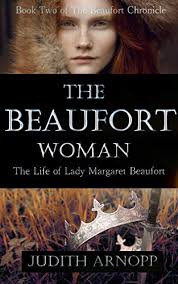 A young woman separated from her only son as a war divides the nation that she dearly loves. The struggle between York and Lancaster, the Wars of the Roses, grows in intensity and the only hope for the Lancastrians is the son of Margaret Beaufort, Henry Tudor. To keep him safe, Margaret must allow him to go into hiding as she adapts to the court of Edward IV and his wife Elizabeth Woodville. Margaret’s journey through love, death, and court intrigue continues in Judith Arnopp’s second book in her Beaufort Chronicle, “The Beaufort Woman”.
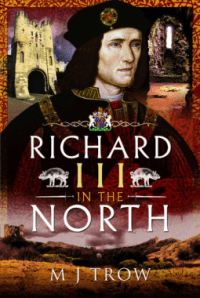 If you have studied the Wars of the Roses, you are obviously very familiar with the infamous last Plantagenet King of England, Richard III. He is known for many things, but the most notorious thing that he is associated with is the murder of the Princes in the Tower, his nephews. However, we cannot be certain that he committed this crime or if a crime was committed in the first place. These rumors swirled around London and Southern England where Richard III was not popular. It was a different story in Northern England, where he was much beloved. In M.J. Trow’s latest book, “Richard III in the North”, he tries to uncover the true story of Richard III by looking at his life while he was living in the North. Was he really the monster that literature has portrayed him as or do we have a case of misunderstanding a historical figure?
 When one thinks about Medieval Europe and buildings, we tend to focus on the luxurious castles with their impenetrable walls. It is a rather glamorous image, but the problem is it is not accurate. Castles were used for defensive measures to protect the kingdom from attacks, either from outsiders or, in some cases, from within. Medieval warfare and castles go hand in hand, but one conflict where we tend to forget that castles play a significant role is in the civil war between the Yorks and the Lancasters, which we refer to today as The Wars of the Roses. Dr. Dan Spencer has scoured the resources that are available to find out the true role of these fortresses, both in England and in Wales, in this complex family drama that threw England into chaos. His research has been compiled in his latest book, “The Castle in the Wars of the Roses”.
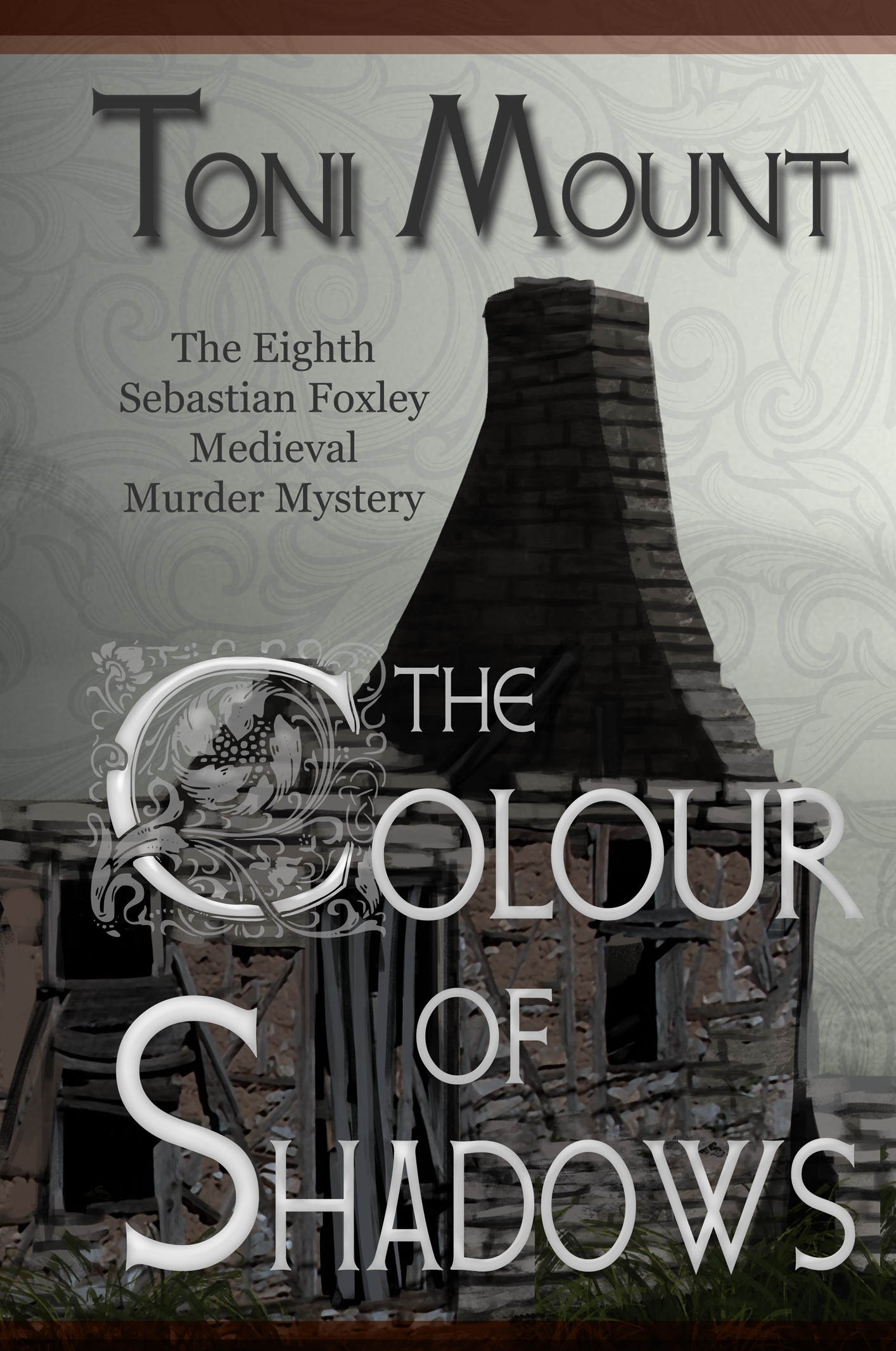 The year is 1479, and Richard III is still the Duke of Gloucester. Peace reigns throughout England as Edward IV continues his second reign as king, and for Sebastian Foxley and his household, life is hectic yet thrilling with new projects for his workshop and his family growing. But life has a way of changing rather quickly. When a young boy is found dead in Sebastian’s studio, and another goes missing, the investigation into both cases takes Foxley and those close to him into the nefarious underworld of Bankside and the mysterious The Mermaid Tavern. Can they shed some light into this dark world of shadows to uncover the truth in time to save a life? This is the premise of the latest Seb Foxley mystery by Toni Mount, “The Colour of Shadows.”
 When one thinks about a royal Progress, we often think about the glitz and glam of the royal family traversing the entire country at a leisurely rate to inspire awe for their subjects. However, the Progress of 1541, when Henry VIII and his fifth wife Catherine Howard traveled to the hostile northern part of England, was anything but a casual visit. It was very political as Henry was trying to make the North submit to him after the Pilgrimage of Grace while at the same time he was waiting for a meeting with King James V of Scotland. It is the city of York and during this important Progress that C.J. Sansom shapes his latest adventure with his hunchback lawyer and part-time detective, Matthew Shardlake, in book three of the delightful Shardlake series, “Sovereign”.
 A weak king caught in the middle of court drama, each side fighting for the control of the crown and the right to have their opinions heard. England is on the brink of civil war with a young heiress struggling to find where she belongs and to survive. The young heiress is Margaret Beaufort, the mother of Henry Tudor (the future of Henry VII) and a survivor of the Wars of the Roses. Her story has been told in many different ways, but the story of her early years has rarely been told, until now. Judith Arnopp has decided to tell Margaret’s story from her perspective in her novel, “The Beaufort Bride: Book One of The Beaufort Chronicle”.
 Adventures of a Tudor Nerd