
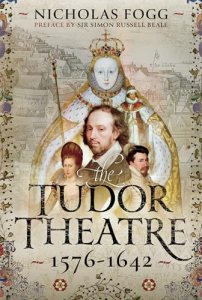
When we think about the world of the Tudor theatre, we often think about the greatest playwrights of the age. Kit Marlowe, Ben Jonson, Thomas Kyd, and of course, William Shakespeare. We think of the Globe Theatre and the grand plays and masques that were performed for the rich and the poor alike. But this is only a small glimpse into the world of the Tudor theatre scene. Nicholas Fogg explores the beginnings and the end of this period in theatrical history in his book, “The Tudor Theatre: 1576-1642.”
I would like to thank Pen & Sword Books and NetGalley for providing me with a copy of this book. I am not very well-versed in theatre history, so I was hoping for something that would be easy for me to follow along, yet also very informative.
Fogg begins in the year 1576 with the opening of The Theatre, which was a passion project of James Burbage. It was the first location dedicated solely to plays and acting, but it will not be the last. Over sixty years, we see the explosion of the theatrical arts from the great playwrights to lesser-known figures. Fogg takes the time to analyze the popular plays and those that don’t get enough attention. We also get to see how politics, the Puritans, and the plague affected the theatre scene. We witness the rise and fall of actors, playwrights, and theatres until the Puritans finally decided to close theatres for good in 1642, once the Stuarts fell for a time.
Fogg is an expert in this field of study, and he shows it on each page, but sometimes, as a novice, I felt a bit lost. The amount of information in this book was a bit overwhelming for someone like me, who is not too familiar with the theatre world. However, if you are someone who loves the Tudor theatre and wants an in-depth look at this period of theatrical history, you might enjoy “The Tudor Theatre: 1576-1642” by Nicholas Fogg.
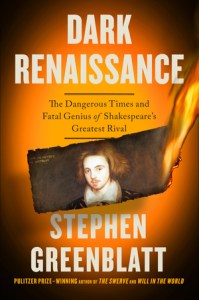 Sixteenth-century England was a time of great change. There were religious changes as the crown passed from one member of the Tudor family to another. Wars and illnesses like the plague and the sweating sickness were rampant. However, this was also a time of an explosion of the arts, particularly of the theatre. We see men like William Shakespeare and Ben Jonson rise from obscurity to write plays that would propel them to become phenomena. There was a third playwright who should be included in this list. He was the son of a cobbler who was educated at Cambridge University. A brilliant man who wrote groundbreaking plays while he was a spy for her majesty Queen Elizabeth I, his cause of death when he was only in his twenties would remain a mystery for centuries. Christopher (Kit) Marlowe’s story is told in Stephen Greenblatt’s latest book, “Dark Renaissance: The Dangerous Times and Fatal Genius of Shakespeare’s Greatest Rival.”
 When we think of the greatest writers of all time, we often think about novelists like Jane Austen and Agatha Christie. There is a playwright who we know quite well in our century, but he wrote during the sixteenth century; William Shakespeare, “the Bard.” He may have been a star in his own time and is seen as one of the greats in our era, but it took a while to get him to such a status. In fact, he was forgotten for quite some time, until the 18th century, when an unlikely group of women decided to save the bard from obscurity. The story of the Shakespeare Ladies Club, its members, and the women’s impact is told in Christine and Jonathan Hainsworth’s book, “The Shakespeare Ladies Club: The Forgotten Women Who Rescued the Bawdy Bard.”
 Everyone knows the story of William Shakespeare—the famed poet, actor, and playwright who revolutionized English literature forever. There have been a series of debates about whether or not Shakespeare truly wrote the plays or someone else did. Well, what if a group of women employed William Shakespeare as a sort of spokesperson for their plays? Can this group of women survive to write another day? This is the premise of DJ Nix’s novel. “The Shakespeare Secret.”
 When we think about live theater, we often think about big actors, elaborate sets, and glittery costumes. The world of the Tudor theater, especially during the reign of Elizabeth I, was similar in some ways, but there was an element of danger. Richard Shakespeare, an actor in the Lord Chamberlain’s Men company and a former thief, knew the dangers of Tudor theater life better than anyone. When a manuscript is stolen, suspicion lands squarely on Richard’s shoulders. Can Richard clear his name, or will it be his final curtain call? Bernard Cornwell tells the story of Richard Shakespeare and the debut of A Midsummer’s Night Dream in his novel, “Fools and Mortals.”
 Have you ever had a dream for your life that seemed so impossible that you would do anything to make sure it happened? Whether the matter of age or gender or even circumstances of one’s birth, there is always that one dream that keeps you going even during the most difficult times. Sander Cooke and his best friend Joan Buckler have dreams that seem impossible, especially living in Elizabethan England. Sander wants to stay young so he can continue to act in female roles in plays whereas Joan wants to be a natural philosopher even though she is a woman. Can they achieve their dreams or will they be doomed to fall to greater powers? The story of Sander and Joan is told in Nicole Galland’s latest novel, “Boy.”
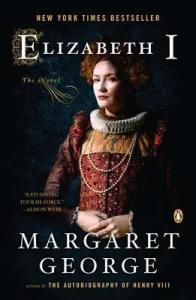 The stories of queens have been told in numerous ways for centuries, but one of the most famous queens in human history is the Virgin Queen, Elizabeth I. The daughter of Anne Boleyn and Henry VIII who famously decided not to marry any man and instead devout her entire life to serve England’s people. That does not mean she was subservient to others she demanded respect and adoration from her subjects. Most stories of Elizabeth I begin in her golden years, but what could a novel about the queen’s silver years tell us about her personality, her reign, and the people who choose to follow or rebel against the famous queen? Margaret George gives her readers an innovative look at the titular queen in her novel, “Elizabeth I.”
 When we think of the name Macbeth, we often imagine the play by William Shakespeare of a power-hungry man and his equally vicious wife willing to do whatever it took to become King and Queen of Scotland. It is a play about revenge and murder, but Shakespeare did not pull these characters out of thin air. He took these characters from the annals of history, such as a man named Macbeth and his wife, a Lady Macbeth named Gruoch. However, the names are about as much as Shakespeare gets right regarding the story of one of the first Kings of Scotland. Val McDermid tells her version of Macbeth and Gruoch’s story in her latest novel, “Queen Macbeth.”
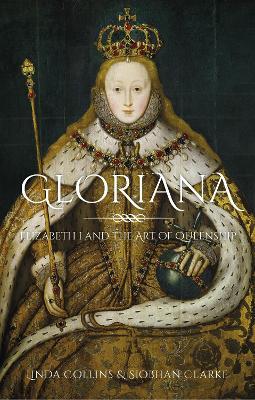 A queen locked in a struggle of being a single woman and the sole ruler of her kingdom must create the image that would help lead her divided country to a golden age. This image must comfort her people while showing strength and perseverance to her enemies who would try to take the throne from her. Elizabeth I worked hard with artists, poets, playwrights, and musicians to create the almost mythological image of “Gloriana,” the virgin goddess. Linda Collins and Siobhan Clarke explore how this image was created throughout Elizabeth’s reign in their latest book, “Gloriana: Elizabeth I and the Art of Queenship.”
 The Black Death has ravished England and Europe for centuries. Although the plague in the 16th century was not as devastating as in previous centuries, it still was a horrific disease that killed thousands. For example, in Warwickshire, England, a family understood how unforgiving death could be and how it can tear down even the strongest of familial bonds. The family of the playwright William Shakespeare must navigate the sudden loss of their beloved son while they keep their family together. “Hamnet” by Maggie O’Farrell is the story of the death of one child and how his death affected so many people.
 Adventures of a Tudor Nerd