
 I am pleased to welcome Julian de la Motte to my blog to share an excerpt from his novel, “The Will of God.” I would like to thank The Coffee Pot Book Club and Julian de la Motte for allowing me to be part of this blog tour.
Excerpt:
And so there had been, far more than a ‘little something’ in fact. Grandesmil was carrying in his panniers documents that entitled him to vast swathes of new lands in the Cotentin, and he was carrying in his head visions of the likely reaction to William’s death of certain of his more immediate family. And thus, to Robert, his eldest son: The boy had been with the King of France for four years now. Kept on a short leash and harboured by William’s greatest enemy, a boy caught in rebellion and open defiance of his father. To Robert, then, full pardon and restitution and the bestowing of the Duchy of Normandy for himself, but no Crown of England.
And thus, to Odo, his half-brother. A man so steeped in sin and villainy and treachery that he could no longer personally enjoy his former high estate. While he languished under close but comfortable confinement for his unchurchly crimes, the bounty of Kent, his bishopric of Bayeux, and a score of other properties and estates had gone, untasted by him and savoured by others. To Odo, then, forgiveness and a return of all his former glories and previous estate. To his problematic and scandalous second son William, called Rufus for his red hair and high complexion, the great prize of the Kingdom of England itself and all that it brought, good and bad. To Henry, his youngest and avaricious son, the sum of the weight of five thousand pounds of silver, to make of it what he would.
It was ever the fate of younger sons to make of themselves what they could. That, after all, was what the wild lands of Spain, of Italy, and Sicily and the possessions of the Byzantines were for, so that determined men with horses and swords could take and make of them what they could. But the strange and cold and calculating boy would not embark upon the world empty-handed.
 Blurb:
“Deus Lo Vult!”
Gilles is the natural son of the Earl Waltheof, executed by William the Conqueror for supposed treachery. Raised in Normandy by Queen Matilda of England, Gilles is a young servant of Robert, Duke of Normandy, when the first call for a Holy War against the infidel and the liberation of Jerusalem is raised in Christendom. Along with thousands of others, inspired by a variety of motives, intense piety mixed with a sense of adventure and the prospects of richness, Gilles becomes a key and respected follower of the Duke of Normandy and travels through France and into Italy to the point of embarkation for Constantinople and the land of the Greeks.
In this epic first phase of a long and gruelling journey, Gilles begins to discover a sense of his strengths and weaknesses, encounters for the first time the full might and strength of the Norman war machine and achieves his much coveted aim of knighthood, as well as a sense of responsibility to the men that he must now lead into battle.
The Will of God is the literal translation of the Latin phrase “Deus Lo Vult,” a ubiquitous war cry and a commonly offered explanation of all the horrors and iniquities unleashed by the First Crusade of 1096 to 1099, when thousands of Europeans made the dangerous and terrifying journey to the Holy Land and the liberation of Jerusalem. It is the first of two books on the subject.
Praise for The Will of God:
“De la Motte has superpowers as a writer of historical fiction; he’s a warhorse of a writer bred to stun and trample the literary senses. You won’t stop turning the pages of The Will of God.”
~ Charles McNair, Pulitzer Prize nominee and author of Land O’Goshen
Buy Link:
Universal Buy Link: https://geni.us/uXe6u
Author Bio:
Julian de la Motte is a Londoner. He graduated from the University of Wales with a degree in Medieval History. He was further awarded a Master of Arts qualification in Medieval English Art from the University of York.
He studied and taught in Italy for nearly four years before returning to the U.K. and a career as a teacher, teacher trainer, and materials designer before taking up a new role as the Director of Foreign Languages and of English as a Foreign Language.
Married and with two grown-up children, He is now extensively involved in review writing and historical research, primarily on medieval history.
”The Will of God” [the first of two books on the subject of the First Crusade] is his third novel.
Author Links:
Website: www.historiumpress.com/julian-de-la-motte
Facebook: https://www.facebook.com/julian.delamotteharrison.3
Amazon Author Page: https://www.amazon.com/stores/author/B08XWMRPYK
Goodreads: https://www.goodreads.com/author/list/20873400.julian_de_la_Motte
 England’s history is centuries old, full of colorful characters and change galore. What truly defines the history of England is the monarchy, which has lasted over a thousand years. Over 40 kings and queens left their distinct marks on the history of this proud island nation. While some could maintain the crown with no issues, others had to fight to earn the crown, and a few even died for the crown. While there has been a plethora of books and novels written about individual monarchs and their impacts on the history of England, only a select few have chosen to take the arduous task of telling the story of the British Monarchy from its origins to the modern-day. One such historian who has chosen the latter is Tracy Borman in her book, “Crown and Sceptre: A New History of the British Monarchy from William the Conqueror to Elizabeth II.”
 We all know the story of William the Conqueror and the Norman Conquest. William claimed he was the heir of Edward the Confessor instead of his rival Harold Godwinson. Harold was seen as a villain throughout history thanks to the Norman sources, but what was the historical Harold Godwinson like? Was he a malicious usurper who had to die at the Battle of Hastings for the rightful King William I to take the throne or is there more to his story than his death? Paula Lofting scoured the archives to find the truth about this maligned man in her book, “Searching for the Last Anglo-Saxon King: Harold Godwinson, England’s Golden Warrior.”
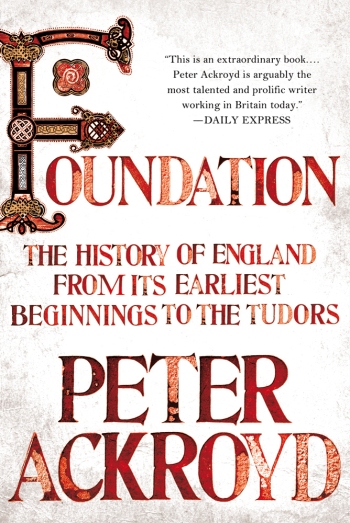 England is a nation that is rich in history and conflicts galore. Through the centuries, England has seen so much change. Many of us know the stories of the medieval and the Tudor kings and queens of England, covered in numerous books, but Peter Ackroyd has taken this concept a step forward. Ackroyd embarked on an epic quest to chronicle the history of England from its prehistoric origins to the modern age. In “Foundation: The History of England From Its Earliest Beginnings to the Tudors,” Peter Ackroyd begins his epic journey into the past to explore the origins of English history.
 A life of luxury from birth, destined to be crowned King or Queen of England. This is what we often think life must have been like for royal heirs who reached the ultimate destination of a crown and a throne. However, the stories of those who failed to reach the throne are mired in tragedy and heartache. The question of royal succession in England is a complex issue, especially when the heir to the throne dies unexpectedly, leaving doubts on whether a dynasty will survive through blood or dissolve in conflict. How did the deaths of these potential rulers radically transform the fabric of English history as a whole and what can their lives tell us about what kind of rulers they might have been? Ashley Mantle hopes to answer all of these questions and more in his latest book, “Uncrowned: Royal Heirs Who Didn’t Take the Throne.”
 One of the most critical years in English history was 1066, when William Duke of Normandy invaded England in the Norman Conquest. Known as William the Conqueror, his strength and ruthlessness made him a legend, but William would not have been the Duke or King of England without his equally formidable wife. Matilda of Flanders stood her ground, became the Duchess of Normandy, had a large family with William, and would become the first crowned Queen of England. Although much has been written about William the Conqueror and the Norman Conquest, Matilda of Flanders has not received the same attention until now. Tracy Borman has written the first biography dedicated to this remarkable woman entitled, “Matilda: Wife of the Conqueror, First Queen of England.”
 When we think about royal relationships from the past, we do not associate them with love; it is more about cementing power. Princes and kings knew how much was at stake, so they tended to have wives for politics and produce legitimate heirs that would inherit their kingdoms. For matters of love and lust, kings and princes would have mistresses, either of noble birth or lower, on the side. These women have been deemed whores and homewreckers but is that a fair assessment of their legacies? Julia A. Hickey takes a closer look at these misunderstood mistresses in her latest book, “Medieval Royal Mistresses: Mischievous Women who Slept with Kings and Princes.”
 When we think of the past, especially those close to a thousand years past our current time, we tend to think about kings and conquerors who transformed the political landscape of certain countries. However, kings and conquerors would be nothing more than mere men if it was not for advisors and allies that stood by their sides or against them. For example, for nearly a century, the men and women of the House of Godwin were at the center of Anglo-Saxon politics and helped or hindered the path of those who wished to sit on the throne of England. The House of Godwin might not be a familiar family for those who are not familiar with Anglo-Saxon England before the Norman Conquest. Still, Michael John Key takes on the challenge to tell their story in his book, “The House of Godwin: The Rise and Fall of an Anglo-Saxon Dynasty.”
 English kings are some of the most recognizable monarchs in all of European history, and when we think of Kings of England, a few names pop into our minds. Edward, George, and William tend to be popular, but you cannot study English history without Henry. Eight kings of England were Henry, and they would change the history of England forever. These eight kings give us an entire range of what kingship was like in medieval Europe. From men born to be king to opportunists who decided to take the throne as their own, from saints to warrior kings, the Henrys of English history were a colorful group of characters. Each king has had numerous biographies written about him, but there has never been a collection of biographies about the kings named Henry until now. This is “Harry of England: The History of Eight Kings, From Henry I to Henry VIII” by Teresa Cole.
 In human history, when citizens have disagreed with a new law or those in charge, they often stage a protest to show their frustration. When their voices are not heard, people often turn to rebellions and revolts to make sure their opinions matter. We might think that revolution and rebellion as a form of protest are modern ideas, but they go back for centuries. Revolutions and rebellions shaped history, no more so than in the middle ages. In his latest book, “Rebellion in the Middle Ages: Fight Against the Crown,” Matthew Lewis examines the origins of the most famous rebellions in medieval England and how they transformed the course of history.
 Adventures of a Tudor Nerd