
 Civil wars between cousins have had many names in the past, notably in England, the Wars of the Roses. However, there was a civil war that pre-dates the colorful contest known as The Anarchy. Two cousins fighting against one another from the throne of England, but what makes this contest unique was the main protagonists caught in the middle. One was the only legitimate child of King Henry I, Empress Matilda. The other was Henry I’s favorite nephew, Stephen of Blois. This conflict stretched for decades and has fascinated historians for centuries. It is complex and at times, a bit confusing, but Matthew Lewis has chosen to shed some light on what happened during this period in history in his latest book, “Stephen and Matilda’s Civil War: Cousins of Anarchy”.
I would like to thank Pen and Sword Books for sending me a copy of this book. I have enjoyed Matthew Lewis’ books in the past and I didn’t know much about The Anarchy, so this book seemed like a good place to start.
The story of The Anarchy started when Henry I’s only legitimate son died tragically in The White Ship disaster. Although Henry I did have numerous illegitimate children, the only legitimate child that he had left was his daughter Matilda. She was married to the Holy Roman Emperor Henry V, thus she took her illustrious title Empress Matilda. However, when her husband died, she married Geoffrey, Count of Anjou.
When Henry I died in 1135, the throne was supposed to pass down to Empress Matilda, which would have been unprecedented as a woman never ruled England before. However, Empress Matilda’s cousin and Henry I’s nephew, Stephen of Blois got to England first and became King Stephen. To make matters a bit more confusing for those who study this time period, King Stephen married Matilda of Boulogne, who is known in this book as Queen Matilda. Although they shared the same name, these two women acted very differently when it came to how women in power demanded respect from the men around them.
As Lewis explains, The Anarchy which lasted from 1135 until 1154, was not this period of extreme chaos caused by King Stephen’s reign. There are some misconceptions about King Stephen and Empress Matilda that have been passed on through the centuries such as King Stephen was an ineffective leader and Empress Matilda was power-hungry and heavy-handed. Since Lewis decided to keep a very neutral approach, showing both sides of the conflict, which was such a strength in this book, the reader can understand what both Stephen and Matilda were fighting for and how they fought their war. Lewis also showed how the barons, clergy, and other European rulers played into this confusing conflict which led to Empress Matilda’s son Henry II becoming the first Plantagenet King of England.
This was a great introductory book to the conflict known as The Anarchy and the colorful characters of King Stephen and Empress Matilda. Lewis was able to combine well-researched information and an easy to understand writing style to bring this conflict to life. As someone who did not know a whole lot about The Anarchy before I read this book, I found it rather enlightening. The only qualm that I did have with this book was that I was getting confused about the barons and clergy who were helping either side and which side they were on. I do wish that Lewis included a table of names of the people involved to help clear the confusion. Overall, I did enjoy this book. If you want a great book that introduces you to the tumultuous time in English history known as The Anarchy, I recommend you read, “Stephen and Matilda’s Civil War: Cousins of Anarchy” by Matthew Lewis.
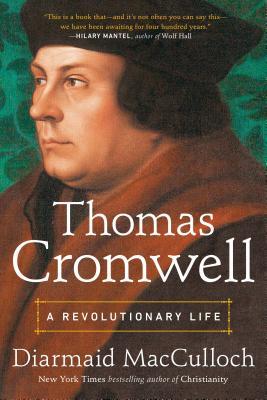 The stories of King Henry VIII and the men around him have fascinated generations of historians, but there was one man who has received a negative reputation for his actions. He was the supposed son of a butcher who rose to be Henry VIII’s right-hand man, until his dramatic fall in July 1540. Thomas Cromwell was credited for helping Henry with his Great Matter, the fall of Anne Boleyn, the establishment of the Church of England, and the disastrous marriage between Henry and Anna of Cleves. Diarmaid MacCulloch has taken on the challenge to figure out who Thomas Cromwell really was by sifting through all remaining archival records that we have from this extraordinary man. It is in this book, “Thomas Cromwell: A Revolutionary Life” that MacCulloch masterfully explores the story of this man who changed English and European history forever.
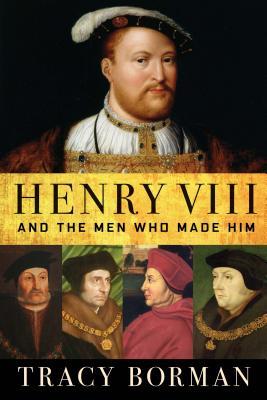 The story of the reign of King Henry VIII has been told mainly through his numerous marriages and through the lives of his children. Although his immediate family was a big part of his legacy, there is much more to his story than his tempestuous relationships. There were also his legal, religious, and military exploits. The ones who were with Henry when he made these decisions were the men who were loyal to him, his counselors and companions. Their tales are often told separately, until now. Tracy Borman has decided to masterfully combine their tales to explore the life of their infamous king in her latest biography, “Henry VIII and the Men Who Made Him”.
  During Henry VIII’s reign, those who were most loyal and the closest to the king did not often last long to enjoy the rewards of his friendship. However, there was one man who stayed in relatively good favor with the king throughout his reign. He was a sailor, a soldier, a diplomat, and acted as an English ambassador mostly in France. He was a cousin to a few of Henry VIII’s wives, a lover of wine, and an infamous womanizer. The name of this rather extraordinary man was Sir Francis Bryan and the story of how he survived the tumultuous reign of Henry VIII is told in Sarah-Beth Watkins’ latest biography, “Sir Francis Bryan: Henry VIII’s Most Notorious Ambassador”.
 There have been certain events in Tudor history that have become as famous as those involved. None more so than the divorce between Henry VIII and Katherine of Aragon so Henry could marry his second wife, Anne Boleyn, also known as “The Great Matter”. We often study this time through the perspectives of the many historians and authors who have written about this topic. But, what if Katherine, Henry, and Anne had a chance to speak for themselves about the events of “The Great Matter”. Thomas Crockett decided to have the main figures of this famous divorce tell their tales in his latest work, “The Great Matter Monologues: Katherine, Henry, Anne”.
 England throughout the centuries has known internal strife with civil wars to determine who had the right to rule the island nation. None more so than in the fifteenth century when a tug of war for the English crown broke out. Today, we call this time period “The Wars of the Roses”, but what was it all about? Who were the main figures during this time? What were the crucial battles that defined these wars? How did the Plantagenet Dynasty fall and how did the Tudors become the new dynasty to rule England? These questions and more are explored in Dan Jones’ book, “The Wars of the Roses: The Fall of the Plantagenets and the Rise of the Tudors”.
 Young Nora Basset has no memory of her father, John, as he died when she was very young. Her first years are spent at Umberleigh in Devon with her family. When she is three years old, she meets her grandmother, Honora Lisle, who has returned from imprisonment in Calais and has been tragically widowed. Nora and her grandmother form a close bond, as the child unwittingly assists the older woman to come to terms with her loss. The following year, Nora’s mother, Frances Plantagenet, remarries. Her new husband is Thomas Monk of Potheridge and the family leaves Umberleigh to begin their new life.
 The story of the Crusades has been told in many different ways from numerous directions. The epic conflict between Christianity and Islam for the Holy Lands that went on for centuries that has lived in infamy. Many questions have arisen as historians try to separate facts from the myths surrounding this topic. How and why did it start? Why did it continue to go on for so long? Was there really a winner in this conflict? Who were the people who defined this conflict? Dan Jones has taken on the challenge of writing a comprehensive history of this conflict and the people who fought during this time in his latest book, “Crusaders: The Epic History of the Wars for the Holy Lands”.
 The medieval era was one of the most turbulent times in all of English history, full of family feuds, gruesome wars, and so many twists and turns. We tend to focus on the big stories, but, it was not just about the royalty and the nobility, there were also lower classes whose lives went on in the background. What was everyday life like for both the rich and the poor? What ceremonies and recipes did they use? What were wills and court cases like? These questions and more are explored in Toni Mount’s delightful book, “A Year in the Life of Medieval England”.
 In history, we tend to focus on the stories of the men and women who shaped the era. This is obviously important, but the locations where the events of the past happened are equally as important. Sadly, many of the buildings that the men and women from the past knew no longer exist. However, there are a few, especially from the Tudor period, that we can still visit. Suzannah Lipscomb explored over 50 of these remarkable buildings and decided to tell their tales in her book, “A Journey Through Tudor England”.
 Adventures of a Tudor Nerd