
 A 16-year-old duchess, who lived a sheltered life, died in a remote villa after only being married to her husband, Alfonso Duke of Ferrera, for a mere year. Many suspect that she died of a fever, but there are rumors that her husband had her poisoned. Not much is known about Lucrezia de Medici, Duchess of Ferrara, except her marriage portrait and a brief mention of her in Robert Browning’s poem, “My Last Duchess.” Did she die of a fever, or was there a more sinister plot behind her demise? The mystery around her life and unexpected death have not been discussed much until now in Maggie O’Farrell’s latest novel, “The Marriage Portrait.”
The last book I read by Maggie O’Farrell, “Hamnet,” was such an emotional ride for me, so when I heard that she would dive back into the 16th century with her latest novel, I was excited. I will admit that I had never heard the story of Lucrezia de Medici, so I was curious to see how O’Farrell would tell her tale.
We begin in the villa with Alfonso and Lucrezia, where Lucrezia feels uneasy and fearful for her life, but to understand why we must go back in time. We then jump to the past and Lucrezia’s childhood as the daughter of Cosimo I de Medici, Grand Duke of Tuscany, and his wife Eleanor of Toledo. Lucrezia’s youth should be filled with balls and glamor, but she is different than her siblings and is treated as almost an outcast in her own family. Her only solace is her maid Sofia, who acts more like her mother, and her love of the arts.
As a daughter of nobility, Lucrezia knows that she will have to marry a noble one day, but it comes sooner than expected when her eldest sister dies, and she is betrothed to Alfonso, Duke of Ferrara. Her marriage to Alfonso begins smoothly; Alfonso is loving and caring, allowing Lucrezia to pursue her passions and have the freedom she desires. He even allows for a portrait painted in her honor to show the world how regal his bride is and how much he loves her. However, as time passes, Alfonso’s more erratic side shows its ugly head, and Lucrezia sees how dangerous her husband can be to those who displease him.
I will admit that it took me a while to get used to how this particular book was structured, as O’Farrell jumps from the present to the past in every other chapter and presents Lucrezia’s story in a very artistic way. I am unsure if Lucrezia was an outcast in her family, but I believe she could have been an artist and viewed the world differently than her family. As for Lucrezia’s relationship with her husband Alfonso, I think it is plausible that he had a more erratic side to him, especially when it came to those who displeased him. Still, I am not sure that he was responsible for her death.
This novel was thought-provoking and engaging with an unlikely protagonist in Lucrezia de Medici. Even though you know she will die at the end, you will root for Lucrezia and hope that she can find even the slightest thread of happiness in her short life. I found this an utterly gripping novel, and I hope O’Farrell will write more stories set in 16th-century Italy. If you want a thrilling book about a young noblewoman living during the Italian Renaissance, “The Marriage Portrait” by Maggie O’Farrell should be at the top of your to-be-read list.
 When one says “the Princes in the Tower,” a few images pop into our mind. Two young boys were killed in the Tower by their evil uncle, who would become King Richard III. At least, that is the image that the Tudors wanted the world to see, and for centuries, that story has often been told. However, as research has expanded into who Richard III was, the tale of these two boys and their ultimate fate has become even murkier with new suspects and the question of whether the boys were murdered. Elizabeth St. John decided to take on the mystery of the Princes of the Tower with her twist to the tale in her latest novel, “The Godmother’s Secret.”
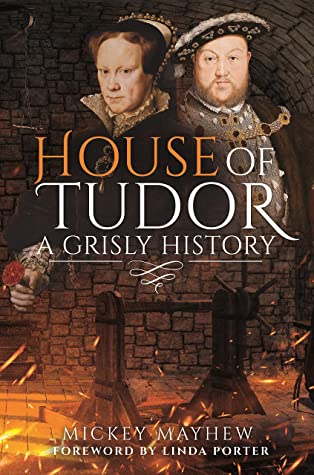 The glitzy, glamorous life of the Tudors portrayed in popular TV shows and novels mask the truth of this infamous dynasty. It is more bloody than what has been described. It is filled with grotesque executions, deadly diseases, bloody battles, and bloody battles. What happened to Richard III’s remains? What was Tudor torture like for those unfortunate victims? What were other devious tales at play in 16th-century Europe? Mickey Mayhew has worked hard to answer these questions by combining 45 of the most gruesome stories from this dynasty into one book, “The House of Tudor: A Grisly History.”
 The year is 1346, and numerous English ships have landed on the shores of France. King Edward III, his son Edward of Woodstock, and his lords launched the first stage of what would be known as the Hundred Years’ War. Amongst the English royalty, nobility, and regular soldiers, are companies of men who came of their own accord for money and glory. One company of men consists of ten men known as the Essex Dogs, led by Loveday FitzTalbot. They are not like the other groups. They do not fight for money or glory; they fight for each other. In the horrors of war in a foreign land, can the Essex Dogs keep their promise and stay alive? Dan Jones introduces the world to these ten men and the early stage of the Hundred Years’ War in his first historical fiction novel, “Essex Dogs.”
 The world of someone close to a king, especially someone close to King Henry VIII, was full of hazards and great triumphs. All the glist and glamor of the Tudor court could not save them from the rage of the King. This could apply to anyone who fell during the reign of this infamous King, but none more so than his second wife and queen, Anne Boleyn. Much has been written about Anne Boleyn and her dramatic fall from grace, specifically the final month of her life, but what was she doing in her last year alive? Natalie Grueninger hopes to answer this question in her latest book, “The Final Year of Anne Boleyn.”
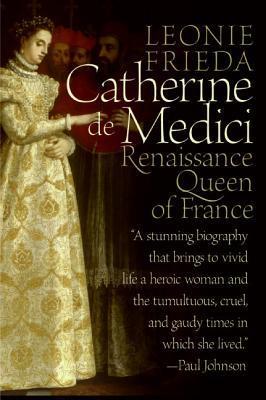 When we think about women rulers in the 16th century, some names, like Queen Mary I, Queen Elizabeth I, and Mary Queen of Scots, come to mind. However, another woman should be included in this list as her life helped keep the Valois dynasty alive and well in France, even though she was Italian by birth. Her name has been tainted with dark legends of poisoning, deadly incidents, and the infamous St. Bartholomew’s Day Massacre. This notorious queen was Catherine de Medici, and Leonie Frieda has chosen to shed some light on the myths and mysteries surrounding this misunderstood woman in her biography, “Catherine de Medici: Renaissance Queen of France.”
 Two women who served Anne Boleyn must deal with the ramifications of staying on opposite sides of the queen’s downfall. One is the next bride of King Henry VIII, who must give the king the son he desires or suffer the consequences. The other is a lady in waiting who holds a dark secret and a relic of the past that could be dangerous to both women. Many of us know the story of Jane Seymour, but is there more to the queen who was able to give King Henry VIII the son he desired? What about the mysterious Margery Horsman? What role did she play in Anne Boleyn’s and Jane Seymour’s inner circles? In her third book, “Keeper of the Queen’s Jewels,” Adrienne Dillard tells the tale of these women bonded by fate to work together to survive such a tumultuous time.
 Medieval Europe was inundated with strong rulers and dominant figures who made a difference in how the policies of certain countries were formed. We tend to focus on the male figures, from kings to lords and rebels, when we study medieval European history. Still, the women in their lives significantly influenced how their countries were governed. Although many women stood by the side of their husbands and didn’t make much of an impact on European history, some women chose to stand out from the crowd and make a name for themselves. Rebecca Holdorph has chosen to highlight a handful of these dynamic women throughout medieval Europe in her book, “Women in the Medieval Court: Consorts and Concubines.”
 Three women in one family who shared the same first name saw England change over a tumultuous century. They saw the end of the Plantagenet dynasty and the rise of the Tudors while on the sidelines of great battles. Through heartaches and triumphs, the women of the Woodville family became princesses and queens that would transform the political landscape of England forever. These three women, Elizabeth Woodville, Elizabeth of York, and Elizabeth Grey, were incredible examples of what it meant to be medieval royal women. They are featured in Sarah J. Hodder’s latest book, “The Woodville Women.”
 When we think about those who rose through the ranks to achieve significant titles in the Tudor Court, we instantly think about Thomas Cromwell. However, we should also consider his mentor as one of these great men, Cardinal Thomas Wolsey. The son of Robert Wolsey, an Ispwich businessman, and his wife, Joan Daundy, who worked hard and ended up being the right-hand man of the young King Henry VIII. The man behind Hampton Court helped start the Great Matter and The Field of Cloth of Gold, Wolsey had numerous achievements. Who was the man behind these significant Tudor moments? This is the question Phil Roberts tries to address in his book, “Cardinal Wolsey: For King and Country.”
 Adventures of a Tudor Nerd