
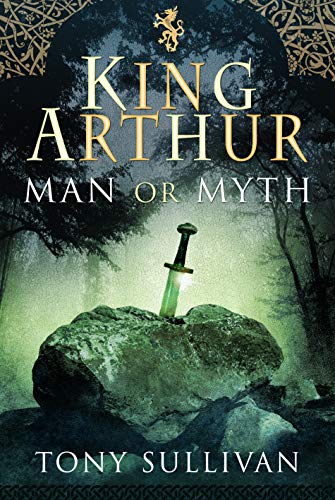
Myths and legends have come to define the legacy of kingdoms. Stories of men like Robin Hood who did not have magical aspects have captured the imagination of Englishmen for generations. However, there is one legend whose legacy is synonymous with the English people; the legend of King Arthur. We all know the story of the mythical king who ruled over Camelot with his beloved wife Gwenivere, his magical sword Excalibur, and his trusty Knights of the Round Table. Yet a question arises when we study this legend; was there ever a historical King Arthur? This is the central issue that Tony Sullivan has chosen to investigate thoroughly in his book, “King Arthur: Man or Myth?”.
I would like to thank Pen and Sword Books for sending me a copy of this book. I was curious about this book after reading a previous book about Robin Hood. I will say that I did not know much about the Arthurian legend except the popular aspects that tend to appear in novels and films. Of course being a Tudor nerd I knew that Henry VII had a fascination with the story, since he named his eldest son Arthur, so I wanted to explore what made this tale so intriguing for many centuries.
To understand the origins of the myth, we must go back in the past, but not to the medieval period that many would expect after reading the legend. Sullivan’s main focus is on a period much farther back in time, Roman Britain. This is not an area of history that I normally study so I was unfamiliar with the people and the battles that Sullivan mentioned in connection to the “real” Arthur. It did feel a bit dense to me and it took me a while to get through this portion of the book, even though I did find it rather interesting to read about Roman Britain.
What impressed me about this book is Sullivan’s passion for this subject and his willingness to go the extra mile to show both sides of the argument, that there was a historical Arthur and a mythical Arthur. He dives deep into the sources, from the earliest annals and chronicles to the 11th and 13th centuries legends and romances. It was extremely fascinating to see how he treated this book like a criminal investigation, using different fields of study to figure out the origins of the legend, how it evolved, and whether or not there was a king named Arthur.
Overall, I found this book intriguing and rather challenging. If you are a novice when it comes to the academic world of the Arthurian legend, it might be a difficult read. I would suggest that if you are interested in reading this book, take your time and take plenty of notes. This may not be the best introductory book for those who want to know about the Arthurian legend, but I think that it will give you a better understanding of Roman Britain and the academic side of studying such a legendary figure. If this piques your interest, you should check out, “King Arthur: Man or Myth?” by Tony Sullivan.
 The year is 1543 and King Henry VIII is looking for his sixth and final wife; the recent widowed Catherine Parr has caught his eye. It is her reformist values that make her a valuable asset for Archbishop Cranmer and his faction at court, and a target for others. A friend of Matthew Shardlake is viciously murdered, leading to a horrific discovery of a killer is on the loose. On top of that, Shardlake must defend a young man who has been placed in the Bedlam insane asylum for his radical beliefs. It is up to Shardlake and his intrepid assistant Barak, along with the former monk turned physician Guy Malton, to solve both cases before anyone else becomes the next victim. This is the world that readers are plunged to in the next book in C.J. Sansom’s Shardlake series, “Revelation”.
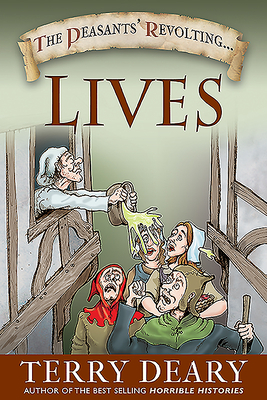 When we study history, we tend to focus on the lives of the elite and the royalty because their lives are well documented. However, there was a large majority of the population who tends to be forgotten in the annals of the past. They are the lower classes who were the backbone of society for centuries, the people who we would call peasants. Now, if we know so much about the higher echelons of society, we must ask ourselves what was life like for those who had almost nothing in life. How did they work? When they did speak out about injustices through revolutions, how were they received? How did they worship? How were they educated? How did they relax after long days of back-breaking labor? Where did they live? These questions and more are answered in Terry Deary’s latest book, “The Peasants’ Revolting Lives”.
 The year of 1215 marked a turning point in English history with the sealing of a rather unique document; the Charter of Liberties, or as we know it today, the Magna Carta. It was a charter from the people to a king demanding the rights that they believed that they deserved. Those who sealed it were rebel barons who were tired of the way King John was running the country, yet instead of asking for his removal, they wanted reform. The clauses mostly concerned the problems of the men who made the charter, however, three clauses dealt with women specifically. In her latest book, “Ladies of Magna Carta: Women of Influence in Thirteenth Century England”, Sharon Bennett Connolly explores the lives of the women who were directly impacted by this document.
 When one thinks about a royal Progress, we often think about the glitz and glam of the royal family traversing the entire country at a leisurely rate to inspire awe for their subjects. However, the Progress of 1541, when Henry VIII and his fifth wife Catherine Howard traveled to the hostile northern part of England, was anything but a casual visit. It was very political as Henry was trying to make the North submit to him after the Pilgrimage of Grace while at the same time he was waiting for a meeting with King James V of Scotland. It is the city of York and during this important Progress that C.J. Sansom shapes his latest adventure with his hunchback lawyer and part-time detective, Matthew Shardlake, in book three of the delightful Shardlake series, “Sovereign”.
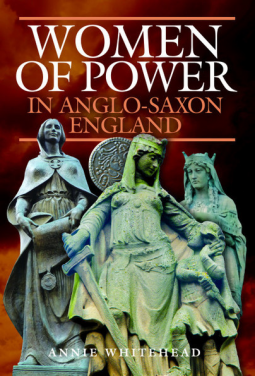 When one studies English history, many people tend to focus on the year 1066 with William the Conqueror and the Norman Conquest as a starting point. However, just like any great civilization, others formed the foundation of English history; they were known as the Anglo-Saxons. What we know about the Anglo-Saxons come from the records of the kings of the different kingdoms of England, which paints a picture of harsh and tumultuous times with power-struggles. However, every strong king and gentleman of the time knew that to succeed, they needed a woman that was equally strong with a bloodline that would make them untouchable. The stories of these women who helped define this era of Anglo-Saxon rulers in England have long been hidden, until now. In her latest book, “Women of Power in Anglo-Saxon England”, Annie Whitehead dives deep into the archives to shed some light on the stories of the formidable women who defined an era.
 The year 1540 during the reign of Henry VIII was a turbulent time. Henry’s new wife, Anne of Cleves, is not exactly the person who he imagined and his eye is starting to wander to a new woman, Katherine Howard. The reformers are starting to lose favor with the king as they and Catholics alike are being executed for treason. This is the London that Matthew Shardlake, our favorite hunchback lawyer turned detective, calls home. He thinks that he has retired from his detective work and serving Thomas Cromwell, but he is sadly mistaken. His next adventure has twice the number of cases and just as much danger that makes his trip to the monastery in “Dissolution” look easy. In the second book of the Shardlake series, “Dark Fire”, C.J. Sansom turns up the heat, the action, and the danger.
 The Tudor dynasty marked tons of changes in society and religious norms. In 1537, the changes are in full force. Anne Boleyn was executed a year earlier and Henry’s third wife, Jane Seymour recently passed away after giving birth to Edward VI. Religious reformers are clashing with the Catholic Church after Henry VIII has declared himself the Supreme Head of the Church of England. Henry VIII’s reign marked the changing point in societal and religious norms, none more so than the dissolution of the monasteries. As monasteries and monks alike adjust to the new ways of life, the monastery at Scarnsea buzzes with activity and murder. Henry VIII’s right-hand man, Thomas Cromwell, sends an unlikely man to investigate the situation; the hunchback reformer lawyer, Matthew Shardlake. This is the world that C.J. Sansom has chosen to create in the first book of his Tudor mystery series, aptly named, “Dissolution”.
 The story and myths of Henry VIII’s second wife, Anne Boleyn, have been debated and dissected for centuries. Was she a cruel and calculating figure who got what she deserved or was she an innocent victim of an evil tyrant of a husband? The funny thing about history is that the truth is never clear cut. Historical figures are human beings, no matter how many centuries separate their lives from our own. They were not all good or all bad, which is the perspective that Claire Ridgway tries to show when she is writing about her favorite figure, Anne Boleyn, either in her books or on her blog, The Anne Boleyn Files. To celebrate the 10th anniversary of the Anne Boleyn Files, Claire Ridgway returns with the latest collection of articles, “The Anne Boleyn Collection III”.
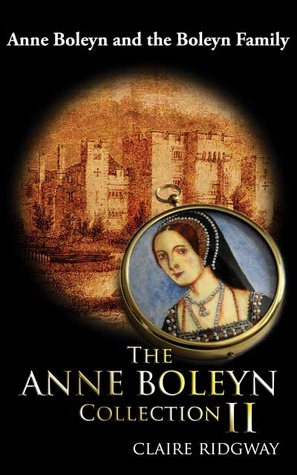 The Boleyn family have been viewed as social climbers, who only desired power and prestige, in history and novels for centuries; their fall from grace was due to their ambitions. But, is this true? Did Anne Boleyn’s family only care about getting to the top by any means necessary? Were they manipulative, cunning, and cruel like they have been portrayed in dramas and novels? Who were the Boleyns and why have they been so maligned in history? In her second book of this series, “The Anne Boleyn Collection II”, Claire Ridgway of The Anne Boleyn Files examines Anne Boleyn and the truth about her family.
 Adventures of a Tudor Nerd