
 Have you ever watched a historical drama/ movie or read a historical fiction novel and started to wonder if the “facts” they a portraying are true? You start researching the history of these people and the times that they lived in and it soon becomes a passion. You have your favorite figures to study and you want to defend them when those online decide to criticize them in discussion boards. For some of us, that is as far as it goes, but some choose to make blogs to explore these topics even further. This scenario is similar to what happened with Claire Ridgway, the creator of the popular blog The Anne Boleyn Files; however, her inspiration came from a dream. To share her passion for all things Anne Boleyn, Ridgway has decided to compile some of the most popular articles from her blog into her debut book, “The Anne Boleyn Collection”.
As a fellow history blogger, I share Ridgway’s passion for finding the truth about the past through personal research and to share that information with other Tudor fans through articles. I admire her for finding a subject that she is so passionate about that she decided to write enough articles to create an entire book about Anne Boleyn and the topics around her. There were several articles in this book that I found fascinating; like the missing Boleyn children, the men and women of Anne’s household, the discussion of the Boleyns in popular historical dramas, and the discovery of Anne’s remains, which I think shows Ridgway’s desire to show a different side to the Boleyn story to those who study the Tudors.
Ridgway’s book is a series of articles that were well received on her blog. They are not in chronological order, but there are some mini-series of articles that discuss certain topics at length. Some of the articles do discuss Anne Boleyn and how she is portrayed in The Tudors and The Other Boleyn Girl, which are popular but they tend to show Anne and her family in a rather negative light. Ridgway has very strong views on these programs and makes them very apparent.
The one major issue that I had with this book was the fact that she reused articles that were on her blog and just put them in an order that made sense. To me, there is a difference in style between writing a blog article and writing a book. You can still have the casual writing style that makes you feel like you are having a conversation with the reader, but expand your thoughts that you had in your articles while using more reliable sources. Since these articles are the same ones that were on the Anne Boleyn Files blog, it feels a bit redundant to have them in this book and on the blog.
Overall, I think that this was a decent debut book for Claire Ridgway. I thought she made some good points in her articles and her passion is evident in her writing. It does feel like having a conversation with Ridgway herself, which makes it easy for Tudor novices to understand. I did wish she expanded on some points and used more credible sources, but I thought it was a good book. If you are a fan of the Anne Boleyn Files and discussing hot topics about Anne Boleyn, I would recommend you check out, “The Anne Boleyn Collection” by Claire Ridgway.
 A weak king caught in the middle of court drama, each side fighting for the control of the crown and the right to have their opinions heard. England is on the brink of civil war with a young heiress struggling to find where she belongs and to survive. The young heiress is Margaret Beaufort, the mother of Henry Tudor (the future of Henry VII) and a survivor of the Wars of the Roses. Her story has been told in many different ways, but the story of her early years has rarely been told, until now. Judith Arnopp has decided to tell Margaret’s story from her perspective in her novel, “The Beaufort Bride: Book One of The Beaufort Chronicle”.
 A foreign princess who travels to England to marry the king to establish a strong political alliance. To those who study history, this is a story that has been told numerous times, but what makes this particular story unique is the people involved. The bridegroom was the recently-widowed Henry VIII, the shadow of his former self and notorious throughout Europe for having his second wife Anne Boleyn executed. His new bride to be is the German princess Anna of Kleve. To say that they did not see eye to eye would be an understatement as the marriage did not last long. Her story is often swept under the rug. Anna is often viewed as the “lucky” wife of Henry VIII, but was she? What was Anna’s story and what was her marriage with Henry really like? Alison Weir has taken up the challenge to give her readers a taste of what Anna’s life might have been like in this novel, “Six Tudor Queens: Anna of Kleve, Queen of Secrets”.
 The stories of the men behind the English crown can be as compelling as the men who wore the crown themselves. They were ruthless, cunning, power-hungry, and for many of them, did not last long. However, there were a select few who proved loyal to the crown and lived long and eventful lives. They are not as well known as their infamous counterparts, yet their stories are just as important to tell. One such man was the grandfather of two of Henry VIII’s wives and the great-grandfather of Elizabeth I. He lived through the reign of six kings and led his men to victory at the Battle of Flodden against King James IV of Scotland towards the end of his life. Thomas Howard, 2nd Duke of Norfolk had his fair shares of highs and lows, including imprisonment, but his story is rarely told. That is until now. Kirsten Claiden-Yardley has taken up the challenge to explore the life of this rather extraordinary man in her book, “The Man Behind the Tudors: Thomas Howards, 2nd Duke of Norfolk”.
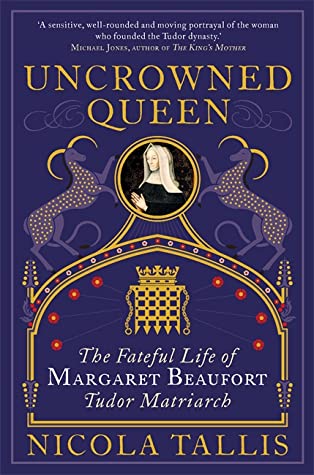 The stories of the women of the Wars of the Roses have become very popular in recent years. Tales of Jacquetta Woodville, Elizabeth Woodville, Margaret of Anjou, and Elizabeth of York tend to be favorites of those who read historical fiction. However, there was one woman whose life story is so much better than fiction. She was married 3 or 4 times (depending on if you count her first marriage), had only one beloved son who she helped rise to become King of England, and was considered one of the most powerful women of her time. In the modern era of historical dramas, Margaret Beaufort has been portrayed as malicious and cunning, someone who plotted against the Yorkist cause. With all of these conflicting reports about this one woman, can we ever find out the truth about her life? What kind of person was Margaret Beaufort? Nicola Tallis has taken up the challenge to answer these questions to find the truth about this remarkable woman in her latest biography, “Uncrowned Queen: The Fateful Life of Margaret Beaufort Tudor Matriarch”.
 Medieval kings are often painted as strong, colorful figures in history. They were warriors who fought to protect their families and countries. Often, we tend to think of men like King Henry V and King Edward IV when it comes to the late medieval kings of England. However, there was a man who was sandwiched between these two pillars of strength. He was the son of Henry V, the king who came before Edward IV, and the man who started the conflict known as the Wars of the Roses. Unlike these two men, Henry VI was a pious peacemaker and is often viewed as a mere man in the background who never measured up to the standards his famous father left behind. His story is often incorporated into other biographies of people of his time; Henry VI has not had a solid biography about his life in a long time. That is until now. Lauren Johnson has taken up the challenge of exploring the life of this often-overlooked monarch in her latest biography, “Shadow King: The Life and Death of Henry VI”.
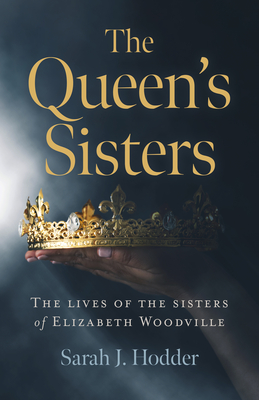 The story of the Woodville family has fascinated those who study the Wars of the Roses for centuries. Their mother Jacquetta of Luxembourg married Richard Woodville because she loved him, even though he was the chamberlain of her late husband. Jacquetta and Richard had numerous children, notably Elizabeth Woodville, who would marry the first Yorkist king, Edward IV. Elizabeth and her brothers are often talked about when discussing the Woodville children, however, Elizabeth had several sisters who married relatively powerful men. The stories of the sisters are rarely told, until now. Sarah J. Hodder has decided to take on the task of exploring the lives of these hidden figures in her debut book, “The Queen’s Sisters: The Lives of the Sisters of Elizabeth Woodville”.
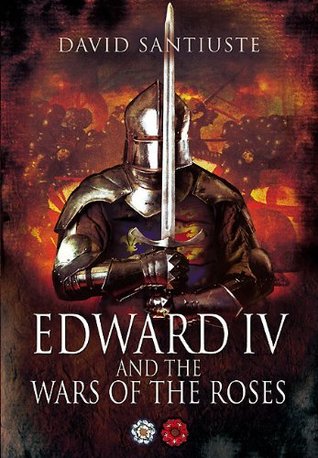 The romanticized conflict that was known as the Wars of the Roses had numerous colorful figures. From the sleeping king, Henry VI and his strong wife Margaret of Anjou to the cunning Kingmaker Warwick and the hotly debated figure Richard III, these men and women made this conflict rather fascinating. However, there was one man who would truly define this era in English history, Edward IV. He was a son of Richard duke of York who fought to avenge his father’s death and the man who would marry a woman, Elizabeth Woodville, who he loved instead of allying himself with a European power. These are elements of his story that most people know, but he was first and foremost an effective general, which is a side that is rarely explored when examining his life. David Santiuste decided to explore this vital part of Edward’s life in his book, “Edward IV and the Wars of the Roses”.
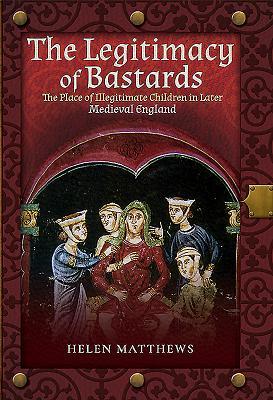 In the medieval world, a person’s lineage was everything. It determined who you could marry, what job you could have, and where you could live. To be considered a legitimate child meant that the world was your oyster, for the most part. It was a bit difficult if you were considered an illegitimate child. We often look at lineage when it comes to royal families, but what about the nobility and the gentry. If you were considered an illegitimate child in the late medieval time period to a family who is part of the nobility or the gentry, what kind of opportunities would be available to you? This question and others are explored in Helen Matthews’ book, “The Legitimacy of Bastards: The Place of Illegitimate Children in Later Medieval England”.
 Adventures of a Tudor Nerd