
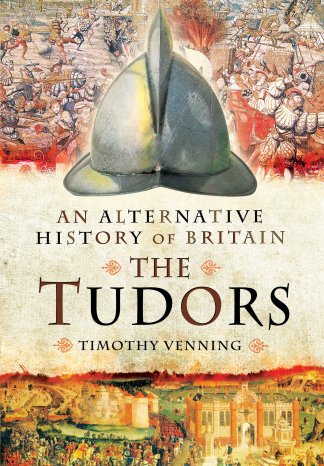
 The study of history is all about asking questions about how and why events happened. We understand that history is very much a study of cause and effect; if a certain person causes something to happen, we study the effect of those actions. But what if the person changes what they do? What would happen to the course of history? These are considered the “what ifs” of history, which is something that history fans and students like to discuss with one another. These questions rarely are discussed in books, until now. Timothy Venning explores some of the “what ifs” of the Tudor Dynasty in his book, “An Alternative History of Britain: The Tudors”.
I would like to thank Pen and Sword Books for sending me a copy of this book. This book was a rather interesting read and gave a different perspective to the Tudor dynasty as a whole.
Instead of having an introduction to explain what he hopes to achieve with this book, Venning dives right into his discussion of some of the most famous “what if” questions about the Tudors. What if Prince Arthur lived to become King? What if Henry Fitzroy lived, could he have become King? What if Anne Boleyn survived? What if King Edward VI lived, who would he have married and what kind of King would he have been like? What if Lady Jane Grey stayed Queen of England, how would she have ruled England? What if Elizabeth I married Robert Dudley? What if the Spanish Armada succeeded in their plan to conquer England? Of course, Venning does include some of his own questions into the discussion as well to explore the entirety of the Tudor dynasty.
I honestly have mixed feelings about this book. I think Venning is very educated about the topics that he does discuss in this book. It is very much what I would call a “discussion starter” book. Venning gives his own opinions about these scenarios and gives readers something to think about. Some of the scenarios were relatively new ideas to me, which made me stop reading the book for a little bit to really think about what Venning is talking about and how history could have changed if one of the factors was changed.
Most of these topics are either political, martial, or military-related so we don’t really get to see how these events might have affected those who were not part of the royal family or the government. I wish Venning would have explored how these events would have impacted the country as a whole as well as how it might have impacted the culture of England. Venning does reference other events and figures in history in this book to make a point, which is fine, but I wish he didn’t compare the Tudors to modern figures that are seen as negative influences. It comes off as a bit distracting and I wish in these moments he would stick to talking about the Tudors.
Overall, I think this book was interesting. It really gives the reader a better understanding of how the Tudors survived during a very precarious time period in order to make England a better place for their people. Venning did present fascinating arguments for the reader to think about, but I wish he had written a bit better so that casual readers don’t get lost. If you want a book that makes you wonder about the “what ifs” of the Tudor dynasty, I would recommend you read, “An Alternative History of Britain: The Tudors” by Timothy Venning.
 In history, many people tend to focus on the big names. The kings and queens, the rebels, and those who really made an impact. The political advisors and men of the church tend to get left behind in the dust since they are not seen as “important”. However, it is these men who were the backbone of the monarchy, who helped make the king’s vision come to fruition. They tend to come and go, so that is why John Morton’s story is so extraordinary. John Morton helped three separate kings of England, was the enemy to a fourth king, tried to reform the church, and had numerous building projects. His life tends to be overshadowed by the kings that he served, but his life is brought into the light in this biography by Stuart Bradley, “John Morton: Adversary to Richard III, Power Behind the Tudors”.
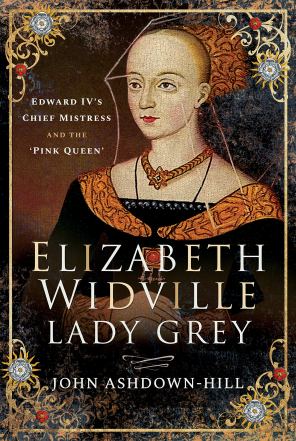 The English conflict known as the Wars of the Roses is filled with dynamic figures whose stories are those of legends. None more so than the wife of Edward IV and the mother of Elizabeth of York and the princes in the Tower, Elizabeth Woodville. She has been known in popular culture as the commoner turned “White Queen” consort, but do we really know the true story about her life? Was she really Edward IV’s wife? How much influence did she actually carry? These questions and more are tackled in Dr. John Ashdown-Hill’s latest book, “Elizabeth Widville Lady Grey: Edward IV’s Chief Mistress and the ‘Pink Queen’.
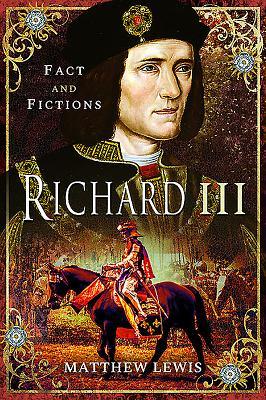 When one looks at the study of history as a whole, the traditional way to look at a person as either good or bad through a combination of facts and fictional tales of their supposed exploits. None so much so as King Richard III, one of the most controversial English monarchs. Fictitious tales, like William Shakespeare’s play
 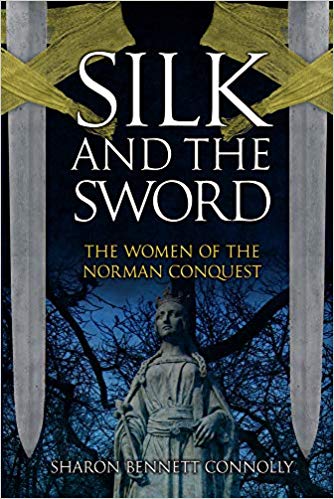 There are quite a few events that one can name that radically shaped the course of British history. None more so than the events of 1066, the year that saw Norman, Breton, Flemish, and French forces, led by the Duke of Normandy, William the Conqueror, invaded England in what we know today as the Norman Conquest. Most history books tend to focus on the men who lived before, during, and after the Norman Conquest: Aethelred the Unready, Edward the Confessor, Cnut, Harold II, Harald Hardrada, and of course William the Conqueror just to name a few. What the history books tend to gloss over is the strong women who stood by their husbands, brothers, and sons during this conflict. Who were these women? What were their stories? How did they help their families before, during and after 1066? These questions are answered in Sharon Bennett Connolly’s delightful book, “Silk and the Sword: The Women of the Norman Conquest”.
 When one thinks about the Wars of the Roses, we often think about the adults who fought against each other. However, there were also children who were stuck in the middle of the conflict. Two of the most famous children of this time were Edward V and Richard of Shrewsbury, Duke of York, the sons of Edward IV and Elizabeth Woodville. Today, we refer to these brothers as “the Princes in the Tower”. The disappearance of these two boys has sparked so much debate over the past five centuries as to who killed them or if they did indeed escape the tower, yet we have no way to know what happened to them. What we do have is the physical locations that were part of the young princes’ lives. Instead of diving into the quagmire that is the mystery of the princes’ lives, Andrew Beattie takes a different approach in his book, “Following in the Footsteps of the Princes in the Tower.”
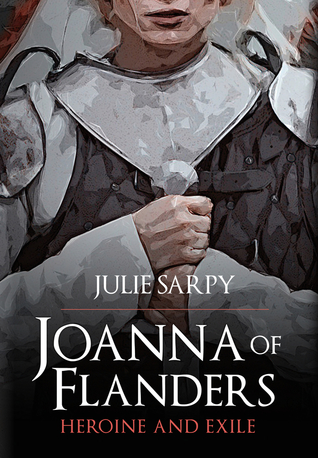 Strong medieval women who helped lead armies were unusual phenomena. Women like Eleanor of Aquitaine, Isabella of France, and Margaret of Anjou, have been seen as “she-wolves” and their stories have lived on for centuries. They were all queens, but strong women from the past could be of any rank, even though their stories are not celebrated as much. Take, for example, the story of Joanna of Flanders, Countess of Montfort and Richmond, Duchess of Brittany. She was a wife and mother who protected Hennebont Castle in Brittany from the French in 1342 while her husband was held captive. She then leaves her beloved Brittany for the court of Edward III of England and all but disappears from the historical record until her death in 1374. What happened to this extraordinary woman and why did she disappear from the historical records? Julie Sarpy answers these questions and more in her book, “Joanna of Flanders: Heroine and Exile”.
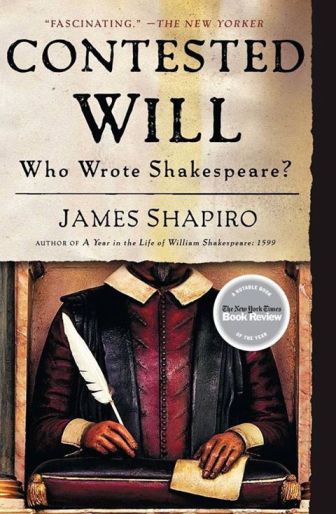 First of all, great Shakespeare questioned? How unthinkable, controversial, bizarre…
 Historically, royal marriages have been viewed with such interest. A king and a queen who can come from either similar or different backgrounds in order to make their country better, or in some cases, worse. During the Wars of the Roses, there were some legendary relationships that shaped the war between the Yorks and the Lancasters. Edward IV and Elizabeth Woodville. George Duke of Clarence and Isabel Neville. Richard III and Anne Neville. Henry Tudor and Elizabeth of York. However, these relationships fail in comparison to the impact that the marriage of Henry VI and Margaret of Anjou had on England during this time. Henry VI was seen as a weak, pious ruler; Margaret was seen as too strong for a woman. They have been viewed separately for a long time, never as a couple. That is until Amy Licence wrote her latest biography, “Henry VI and Margaret of Anjou: A Marriage of Unequals”.
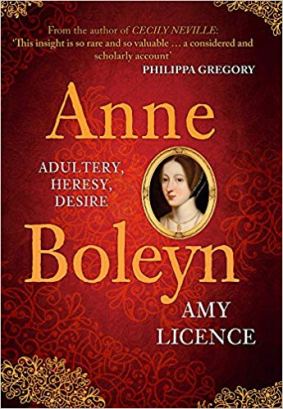 Anne Boleyn, the second wife of Henry VIII and the mother of the future Queen Elizabeth I, is one of the unique characters of the Tudor era. She was the sister of one of the king’s mistresses, Mary Boleyn, which she could have been, but Henry wanted Anne as his queen. Unfortunately, he was married to his first wife, Catherine of Aragon. It is Henry’s divorce to Catherine and his relationship with Anne, the rise and fall, is what many people look at, but there is more to Anne’s story than just her life with Henry. What was Anne’s life really like and what really caused her fall? These are just a few questions that Amy Licence tackles in her latest biography, “Anne Boleyn: Adultery, Heresy, Desire.”
 Adventures of a Tudor Nerd