
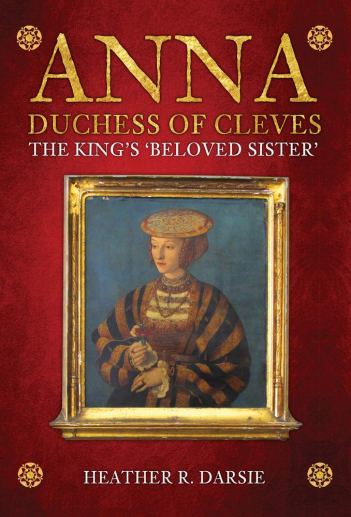
 The wives of Henry VIII are some of the most hotly-discussed women of the Tudor Dynasty. They all had unique lives and origins before and after they met the man that connects them all. Two of his brides, Catherine of Aragon and Anna, Duchess of Cleves, were foreign princesses and their marriages were used to create alliances with Spain and Germany respectfully. While Catherine of Aragon and the rest of the wives of Henry VIII get a ton of attention, Anna Duchess of Cleves tends to be brushed aside. She is often seen as the wife that Henry did not approve of because of her looks. However, Heather R. Darsie decided to change how we view Anna with her groundbreaking debut biography, “Anna, Duchess of Cleves: The King’s ‘Beloved Sister’”.
I would like to thank Amberley Publishing for sending me a copy of this wonderful book. Anna, Duchess of Cleves has been one of those women who I wanted to learn more about, so I was very excited to read a biography about her.
Anna’s story is often told through the English perspective, but it does not tell the entire story. Anna was born in Germany so it makes sense to tell her story using both English and German sources. Darsie explains her approach to this book and her purpose for writing her biography of Anna in the way she does:
Anna’s life and experiences from the German experiences are very different in some ways than what has been described in English-language books. This is not to say that any English biographies about Anna are wrong, but rather that the German sources help make more sense of Anna’s life and short marriage. The German sources show what a valuable bride Anna was to any suitor, and why she stayed on in England after moving there in December 1539. It is my sincere hope that this biography augments the generally accepted view of Anna, her family, and the political entanglements in which she was enmeshed. I also hope it brings more knowledge about German history to English speakers. (Darsie, 8-9).
Darsie brings a fresh new perspective to Anna’s life by explaining her foundations and her family in the German court. This is critical for understanding what kind of woman Anna was like and why the marriage between Anna and Henry was necessary. We are introduced to Anna’s family; her mother Maria, her brother Wilhelm, and her sisters Sybylla and Amalia, who all play a crucial role in shaping the path Anna’s life will take. Anna’s family had a huge influence in German and European politics and the decisions that they made will shape not only German history but European history forever. This was also the start of the Protestant Reformation and the battle between Lutheranism and Catholicism ensues with Anna’s family caught directly in the middle.
This book is an eye-opening read. By exploring the political and religious factors of the time, as well as the German and English primary sources, Darsie is able to tell a complete story of Anna, Duchess of Cleves. She was not just some footnote in history. She was a strong, independent German princess who was doing what she could in order to survive. Darsie’s engaging writing style combined with her knowledge of not only German history but legal documents which shaped the agreements of Henry and Anna’s relationship as well as the understanding of the religious conflicts of the time, blend together masterfully to create a stunning debut. “Anna, Duchess of Cleves: The King’s ‘Beloved Sister’” by Heather R. Darsie is an absolute game-changer when it comes to studying the marriage between Henry VIII and his fourth wife Anna Duchess of Cleves and I highly recommend Tudor fans to read this book. This may be Heather R. Darsie’s first book, but I look forward to reading more of her books.
“Anna, Duchess of Cleves: The King’s ‘Beloved Sister’” by Heather R. Darsie will be published in the US on July 1, 2019.
If you are interested in pre-ordering the book for the US, please follow the link: https://www.amazon.com/Anna-Duchess-Cleves-Beloved-Sister/dp/1445677105
 Every family has their own stories. Stories of how they became a family, how they fought hard to get where they are today. Stories filled with love, drama, and endurance. When it comes to royal families, their stories tend to be broadcast to the masses, and none more so than the Tudors, who have captured the imagination of history lovers for generations. The Tudor’s story is often told in parts, focusing on individual people like Henry VIII or Elizabeth I. The Tudor story is fascinating told in parts, but as a whole, one sees how hard they worked to become a dynasty that will be remembered for centuries after their deaths. It is time for the story of this extraordinary family to be told as a whole and Leanda de Lisle does so in her book, “Tudor”.
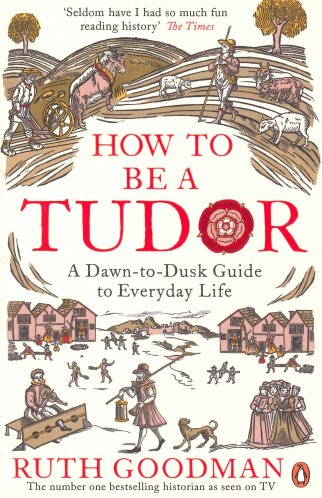 The Tudor era has enchanted generations of history lovers with its interesting monarchs and scandals. The beautiful outfits, the political drama of the age, the legendary marriages of King Henry VIII, the children of Henry VIII, and how England grew into a dominant force in European politics. These are the things that people tend to focus on when studying the Tudors, yet this is a very narrow view of the time period. We tend to focus on the inner workings of the court system, but we don’t focus on the common people who lived in England during this time. What was it like to live in Tudor England for the common people? This is the question that Ruth Goodman explores in her book, “How To Be a Tudor: A Dawn-to-Dusk Guide to Everyday Life”.
  The Wars of the Roses was a time of great hardships and strong men and women who did everything they could in order to survive. One of these remarkable people was a woman who did everything she could to make sure her only son lived and prospered. She was the daughter of a man who, allegedly committed suicide, she had four different husbands and gave birth to her son at the age of thirteen. She helped organize rebellions and a marriage that helped her son win the throne of England. Her name was Margaret Beaufort, the mother of King Henry VII. Her remarkable story is told in Elizabeth Norton’s insightful book, “Margaret Beaufort: Mother of the Tudor Dynasty.”
 In recent years, the study of the English conflict known as the “Wars of the Roses” has become rather popular. The Lancasters and the Yorks fighting for the English throne. Only one can be the winner. When we do look at this time period, we tend to focus on the people involved in the battles and the political aspect of the conflict. The battles, how they were fought, and why the conflict started in the first place tend to be pushed to the sideline. That is not the case with this particular book. In Hugh Bicheno’s book, “Battle Royal- The Wars of the Roses: 1440-1462”, the political and military aspects combine with family histories for a comprehensive look into what made this time period so fascinating.
 By the year 1470, England had been embroiled in a civil war between the houses of York and Lancaster for nearly 20 years. Edward IV was king until he was driven out of the country by his former best friend Warwick and Edward’s own brother, George Duke of Clarence. The House of Lancaster is back in charge with Henry VI, but Edward IV and his other brother Richard Duke of Gloucester are not giving up without a fight. However, there is another family who wants to fight for the throne, the Tudors. How will it come to an end? Who will become King of England when all the major battles come to an end? These questions are answered in Conn Iggulden’s thrilling conclusion to his Wars of the Roses series, “Ravenspur- Rise of the Tudors.”
 The deaths of the Duke of York, Earl Salisbury and Edmund Earl of Rutland at the Battle of Wakefield at the end of 1460 marked a changing point for how the Wars of the Roses was fought. Now it was not going to be simply a matter of who was going to be the King of England, but it was a war of revenge. What the Lancastrians did not realize at the time was the fact that these deaths would unleash two men who would mark the destruction of the Lancastrian cause; Edward Duke of York, the future King Edward IV, and Richard Neville Earl of Warwick “the Kingmaker”. In the third book of Conn Iggulden’s Wars of the Roses series called “Bloodline”, Iggulden explores the rise of these two dynamic men and how family matters tore the two best friends apart.
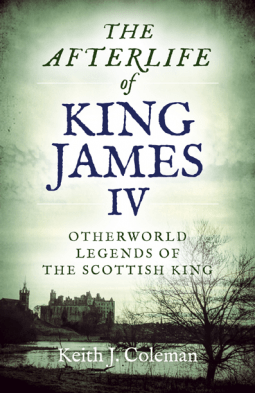 A king who died on the battlefield and his remains were never found. His story and his legacy went through many revisions throughout history. This sounds like a certain English king, King Richard III, but this story actually takes place decades after Richard’s death in Scotland. This is the story of King James IV of Scotland, who died at the Battle of Flodden in 1513. It was this event and how James IV was viewed afterward which Keith J. Coleman explores in his book, “The Afterlife of King James IV: Otherworld Legends of the Scottish King”.
 known as the Hundred Years’ War, and the massively destructive illness that we know today as either “the Black Death” or “the Black Plague”. This was a time of despair, but it was also a time where we see a shift from old traditions of the church and the state. It is also two centuries after the events of Ken Follett’s massively popular book, “The Pillars of the Earth”. Follett explores how the people of Kingsbridge survived during this tumultuous time in his second book of the Kingsbridge series, “World Without End”.
 When one thinks about epic tales stories of adventures and romance tend to come to mind. One hardly thinks about the construction of a magnificent building as an “epic tale” with monks and builders as the main characters. We see cathedrals as these massive buildings from the past used as churches, but we rarely think about how they were constructed and why. Who were the people who decided to make these spectacular buildings and what might have their lives have been like? These are just some of the questions that Ken Follett wanted to try and answer in his monumental historical fiction masterpiece, “The Pillars of the Earth”.
 Adventures of a Tudor Nerd