
 Medieval wars were not just fought on the battlefield. They also fought in court through marriage alliances and politics. While we often think about wars and men, we should also consider the women who played their parts either in exile or glistening palaces. We often think about medieval queens like Margaret of Anjou as these strong women who fought in their ways, but we have to consider the wife of Richard Neville Earl of Warwick, known as the Kingmaker; her name was Anne Beauchamp Countess of Warwick. The relationship between Margaret of Anjou and Anne Beauchamp has not been discussed much until now. Anne O’Brien tells the stories of these two women and the wars that bound them together in her latest novel, “The Queen and the Countess.”
I want to thank Orion Publishing and Net Galley for sending me a copy of this novel. What attracted me to this novel was the cover at first and then the description. I love reading novels about the Wars of the Roses, so when I saw it was a novel featuring both Margaret of Anjou and Anne Beauchamp Countess of Warwick, it was a must read for me.
We begin in the year 1480 as both Margaret and Anne reflect on their lives while they are in exile. Then, we get a flashback to the famous Love Day “celebration” of 1458, when members of the Lancaster and York families joined hands as a way to try to mend the rift that was bound to tear the country apart. It is the idea of King Henry VI that his wife, Margaret of Anjou, joins hands with the Duke of York. It is a complete and utter failure as the Wars of the Roses kick off in full force. Since the King is very weak, it is Margaret who must take the reigns of government to protect the Lancaster family and the throne for not only her husband but also for their only son, Prince Edward.
On the other side of the conflict is Anne Beauchamp Countess of Warwick, the wife of Richard Neville, Earl of Warwick, also known as the King Maker. She is the mother of two daughters, Isabel and Anne, but she desires a son. Being on the rebellious Yorkist side means that Anne is directly an enemy of Margaret of Anjou, but something remarkable happens: the two women form a thorny friendship. For over twenty years, the relationship between Anne and Margaret ebbs and flows as the crown passes from Henry VI to Edward IV like a ping-pong ball. Both Anne and Margaret understand what it means to lose their husbands and children whom they love; they know the glory of victory, the terror of defeat, and the uncertainty of being in exile.
I enjoyed this novel very much. It gave more depth and heart to the conflict as a whole, as well as a better understanding of both women. Anne O’Brien was able to create such dynamic characters and a thrilling novel that any fan of medieval novels will enjoy. If you are a fan of novels set during the Wars of the Roses featuring strong women, I highly suggest you read, “The Queen and the Countess” by Anne O’Brien.
 Have you ever had a dream for your life that seemed so impossible that you would do anything to make sure it happened? Whether the matter of age or gender or even circumstances of one’s birth, there is always that one dream that keeps you going even during the most difficult times. Sander Cooke and his best friend Joan Buckler have dreams that seem impossible, especially living in Elizabethan England. Sander wants to stay young so he can continue to act in female roles in plays whereas Joan wants to be a natural philosopher even though she is a woman. Can they achieve their dreams or will they be doomed to fall to greater powers? The story of Sander and Joan is told in Nicole Galland’s latest novel, “Boy.”
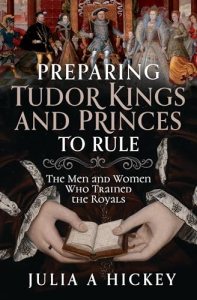 In life, when it comes to a new skill or job, you must be trained to become good at it. The same can be said for the monarchy, which in a sense is a job that encompasses one’s entire life. You have to understand different languages, rhetoric, the arts of dancing, and music, as well as diplomacy and physical activities if you want to rule a nation. It may seem like a lot for one person to handle, but from the moment of their birth, a prince or princess has a team of people behind them to make sure that they are ready to either rule their home country or create an alliance with other nations. The Tudors knew how important educating their future monarchs was for the survival of the dynasty. Julia A. Hickey examines the people behind the teams raising the future Tudor monarchs in her book, “Preparing Tudor Kings and Princes to Rule: The Men and Women Who Trained the Royals.”
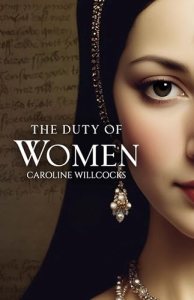 The Tudor court during the reign of King Henry VIII was a treacherous place to be, even for the humble female musician. It was full of men and women vying for a position of power, and they were ready to give anything and everything for that power. This is the world that Kat Cooke finds herself in. After faithfully serving Queen Katherine of Aragon for years, she must switch her loyalties to Anne Boleyn, but when things get dangerous, where will Kat’s loyalties lie? Can Kat survive such turbulent times or sacrifice everything she holds dear? Kat’s story is told in the second book of Caroline Willcocks’ Tudor Queens series, “The Duty of Women.”
 The medieval world could be a treacherous place to live in, especially when it comes to life in the medieval court. There was so much backstabbing and men reaching for titles and crowns that were not given to them. Take, for example, the House of York. Now, we will assume that their desire for the throne truly came to fruition during the period known as the Wars of the Roses in the 15th century. However, the sons and the daughter of Edmund of Langley and Isabella of Castile were fiercely loyal to those they served and were ruthless to those who they deemed as their enemies. This is the world that Constance of York, Lady Despenser, is raised in, but when her world is turned upside down, will she choose to stay on the sideline, or will she scheme with her family and fight for what they believe is right? Constance’s story is woven together in Anne O’Brien’s novel, “A Tapestry of Treason.”
 What’s better than snuggling up on a cold winter’s day and reading a murder mystery? How about an entire book about historical murders and the laws about murder and revenge? While we do have murder mysteries in every century and every walk of life, the farther back into the past we go, the more difficult it can be to discern fact from fiction. Take, for example, the stories of murder, betrayal, and revenge in Anglo-Saxon England. Annie Whitehead hopes to reveal a deeper understanding of this period through numerous murder cases in her latest book, “Murder in Anglo-Saxon England: Justice, Weregild, Revenge.”
 We all know the story of William the Conqueror and the Norman Conquest. William claimed he was the heir of Edward the Confessor instead of his rival Harold Godwinson. Harold was seen as a villain throughout history thanks to the Norman sources, but what was the historical Harold Godwinson like? Was he a malicious usurper who had to die at the Battle of Hastings for the rightful King William I to take the throne or is there more to his story than his death? Paula Lofting scoured the archives to find the truth about this maligned man in her book, “Searching for the Last Anglo-Saxon King: Harold Godwinson, England’s Golden Warrior.”
 In an age when most women of power did not have much power outside their own countries, one stood higher than most. She was not even supposed to become queen, but fate had a bigger mission for the young woman: rescue Christianity from dying out. As a ruler, this seems like a monumental task to complete especially when their enemies were the Ottoman Empire and the Turks at the height of the power. There was one woman who was up to the challenge while fighting to reclaim Spain for the Christians, exploring the new world, and dealing with her family drama. Isabella of Castile is either viewed as a saintly queen or a horrible woman ruler, but what do the archives tell us about her reign? Kirstin Downey tells the story of this revolutionary queen in her biography, “Isabella: The Warrior Queen.”
 A love that can get through any obstacle even when the couple is married to other people is considered very rare. However, star-crossed lovers at court were practically unheard of, especially multiple couples from the same family. Anne Brandon knows how rare these matches are as her father Charles Brandon married the sister of King Henry VIII. Now she must figure out her feelings about romance while navigating court life. In the modern day, Caroline Harvey has relationship problems while she navigates the loss of her famous writer, grandfather Dexter Blake. How are these two women from different centuries connected and can they fight for who they love or are they destined to be alone? Alexandra Walsh tells both women’s stories in her novel, “The House of Echoes.”
 Adventures of a Tudor Nerd