
 Throughout English history, a colorful cast of queens has left their marks in their distinct ways. While the Plantagenet and Tudor queens are more well-known, the Stuart queens and the mistresses of the Stuart kings were dynamic in their unique ways. One of the lesser-known queens was the wife of King Charles II. Though Charles II is known for his numerous mistresses, his wife Catherine of Braganza is not discussed much in England, but in her native Portugal, she is famous. So who was Catherine of Braganza, and what is her legacy in England and Portugal? Susan Abernethy tells the story of this almost forgotten queen in her book, “Charles II’s Portuguese Queen: The Legacy of Catherine of Braganza.”
I would like to thank Pen and Sword Books and Net Galley for sending me a copy of this book. I am someone who is dipping her toes into the Stuart dynasty, so I wanted to explore a story about someone new to me. When I saw the title and subject of this book, it piqued my curiosity because I have heard of Catherine of Braganza, but I know nothing about her.
Before we dive into the actual life of Catherine of Braganza, Abernethy takes the time to explore the relationship between Portugal and England, which culminated in the union of King Charles II and Catherine. I didn’t know much about the history of Portugal except for the aspect that is included during the life of John of Gaunt, so I was excited to learn more about how Portugal became a trading and exploration powerhouse. It was the rise of the House of Braganza that propelled Catherine into a position to marry the King of England.
As the daughter of King John IV of Portugal and Queen Luisa de Guzman, Catherine was destined to marry a member of royalty, but the issue was a matter of faith. Catherine was a devout Roman Catholic, whereas Charles II was a Protestant who was trying to restore his kingdom after the reign of the Protector Oliver Cromwell. Catherine also had to deal with the numerous mistresses of Charles II, like Barbara Villiers, Lucy Walter, Louise de Keroualle, and Nell Gwyn, who were able to give Charles children while Catherine remained barren. Throw in a few anti-Catholic plots, and you can start to understand the strain Catherine was under while living in England. Eventually, after the death of Charles II, Catherine decided to return to her native Portugal, where her life took an unexpected twist with the War of the Spanish Succession until she died in 1705.
I found Catherine of Braganza such a fascinating figure. She did so much in her lifetime, and it is a shame that Catherine does not get more attention. Abernethy does an excellent job of telling the story of this queen who is often in the shadow of more boisterous figures of the age and integrating the history of Portugal into this book. If you want to learn more about a Stuart queen who is often forgotten and her impact on two nations, I highly recommend you read “Charles II’s Portuguese Queen: The Legacy of Catherine of Braganza” by Susan Abernethy.
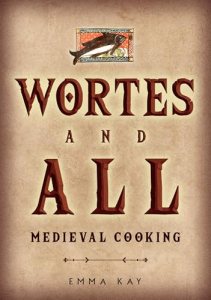 History is not just dates and conflicts with men and women sprinkled in, so we can learn a lesson. It’s not just births, conflicts, triumphs, marriages, and deaths. The people of the past are similar to us in so many ways, and it is through the field of study known as Living History or Experimental Archeology that we can understand the past through a more hands-on approach. One of the most popular methods of studying living history is cooking recipes from the past. But one must wonder how our tastes and understanding of the benefits of food change over time. Emma Kay takes the question of how eating and drinking changed over the medieval period in England and explores it in her book, “Wortes and All: Medieval Cooking.”
 A princess born to a king and his second wife lost her title and legitimacy when her father decided that her mother, Anne Boleyn, needed to die. Elizabeth Tudor knows the meaning of resilience as she survived her childhood during her father King Henry VIII’s reign. Now that her father is dead Elizabeth is at the mercy of her half-siblings Edward and Mary, plus any scheming man who wants to marry her and get closer to the crown. Can Elizabeth survive her siblings’ reigns or is she destined to be locked in the Tower to await her ultimate fate like her mother? Janet Wertman explores the life of Elizabeth Tudor in her latest series
  Throughout history, many civil wars have altered the course of the history of the countries where they occurred. While we think about the American Civil War, the French Revolution, and the Wars of the Roses, another civil war often overlooked outside of England is the English Civil Wars. A series of conflicts between the Parliamentarians and the Royalists led to the execution of King Charles I and the rise of the English Republic under Oliver Cromwell. We often view the conflict from either Charles’ or Oliver’s perspective, but we have to consider the family that Charles left behind. How did the English Civil Wars mold the children of Charles I and his Catholic Queen Henrietta Maria? Linda Porter explores the lives of the royal children in her book, “Royal Renegades: The Children of Charles I and the English Civil Wars.”
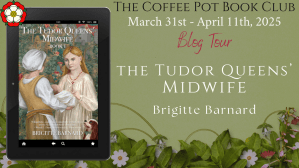 Throughout history, the true defining feature of a good queen was whether or not she could give birth to a male heir and a spare to keep the dynasty going. No dynasty relied heavily on the pregnancy of a queen and a male heir than the Tudor dynasty of England. While we tend to focus on the women who wear the crown and give birth to the potential heir, another stands beside her during the entire process; the royal midwife. Not much attention has been given to the royal midwife until now. Brigitte Barnard explores the life of a royal midwife and her daughter who work to help Queen Katherine of Aragon in her novel, “The Tudor Queens’ Midwife.”
 Blurb:
 Author Bio
 For centuries, fairy tales have entertained and taught lessons to those young and young at heart. One of the most memorable stories was the tale of Rapunzel, the maiden a witch kidnapped because her parents stole a Rapunzel plant from her while Rapunzel’s mother was pregnant. For years, Rapunzel languished in a Tower, her hair growing exponentially until a rogue/ prince climbs her hair and rescues the damsel in distress. The witch dies and Rapunzel and her hero live happily ever after. At least, that is how the story has been passed down to us throughout the centuries, but where did the story come from and how are the stories of three women from different generations and countries connected? Kate Forsyth weaves together the stories of three women and their fates into one delightful novel called, “Bitter Greens.”
 England’s history is centuries old, full of colorful characters and change galore. What truly defines the history of England is the monarchy, which has lasted over a thousand years. Over 40 kings and queens left their distinct marks on the history of this proud island nation. While some could maintain the crown with no issues, others had to fight to earn the crown, and a few even died for the crown. While there has been a plethora of books and novels written about individual monarchs and their impacts on the history of England, only a select few have chosen to take the arduous task of telling the story of the British Monarchy from its origins to the modern-day. One such historian who has chosen the latter is Tracy Borman in her book, “Crown and Sceptre: A New History of the British Monarchy from William the Conqueror to Elizabeth II.”
 The Great Matter was a defining event in the lives of King Henry VIII, Catherine of Aragon, and Anne Boleyn. One of the world’s messiest divorces, it saw Henry VIII trying everything in his bag of tricks to annul his marriage to Catherine of Aragon to marry his new infatuation, Anne Boleyn. While we know that the basis for his argument that he should be able to divorce Catherine comes from the book of Leviticus in the Bible, we often see Henry’s debate through the Catholic and Protestant lenses. However, Henry relied on another group of people who had not been on English soil for centuries, the Jews. What does Jewish law bring to the discussion of the Great Matter and did it help Henry? Jerry Rabow examines this often overlooked aspect of Henry’s road to divorce in his book, “Henry VIII and His Rabbis: How the King Relied on Jewish Law to End His First Marriage- and Why He Failed.”
 Have you ever had an incident that was so impactful that it defined your entire life from that moment on? For Anne Howard, Countess of Arundel, it was the death of her younger brother, George. She vows vengeance against those who were behind his untimely demise. In the present day, Sarah must return to her godmother’s home, which holds a lot of memories, mostly painful. It is in the halls of this ancient house that Sarah meets Anne through a book of poetry. Can these two women find peace or will the truths bring even more disasters? Clare Marchant tells the stories of these two women, the tragedies and the poetry that unite them, in her latest novel, “The Shadow on the Bridge.”
 For centuries, man’s best friend has been the dog, but don’t tell your feline friends that. In ancient times, cats were revered as idols, but something changed during the medieval period. For a thousand years, from 500 to 1500, cats were vilified and believed to be working with witches and the devil—a harsh assessment for small, fluffy cats, which we consider pets nowadays. So how were cats portrayed in medieval art and literature? Catherine Nappington hopes to give her readers a glimpse of feline art and literature in her book, “Medieval Cats: Claws, Paws, and Kitties of Yore.”
 Adventures of a Tudor Nerd